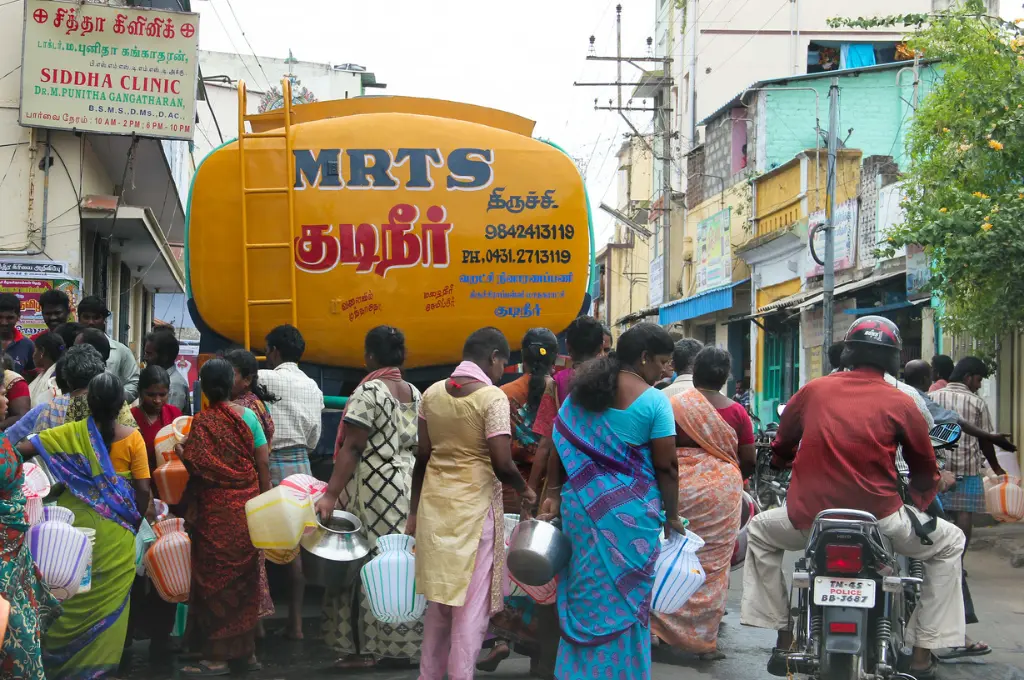
Since August 2025, thousands of sanitation workers have been occupying the streets of Chennai in protest. The dissent is directed at the state government’s decision to outsource waste collection and street cleaning to large private contractors. This phenomenon is not exclusive to Chennai. As door-to-door waste collection has been gradually privatised across cities, municipal sanitation jobs are increasingly filled by contract labour rather than regular permanent workers. Cities such as Lucknow, Ahmedabad, and Surat win ‘new clean cities’ awards, but these accolades stand in stark contrast to the condition of workers who keep the city clean, necessitating an examination of what sanitation work looks like on the ground.
More importantly, it requires an understanding of who performs this work. The enduring legacy of caste-based social and occupational segregation means that Dalit and other historically oppressed communities remain overrepresented in sanitation and waste collection.
According to a government survey conducted in 2023–24, covering 38,000 workers from 3,000 urban local bodies in 29 states and Union Territories, around 92 percent of those engaged in cleaning urban sewers and septic tanks belonged to Scheduled Caste (SC), Scheduled Tribe (ST), and Other Backward Class (OBC) communities. Dalit sub-castes have been involved across the sanitation value chain, namely communities such as Valmiki, Bhangi, Mehtar, and Chooda in northern and western India; Bassfor, Dom, and Ghaasi in eastern India; and Thotti, Arunthathiyar, and Madiga in southern India. These communities reportedly comprise around six million households, with approximately 40–60 percent engaged in extremely hazardous sanitation work.

In 2023 and 2024, the Centre for Labour Research and Action (CLRA), a labour rights organisation based in western India, conducted two research studies to understand the impact of privatisation and contractualisation on sanitation workers. We spoke to contract workers, permanent employees, and those classified as self-employed in Ahmedabad and Surat. These conversations revealed how shifts in the waste and sanitation sector have compounded caste-based inequalities, leaving workers increasingly vulnerable.
Privatisation, contractualisation, and the intersections of caste-based oppression
Sanitation jobs today are split between permanent roles and contracted work. However, our research indicates a growing trend of hiring sanitation workers almost exclusively on contract. Permanent hirings are declining, and workers from the Valmiki community are being relegated to predominantly contractual roles.
In the absence of any standard operating procedure for hiring contract workers, employment records are poorly maintained or not maintained at all.
Workers estimate that nearly 60 percent of the sanitation workforce on the Ahmedabad Municipal Corporation’s payroll consists of Valmikis. At the same time, there has been an influx of dominant-caste workers into permanent positions such as peons and attendants. In Surat, workers alleged that non-Valmikis often bribe recruitment officers to secure permanent jobs. This practice is also prevalent in Rajasthan. Although these workers do not perform actual sanitation work, their salary slips classify them as ‘labour,’ creating the misleading impression that sanitation roles have been equalised across castes. In reality, where dominant-caste workers are assigned sanitation duties, they frequently subcontract the work. At a public toilet in Ahmedabad, for instance, the person assigned to manage the toilet identified as a Brahmin and reported hiring other workers to clean the toilets twice a day, paying INR 100–150 per visit.
Workers also revealed overt forms of untouchability and discrimination in their work environment. A Valmiki worker recounted instances where he was made to sit on the ground during events while his savarna colleagues sat on chairs. Others shared that sanitary inspectors and sub-sanitary inspectors, who are often from dominant castes, regularly displayed insensitive and casteist behaviour.
In the absence of any standard operating procedure for hiring contract workers, employment records are poorly maintained or not maintained at all. This leads to the systemic invisibilisation of contract workers as well as the denial of statutory minimum wages. We found that contract workers were paid significantly less for municipal sanitation work, often as little as one-fourth of the wages earned by permanent workers. They are typically given a daily hazri (attendance-based wage), which has remained unchanged since 2016 at INR 200–250.

Securing permanent employment has become increasingly difficult. Earlier, contract roles could be turned into permanent roles once workers completed 900 days of work over a five-year period. This pathway has now effectively been closed. This raises serious legal concerns under the Contract Labour (Regulation and Abolition) Act, 1970, which mandates equal wages for contract workers performing similar work as regular employees—a provision that is routinely violated.
Even compensatory mechanisms have failed to offer meaningful mobility. Under the warasdar system, the next of kin of sanitation workers who die or are injured on duty are entitled to employment. However, these jobs are still confined to low-paid, manual labour. One safai karamchari in Surat, who inherited his mother’s job under this system, shared that despite holding a BCom degree, he was offered the job of a cleaner and has been waiting for a promotion for a long time.
Contradictions of the warasdar system
For some workers, the warasdar system provides one of the few remaining paths to an assured government job amid precarity and rampant caste-based discrimination in employment. For others, it reinforces caste-based occupations, by tethering families to sanitation work across generations. The system itself is limited to lower-grade roles and is revoked if a worker accepts a promotion to a higher-level position. Left with no other choice, workers are compelled to decline promotions and remain in low-paying positions that pose constant threats to their health and safety.
In 2006, through strong advocacy, 900 workers were added into municipal service under the warasdar system. In fact, most permanent sanitation workers we spoke to in Ahmedabad had secured their jobs through this route.
Not everyone wishes to continue working in sanitation, but leaving poses another hurdle.
The struggle to leave the system
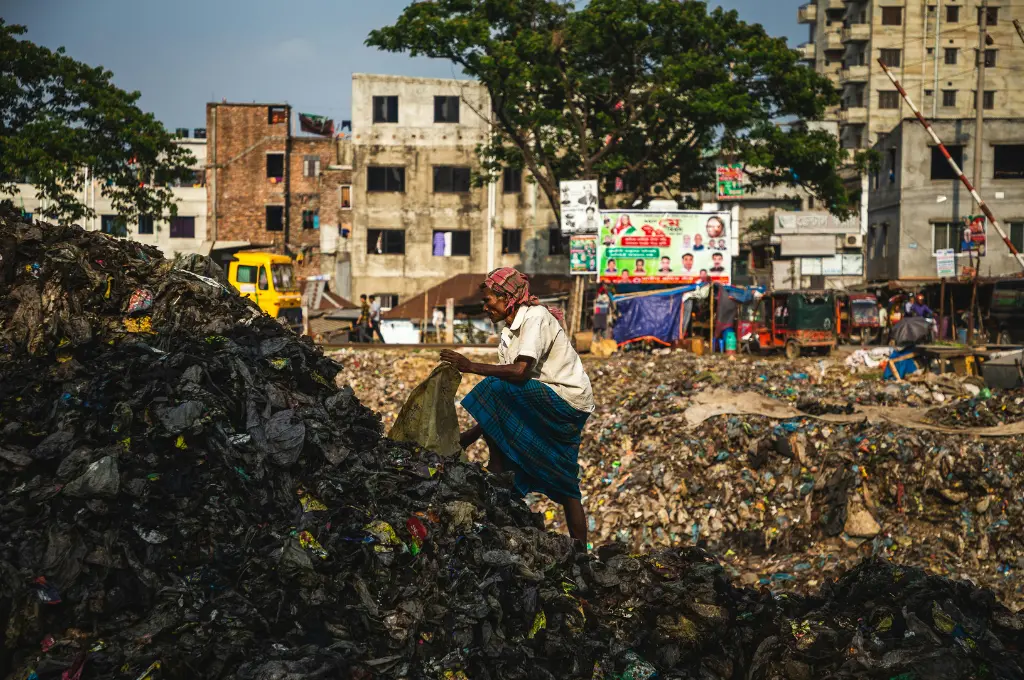
Workers described the hindrances they face when attempting to exit sanitation work altogether. One worker shared, “Agar koyi nayi dukaan bhi kholte hein aur pata chal jaata hai, toh wahan koyi nahi aata (Even when we open a new shop, once people get to know our identity, they do not come).” Caste identity becomes a significant barrier to access, acceptance, and mobility in other livelihoods.
Workers repeatedly expressed the desire for their children to receive quality education and not have to continue working in sanitation. However, many reported being denied admission in private schools once their occupation was known and having produced their caste certificates. A worker said, “Chuua-chuut abhi bhi chaalu hai humare samaaj mein. Mein mehnat kar raha hun ki apne bachche ko padhaun, lekin admission nahi de rahe toh ab kya karun (Untouchability still exists in our society. I am working hard to educate my children, but when they are not being given admission, what can I do?).” Another added, “Koi acche school mein padhana chaah rahe ho toh nahi milega (If we want our children to get educated in a good school, we will not get admission).”
Structural barriers compound these challenges. One of the workers in a Valmiki basti in Ahmedabad shared that there are no schools near their bastis. Sending their children to distant schools is expensive, and long working hours make daily travel and supervision difficult.
Given such conditions, sanitation workers across various urban areas have repeatedly mobilised to raise collective demands, which continue to remain unheard.
Key demands and way forward
Based on conversations with workers—both permanent and contractual—a set of immediate demands emerged:
- Abolish contract work and regularise the employment of existing contract workers.
- Ensure dignified wages that recognise sanitation work as essential labour.
- Guarantee safe and dignified working conditions with proactive support for healthcare, education, and adequate housing.
- Recognise deaths while cleaning septic tanks under the SC/ST (Prevention of Atrocities) Act, rather than treating them as accidents or cases of negligence.
- Provide reparations for the systemic and historical injustice meted out to sanitation workers and their communities. While reservations remain an important tool to deliver justice, the urgent task should be to speak of reparations as a critical tool to ensure social and economic justice.
It is essential for labour unions to recognise that caste is a labour issue and alter their approach and strategies accordingly. Failure to address the caste divide within unions has led to the emergence of caste- or identity-based unions to articulate the demands of workers from historically oppressed groups. However, this fragmentation reflects a larger refusal to confront how caste structures the labour market.
Caste shapes economic exploitation and, in India, it is inseparable from class.
Caste shapes economic exploitation and, in India, it is inseparable from class. At a recent meeting in Mumbai on the need for solidarity between labour and identity movements, activists argued that unions must begin to document local economic activities and modes of production through a caste lens. They also called for building a counterculture that challenges dominant norms of subjugation. This can be done through sustained collaboration with anti-caste organisations, community-level mobilisation, and political education. Crucially, this shift must also be reflected in union leadership.
The sociocultural indignity associated with caste-based sanitation work will persist as long as workers are denied occupational mobility. Thus, a key demand of sanitation workers’ unions should also be the freedom to leave sanitation work and the abolition of the contract system, without losing access to secure employment.
These demands have also found judicial recognition. In a landmark judgement, the Bombay High Court directed a municipal corporation to regularise the employment of 580 sanitation workers. The court stated that “in a welfare state, cleanliness for one class of citizens cannot be achieved by engaging in ‘slavery’ of others”. It also explicitly acknowledged the caste-based nature of sanitation work, distinguishing it from other contract labour disputes. Anand Teltumbde has emphasised how the government’s nationwide Swachh Bharat Mission will remain merely rhetorical unless caste hierarchies are dismantled. He astutely argues that a few workers from historically marginalised communities cannot be responsible for managing the waste generated by an entire population.
Ultimately, organising sanitation workers, including contract workers, is the only way to build a collective voice capable of challenging systems that restrict dignity, safety, and occupational mobility. The experience of workers in urban Gujarat shows that the fear expressed by Chennai’s conservancy workers are well founded. Their organised struggle for recognition and dignity of labour must not only be recognised but also actively supported.
—
Know more
- Read more about the state of sanitation work for Valmikis as a result of ‘badli’ work.
- Learn about India’s unorganised labour sector.
- Read more about the systemic issues that prevent progress for sanitation workers.