In recent years, the start-up scene in Mizoram has been quietly reshaping itself. Entrepreneurs no longer adhere solely to traditional brick-and-mortar models of business. This means that shopping complexes or malls are no longer the only places to discover new businesses. The internet has emerged as the new marketplace, where many start-ups operate entirely online. These e-commerce ventures can be found in every nook and cranny of social media platforms such as Facebook and Instagram.
But since the culture is in its early stages, founders are learning the fundamentals of e-commerce on the go, which includes conducting market research, building and sustaining supply chains, and planning expansion beyond the state. While government initiatives such as Mizoram Startup Mission support entrepreneurial development, foundational problems still persist. They must navigate poor infrastructure, unpredictable weather, and shifting consumer preferences to grow their businesses.
To understand these emerging enterprises better, we spoke with Zomawii Khiangte, co-founder of Local All Natural Soda (an artisanal beverages brand), and Puipuii Hmar, founder of Lawm from the Hills (a skincare brand). Founded in 2016 and 2021, respectively, both brands have gradually carved out distinct niches. Along the way, they have encountered various challenges that have pushed them to find new strategies for adaptation.

From experimentation to enterprise
Zomawii started by making craft beer before pivoting to soda because of Mizoram’s strict policies around alcohol production, sale, and consumption. She recalls, “In the early 2010s, when I was in New York, I tried an orange-flavoured artisanal beverage and thought, ‘Oh my god, this actually tastes like the fruit.’” In a way, this was Zomawii’s first market research that led to Local—an artisanal soda brand that sells pomelo, orange, and ginger ale sodas.
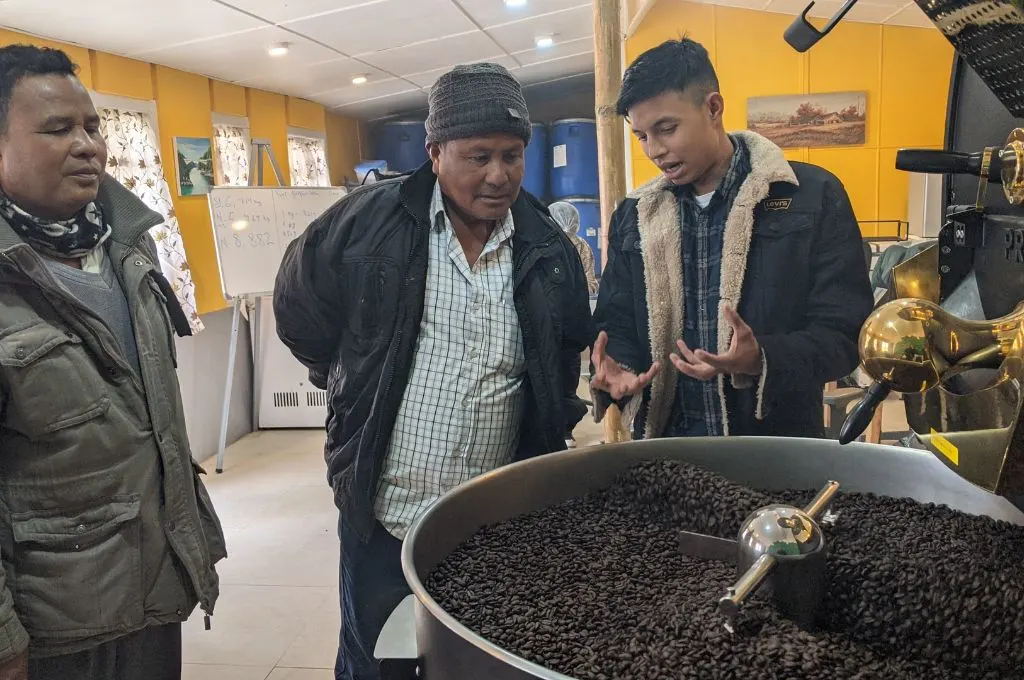
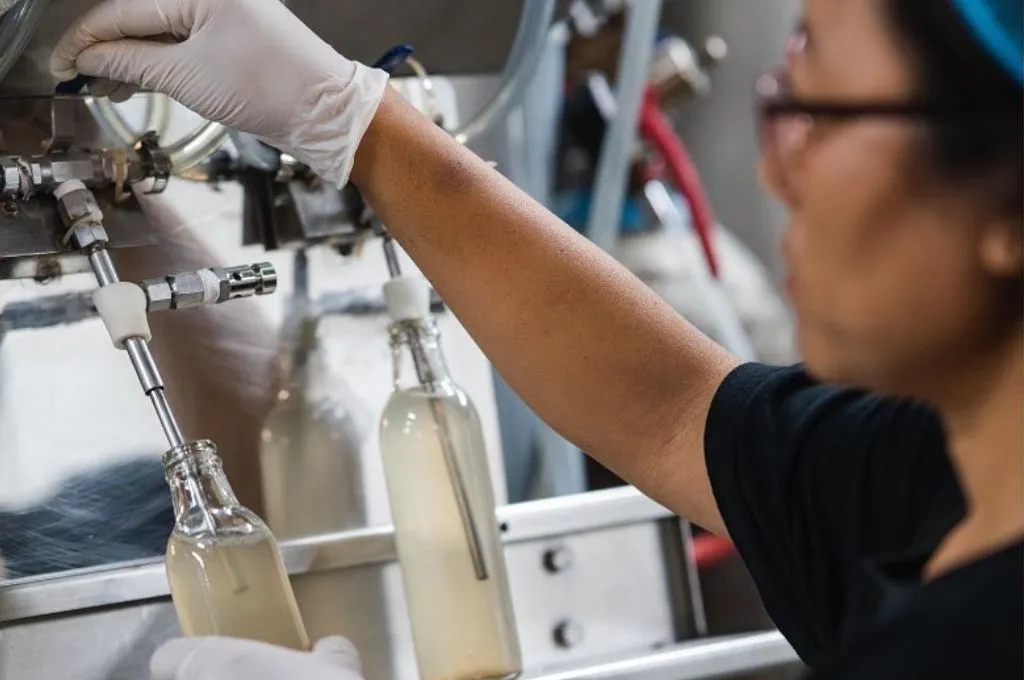
The fruits are sourced directly from farmers in different parts of Mizoram, kept in cold storage, and then juiced, processed, and packaged in small batches. Local also uses very little sugar to cater to health-conscious consumers. All this comes at a cost, making it a premium product priced at INR 120 per bottle. “At this price point, the majority of our consumers are outside Mizoram,” says Zomawii.
Puipuii, too, toyed with several business ideas before settling on Lawm. “In 2015, while preparing for government job exams, I stumbled upon Korean beauty brands on social media. Those were the early days of K-beauty’s influence on Indian consumers. I researched a lot to understand the ingredients that set them apart from the beauty brands available in India,” she says.
Puipuii began by looking for Korean products available in India and soon launched an Instagram page to curate them. She says, “With time, my business grew, and I was lucky to find Korean partners who wanted to work with us in India.”
In 2018, she set up an office in Bengaluru, importing and distributing four Korean brands. This phase became her crash course in business management, learning import documentation, logistics, and marketing. Just as she began harbouring dreams of launching her own brand, COVID-19 struck. She had to return home. “The Central Drug Control registration for importing cosmetics was expiring that year, and I decided not to renew it.”

Lawm started with two products: facewash and sunscreen. However, its first successful product was walnut oil, something Puipuii stumbled upon while scrolling though her Facebook feed. “A person was trying to sell a bottle of walnut oil for quite cheap and didn’t really have customers. So I wrote to her to try out the product. Eventually, we signed a manufacturing contract. We gave her a cold press machine and told her to make a particular amount of oil for one year which we sold,” she recounts. The start-up then found other independent producers who make products with local ingredients and started working with them to create products like facewash made with bamboo water.
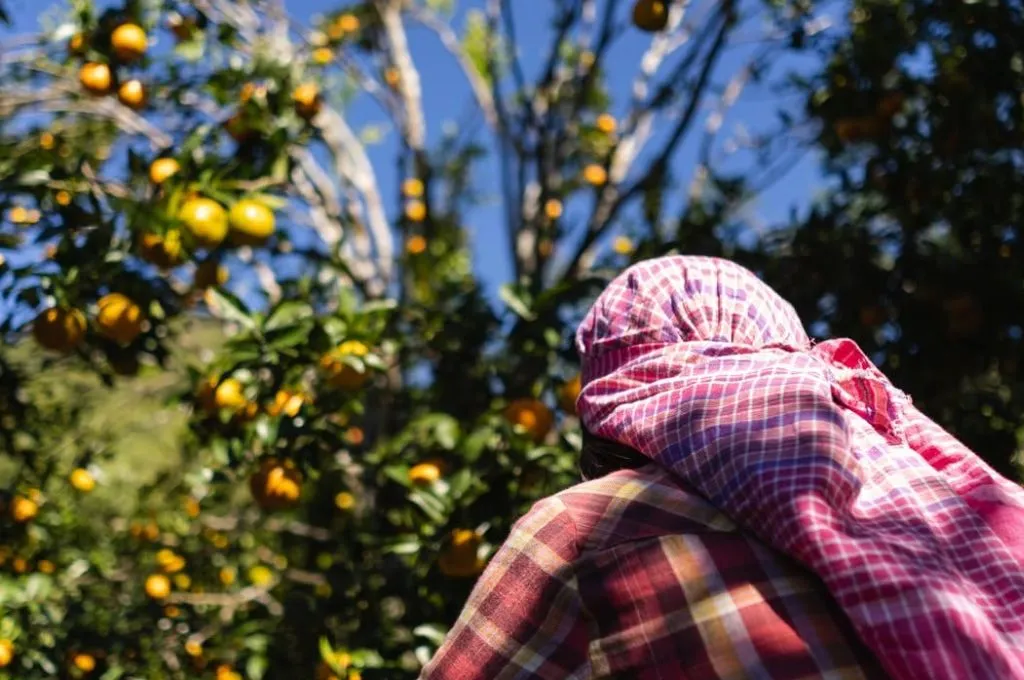
For both brands, farmers and local producers have been the backbone of these businesses. While Lawm initially worked with individual producers, they gradually expanded to working with farmer groups. In 2025, they also signed a contract with a farmer producer organisation, which allows them to source produce at a large scale.
Sourcing locally, growing collectively
Both Lawm and Local leveraged their understanding of their state and its people to build their brands. In many ways, these start-ups embody the ethos of social enterprises, where community impact sits at the core of the venture. As Zomawii explains, “I didn’t know how to start a nonprofit. I had a corporate background, so it made sense for me to start a for-profit enterprise even as I wanted to empower the people.”
She adds, “We wanted to address agricultural issues like farmers’ lack of market access. Even though they produce substantially, a lot of it goes to waste because there are no processing units and no means to preserve the food.”
Local sources its produce from different districts. For example, oranges come from Sercchip and pomelo and ginger from across Mizoram. They have set up their own manufacturing plant in Aizawl, where the fruit is processed and bottled, before being stored in different warehouses for distribution.
Local has consciously built its brand around the communities it works with, often showcasing impact numbers.
The start-up has also consciously built its brand around the communities it works with, often showcasing impact numbers and photos of community members at markets, farms, and processing units, much like nonprofits do. But this network took time to build. “We did this through a combination of government support and personal connections,” says Zomawii. “In Mizoram, personal connections are the key. My mother is a social worker who has worked on women’s empowerment so she already knew a lot of the farmers. We also partnered with government departments, such as horticulture, which helped us connect with communities and village councils.”
Local’s workers come from different districts and villages, and they often tap into their own contacts to procure raw materials. Zomawii has found that farmers are very open to conversation and collaboration. They understand sales and they want a good price for the labour they put into agriculture.
Marketing and forecasting in an unruly weather
The bigger challenges for these enterprises lie in marketing and distributing their products. These difficulties stem from the unique characteristics of their business models.
Local follows a largely B2B model, selling directly to cafes and shops both within Mizoram and in cities such as Delhi, Mumbai, and Bengaluru. But this model came up only after considerable trial and error.
“We tried sponsoring cultural events in the city to promote our product, but soon realised that you can’t predict the footfall. At some point, we started wondering whether it even worked for a brand like ours,” says Zomawii.
Local then started working with micro-influencers who have a loyal viewership on social media platforms. They also added a ‘buy’ button on their website to sell six-bottle packs. However, it was soon evident that not many customers bulk buy sodas. “No one’s going to come to our website just to order six bottles and then wait for a week to get it,” states Zomawii. “Our sodas are expensive, and only our loyal customers buy entire packs.”
Lawm regularly posts on Instagram and collaborates with influencers to promote their brand.
On the other hand, Lawm continues to focus on their B2C market, building on the legacy of the Instagram-first model that Puipuii ran. “Our primary mode of customer acquisition is still through social media, especially Instagram for people outside the state. Within Mizoram, we have found that word-of-mouth also works quite well,” she reveals.
Lawm regularly posts on Instagram and collaborates with influencers to promote their brand. For a long time, most of their traffic was organic, but recently, they started running paid ads to increase visibility.
They also work with influencers in both paid and unpaid capacities. Sometimes Lawm sends products to certain influencers who try them and post about it only if they like it. But this requires work. “Finding the right influencer means studying their audience and knowing beforehand what we want to achieve by working with them,” Puipuii explains.
She adds, “We have paid partnerships with local influencers who understand skincare and whose audiences align with ours. This helps us build brand awareness. Recently, an influencer with more than a million followers posted about our product on her page. We are still trying to meet the demand it created.”
Apart from studying trends using social media analytics, these start-ups have also found it beneficial to conduct in-person consumer surveys over email surveys which are often ignored or mistaken as spam.
“We have been cautious about email surveys,” says Zomawii. “But at our pop-up stalls at events, we spend a lot of time interacting with customers who buy from us and learn from their feedback.” Local also hires interns, often marketing students, who help conduct surveys and research consumer tastes. “For example, we learned that our consumers are keen to know about the nutrients in our sodas. So we started mentioning vitamins and other nutrients that the fruits contain. We also use very little sugar,” she adds.
However, one challenge remains stubbornly beyond their control: the weather. Since Local relies on agricultural produce, unpredictable weather patterns can disrupt the supply chain. “Our farmers pluck small batches of oranges during the harvest season. We estimate how much we will need for a particular year and store the fruit in cold storage based on projected demand,” says Zomawii. But this isn’t easy. In 2024, poor rainfall led to very low orange harvest and a sharp rise in prices. “I am hoping that this doesn’t happen again, but it isn’t in our hands,” says Zomawii.
“We are allies, not competitors”
In this climate of unpredictability, these start-ups have one another to be invaluable allies who understand and resonate with other’s struggles.
The Mizoram Start-up Mission began only in 2017, which means that it is still relatively young. “Their activities focus mainly on awareness about business building, accounting, financials, marketing—everything that a start-up needs,” says Puipuii. “But I feel that start-ups must know their own businesses deeply if they are to sustain their ventures.”
Zomawii agrees. “While government support is important and it is necessary to have positive relationships, you can’t rely on them for everything. Because then you’re setting yourself up for failure. It is great that the government allows us to set up stalls at their exhibitions, but we still have to learn how to find markets outside that space.” She adds that overdependence on government schemes for funding restricts start-ups from figuring out their own cash flow.
Both entrepreneurs emphasise the importance of peer networks. “I have learned a lot from my peers,” says Puipuii. “When we find the time, we meet and share our experiences. These connections also help us expand our networks.”
For Zomawii, these relationships also solve practical challenges. “Let’s say we are ordering bottles. It is a lot cheaper if I can buy a truckload. If I know a bunch of other start-ups that also need bottles, we can all pool our orders and buy from the same vendor at a lower price.” Rather than seeing each other as competition, the start-ups have found that collective problem-solving makes doing business easier for everyone.
Both women also share the experience of being women entrepreneurs in a state where they are still few in number. “My husband is a co-founder and he focuses on production, while I deal more with numbers and data,” says Zomawii. “But I have noticed that people take it less seriously when I present the numbers at conferences, compared to when he does. It is almost like they hear him better.” Puipuii adds, “Even though I have a very supportive family, I still struggle at times to balance caring for my child with running the business.”
Their stories, intertwined yet different, offer a glimpse into Mizoram’s evolving start-up ecosystem. As their businesses grow, and as more entrepreneurs join hands, there will be a lot to learn from one another and much to rally for collectively.
—
Know more
- Learn about the unique marketing strategies used by a start-up in Meghalaya.
- Understand the opportunities and challenges of agriculture-based businesses in Mizoram.