Mission-mode programmes are government initiatives designed to achieve specific, high-priority outcomes within a defined timeframe, supported by focused resources, streamlined processes, and close monitoring. Originally conceived for long-term national goals, such as literacy and technology missions, they have evolved over the past decade into a central instrument for quicker improvement of public service delivery.
With development agendas becoming more ambitious, and the demand for visible, measurable results growing, mission-mode schemes have multiplied across sectors. Such schemes include Swachh Bharat Mission, Smart Cities, Digital India, Jal Jeevan Mission (JJM), Mission Shakti, Mission Karmayogi, and Ayushman Bharat.
While these programmes are often celebrated for delivering immediate, tangible outputs, a critical question remains: do these programmes also translate into sustained social outcomes? Lasting transformation requires more than infrastructure. It also depends on recurring engagement, behavioural change, and local ownership, outcomes which often remain elusive in practice, especially within mission-mode programmes.

Patterns beneath the success stories
Looking across major mission-mode programmes, several common patterns in design and execution emerge.
1. Focus on short-term, target-driven outputs
Mission-mode programmes tend to prioritise outputs that are tangible and easily verifiable, such as the number of toilets built, tap connections provided, or dashboards created. Softer but critical dimensions, such as sustained toilet usage, reliable water supply, digital literacy, or continuity in operational designs, tend to take a back seat.
For instance, Pradhan Mantri Awas Yojana (PMAY) rapidly scaled up the number of houses sanctioned and built. Yet in several states, reported delays in providing electricity, water supply, and livelihood linkages revealed how the number of “houses completed” often took precedence over whether the homes were liveable.
2. Heavy dependence on the drive and continuity of local leadership
Whether it is a district collector leading sanitation campaigns, a mission director steering health interventions, or a municipal commissioner heading urban reforms, the intensity of implementation often mirrors the energy and priorities of the individual at the helm. In practice, when such officers are transferred, sometimes within months, the momentum can sharply decline. Field teams wait for new priorities to be set, review mechanisms pause, and activities have to be restarted or re-explained to incoming leadership.
This break in rhythm is not due to lack of intent. Mission-mode programmes rely on constant coordination, tight monitoring, and a clear narrative, all of which take time to rebuild. In districts where institutional processes are not strong enough to sustain momentum independently, progress remains closely tied to individual leadership.

3. Designed for short- operations, not long-term change
By design, the mission-mode model is most effective in ultra-short operational setups, such as natural disaster response, or in strictly defined, demand-driven interventions where objectives are precise, timelines limited, and the emphasis is on swift execution.
Take COVID-19 for instance. Hospital infrastructure was rapidly scaled, and vaccines were developed and administered within months—an achievement that would ordinarily take years of R&D and investment. In such cases, organic demand fuels adoption, and sustainability is defined not as long-term continuity, but as the ability to carry forward learnings that improve preparedness and enable quicker, more efficient future responses.
However, translating this model into sustained, system-wide transformation is far more complex. The COVID experience propelled the launch of two national health missions: PM Ayushman Bharat Health Infrastructure Mission (PM-ABHIM) and Ayushman Bharat Digital Mission (ABDM). Five years on, both face execution challenges, highlighting the complexity of transitioning from short-term, high-impact execution to long-term institutional change.
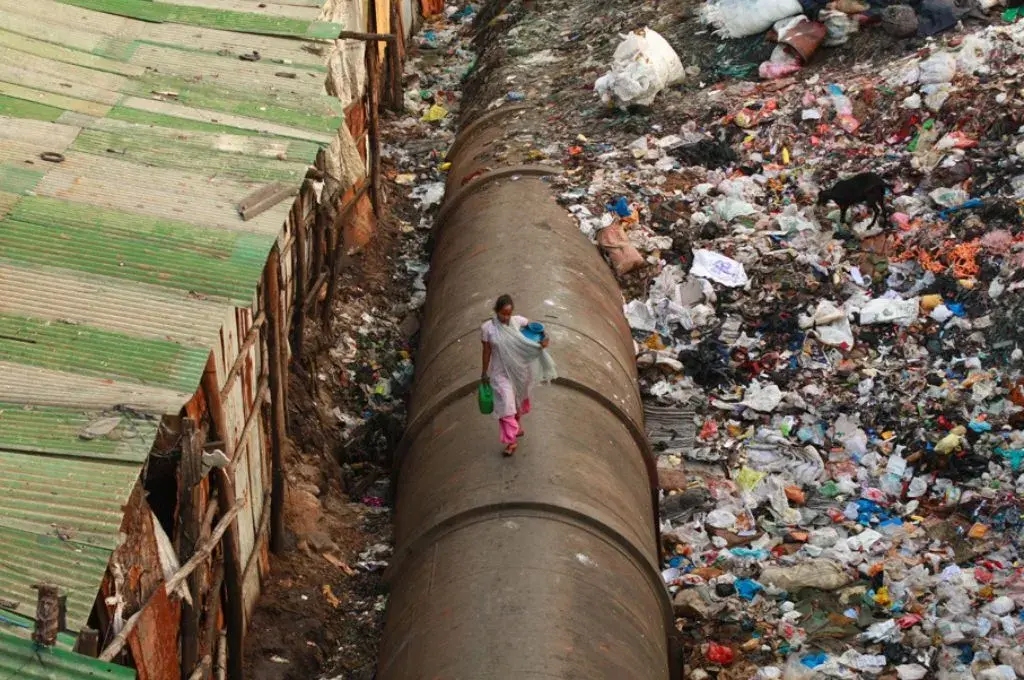
One reason for this is that sustainability tracking in mission-mode programmes remains a weak link. It is far easier to showcase tangible outputs than to measure long-term adoption, service quality, or behavioural change. This short-sightedness often extends to operation and maintenance (O&M) and financing beyond the mission period, both critical for sustainability. Once the infrastructure is built, the resources and attention required to run systems smoothly often do not follow. For instance, under Atal Mission for Rejuvenation and Urban Transformation (AMRUT), water supply projects in many states were commissioned successfully, but systems later suffered due to unclear O&M responsibilities among stakeholders.
4. Uneven implementation across states
While decentralisation gives states the autonomy to tailor mission-mode programmes to local contexts, it also produces uneven planning, variable institutional capacity, and wide disparities in outcomes. States may begin with similar goals, but differences in strategies they choose, and the hurdles they must navigate, often create divergent trajectories of progress. Limited timelines and the sheer scale of mission-mode programmes further amplify these variations, at times forcing compromises on quality or delaying core infrastructure.
The Jal Jeevan Mission illustrates this clearly. States started with vastly different baselines in 2019, and after six years of implementation, their progress reflects the cumulative effects of decentralised choices. For instance, Odisha struggled to execute large multi-village schemes that required forest, highway, or railway clearances, slowing down implementation.
In contrast, Assam relied largely on smaller, groundwater-based systems rather than large, multi-village schemes. This helped the state bypass several implementation bottlenecks and rapidly expand coverage—from just 1.1 percent of households in 2019 to 82 percent by 2025.
Strengthening missions, not abandoning them
When backed by political and administrative will, the government can turn even long-standing challenges into opportunities for impact, demonstrating that public systems are far from inert.
For instance, the Swachh Bharat Mission (SBM), set out to address the entrenched challenge of open defecation and poor sanitation in rural India. It sought not only to build toilets, but to move sanitation from the margins to the centre of public consciousness, combining infrastructure with behavioural change campaigns. Its early momentum was driven by strong political leadership and ownership by the Ministry of Drinking Water and Sanitation (now Jal Shakti) and the Prime Minister’s Office, marking a departure from earlier programmes largely operated by the Ministry of Rural Development.
By carving out focused attention and resources, SBM progressed rapidly. While questions about sustained toilet usage persist, the government’s response was clear: even as Phase 1, highlighted gaps in adoption and sustained usage of infrastructure, Phase 2 was introduced in good time, with a well-outlined mandate, larger goals, and strategies to reinforce gains.
This suggests that the way forward lies not in abandoning missions, but in enhancing and refining them:
1. Focus on fewer priorities
Mission-mode governance could benefit from a more streamlined approach. Ministries and departments should focus on fewer, high-priority areas that require long-term, sustained attention. Greater emphasis on tracking outcomes, scaling programmes in phases, setting clear rules of engagement with samaaj and bazaar, and embedding missions within existing institutional systems can make them more adaptable, durable, and easier to sustain.
2. Centre community ownership in design
Equally important is fostering community ownership and local accountability, which can enhance adoption and sustainability as seen under participatory water and sanitation programmes. For instance, the Participatory Irrigation Management (PIM) Act placed local water user associations (WUAs) at the core of decision-making and implementation. By decentralising management, it enabled farmers to collectively plan water distribution, manage routine operations and maintenance, and respond to scarcity using local knowledge. This approach strengthened accountability and stewardship, leading to more equitable allocation and better-managed systems over time, thereby reducing the execution burden on the state.
3. Move beyond rigid, pre-designed outcomes
Missions tend to rely on narrowly defined targets. But social outcomes are rarely linear or uniform. For example, SBM’s goal of 100 percent sanitation, measured largely through toilet construction, cannot be achieved through infrastructure alone. It depends on consistent use, hygiene practices, maintenance systems, and sustained financing, all of which are deeply context-specific and difficult to capture through simple metrics alone.
Achieving meaningful impact, therefore, requires shifting emphasis from infrastructure development to strengthening community institutions. This includes building shared norms, designing local systems for upkeep and monitoring, creating incentives, and ensuring sustainable financing. In this approach, infrastructure becomes one outcome among many, rather than the sole marker of success.
This is where missions must evolve into broader frameworks. Unlike tightly defined missions, frameworks are inherently more flexible. They allow programmes to adapt to local realities, rely on decentralisation and shared principles, and learn continuously from lived experiences.
In this shift, ministries move from being hands-on implementers to providers of direction and continuity, enabling programmes to endure leadership changes and political transitions without losing momentum.
As India’s development journey progresses, the emphasis must shift from expansion alone to expansion with depth. Missions that evolve into frameworks can provide the institutional and social scaffolding necessary for this shift, turning campaigns into enduring systems, and short-term achievements into long-term transformation. The next phase of India’s missions must therefore be about permanence, not just performance, building systems people want to sustain, and anchoring change in everyday life.
—
Know more
- Read more about how Swachh Bharat Mission can have lasting impact through behaviour change nudges.
- Learn about how government schemes are tested before large-scale implementation.