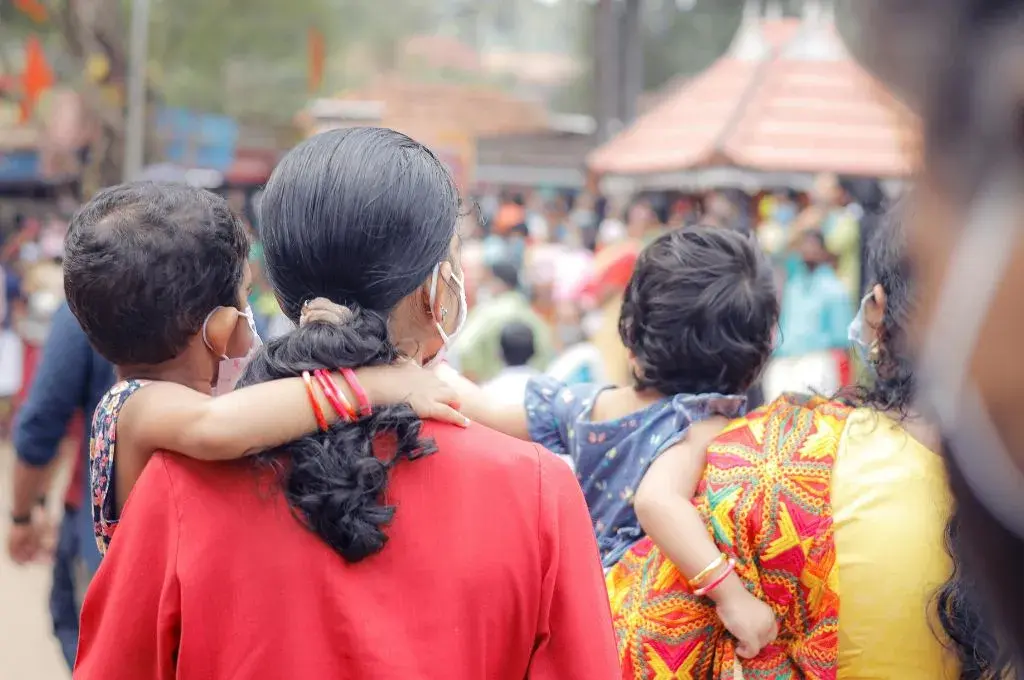
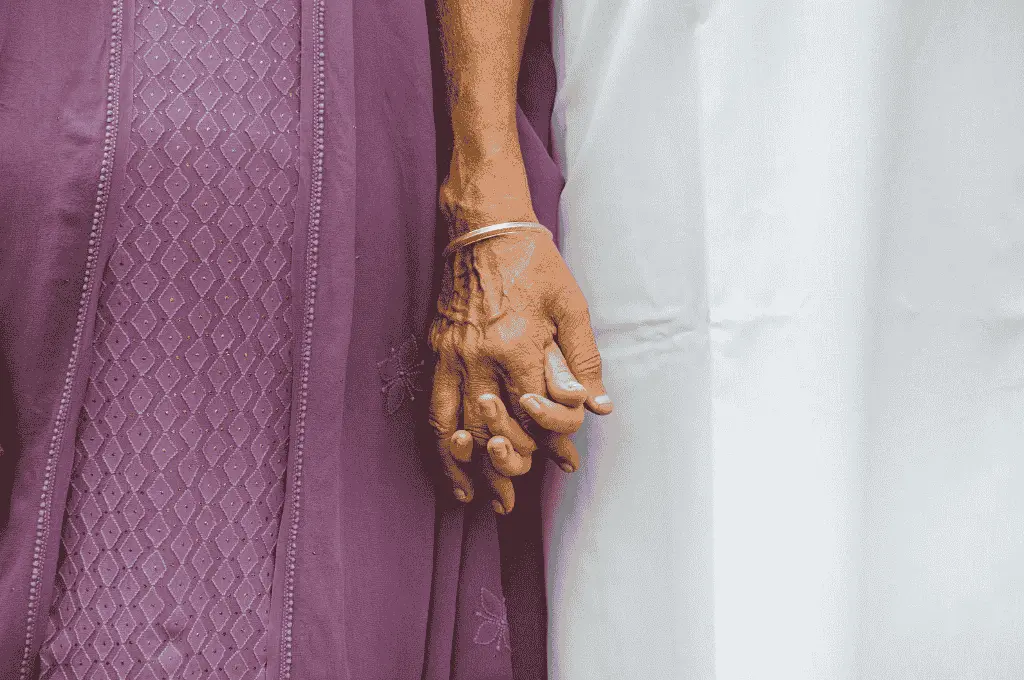
The house is in chaos. Lata,* caregiver to 95-year-old Vinata,* has chosen not to return. She is the fourth caregiver to leave in the last two months. Lata is 60 years old and has a daughter who is usually at work. Between visits to the pension office, cooking for her sons, and taking care of her grandchildren, Lata has no time left.
Without a caretaker present, Vinata’s 65-year-old daughter-in-law responds to her incessant questions such as ‘Have I eaten?’, ‘Do I need to use the toilet?’, ‘Should I sleep?’ while cooking for her and helping her to the toilet.
India has 150 million older adults, with 15 million over the age of 80. Caregiving is fuelled by the physical and emotional labour of middle-aged and older women across class and caste lines as they uphold different roles and carry different burdens. What we loosely call ‘care’ combines institutionally situated assistance-based services by private entities, government, civil society, religious institutions, and home-based care.

Care depends on a network of authentic relationships. It cannot be manufactured, yet many current models feel artificial. When we look at India’s caregiving landscape, the question arises: Do we truly value the labour that goes into care work?
How caregiving works today
Shekhar* and Neena’s* only daughter, Meera,* moved to the United States in 1980 at age 22. Now 67, she lives in Los Angeles while her parents continue to reside in Bangalore. At 87 and 92, Neena and Shekhar are healthy but need care. Meera spends four months of the year with them, enlists nurses, and uses a plethora of devices to track their movement. With no close relatives, friends, or social circle nearby, she struggles to find people she can trust to care for them.
What was once the responsibility of the joint family now falls to private players, government social safety nets, and religious as well as civil society organisations.
A Rohini Nilekani Philanthropies (RNP) report shows that 26 percent of older adults in India live independently (alone or with spouse only). By 2045, it is estimated that 60 million older adults in the country will be living alone or with their spouse. Migration and changing intergenerational family structures turn caregiving into a pain point to be addressed. What was once the responsibility of the joint family now falls to private players, government social safety nets, and religious as well as civil society organisations. The landscape of caregiving has a cast of interconnected characters with socio-economic strata dictating options.
For those living abroad or in jobs that do not allow for home-based caregiving of older adults, there is a burgeoning industry of age-tech products such as wearables that detect falls, provide medication reminders, monitor vitals, and alert caregivers. A wide range of elder-care living facilities have also emerged that provide nurses on call, meals, activities, and more. Premilla Nadesan, a feminist scholar, critiques these offerings for turning care into sites of profit where older adults’ needs become commodified, and many older adults are excluded from such spaces due to the price point or severe needs that cannot be addressed by service providers. While these offerings contribute to the service ecosystem around a certain stratum of older adults, they may not always meet actual care needs, nor be available or affordable to many. The caregiving safety net for vulnerable older adults in India is precarious, with 40 percent of older adults living in poverty. These devices and services aren’t accessible to them.
Who are the caregivers?
As much as caregiving is the story of those being cared for, it is also about the experiences of those who provide care. In upper-middle-class homes, home-based caregiving—with the support of caregivers provided through agencies—is widely prevalent. While this offers a support structure for nuclear families to manage the needs of older adults over 80 or with health conditions that prevent independent activity, it takes a significant toll on caregivers.

Almost a third of caregivers experience emotional strain, and approximately 29 percent of those supporting older adults report signs of depression.
India has approximately 4.3 lakh older adults in the age group of 60–70 caring for their older parents or in-laws. According to the RNP report, almost a third of caregivers experience emotional strain, and approximately 29 percent of those supporting older adults report signs of depression. Caregivers in both rural and urban areas report increased financial stress. ‘Saving for ourselves and our children is hard enough with cities having become so expensive, how do I save for our parents and their care?’ asks Bharathi,* a woman in her late 40s. Many women drop out of the workforce every year to care for older adults, which adds to the financial stress.
Children of older adults offer one part of the support, but the other part is provided by the nurse, who is a pivotal element in elder care. In many cases, these nurses are migrant workers who live in the houses of the elders they care for. Their tasks include feeding the elderly, bathing them, changing their clothes, and responding to multiple other requests. While nurses earn INR 1.2–6 lakh per annum, the actual salary varies based on skills and experience. Many send a large part of their salaries back home.
On one hand, caregiving often commodifies the bodies and labour of women and, on the other, leaves out vulnerable older adults from the safety net.
More than 18 million older adults in India are believed to be homeless. Roughly 16,000 live in public or charitable old-age homes, largely because of family abandonment or financial hardship, and many gravitate towards religious cities for support. According to experts, these facilities generally offer substandard living conditions, lacking basic sanitation and essential services. Overcrowding and severe funding shortages also mean that bedridden or critically ill older adults are often turned away.
What needs to change?
No single solution will solve all these challenges. While technology and infrastructure will continue to evolve and improve things for many caregivers and care receivers, we should redesign systems to be able to respond to the significant demographic shift India is going through.
Three dominant narratives at the heart of the caregiving crisis need to be rewritten.
1. Let’s view caregiving as shared and reciprocal
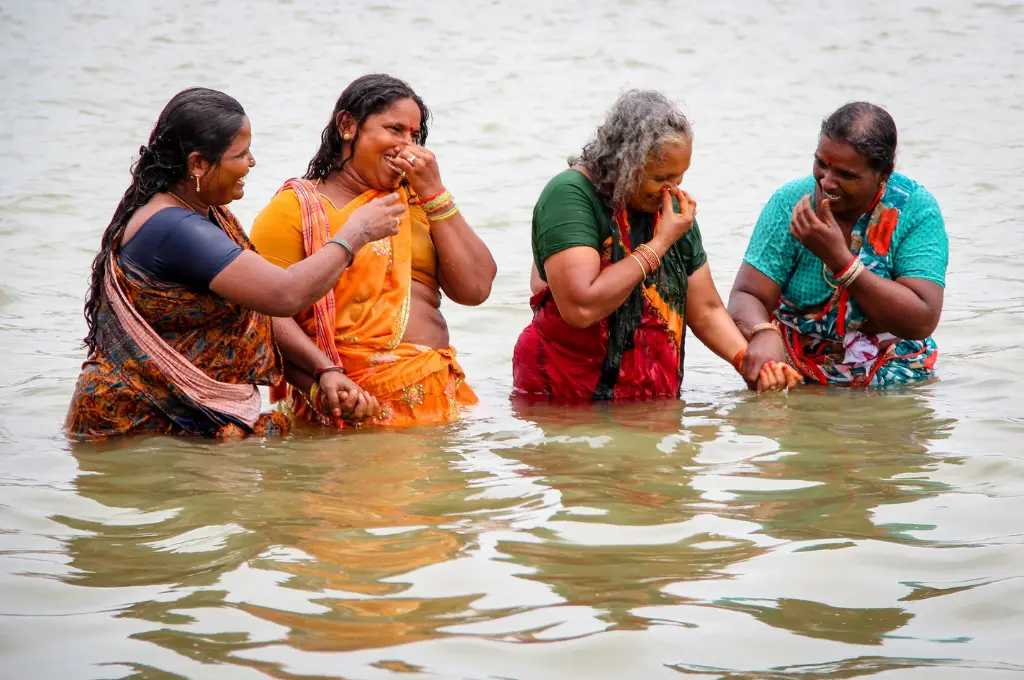
In her work on people living in informal settlements, Kaveri Haritas, an academic, discusses the reciprocal care networks for older adults in the absence of state care for communities in need. Women in these settlements take care of one another’s dependents such as children and older adults, share food, mobilise state benefits, and coordinate utilities. Care is non-institutional, reciprocal, and fluid.
Nuclear families and the absence of social support systems has forced care to be manufactured in the garb of services that do not have a basis in meaningful relationships between the older adult and the caregiver. Further, older adults are significant contributors to caregiving, as 14 percent of older adults are engaged in caregiving activities in their families. On average, these older adults spend over 1.75 hours daily caring for other members of their families such as their grandchildren, sick family members, or other older adults.
Older adults who live and interact in intergenerational spaces with strong relationships and trust are more likely to age well and be truly cared for when in need.
- In Kerala, Dr Suresh Kumar’s Institute of Palliative Medicine has championed a model of community-based palliative care. Started as the Neighborhood Network in Palliative Care, local volunteers (shopkeepers, students, teachers, neighbours) are trained to provide not only basic medical support, but also companionship, emotional comfort, and dignity to those living with serious illnesses. The concept and the capacity building for communities have since then evolved into ‘universal training’ in caring skills based on a philosophy of ‘caring as a life skill’. This grassroots network has transformed how communities respond to suffering, ensuring that people are not isolated in their final stages of life but surrounded by empathy and support. The outcome is not the provision of a service but the creation of a caring community. While focused on palliative care, the model can be extended to provide support to older adults in a neighbourhood through the community around them.
- In Bogotá, Colombia, the government-run Care Blocks initiative turns public spaces into community hubs of care. These centres provide services, training, wellness activities, and income opportunities for caregivers. They also offer essential support for children, older adults, and people with disabilities, strengthening both those who give as well as receive care.
2. Let’s support people who give care
Caregivers, be it family members or professionals, are the backbone of healthy communities. Yet, too often, they work without enough training, fair pay, legal rights, or emotional support. For family caregivers, the responsibility can be overwhelming.
The RNP report cites that 84 percent caregivers see caring for ageing relatives as their duty, but most have never been equipped for the physical, emotional, and financial demands. It is necessary to ensure caregivers have the skills, resources, and peer networks they need, so they can care for others without sacrificing their own well-being.
There have been attempts by nonprofits such as Noora Health and Carers Worldwide to address this issue:
- Noora Health works with hospitals to make sure family members have the skills and confidence to care for loved ones at home. It trains healthcare workers on high-impact care practices, using materials designed to fit local cultures and needs.
- Carers Worldwide runs community caring centres for families living with disabilities. These centres provide safe, inclusive spaces where children and adults with disabilities can access therapy, learning activities, and social interactions. The centres also conduct training programmes and provide emotional support through counselling for unpaid family caregivers.
Although both Noora Health and Carers Worldwide focus on caregiving across all age groups, their models are particularly effective in meeting the needs of older adults, strengthening families’ ability to provide dignified, confident care.
3. Let’s make care a public good
As populations age and family structures change, the gap between the need for care and support systems will only grow. Treating caregiving as a public good—such as clean water, public education, or healthcare—means ensuring that everyone has access to the skills, resources, and networks they need to care for loved ones without sacrificing their own well-being.
Multiple countries have extended public benefits to caregivers. In Germany, informal caregivers who reduce their work hours to take care of older adults are eligible for wage compensation. In South Korea and parts of China, modest cash allowances are provided to family-based caregivers.
India urgently needs to expand the social safety net of the most vulnerable and provide them financial support, invest in their education, and advocate for better working conditions. As Dr Alexander Thomas, founder of the Association of Healthcare Providers India and the Consortium of Accredited Healthcare Organizations, says in an interview with The Hindu, India should invest in building partnerships that connect grassroots innovations with national policy, and foster collaboration among hospitals, policymakers, and civil society to reimagine caregiving as a shared societal responsibility.
When a society invests in caregivers, it strengthens families, communities, and the nation’s health. Care is not only what we do for older adults, but also how we value each other. While expanding social safety nets and healthcare for the most vulnerable is pivotal, building community is far more pressing. If we build systems rooted in respect and relationships, growing old will not feel like being left behind.
*Names have been changed to maintain anonymity.
—
Know more
- Learn why India urgently needs an elderly care policy.
- Read the full report by RNP on elderly care in India.
- Learn more about how we can address unmet need of care for elderly.