Over the past decade, India has made notable efforts in expanding access to clean cooking by shifting households away from biomass fuels to cleaner alternatives such as Liquefied Petroleum Gas (LPG). Key government initiatives, such as the Pradhan Mantri Ujjwala Yojana (PMUY) and the Direct Benefit Transfer for LPG (DBTL) have been central to this transition. Between 2016 and 2024 alone, more than 100 million LPG connections were distributed, making this one of the largest clean energy access efforts globally.
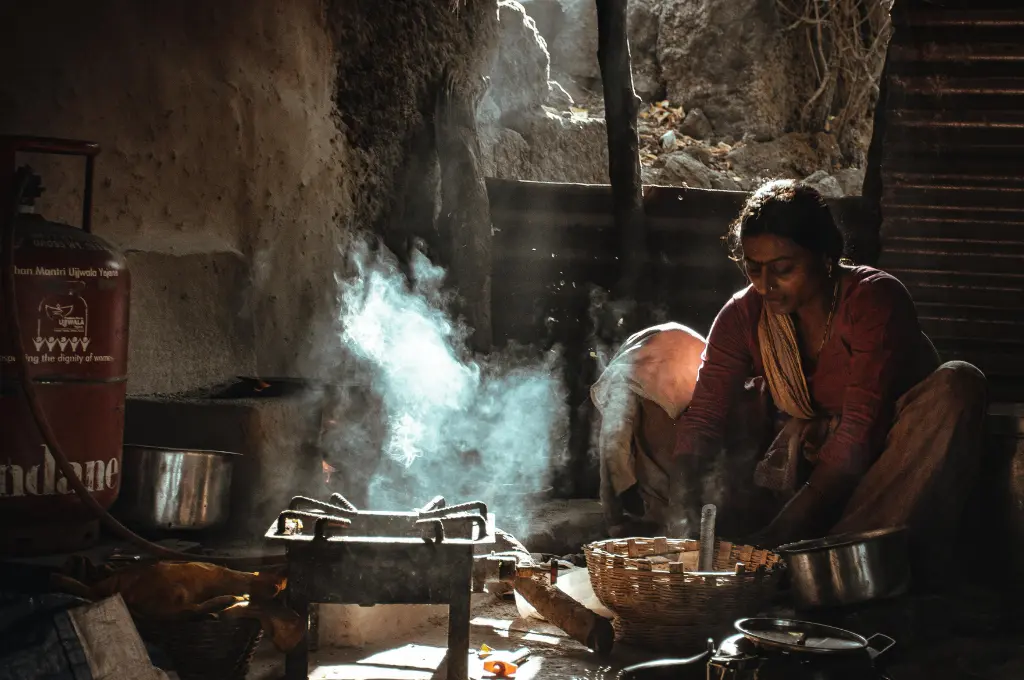
Yet, access alone does not guarantee an inclusive transition. While many urban and affluent households are increasingly relying on LPG as their primary cooking fuel, a large share of rural and marginalised households continue to practise fuel stacking—using a combination of LPG and traditional fuels such as firewood. High refill costs, unreliable last-mile delivery, and inconsistent service often limit exclusive reliance on LPG.
At the same time, the transition to LPG has raised concerns about India’s growing reliance on fuel imports. In 2015, India’s LPG import dependence was around 47 percent. By FY 2024, domestic production met only about 35 percent of the total 29.6 million tonnes of LPG consumed, with around 65 percent supplied through imports. This increasing reliance has implications for both fiscal stability and energy security, particularly during periods of global supply chain disruptions arising from extraordinary situations, such as pandemics and geopolitical conflicts.

Together, these challenges point to a deeper issue: India’s clean cooking transition cannot rely on a single fuel if it is to be both equitable and resilient. As India plans the next shift in its kitchens, it will be important to ensure that this shift does not deepen existing vulnerabilities, but instead expands choice and strengthens resilience.
The need for a multi-fuel cooking strategy
India’s cooking transition remains uneven, as access to LPG has not translated into sustained use. Thirty-seven percent of households still rely on biomass due to affordability, accessibility, and reliability constraints.
A more resilient and inclusive pathway lies in diversifying clean cooking options by integrating LPG, electricity, and other alternatives such as biogas into a flexible energy mix. This approach also aligns with India’s broader goals of improving energy security, reducing import dependence, and advancing climate commitments.
Electric cooking is a critical piece of this transition. Globally, the International Energy Agency estimates that electricity could meet up to 75 percent of cooking needs in emerging economies by 2050. In India, however, adoption remains at an early stage. Appliances such as induction cookstoves, electric pressure cookers, and rice cookers are largely concentrated among urban, affluent households, and typically play a secondary role.
This uneven uptake also reflects differences in households’ ability to afford appliances and the reliability of electricity supply. Evidence suggests that higher-income households, particularly in urban areas with more reliable electricity supply, are significantly more likely to own modern electric appliances than marginalised households.

That this transition is gradual is not surprising. Changes in Indian kitchens have historically unfolded over time, shaped by diverse culinary practices, infrastructure constraints, and household preferences. The shift from biomass to LPG itself took years of sustained policy support, behavioural change, and investments in supply chains. The transition to electric cooking is likely to follow a similar trajectory—incremental at first, but potentially transformative over time.
Schemes such as PM–Surya Ghar are expanding access to rooftop solar, creating opportunities for households to directly link electricity generation with end uses like cooking.
India has already begun laying the groundwork for this transition. Policy and programme-level signals supporting electric cooking are beginning to emerge. Initiatives such as the Go Electric campaign promote electric alternatives across sectors, including cooking. The National Efficient Cooking Programme aims to deploy millions of induction cooktops. The Bureau of Energy Efficiency has introduced star labelling for induction hobs, helping consumers identify efficient products while nudging manufacturers towards better performance.
At the same time, schemes such as PM–Surya Ghar are expanding access to rooftop solar, creating opportunities for households to directly link electricity generation with end uses like cooking. Together, these efforts signal a shift towards integrating cooking into India’s broader electrification and energy transition agenda.
However, early policy signals alone will not be enough. Ensuring an inclusive expansion will require addressing a set of persistent barriers, many of which are rooted in perception, affordability, and system readiness.
Why electric cooking remains out of reach
Electric cooking continues to remain out of reach for many households due to a combination of awareness, economic, and behavioural factors.
- Perception: Many households view electric appliances as expensive to operate, unsafe, or unsuitable for Indian cooking practices. However, these concerns are increasingly being challenged by evidence. Modern electric cooking appliances can handle a wide range of cooking tasks from boiling and frying to pressure cooking, and making staples such as rotis and rice. They also eliminate risks associated with open flames and indoor air pollution.
- Costs: Many households, particularly in rural and marginalised settings, are hesitant to adopt e-cooking due to the upfront and operational costs of appliances. However, emerging studies suggest that electric cooking can be cost-competitive, and in some cases cheaper than LPG, particularly when supported by efficient appliances and reliable electricity supply. For instance, The International Institute for Sustainable Development reports that the operational cost of e-cooking is 15 percent lower than LPG. Other analyses by IEEFA South Asia reported that e-cooking is 37 percent cheaper in comparison to non-subsidised LPG.
- Awareness: Lessons from past programmes suggest that households that have not experienced these appliances firsthand often rely on perceptions rather than evidence. Targeted communication campaigns, demonstrations, and user engagement will be critical in mitigating these barriers by building trust and shifting consumer behaviour.
Facilitating the transition
Addressing these barriers will require a coordinated approach across policy, markets, and infrastructure to scale the adoption of e-cooking appliances.
1. Expanding choice and accessibility
Expanding access to a wider range of electric cooking appliances is an important starting point. While induction cookstoves dominate the conversation, appliances such as electric pressure cookers and electric rice cookers can meet a broader range of cooking needs more efficiently.
Reliable electricity supply is a prerequisite for sustained adoption.
However, access to these appliances remains uneven, especially outside cities. This depends not just on availability, but on whether they are easy to find, affordable, and supported by local supply chains that reach smaller towns and rural markets.
Infrastructure is equally important. Reliable electricity supply is a prerequisite for sustained adoption. As grid reliability improves and renewable energy capacity expands, the case for electric cooking will become stronger, particularly in rural and peri-urban areas.
There is also an opportunity to integrate electric cooking into urban planning. As India’s cities expand, residential design and electrical load planning can play a role in ensuring that homes are compatible with electric appliances from the outset.
2. Making it affordable
While operating costs may be competitive, upfront costs remain a barrier for many households. High-capacity induction cooktops and multi-burner systems can be expensive, with prices typically ranging from INR 5,000 to INR 10,000 or more. Additionally, households that have only recently transitioned to LPG may find it difficult to make another upfront investment in electric cooking appliances.
Addressing this will require a mix of policy and market-based solutions. Financing mechanisms, targeted subsidies, and innovative product offerings, such as bundled packages, with compatible utensils can help lower entry barriers.
Experience from other sectors shows that early support can accelerate adoption and reduce costs. India’s LED transition programme under the Unnat Jyoti by Affordable LEDs for All (UJALA) scheme is a clear example of this approach. Through early-stage bulk procurement and targeted policy support, the programme brought down LED bulb prices from INR 300–350 to INR 70–80 per bulb.
3. Building consumer trust
For electric cooking to move from a supplementary option to a primary cooking solution, continued investment in research and development will be essential. Appliances must be designed to meet the specific needs of Indian kitchens, including multi-dish cooking and high-heat applications.
Equally important is ensuring product quality and reliability. Consumer trust will depend on consistent performance, durability, and access to repair and maintenance services.
India’s existing standards and labelling ecosystem provides a strong foundation. The Bureau of Energy Efficiency’s programmes have already transformed markets for appliances such as air conditioners and refrigerators. Extending similar approaches to electric cooking can help build a high-performance and trustworthy market.
A gradual but necessary shift
Electric cooking is not a silver bullet, nor is it a replacement for LPG in the near term. Instead, it represents an opportunity to build a more diversified and resilient cooking energy system.
As India’s electricity grid becomes cleaner and more reliable, electrifying end uses such as cooking can reduce dependence on imported fuels, improve energy efficiency, and support climate goals. But given the scale and diversity of demand, this transition will take time.
The goal is not an overnight switch, but a steady shift that expands consumer choice, strengthens system resilience, and aligns with India’s long-term development priorities.
India’s clean cooking journey has already demonstrated what is possible at scale. The next phase will require a similar level of ambition, but with a broader lens that moves beyond access alone to focus on sustained use, equal access, and system transformation.
Electric cooking, alongside LPG and other clean fuels, can play a pivotal role in this transition. The challenge now is to create the conditions that enable households to adopt it with confidence, through better awareness, improved affordability, stronger infrastructure, and reliable products.
Done right, this transition can do more than clean up kitchens. It can strengthen energy security, advance climate goals, and build a more resilient energy future for millions of households.
—
Know more
- Learn more about how the LPG shortage is turning into a crisis of trust for fieldworkers.
- Read this article on the fragility of India’s clean cooking strategy in the wake of the LPG crisis.