This is Rinchen’s story.
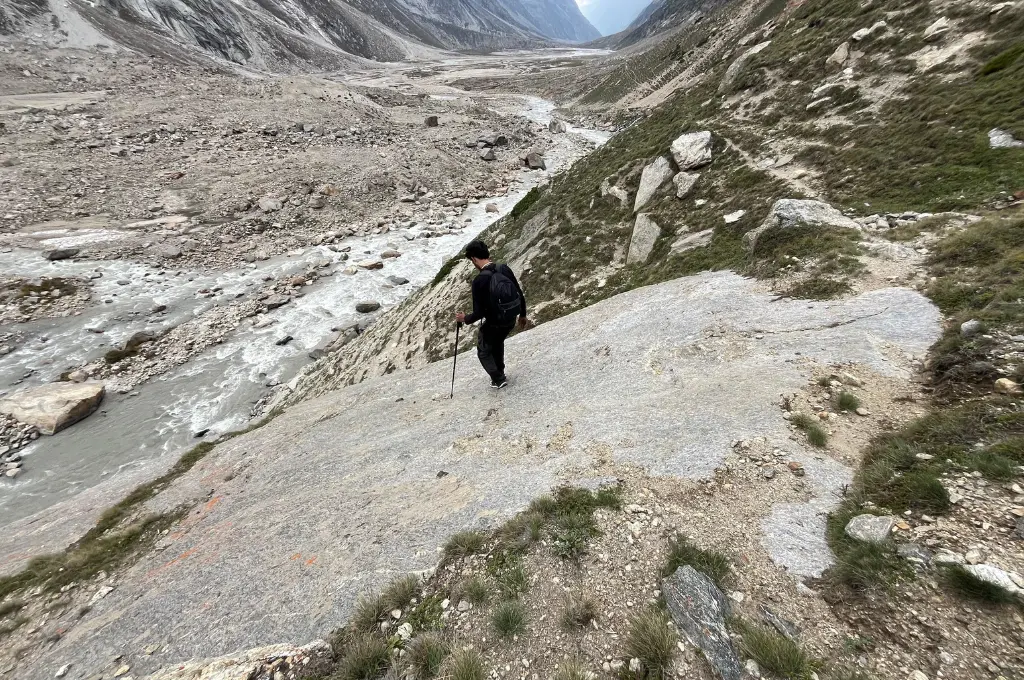
It is the end of September 2025, and we have just completed a 60 km hike into the Kiyar Naala, deep within Kishtawar National Park. Walking between 7–10 hours a day, navigating trails washed out by recent floods, and camping in makeshift huts left behind by the Bakharwaals (pastoralists), we gained 1,500 metres in altitude. Along the way, we deployed 12 camera traps that, in the coming months, would give us new insights on how snow leopards inhabit this part of Jammu and Kashmir.
Since 2023, scientists at the Nature Conservation Foundation have been working on the first comprehensive baseline study of snow leopard populations in the Kishtawar National Park, and our camera-trapping exercise is part of that broader effort.

As soon as we reach a place with cellular network, Rinchen will learn that his mother has fallen severely ill. We’ve been unreachable for the past week.
Rinchen is a part of a group of conservationists based in Spiti, and has been working in mountainous landscapes across the Himalayas for the past 12 years. To me, he embodies the spirit of most conservationists I’ve had the privilege of working with over the past six years, some of whom have grown to become close friends. Their experiences offer a window into what conservation work looks like on the frontlines of the climate crisis.
From rising temperatures and declining forest cover, to the changing wildlife behaviour, climate and environmental news surrounds us from all directions. Whether we choose to engage or not, there is no avoiding the conversation anymore. In 2024, the United Nations Development Programme (UNDP) published the People’s Climate Vote, the world’s largest public opinion survey on climate change. More than half of the respondents said they thought about climate change daily or weekly. Similarly, a 2023 Yale survey in India found that 86 percent of the 2,178 respondents were concerned about the extinction of plant and animal species.
At a time when there seems to be a consensus that urgent action is needed to avert the climate crisis, there are people around the world running directly towards this metaphorical fire. A community of field researchers, conservation scientists, and other technicians are spending years under rainforest canopies, guided by the flickering glint of a headtorch; at sea, with salt burning into their skins; or trekking hairpin slopes to meet with communities who might provide crucial insights into the ecosystem puzzle.
However, even as conservationists are rushing to solve the most pressing environmental issues of our time, their socio-emotional and material needs often go unnoticed. This absence of the lived experiences of frontline workers is also reflected in climate policy and decision-making. An effort to bridge this gap is what led to a 2023 study conducted by Thomas Pienkowski and Munib Khanyari. Informed by anecdotal evidence and the authors’ interactions with conservationists across two continents over the course of their PhD research, they surveyed more than 2,300 professionals across 122 countries.

Their findings shone a light on the magnitude of the mental health emergency in the conservation space, with more than one in four conservationists’ showing signs of moderate or severe psychological distress. Women reported higher distress than men, as did early-career professionals compared to those with longer experience. The study also highlighted how respondents with low optimism (about conservation or in general), poor physical health, and limited social support were most at risk of distress. Heavy workload, job demands, and organisational instability were among factors that caused higher distress, while stability and satisfaction with one’s job, and contributions to conservation were associated with lower distress.
Along with these findings, the study shed important light on where employers may be able to provide support to alleviate these concerns and promote better working conditions for the well-being of conservationists, and consequently, the landscapes they work to protect.
When conservation becomes a livelihood
Most people enter conservation driven by their love for the natural world, and the opportunity to contribute meaningfully to preserving it. Yet even the best and most motivated can burn out if the systems around them aren’t conducive to their professional growth and well-being.
Often considering themselves to have an ‘unconventional job’, conservationists are thrust into a space as uncertain and volatile as the planetary challenges they are trying to address. Long working days, weeks of separation from family and social relations, forays into isolated and harsh landscapes, and adapting to uncertainties and limited resources are all treated as routine. Depending on where the research is being carried out, apart from the responsibility of collecting accurate data, conservationists also walk a thin line balancing relationships with local communities, personal issues, ecological instability, and in some cases, military or border-related tensions.
Far from the mountain landscapes of Spiti where I met Rinchen, a similar story unfolds in the Western Ghats. In this increasingly conflict-prone region, a close friend has spent more than a decade finding solutions to mitigate negative interactions between local communities and wildlife, managing high tensions—most often in the aftermath of severe damage or casualties—and conducting constant outreach among various stakeholders for organised change in the wildlife space.
Although “passion” and “commitment” are exemplified and acknowledged, requests for better structural changes haven’t been recognised in the same vein.
For them, this has been a constant balancing act between managing high stress situations at work and the quality of their personal life. As someone who quit an education in finance purely guided by their love for wildlife, it is impossible to miss the spark in their eyes as they describe a serendipitous interaction with their favourite species. These are redeeming moments in an otherwise unforgiving profession, and ones that reinvigorate their commitment to the landscape. My friend candidly confides that although “passion” and “commitment” are exemplified and acknowledged, requests for better structural changes—including insurance, better job security and benefits, as well as trained staff to share the workload—haven’t been recognised in the same vein.
The need for a changing culture in a complex system
Over the years, though conservation in India has improved in terms of stronger scientific methodologies and collaborations with the rest of the world, the field is still vying for attention and resources while being at loggerheads with an imperfect notion of development. As I write this, the Great Nicobar Project has been cleared by the National Green Tribunal despite significant opposition from environmental experts and Nicobarese communities alike. In Odisha, villagers are vehemently resisting a bauxite mining project that will open up the Eastern Ghats for further exploitation and displace thousands of forest-dwelling indigenous people.
When confronted by a crisis that is growing increasingly complex, what does this constant sense of urgency mean for those at the forefront?
In The Psychology of Climate Anxiety, author Joseph Dodds says that “climate anxiety can affect people of all ages, but is often felt most powerfully by the young, by first responders to natural disasters, and by environmental scientists and activists who are exposed to information about the threat more than most.”
As we move deeper into an ecological crisis in the coming decades, we need to steer away from a culture that disguises burnout as sincerity, overwork as duty, and underpay as sacrifice. The world is presenting to conservationists a grim reality. To be exposed to it on a routine basis is hard enough, without the added burden of systemic overwork, inadequate resources, and weak social support structures.
Building care into conservation work
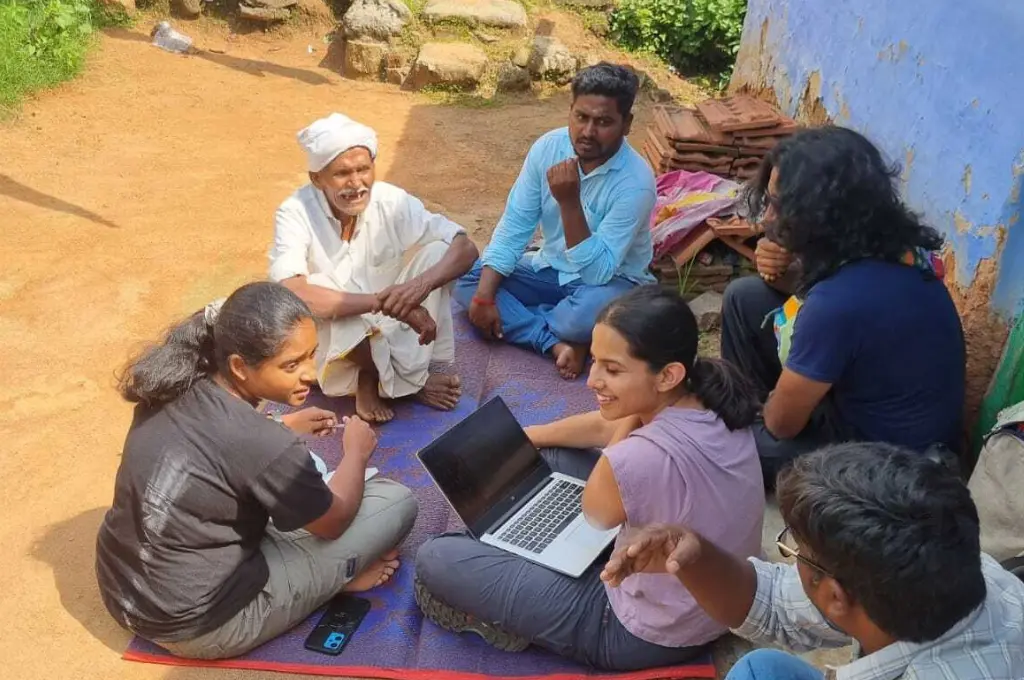
While conversations around mental health in conservation have certainly grown, this awareness needs to be translated into action. Organisations could benefit from more honest, open spaces that acknowledge role-specific strains, and help tailor meaningful solutions for the needs of workers at various levels.
At its best, conservation work means access to some of the most pristine landscapes across the world, and an opportunity to do work whose impact will be felt for generations to come. At its worst, it is riddled with tremendous hardships. Within this space, there is a divide in terms of the vulnerability experienced by workers, which is shaped by factors including access to vocational and specialised education, avenues to earn a living, access to benefits and medical facilities, and geographical connectivity.
What does it mean for organisations to recognise the varying needs of their employees, and how can they provide the support needed?
1. Acknowledging disparities within the conservation workforce
The conservation workforce includes field staff from local communities. Not only do they work tirelessly to collect primary data, often within limited seasonal windows, but they also balance their roles as members of the very communities most severely impacted by factors like climate disasters and human-animal interactions. Then there are senior researchers managing multiple projects, entrusted with the responsibility of raising funds for their particular work while also being in a leadership role for the team working under them. In these instances, it is not just sustained exposure to environmental stressors, but also the nature and responsibilities of their role that can exacerbate stress, anxiety, and feelings of isolation.
Acknowledging these differences also means understanding that what translates to security and support for workers in the space would vary greatly. While defining the culture and support in a team largely falls on the programme leads, there is a need for systemic change within conservation organisations. These could include flexible and extended periods of break for field staff, who often work in difficult terrains for weeks at a stretch, and providing researchers at higher positions with staff support with specialised skills.
2. Establishing clearly defined roles supported with proper training
In a close-knit community, where colleagues are also community, blurred boundaries and ill-defined roles can quietly let our frontliners down. For roles that repeatedly expose individuals to stressful environments, transparent conversations, necessary training, and mentorship before team members go to the field is crucial. Safety, security, and mental as well as physical well-being need to be institutionalised.
What can be equally important is the diversification of teams at conversation organisations. Qualified, trained office staff, such as administrators, communicators, managers, lawyers, and a diverse in-house team with specialised skills, could help define roles and share burdens more efficiently, so that those on field can focus on what they were assigned to do.
3. Funding that is responsive to the needs and priorities of organisations
In India, many conservation organisations depend heavily on grants and donors for both ecological outcomes and basic institutional functioning. In recognising these imperatives and enabling better possibilities, funding agencies and grant makers play a crucial role.
Colleagues leading the conservation vertical at my former workplace, the Rainmatter Foundation, provide important insights on their approach to supporting organisations and consortia in the conservation space as well as speaking to other funding agencies. For them, funding follows a balance between programme-led and institutional costs. While the larger goals for the ecosystem are clearly defined, the costs of running an organisation—that may translate to better pay, health benefits and medical insurance, the ability to hire more staff, among other priorities—are determined by the organisations themselves, and are taken into account in the funding arrangement.
Conservation is a dynamic space where tireless, patient work often takes years to show meaningful change.
For organisations, coordinating with multiple funding bodies, especially in cases where funds are rigidly tied to specific tasks and time-bound priorities, it can become even more challenging to meet the institutional and administrative needs of the workforce. To address this, funders themselves need to come to the table to realign on what realistic, flexible goals mean for organisations. What is the larger goal we’re collectively moving towards? Moreover, representation of people who have significant field experience in funding agencies is also important to building empathy towards the realities of conservation work while ensuring funds are meaningfully dispensed.
Conservation is a dynamic space where tireless, patient work often takes years to show meaningful change. The support needed for this should reflect the same. By offering nonprofits the freedom and flexibility to set their own priorities, beyond the limited metrics of projects and outputs, could we ultimately be looking at a healthier, more sustainable ecosystem—for our landscapes and our colleagues—in the long run?
In the middle of the arduous hike on our way back from the Kiyar Naala, Rinchen asked us to pause; take a moment to rest and observe the mountains, the only way you can hope to catch a glimpse of the elusive, rare ungulates that call these landscapes home. He had been in these landscapes a hundred times, and they still held the same allure for him. The wild landscape is his safe haven, his realm of action, and his place of joy and friendship, in spite of its myriad challenges.
People like Rinchen, and the many young conservationists who have followed the same path, across landscapes and designations, deserve more as they continue to trek, drive, and dive into the depths of the big questions. Unless the financial, emotional, and physical health of conservationists are consciously accounted for in team meetings, budgets, and annual plans, the big questions will always take precedence. However, working on these big questions takes a big heart and big courage, and it is our collective responsibility to preserve that spirit for those at the frontlines.
I have written this to serve as a beginning—an attempt to open up conversations around mental health in the conservation space, and to ask how organisations might better care for the people who sustain this work. And there are many more stories to be told—of women, frontline communities, and field workers across India who are working to protect fragile ecosystems. I hope this narrative is enriched and expanded upon so that together we can imagine a more conducive and supportive future for all.
—
Know more
- Read the full report on the state of conservation workers.
- Learn more about the crisis in the conservation sector.
- Follow a day in the life of a forest guard in Rajasthan.