Pooja,* a 50-year-old daily wage labourer in Delhi, endured physical, verbal, and sexual violence from her husband for 30 years. During this period, she stayed in shelter homes more than once, but the lack of long-term alternative housing and support forced her back to her abusive matrimonial home. Each time she approached the state for help, officials pushed her towards reconciliation instead. After her fifteenth complaint, the state assigned her a legal aid lawyer. He spoke to her once and filed a petition of barely five pages. The petition never mentioned the two things she needed most: protection from violence and a safe residence.
Pooja’s lawyer stopped appearing in court altogether, and she did not hear from him for a year. She did not know what stage her case had reached. Then at a legal awareness and outreach camp, pro bono lawyers from a civil society organisation met her, took up her case, and secured a protection order against her husband. For the first time in 30 years, the abuse stopped.
Pooja’s case is not an anomaly. Through our work on access to justice, and in conversations with paralegal workers, lawyers, and civil society organisations working in this space, we have observed a documented failure in institutional responses to sexual and gender-based violence (SGBV), particularly for women from marginalised communities. Meaningful intervention, especially through the courts, is often what stops violence in the long run. However, legal aid to help survivors navigate the judicial system often does not receive adequate attention or resources.

Even civil society organisations working in this space are, at times, compelled to advise survivors to turn to mediation. This is partly circumstantial. Court backlogs stretch litigation over years, and many women, often financially dependent on the household they are trying to leave, cannot afford to wait that long. Mediation becomes the quicker, more practical choice in the moment. The problem is also structural. Nonprofit funding models in India rarely support sustained litigation, when this is precisely the kind of support survivors need most.
What legal representation actually looks like
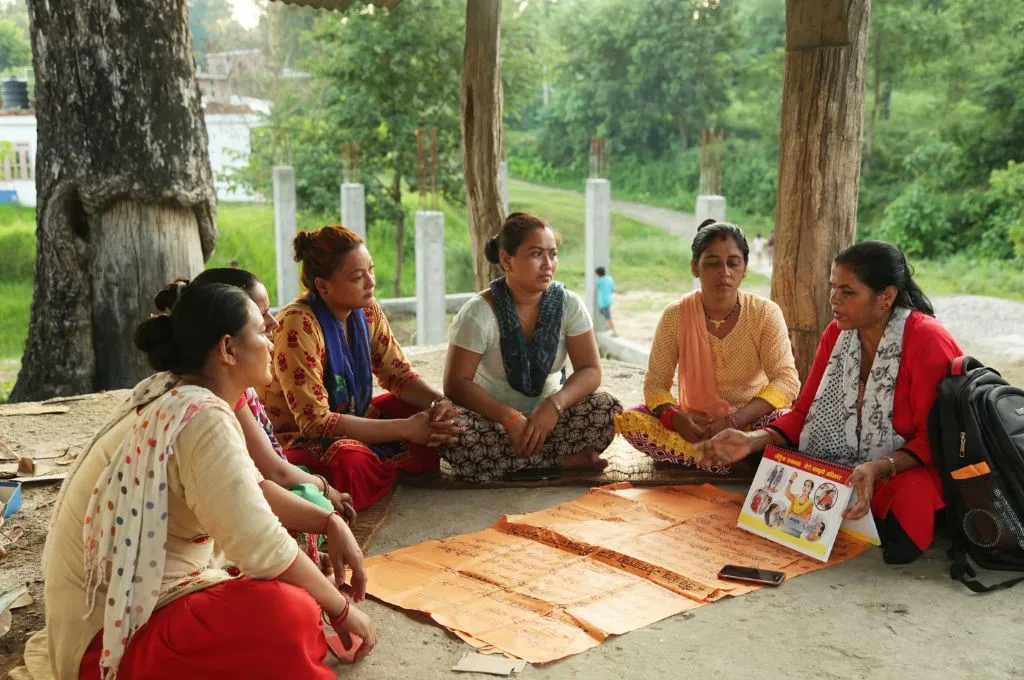
Sustained legal representation in instances of sexual and gender-based violence goes far beyond filing a case and carries specific and demanding requirements.
In most of the SGBV cases we have worked on, a lawyer or paralegal worker becomes the first responder when a survivor approaches the system in crisis. This happens partly because other systems don’t exist, and partly because the patriarchal notions embedded in existing systems result in turning away women who come forward. We have spent hours at police stations trying to convince the officers to file a criminal case, only to have domestic violence and cruelty dismissed as a ghar ka maamla, a mere family matter to be settled within the home.
Then comes the litigation itself. In many of our cases, survivors needed parallel proceedings in different courts for a protection order, maintenance, custody, and a criminal complaint—each with its own timeline and hearings. This fragmentation occurs because courts hold exclusive subject-matter jurisdiction. No single bench can rule on civil protections, family law matters, and criminal prosecution all at once. For a survivor, this means an already traumatic ordeal turns into a punishing one, forcing her to recount and relitigate the same facts repeatedly. When the other party ignores a court order, which happens often, the survivor needs multiple fresh applications to enforce it.
Throughout this process, lawyers also act as case managers. They follow up with police on compliance, assist the public prosecutor, track whether the protection officer has filed required reports, and keep the survivor informed. In this way, a lawyer representing a survivor of SGBV may appear in court 20 to 25 times for a single matter while also managing the case end to end. Despite this, there has been a continued lack of support in the nonprofit sector for litigation as part of legal aid, even in organisations that are otherwise working on SGBV.

The funding gap in legal representation
Most SGBV-focused nonprofits focus on legal awareness, running sessions on women’s rights, sensitising communities about the law, and training paralegals to identify cases. This work helps women like Pooja recognise their experiences as violations that deserve remedy.
However, awareness is where much of the work stops. Few organisations follow through with sustained legal representation, often due to a lack of funding. In our experience, there are two major issues within existing funding models for legal representation:
1. Litigation doesn’t count as system change
Funding tends to follow legal awareness work rather than legal representation, largely because of how ‘systems change’ gets defined and rewarded. It is often associated with a narrow set of activities, including working with government, shaping policy, and embedding solutions inside public institutions at scale. Funders and organisations across sectors now describe their work in this vocabulary, and legal aid is no exception. This is important work, but it is only one slice of how systems shift.
This narrow framing excludes litigation, yet litigation is one of the most direct engines of systems change. Every case a lawyer takes on produces evidence of how institutions fail in practice. A pattern of police stations refusing to register FIRs becomes the basis for advocacy with senior officers. A recurring gap in protection officer appointments becomes the basis for a formal complaint to the District Legal Services Authority. A series of cases revealing the same procedural failure becomes the foundation for public interest litigation or a policy recommendation. The courtroom is where the failures of other systems become visible, documented, and actionable, which is precisely what systems change is supposed to do. Funding follows what’s legible and scalable. A single awareness session can reach 50 women in an afternoon and count as outreach, while litigation is slower, harder to measure, and tied to one survivor at a time.
2. The mismatch in funding cycles
Short-term grants and litigation run on separate timelines, and the former is not designed to match the latter. Even when funding exists for litigation work, it usually covers only a short period, with no guarantee that support will continue until the case ends. Funders tend to favour short-term output metrics, such as the number of cases filed in a year, over long-term outcomes like seeing a case through to enforcement. Domestic violence cases, where the law reads that a Magistrate “shall endeavour to dispose of every application (….) within a period of sixty days from the date of its first hearing”, routinely run much longer in our experience.
A lawyer who runs a legal aid organisation in Delhi also described the instability that short-term grants create for litigation work. Organisations end up spending significant time and energy constantly reapplying for grants or are forced to hand over ongoing cases to other lawyers and organisations.
The models that do not hold
It is important to keep in mind that civil society organisations step in to provide legal representation because the state legal aid system has failed to do so. Ensuring access to justice remains the state’s responsibility, and civil society’s efforts are best understood as a response to that gap and, hence, inevitably have certain limitations.
We have observed these limitations of three mechanisms that are broadly in use by civil society and nonprofit organisations:
1. In-house legal teams
An in-house legal team is typically a group of lawyers employed full-time and exclusively by the nonprofit. This allows close engagement with survivors, better coordination with first-response work, and stronger case strategy. But it is also the most resource-intensive model. In-house lawyers are paid far less than peers in court practice, yet handle complex, high-stakes litigation alongside counselling, drafting, supervision of paralegals, and coordination with police and courts. Low and uncertain pay also makes these roles hard to fill and harder to keep, so experienced lawyers drift towards better-paid court practice, and survivors lose the continuity an in-house team is meant to guarantee. Compounding this, nonprofits rarely secure grants that cover full-time legal salaries at a fair rate, so two or three people end up doing the work of a much larger team. The result is a widening backlog, uneven quality, and burnout, driven not by any flaw in the model itself, but by a shortage of resources.
2. External panels of pro bono lawyers
The second model relies on external panels of pro bono lawyers. While this appears cost-effective, it mirrors the problems of the state legal aid system. In our experience, some lawyers sign up mainly to list pro bono work on their CVs. There is also a prevailing mindset in the sector that pro bono work is charity, warranting only minimal effort, rather than a professional obligation owed in full. We have also met many lawyers who want to prioritise pro bono work but cannot, since their paid caseloads leave no room for it. Across all three patterns, external lawyers end up taking on few cases and prioritise paid work. This results in delayed drafts, missed hearings, and survivors left in uncertainty.
3. Fellowship and retainer models
In this model, a civil society organisation (CSO) supports a lawyer for one to three years with capacity-building training and a modest stipend. Fellowships are proposed as a way to increase representation at the Bar, bringing young lawyers into litigation and supporting their professional mobility.
However, when these models become the primary means of handling sensitive cases, such as those involving SGBV, survivors become, at best, secondary beneficiaries.
The model also fails survivors directly. A one- or two-year tenure, which is the standard duration of most fellowships, is short by Indian litigation standards. As a result, a single SGBV matter outlasts the fellowship itself. When support ends before the case, fellows move to better-paying work and survivors are left without any support or resolution.
In theory, some combination of these three models could work. In reality, all three depend on the same thing: sustained funding for representation, training, and supervision—and that funding is nowhere near what is needed.
What needs to change
Strengthening access to justice for survivors of SGBV requires prioritising legal representation as a core response to violence, not a last resort, especially when lawyers have to step in to fill the gaps in state systems. Civil society organisations working on gender justice must stop treating awareness and litigation as separate streams. Awareness-focused organisations need formal partnerships with litigation-focused ones, with clear referral pathways and shared case tracking, so that a woman who learns about her rights in a community session can exercise them. In our experience, we have seen organisations also try out a combination of the three legal representation models to ensure that cases handled by pro bono panels or retainer lawyers can be monitored or taken over by in-house lawyers. Organisations should invest in building well-funded in-house legal teams as the core of their representation work, resourced enough to hold cases over the years they take to resolve, with fellowships and external panels of pro bono lawyers supplementing that core rather than standing in for it.
This work requires funding. Donors need to treat legal representation as a mechanism that stops violence and fund it accordingly. That means building grant cycles around three to four years of court proceedings, not twelve-month project timelines. It means measuring protection orders secured, cases where violence stopped, and court orders enforced, alongside the number of awareness sessions conducted or women reached.
The woman who walks into a help desk after a legal awareness session is taking an enormous risk. She is revealing her vulnerability, defying family pressure, and betting that someone will help her navigate a system that has historically failed people like her. The least we can do is ensure she is not facing this alone.
*Name changed to maintain confidentiality.
—
Know more
- Learn more about why the quality of free legal aid in India is poor.
- Read more about how India’s domestic violence law can better deliver justice.