Sustainability and convenience walk into a tea shop in Mizoram
 Aizawl, Mizoram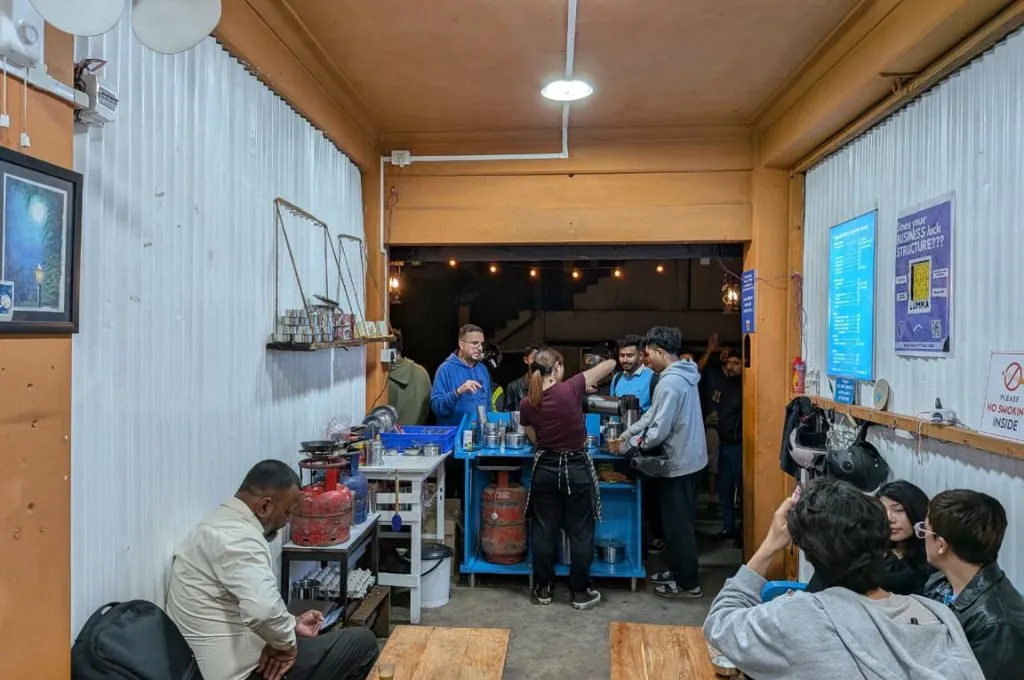
After working retail and sales jobs in Delhi for four years, and pursuing a culinary arts degree for another two years, I returned to my hometown Aizawl in December 2024. I then set up a small tea stall here called Neeli Dukaan (blue shop). It is a tiny space with just one bench for customers to sit, but it is always full of people. Not just locals, even non-locals visit my shop because I can communicate in Hindi. People from cities such as Guwahati, Shillong, Silchar, and Kolkata feel welcome here.
Neeli Dukaan’s popularity has turned it into a stable business. But I have also learned many lessons along the way. Initially, I would use disposable cutlery to serve the customers. However, I soon realised that this was leading to a lot of waste. I found some easy solutions that helped me overcome this challenge. Since plastic bottles fill up the dustbin in just one day, I got rid of them and began serving water in a glass; I also started using steel plates to serve the food. Until last year, I would use packaged carton milk. This amounted to 20–25 cartons per day, which would fill up the trash. The pile would keep growing, taking up space till the garbage truck collected the trash. Initially, I started by donating the empty cartons to Gilead Special School, which recycles them to create paper plates. But this was not easy for me to do every day.
Since December 2025, I have switched to local milk from a supplier who owns a dairy farm in Lungleng, a village just a few kilometres from Aizawl. The milk is of excellent quality. I collect a daily amount in plastic and steel milk canisters. The hassle of disposing of cartons is no longer a concern for me, which makes the switch both convenient and sustainable for my shop.
I am aware that these solutions may not work for every business. I have the space to wash and dry the cutlery that I use; many businesses don’t have that luxury. But this is what I can do to solve a problem that’s affecting me.
Looking ahead, the changes I am planning may not be grand but l believe they are practical. An idea I am considering is to have glass bottles refilled with lemon juice from a vendor instead of the plastic packets that I get now. I can then clean and reuse the bottles. We may not be able to afford them all at once but they last a long time, which in turn mitigates my expenses and the waste produced from the shop.
Chuauzikpuia Pachuau is the owner of Neeli Dukaan in Aizawl, Mizoram.
As told to Malsawmdawngliani Tara, IDR Northeast Fellow 2025–26.
—
Know more: Read about a fridge magnet artist in Mizoram, that makes artifacts representing his culture.
Do more: Connect with the author at chuauzikpuia@gmail.com to learn more about and support his work.