The war in Iran has been raging for more than a month now. While the war itself hasn’t reached Indian shores yet, its impact is being felt in the markets. Approximately 90 percent of India’s imported liquefied petroleum gas (LPG) passes through the Strait of Hormuz, so the potential ripple effects are massive. From deploying the Indian Navy for securing oil tankers to calibrated policy responses, efforts to control the crisis are underway at multiple levels. However, in the streets and inside kitchens, the fear is real.
From Iran to Tripura
Tripura has one of the highest number of PM Ujjwala Yojana (PMUY) beneficiaries in the Northeast. The reach of LPG has massively grown in recent years, in turn creating a dependence on it. Tripura is mainly served by two bottling plants:
- Bodhjungnagar (serves West Tripura, Sepahijala, Khowai, Gomati, and South Tripura)
- Silchar (serves North Tripura, Dhalai, and Unakoti districts)
The presence of an in-state bottling plant in Bodhjungnagar has provided some reserve capacity. Tripura had also heavily invested in developing piped natural gas (PNG) pipelines served by the Oil and Natural Gas Corporation Limited (ONGC) and Oil India Limited (OIL) fields within the state and in the wider region.

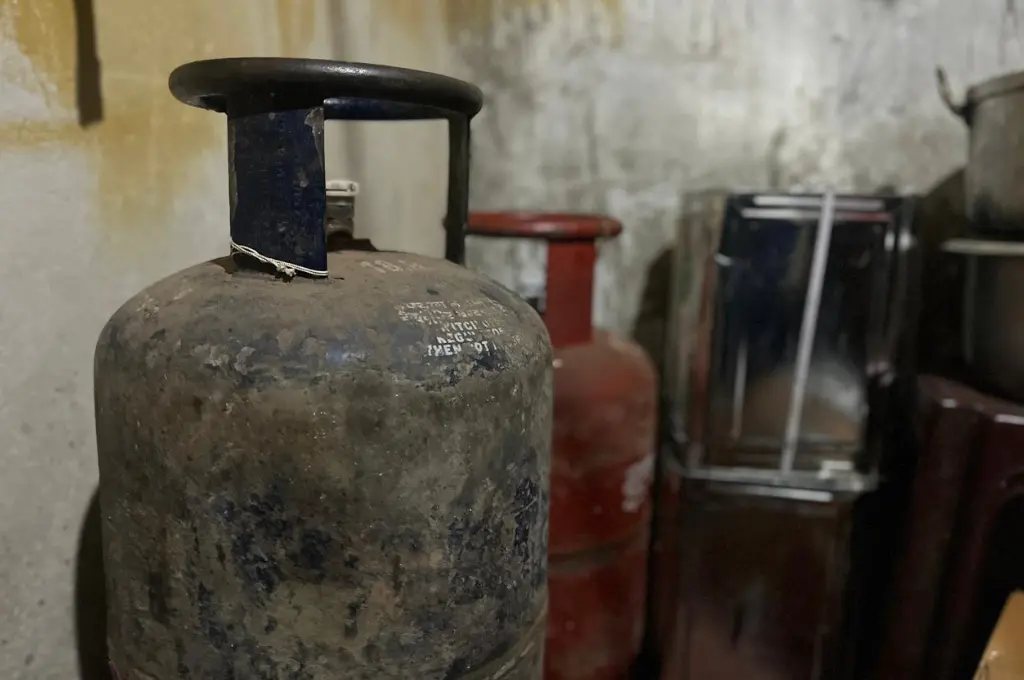
PNG connections inside Agartala’s municipality have reduced the reliance on cylinders to a large extent. However, the rest of Tripura is largely devoid of PNG connections. This dependence on cylinders coupled with the ongoing crisis has led to anxiety among citizens.
In North Tripura, long queues in front of gas agencies are now a common sight. Due to the government’s ‘prioritised supply’ strategy:
- Hospitals, educational institutions, and government canteens are receiving 100 percent of their usual monthly quota of LPG.
- Restaurants, hotels, and small industries are currently operating at 70 percent of their monthly commercial LPG quota.
Based on the existing PNG connections and prioritisation strategy, it is being claimed that the LPG supply in the state is stable. However, the reality is different.
Ajay Debnath,* a resident of Dharmanagar, tells us, “I have been standing in the queue for five hours. I waited almost all day yesterday, but couldn’t get a cylinder. I’m hoping I’ll get one today. These are uncertain times, and we can only pray for a cylinder now.”
From LPG to KYC
Conversations with the residents revealed that KYC is a bigger bottleneck than the LPG shortage. A majority of the people waiting in line had old LPG records, and hadn’t updated them under the new Aadhaar-based KYC process. While the provision of e-KYC exists, many hadn’t heard of it.

This bottleneck has led to longer queues despite the availability of cylinders. Prabal Das,* technical assistant at a gas agency in Dharmanagar, says, “We have enough cylinders for our registered supply base. There is unnecessary panic in the market; it is understandable with all the news that’s coming in, but most of the issues are technical. Sometimes the server fails, and people are stuck in the queue. We can’t do anything about it despite our best intentions.” Due to its geographical location, Dharmanagar is served by the Silchar bottling plant in Assam.
Forced to find a solution, consumers are now resorting to other measures.
From cylinder to induction
Bina Chakraborty,* another Dharmanagar resident, says, “We had bought an induction cooker during COVID-19 to make basic meals. Now with the price of gas cylinders skyrocketing, we are relying on electricity for most of our meals. If the supply stops, we don’t know what will happen.”
The panic buying of induction cooktops and electric cookers is evident in the sales numbers and aggressive ads on social media. But in villages like Dewanpasha, people are still stocking up on firewood and bamboo. Rahul Das, a resident of Dewanpasha, says, “I have an induction cooker at home. But for the last four days we have had barely three hours of electricity. Storms and winds are destroying wires and uprooting power lines everywhere; what is the use of an induction cooker then? I have already sourced firewood and kerosene for my house.” This sense of unpredictability is being felt more strongly in villages and towns further away from the main transit routes for LPG.
What about other Northeastern states?
The discomfort is palpable in states across the Northeast. In Meghalaya, due to the ongoing shortage, LPG deliveries have been significantly delayed. People in urban areas can now only book their refills after 25 days of receiving the first cylinder as opposed to 15 days in the past, and the quantity is often not sufficient to fulfil their needs. In addition, consumers are now required to complete Aadhaar-based e-KYC, adding another step to the process. This is the story across different regions, highlighting the challenge of low technological awareness among civilians and the need for improved ease-of-living deliverables.
Moinak Deb,* a resident of Shillong, says, “People are waiting for deliveries because they don’t have an option.” He adds, “Stock is available, but there is a lot of distress among people, especially because of what they are seeing in the media. While the situation is gradually improving, there is currently a rush to maintain enough stock to meet public demand.”
This has led to behaviours such as advance or repeated bookings, even when households still have gas. Some are also depending on electric heaters and induction cooktops.
“People are trying to store more than they need because they’re worried it won’t be enough. We also get calls asking for favours or early delivery. Everyone is anxious,” he adds.
What lies ahead?
These issues are transboundary and represent the interconnected nature of supply chains in the Northeast. With the ongoing war and the Australian PM ringing alarm bells, the global energy market and especially the Indian energy sector could be staring at months of lingering crisis and a greater emphasis on self-reliance.
While Tripura’s PNG push has demonstrated insulation from supply chain shocks, its limitation to urban centres has kept the larger section of the state’s citizens exposed to vulnerabilities. In addition to securing local supply chains, improving the resilience of the power grid has emerged as one of the key goals to prevent further shocks down the line. Rural and urban electrification numbers are high in the state, but there needs to be a greater focus on reducing failures due to adverse climate events and accidents.
We might not know what the future holds, but we do know that today the impact is being felt as much in the kitchens as in the stock markets. The urgency to secure energy supplies and ease-of-living deliverables cannot be ignored any more.
*Names changed to maintain confidentiality.
—
Know more
- Learn how the LPG crisis is turning into a crisis of trust for nonprofit fieldworkers.
- Read how the Iran conflict is disrupting fertiliser supply in India.
Do more
- Follow this dashboard for a real-time perspective on how the war is affecting India.