Women’s leadership in India’s development sector presents a paradox. There’s plenty of scaffolding—mentoring circles, workshops, leadership academies, networking dinners—built with genuine intention and care. Women climb it. They lean in, network, build credentials, and do the quiet work of becoming legible to power. And yet numbers and conversations are not as promising as they should be.
According to a study published in 2025, women hold 67 percent of leadership in small social sector organisations, 58 percent in mid-sized ones, and only 29 percent once an organisation becomes large enough to shape the sector.
Researchers across the landscape of women’s leadership call this a ‘leaky pipeline’, which is based on the idea that women drop off or choose not to pursue certain career trajectories. But this metaphor conceals more than it reveals. Pipes leak, and no one in particular is responsible for a puddle. But this leak has a location.

It happens midway through a woman’s career—10 to 20 years in—exactly when she is ready to translate competence into authority.
The myth of the ideal worker
Behind every institutional design is a set of assumptions about who the worker is. In 1990, sociologist Joan Acker named this figure ‘the ideal worker’: someone with total availability and with no claims on their time outside the job. This figure is a myth, but it is structurally productive, embedded in how meetings get scheduled, how leadership potential gets assessed, and which kinds of knowledge get counted as expertise.
The institutional message is clear: people who deviate from the ideal worker norm—through pregnancy, caregiving, or simply by being visibly human in ways the norm does not accommodate—bear the cost of that mismatch. The mechanics of this play out in different ways. In organisations, meetings are often scheduled too late, too early, or with little notice—times that frequently clash with caregiving responsibilities. Few organisations plan their days with enough structure, so meetings tend to pop up suddenly, and this can’t always be avoided. But the effect is that employees are expected to be fully available at all times, regardless of their responsibilities at home—and women are more likely to carry those responsibilities than men.
Leadership potential tends to be evaluated through funds raised, on-ground impact, and partners onboarded. These are important measures. But there is a quieter kind of work—often carried out by women—that goes into holding an organisation and its culture together: constant communication up and down the chain, managing egos and expectations, investing time and energy in building collaborative teams, and bringing transparency into opaque systems. This layer of organisational work rarely makes it into core metrics; at best, it’s treated as supplemental.
Technical knowledge in financial literacy, public health, health systems, climate change, or agriculture is widely recognised and valued in the sector. But competencies like collaboration, convergence, inclusivity, relationship-building, mentoring others, agility, and resilience remain largely invisible.

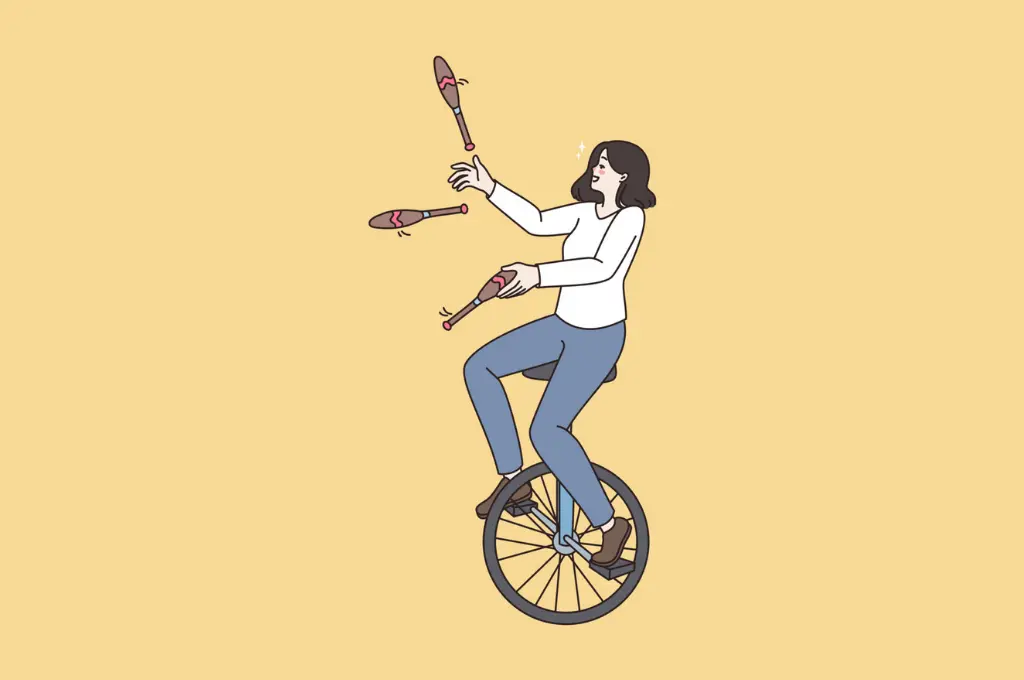
This system pays scant regard to the fact that mid-career women often navigate multiple transitions simultaneously. They navigate five to seven simultaneously, often compressed into the same five-to-six-year window, with little or no institutional support designed for compounding load.
Large social-sector organisations should be leading on caregiving support because they have the resources.
It typically begins with marriage, which for many women means they relocate to new cities and rebuild a career from scratch in unfamiliar professional networks. Close on its heels comes childbearing and the caregiving that follows, pulling women out of the workforce at precisely the stage when career momentum matters most, and the difficulty of transitioning back in is well documented. Just as children become more independent, eldercare responsibilities often arrive, overlapping rather than following in sequence. And all of this unfolds on the domestic front while the nature of the job itself starts shifting. The very skills that made a woman a strong individual contributor are no longer sufficient. She is now expected to lead people, not just deliver output: a transition that demands an entirely new skill set built on influence and people leadership rather than technical mastery alone.
We don’t need to elaborate on the gendered and disproportionate burden of care work, but WomenLift Health’s comparative study on women’s health leadership found that harmonising personal responsibilities with work was cited by 38.9 percent of Indian respondents as one of their top professional barriers. Respondents even described the pressure to marry and have children as disruptive to career timing, with women reporting they turned down roles they had long wanted because the timing collided with childbearing.
Large social-sector organisations should be leading on caregiving support because they have the resources. Instead, only approximately 43 percent offer paid caregiving leave, compared with 57 percent of small organisations, which would have far less capacity. The pattern repeats with flexible hours: 67 percent of small organisations offer them, versus just 50 percent of large ones.
Menopause, which coincides precisely with the years of peak institutional knowledge and seniority, appears to have minimal institutional visibility. While there is little research specific to the social development sector, there is enough evidence elsewhere on the cost of menopause. Menopausal symptoms—hot flashes, cognitive disruption, sleep disturbance, mood change, fatigue—are directly associated with reduced productivity, absenteeism, and in more severe cases, early exit from the workforce. The numbers are troublesome: Nearly 48 percent of Indian women experience severe menopausal symptoms, such as scanty bleeding, depression, pain during intercourse, and heavy bleeding during periods. While menopause might be having a cultural moment, India does not have a menopause at workplace policy.
What mid-career women are uniquely positioned to see
One of the biggest shifts in today’s workplace is generational. Generation Z are entering organisations with fundamentally different expectations. Recent national movements suggest that Gen Z expects greater transparency around hierarchy, flexibility over presenteeism, psychological safety over performative resilience, and leaders who are accountable to people rather than just processes.
Ironically, these are not new aspirations. Many mid-career women, including ourselves, entered the workforce with similar ideals but found little space to realise them. We imagined organisations built on collaboration, empathy and shared purpose, yet spent much of our careers adapting to leadership models that rewarded hierarchy, overwork, and conformity.
Feminist leadership asks how power itself is exercised, whose voices are heard.
While the data is unambiguous, the social dynamics of authority show up time and again for women leaders. They often describe being “clubbed down” in decision-making settings—their views overridden by junior male colleagues. Senior positions, held mostly by men, simply don’t treat women’s authority as legitimate. Being counted as a leader and being structurally positioned to lead are not the same thing, and the gap between them is precisely where mid-career women’s authority tends to be hollowed out.
However, workers’ expectations of the leadership seem to have shifted drastically over the years, with younger employees preferring leaders with the ability to build trust, value lived experience, collaborate across differences, and create shared ownership. Evidence suggests that these relational capacities are more often associated with women leaders, but they are also more accurately understood as the hallmarks of feminist leadership.
Feminist leadership goes beyond the distributional question of numbers. It asks how power itself is exercised, whose voices are heard, whose caregiving, menopause, or motherhood is treated as a planning consideration rather than a liability, and whose knowledge counts. The goal is not simply to increase representation but to redesign institutions.
This is a rare convergence. Organisations want to be more transparent, accountable, and humane, just as a generation of mid-career women arrives with the lived experience and relational skill to do exactly that. They’re not just ready to lead within existing systems; they’re positioned to reshape them. The task isn’t to promote more women into leadership. It’s to remove barriers that are stopping them from leading fully.
Organisations need to go beyond representation
The barriers facing mid-career women cannot be solved through individual resilience alone. We already know the broad levers: re-entry pathways after career breaks, transparent promotion processes, caregiving support, equitable recruitment, and accountable leadership. What’s missing isn’t knowledge, it’s specificity. And the specifics are low-hanging fruit.
Organisations can audit compensation and promotion patterns by gender. They can equalise resource allocation between male and female managers at the same level. They can build sponsorship programmes—not mentorship, sponsorship—that give mid-career women real access to strategic decision-making, high-visibility work, and influence, not just titles. Boards can hold senior management accountable for implementing these policies, not just announcing them.
Women often spend years managing complexity and building collaborative relationships—capabilities that remain invisible in systems designed to measure something else. Their knowledge of holding together career, caregiving, and household simultaneously, which rarely gets formalised into performance reviews or leadership frameworks, surfaces informally through mentorship or personal networks. Performance metrics can be redefined to recognise these as expertise in their own right.
None of this requires more research. It requires organisations to ask their own mid-career women what specifically is broken, and to act on the answer. The deeper question isn’t whether we can retain women within leadership structures as they exist. It’s whether we’re willing to let what women bring reshape those structures.
That is a different ambition than representation.
—
Know more
- Learn why the social sector needs more women leaders.
- Read why mid-career women are missing from leadership roles in India.