For years, we have been driving auto rickshaws across Chennai, earning a livelihood on roads where women behind the wheel are still an unusual sight. While auto rickshaws have long been one of the most common modes of transport on Indian roads, women are seldom a part of this workforce. In Chennai alone, more than 40 percent of all transport vehicles are autos, driven mostly by men.
Intimidation from male drivers and police officers, combined with a lack of safe infrastructure, discourages many women from joining the profession. As a result, only a small number of women like us continue to drive, navigating a system rarely designed with us in mind.
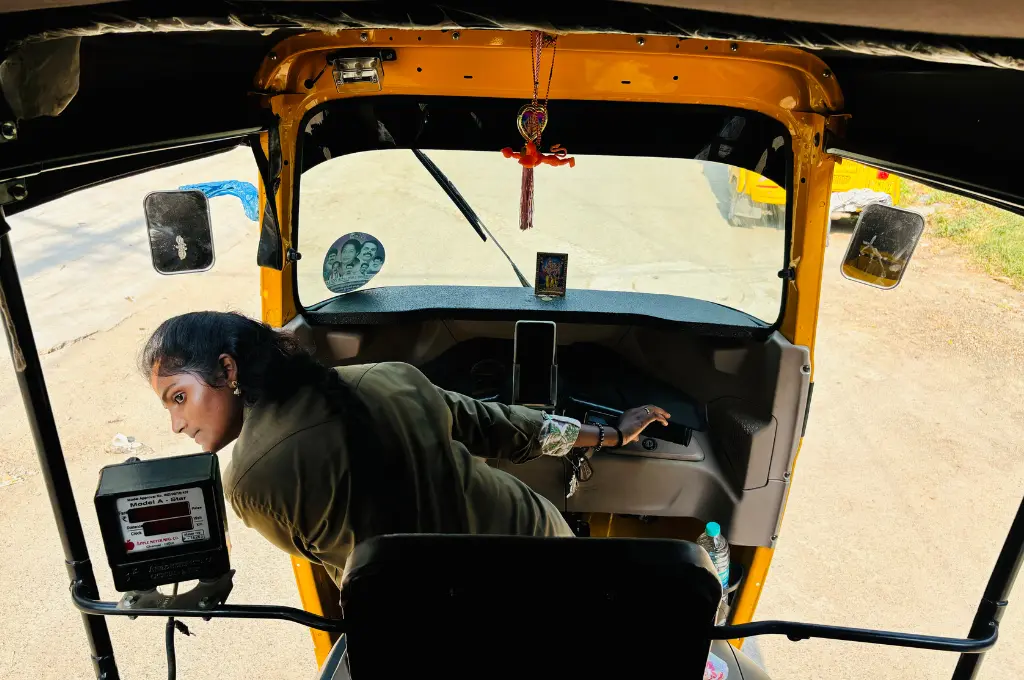
Driving isn’t the hardest part of the job. Most of us begin our day with household chores before we head out to work. We work for 8 to 10 hours a day, with breaks in between for lunch and rest. But on some days, even these small moments of rest can be difficult to find.

Auto stands are spaces where drivers usually rest between passengers. Yet, these spaces rarely feel welcoming to us. Male drivers pass comments or question our place in the profession, and sometimes the remarks turn indecent. On days when the frustration gets the better of us, we speak up. But their reaction can be unpredictable, and what begins as a passing remark can quickly escalate into a confrontation. Even the few men who treat us with respect are mocked by other drivers for doing so. At crowded hubs such as the airport and railway stations, where passenger demand is highest, this harassment often intensifies. As a result, what should be the most profitable spots for us are also the most hostile ones.
Ride-hailing apps present another challenge. At times we travel several kilometres to reach a passenger assigned through the app. This costs us money from our pockets. Additionally, these apps provide no meaningful support in a profession where accidents are frequent.
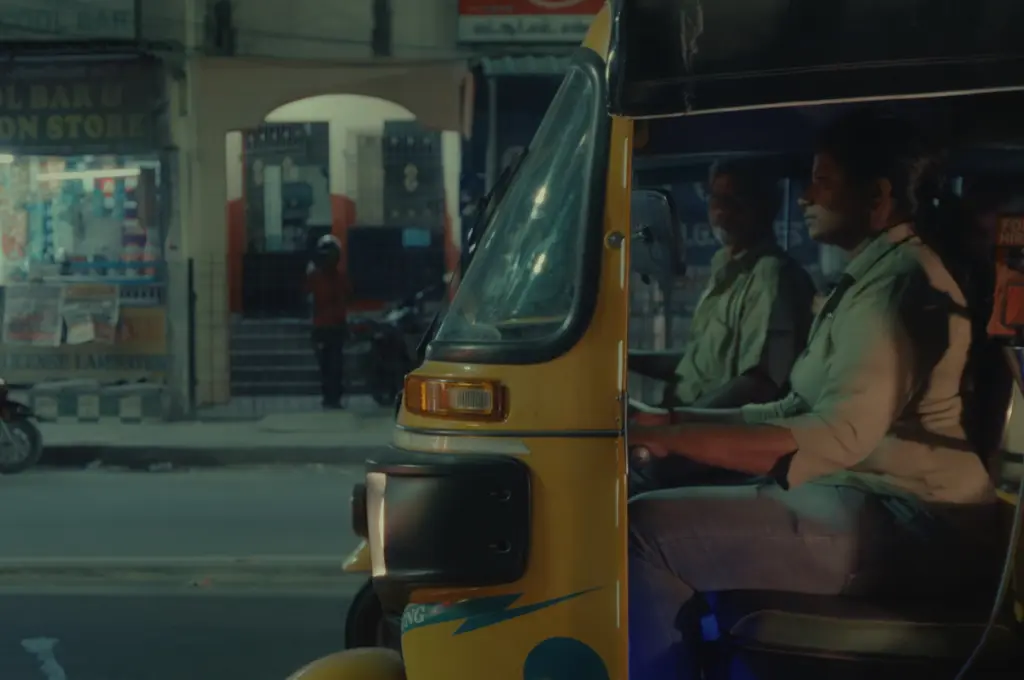
Support from police is often unfathomable as well. Running into them means trivial matters are escalated, and a solution is seldom reached. Even straightforward probes, where solutions are obvious, take hours. When traffic gets busy, traffic police officers try to shoo us away, but male drivers are not given the same treatment.
We find strength in numbers
Facing these challenges alone can be exhausting. Across India, several unions exist to support workers in our profession. But misogyny often finds a comfortable home in these spaces as well. In Tamil Nadu, for instance, one such union has tens of thousands of members, including women. Yet, women are rarely given the stage to voice their concerns. At best, they are asked to lead “women’s divisions”, effectively sidelining them from the union’s core decision-making. We were once invited to join this union but declined after hearing how begrudgingly some of its male members spoke about a fellow female auto driver.
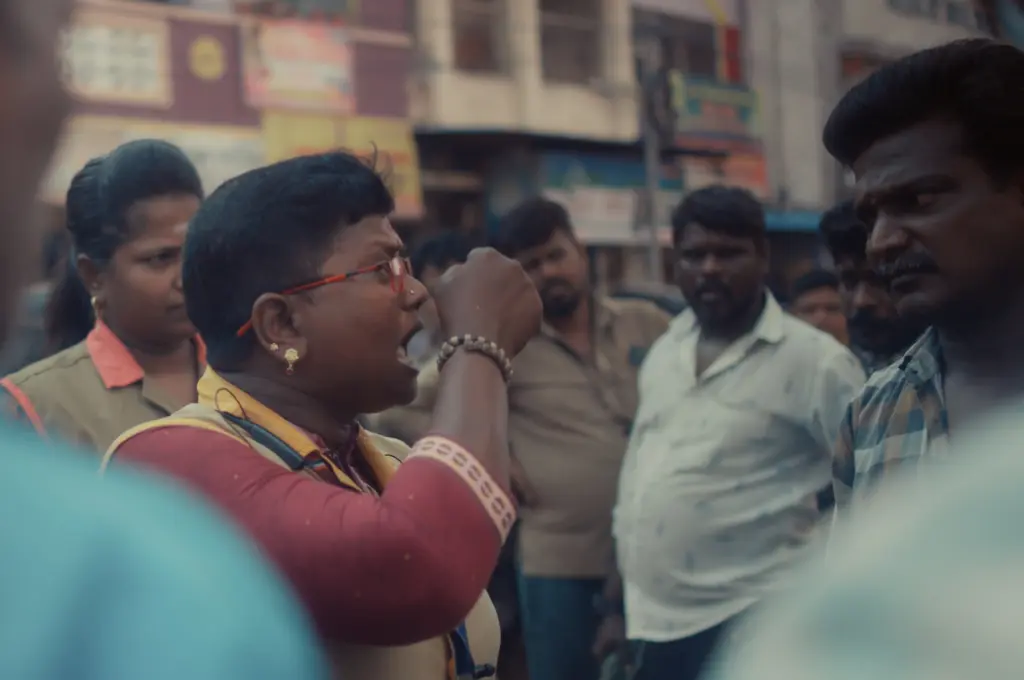
Despite collecting membership fees, the union offers little meaningful support. In the event of an accident, a driver receives a mere INR 12,500. While the union occasionally helps members deal with the police, its indifference to women’s concerns, particularly the harassment many of us face from male drivers (some of whom are fellow members), has left many women deeply disillusioned with the institution.
This disillusionment compelled us to start our own union—Veera Pengal Munnetra Sangam. The union represents all female transportation workers.
Members contribute a fee of INR 222, which helps sustain a small but vital support system. Through this, the union provides uniforms and ID cards and enrols drivers in basic life insurance schemes. It also runs a circular loan system, offering members loans ranging from INR 10,000 to INR 50,000 based on internal guidelines. In moments of crisis, including accidents or the death of a family member, the union steps in to provide financial and logistical support. We currently have 60 paying members and are actively working to grow that number, though this takes time. Many workers have had negative experiences with unions in the past and rebuilding that trust is a gradual process.
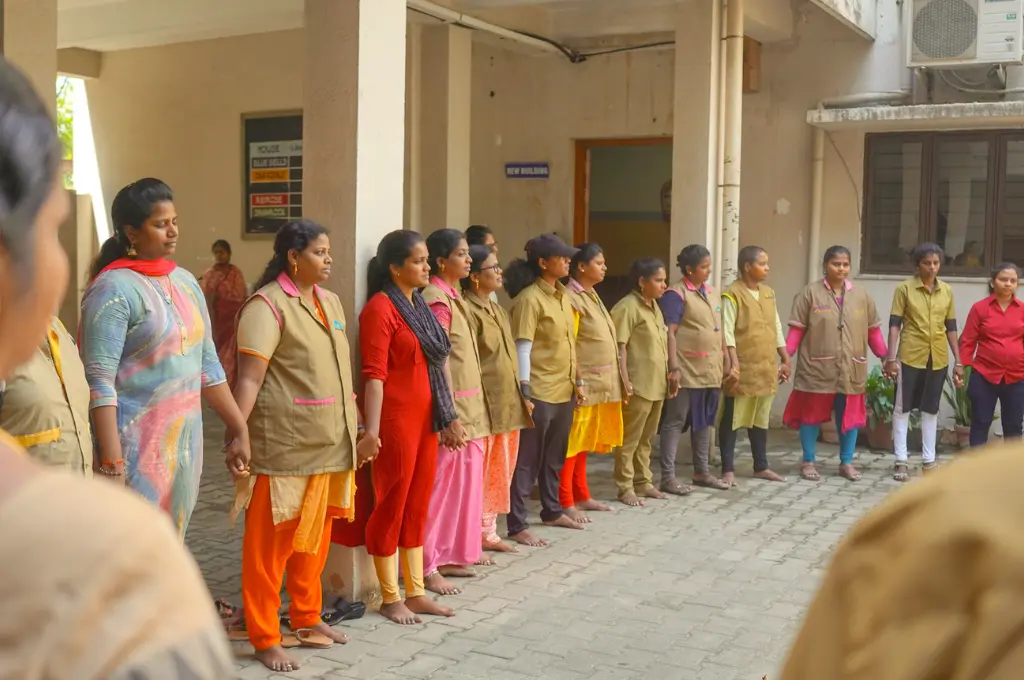
Organising ourselves allows us to better represent our concerns and demand attention from government authorities, the police, and private stakeholders in the transport sector. While challenges persist with the police, we have noted that law enforcement has become more responsive since we started the union, occasionally acting against male drivers who harass us. This shift is less a result of genuine empathy for women drivers, and more a reflection of the pressure that collective organising can create.
Systemic failures ensure women stay out of these professions
For many women, the barriers to entering this profession begin long before they take the wheel. Most are already balancing informal jobs such as domestic labour, running small shops, or selling fruits and vegetables. Giving up these livelihoods to train as an auto driver comes with a steep opportunity cost. For someone who depends on daily earnings, even a few months without income can make the transition impossible.
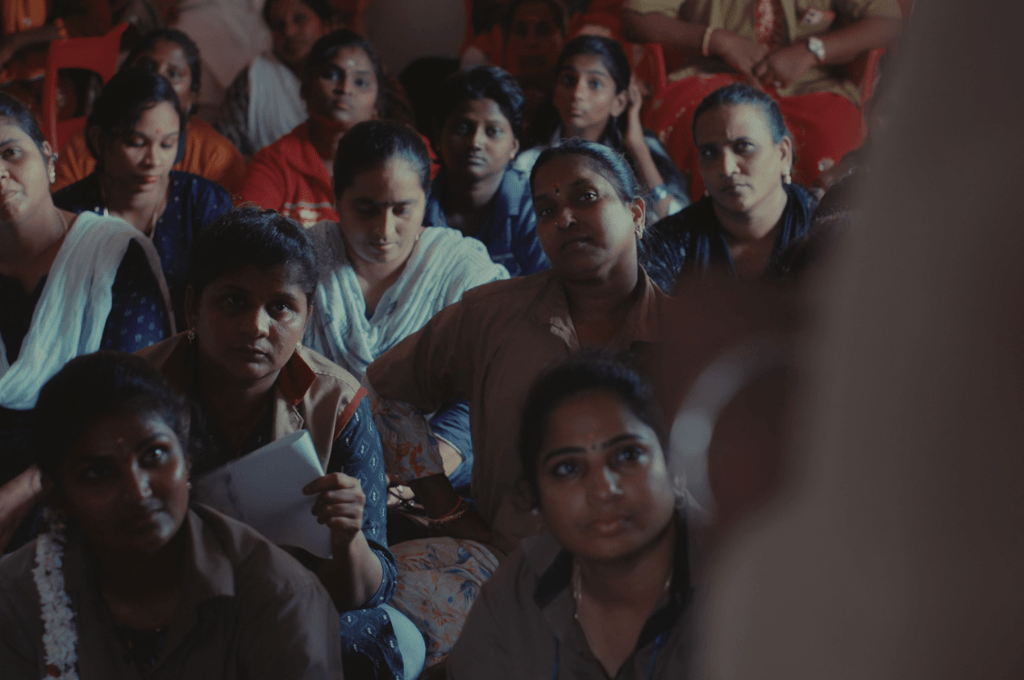
A handful of Chennai nonprofits train women to become auto drivers and assist with licensing, but the timelines are often skewed. While the actual driving training takes two to three weeks, these programmes can stretch from three to six months. In comparison, the government’s licensing process typically takes 45 to 60 days. For many women, the long waiting period means months without stable income, something few can afford. Shortening this process or offering stipends during training could make the profession far more accessible.
But even after obtaining a license, another challenge emerges: procuring the vehicle itself. Subsidy schemes by the Tamil Nadu government have helped some women purchase autos, but accessing loans remains difficult. Many women saw their credit scores deteriorate during COVID-19, making it harder to secure financing. Without affordable loans or subsidies, the cost of buying an auto remains a major barrier.
Once women begin driving, the challenges persist. Harassment, lack of institutional support, and everyday struggles on the road continue to shape their experiences. An immediate need is dedicated auto stands or pick-up points for women at busy locations such as metro stations, railway stations, and airports. Better lighting, functioning CCTV systems, and safer public spaces would also make a significant difference.
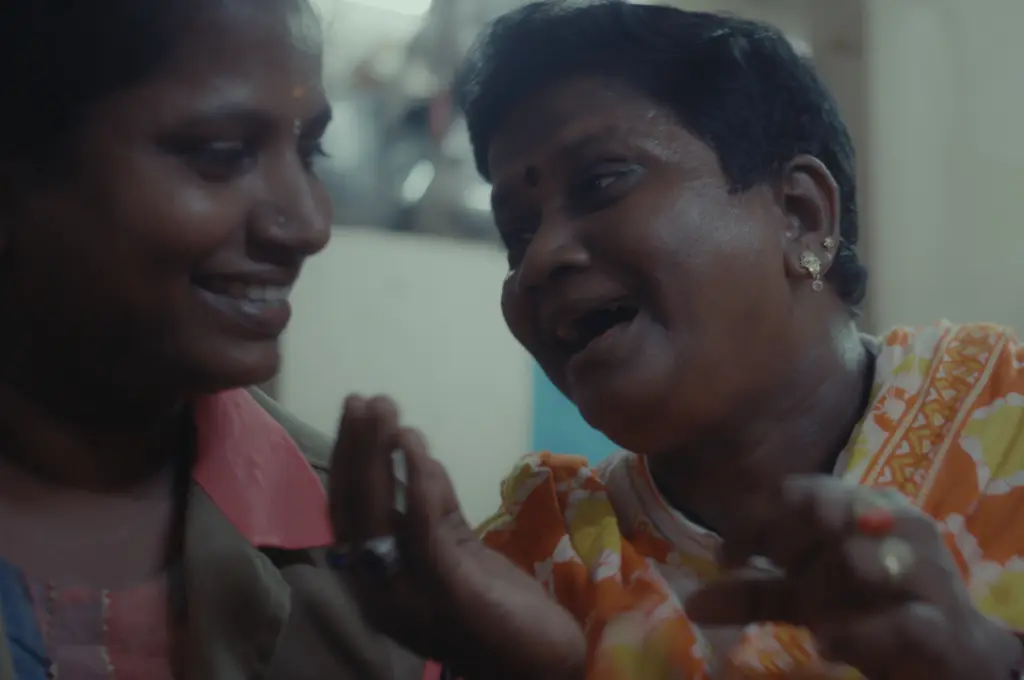
Until these institutional barriers are sufficiently addressed, women auto drivers in Chennai and across the country will continue to struggle. However, we believe the future of this profession can look different. Our goal is to bring at least 3,000 women into the transport sector in Chennai by 2030, and possibly as many as 10,000 by 2035. But for that to happen, cities must become more supportive of women drivers, through both policy changes and shifts in social attitudes.
—
Know more
- Watch the short film Auto Queens featuring Mohana and Leela.
- Learn more about women auto drivers in Bangalore.
- Read this report on the lives and experiences of women auto drivers.