Twenty-five messages, five groups, and zero actual coordination. 

2 min read

Professional journeys in the social sector begin with a laundry list of WhatsApp group invitations. Here’s what that looks like, from the perspective of someone who routinely wakes up to 25+ group notifications every morning.

While access to a majority of these groups is granted instantly, there is always one unofficial group without the project head where you must earn inclusion by demonstrating the ability to crack cryptic e-mails, provide emotional support, and share unofficial updates. 

1. Project collaborators

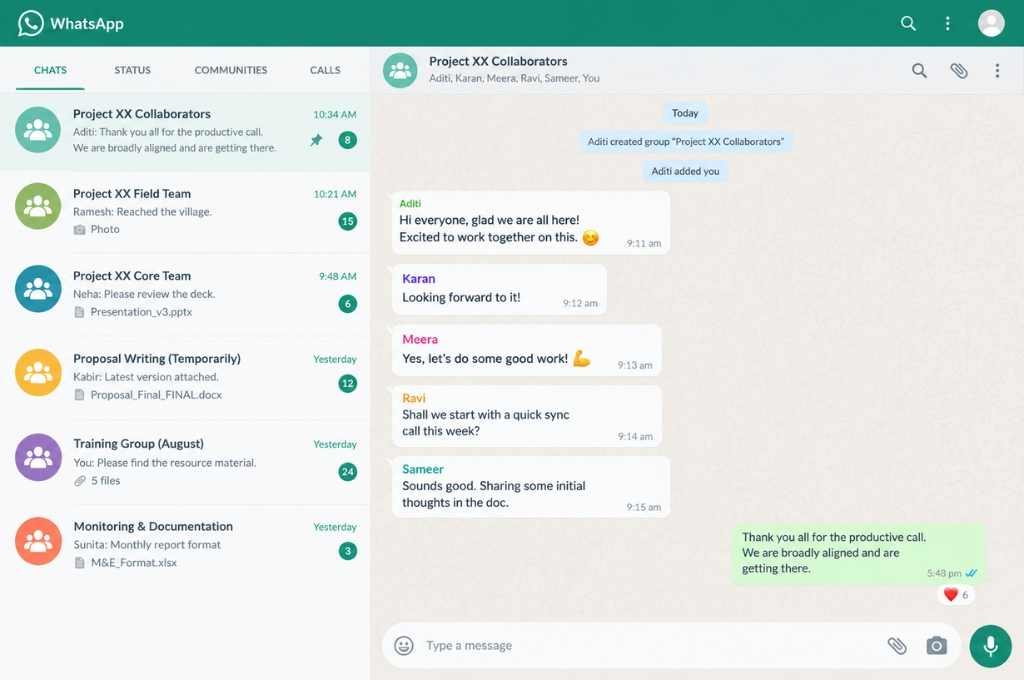
After every intense Zoom call filled with disagreements, competing perspectives, and ineffectiveness, the group eventually receives the most predictable message. 
What is IDR Answers Page Banner
A WhatsApp Web screenshot of a group chat labelled "Project XX Collaborators"--nonprofit humour

2. Project field team

The purpose of this group is better coordination. What the group actually does is serve as your daily visual logbook. 
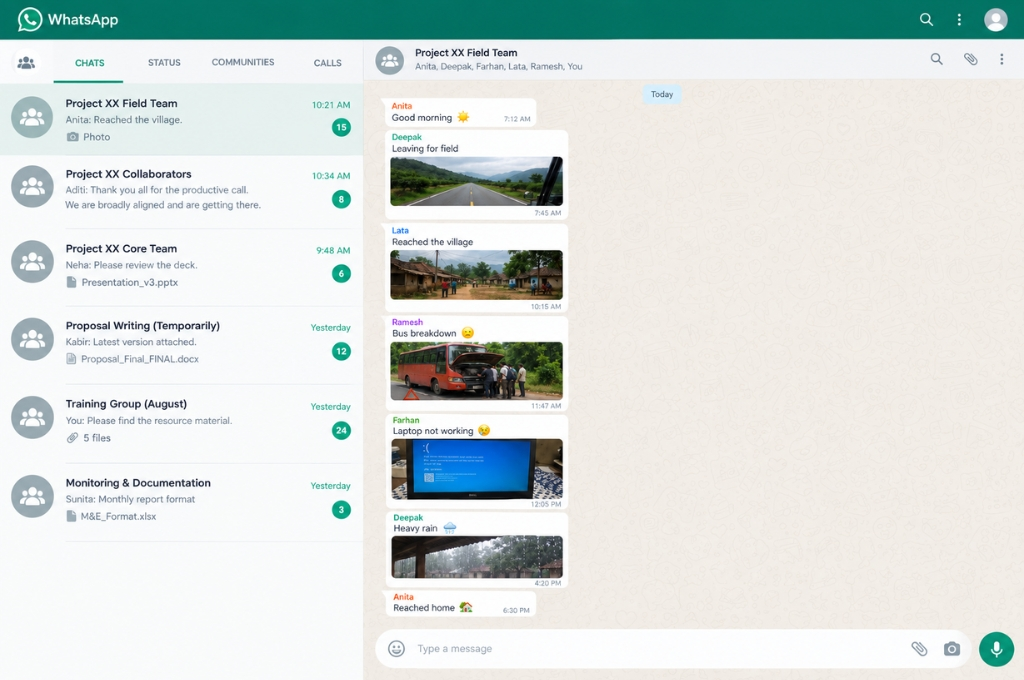
A WhatsApp Web screenshot of a group chat labelled "Project XX Field Team"--nonprofit humour

3. Proposal writing (temporarily)

Spoiler alert: It’s not temporary. How can it be when team members are always navigating impossible deadlines, new submission software, and ideas to make a pitch ‘unique’?
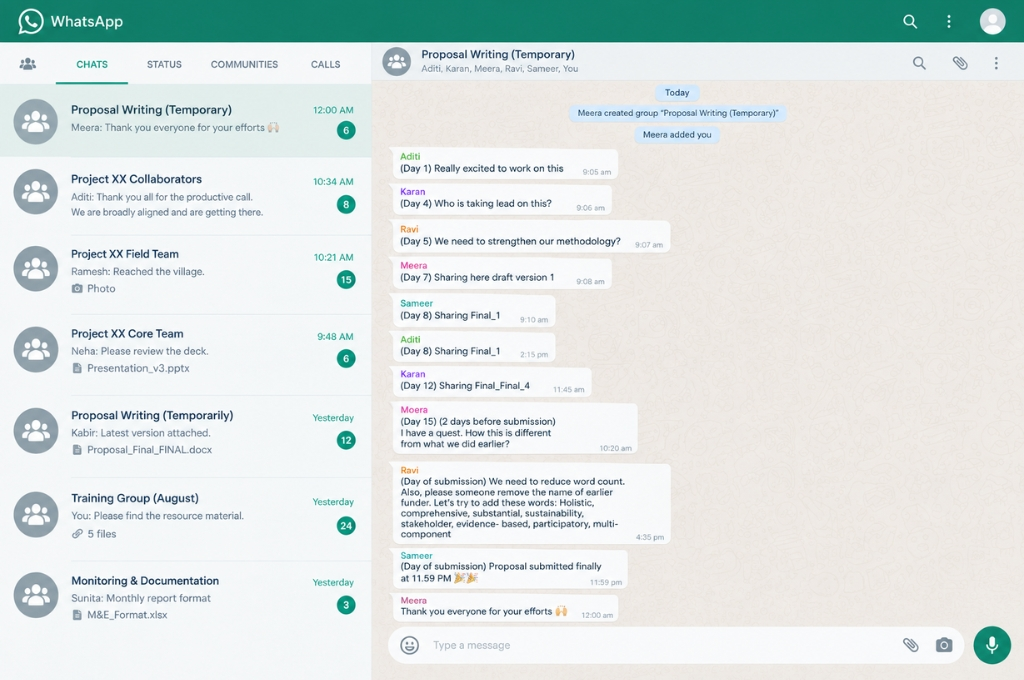
A WhatsApp Web screenshot of a group chat labelled "Proposal Writing (Temporary)"--nonprofit humour

4. Training group (xx month)

Created to reduce the headache of the organising team, this group is actually the source of the headache.
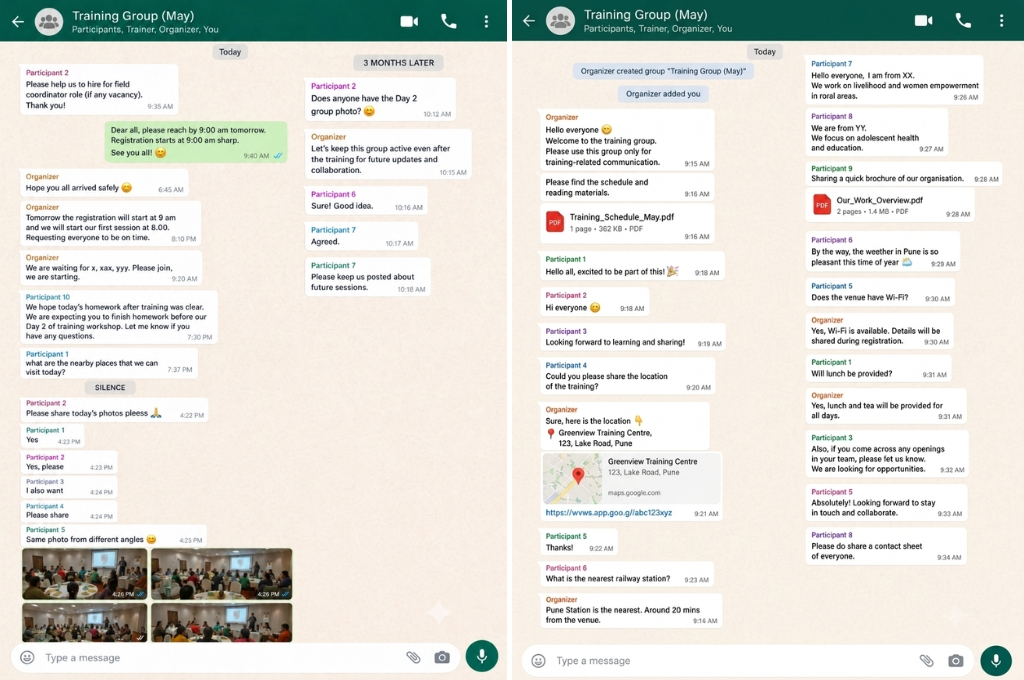
A WhatsApp Web screenshot of a group chat labelled "Training Group (May)"--nonprofit humour

5. Project group WITHOUT project incharge

This is the most active and important group, where live forecasting of conversations happens.      
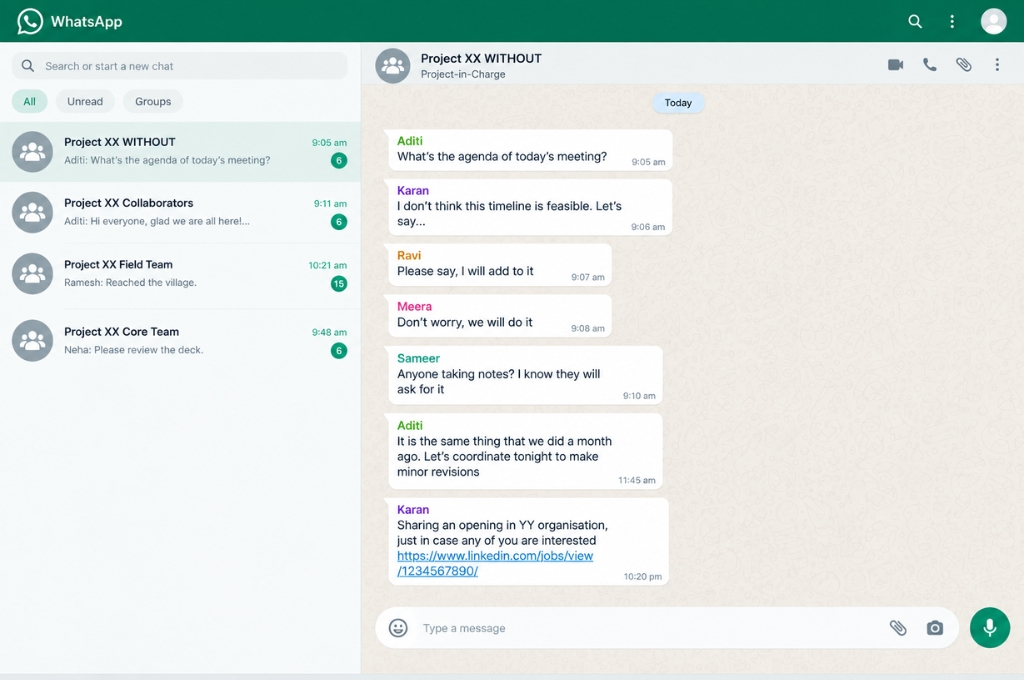
A WhatsApp Web screenshot of a group chat labelled "Project XX Without"--nonprofit humour

donate banner
We want IDR to be as much yours as it is ours. Tell us what you want to read.
ABOUT THE AUTHORS
Sanjida Arora-Image
Sanjida Arora

Sanjida Arora is a public health researcher with over a decade of experience working on women’s health and gender-based violence. Her research focuses on strengthening health-system responses to violence against women, implementation research, provider capacity, and evidence-informed interventions. She has collaborated with WHO and contributed to research examining healthcare providers’ knowledge, attitudes, and practices, as well as health facility readiness to respond to violence against women and integrate survivor-centred care into routine health services.

COMMENTS
READ NEXT