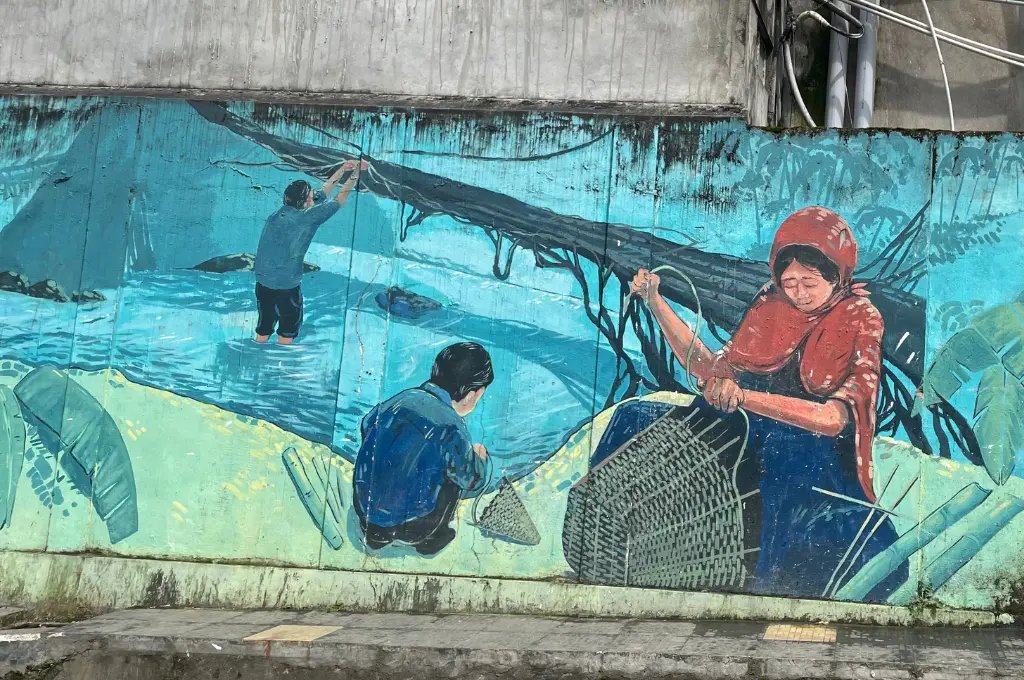
Mumbai experienced a massive flood in 2005. Our tent settlement was near a bridge, and the floods surrounded our settlement in debris. My father was stranded for nearly three days, developing multiple infections, and eventually passing away. We belong to Ghisadi Gadia Lohar community, a denotified tribe that makes tools and weapons from iron. My father was the primary craftsman while we only assisted by working the bellows or collecting the coal. When he died, my mother was left with five daughters, the youngest four years old, with a livelihood none of us knew how to carry forward.
In the months that followed, the ironsmith families around us folded our work into theirs. They would come, shape the iron, and hand the rest back to us to finish. There was no formal arrangement. For about a year and a half, we kept working this way and avoided severe hardship.
That experience is what I now understand as collective care: A practice of looking out for each other that communities, particularly those pushed outside mainstream support, have built and maintained over generations. It is not a programme or a policy. Most organisations, including many that work directly with such communities, do not draw from this when thinking about how to care for their own staff.

As care gains prominence in development discourse, the communities that built and practiced it across generations are being pushed to the margins of such conversations. Care is increasingly discussed in terms of insurance packages, wellness programmes, and self-care practices, all of which centre the individual and assume a kind of access that most grassroots communities have never had. The knowledge that these communities carry about how to look after each other collectively, rarely makes it into those conversations.
I founded Anubhuti Trust in 2016. The majority of our team comes from Adivasi, Dalit, nomadic, and migrant communities. Many are single women, some are divorced, some took a gap of ten to 12 years before entering the workforce. When I sat with this reality, it became clear that the standard organisational care packages like insurance, sick leave, and an annual health check-up was built around assumptions that did not hold for most of our people.
When care becomes culture
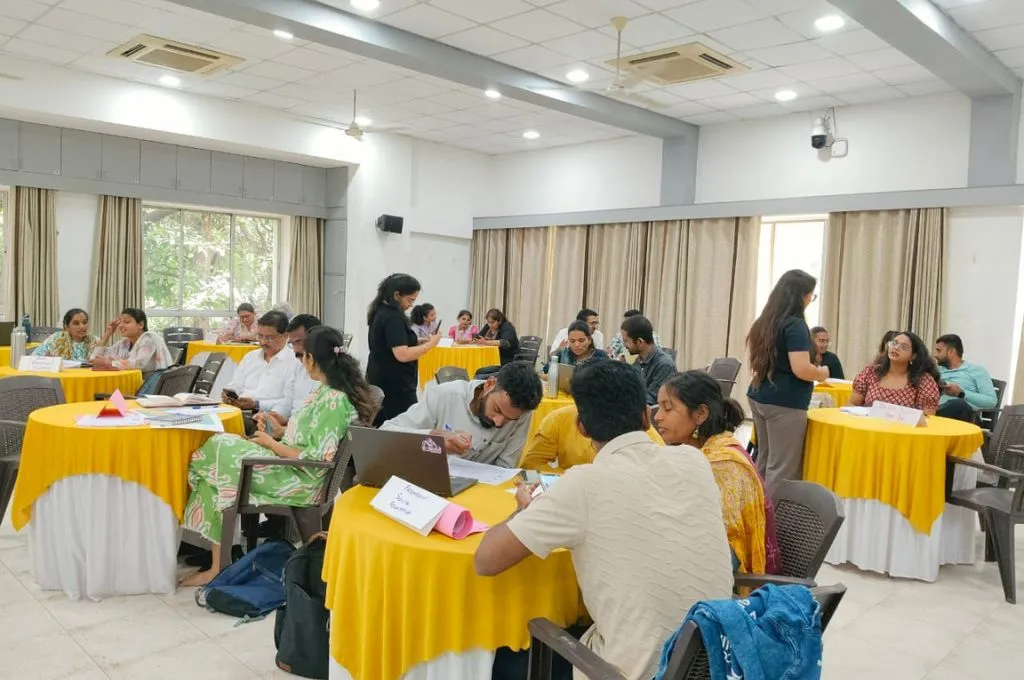
Building a culture of collective care starts with a clear commitment to human rights, feminism, and the values of the Indian constitution. When a team comes from nomadic, Adivasi, and rural backgrounds shaped by struggle, it is unrealistic to assume that everyone will operate at the same level of social, mental, or emotional well-being. Acknowledging the conditions people come from is what makes motivation and consistency possible.
When we shifted team meetings to Hindi because a colleague from a tribal community in Jharkhand was more comfortable in it, we were recognising that the pace and manner in which someone speaks is not a measure of their capability. When candidates report that a simple “Jai Bhim” greeting during an interview influenced their decision to join, it underscores the extent to which their beliefs have historically been excluded from workplace environments. When team members eat together without having to think about what is in each other’s tiffins, it matters in a context where food still carries the weight of caste which often sweeps into office spaces.
Organisations that work with the most marginalised communities can still carry, within their own functioning, the same biases of caste, gender, class, and ableism that they seek to address in the world outside. The gaps in this kind of thinking are not always visible until someone points them out.

Care culture requires constant examination of where the organisation is going wrong, because in a hierarchical society, bias will find its way in.
For example, after observing an activity in another organisation where children brought canvas shoes from home to decorate, a team member proposed replicating it in our community. The question that surfaced was which children in our communities actually have canvas shoes at home, and which ones would have to go looking for them. That one conversation opened into a longer discussion about how assumptions travel unexamined into planning, and how leadership that comes from a more privileged location can miss this unintentionally. Care culture requires constant examination of where the organisation is going wrong, because in a hierarchical society, bias will find its way in.
What it takes to unlearn corporate care
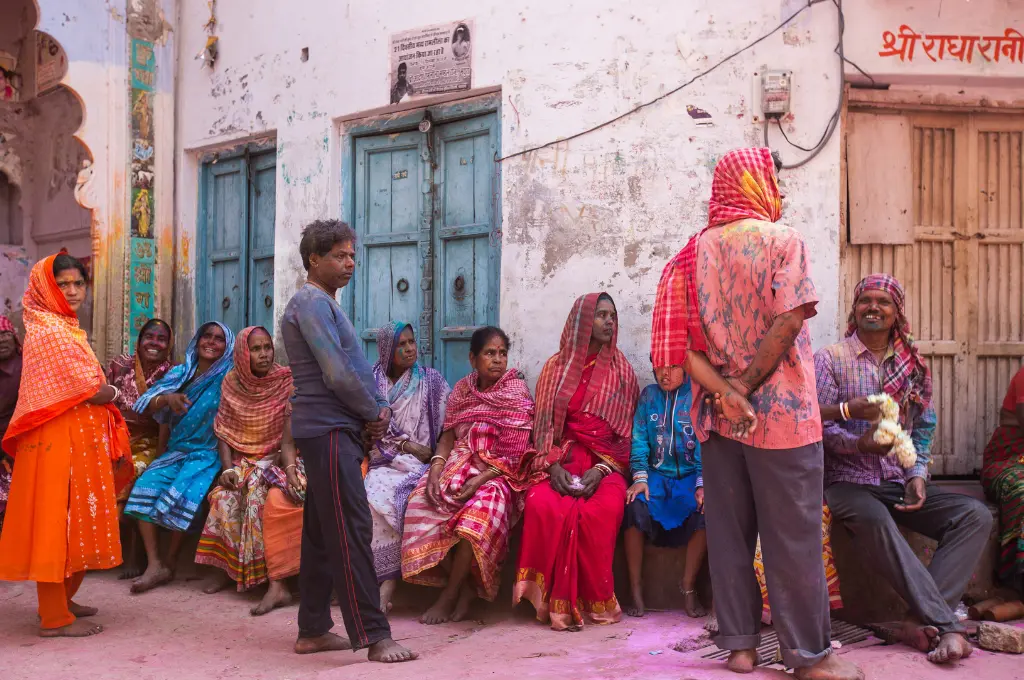
I asked 25 colleagues to think of moments where they had genuinely felt cared for by the organisation in practice. What came back was specific, grounded, and in many cases, things I had not expected to hear.
1. Lived experience as criteria for hiring
A key practice that shapes our work, though absent from formal policy, is how we approach hiring. Lived experience of caste, migration, gender, and identity are treated as a core skill because this knowledge is central, not incidental. It has often been overlooked or displaced by more visible markers such as educational qualification, prior experience of working with other nonprofits, proficiency in English, computer skills, and more. Several team members have said hearing this shift in interviews, helped them see their own histories as strengths rather than liabilities.
2. Moving beyond health insurance
While most organisations provide health insurance, it only activates during hospitalisation ,which happen only once in three to five years. Our team members pointed out that they fall sick far more regularly than that, and everyday expenses such as a visit to a local doctor and medicines from a nearby clinic are not covered under insurance at all. Many of them had been quietly skipping these expenses because spending even a INR 100 or INR 400 on themselves felt hard to justify. Gendered roles had made this so habitual that they did not recognise they were doing it. To solve for this, we add a fixed monthly amount directly to their salary, with no conditions attached.
Another practice the team brought up was our revolving loan. We had seen that by the 24th or 25th of the month, salaries were already exhausted for many team members, and the alternative was borrowing from informal lenders at ten percent interest. Several of our people were already caught in that cycle when we began this. Nonprofit organisations cannot legally give loans, so we mobilised a small corpus from individual donors, around INR 2–3 lakh, that keeps circulating within the organisation. If someone needs INR 10,000, they can borrow it and return it over a year on their own terms.
3. Maximum reservation policy
Maximum representation—not just reservation policy—ensures people from diverse grassroots contexts are meaningfully present within the organisation.
For many, particularly those from Scheduled Caste, Nomadic Tribe, and Scheduled Tribe communities, this was a striking departure from their prior experiences with institutions and nonprofits, where the language and practice of reservation was often mentioned in a negative light. It is important to not frame representation and reservation as acts of charity but as rights, grounded in a conscious policy choice and a larger framework of social justice.
4. Creating accessible spaces
Members also reflected on how when the organisation recognises and responds to what they described as ‘social disability’—the cumulative exhaustion that comes from navigating structural barriers linked to caste, class, gender, and life circumstances—it reduces daily strain, offers a sense of relief, and enables people to engage with their work with greater ease and focus. In this context, even seemingly small measures such as flexibility in travel policies, working hours, or increased budgets for local transport play a significant role.
Building Dalit, Adivasi, and Nomadic leadership requires engaging with the material realities of people’s lives. Many team members are single parents, have grown up without familial support, or have migrated away from their homes to assert independence. These circumstances shape their access to opportunity and everyday well-being.
For instance, many team members were unable to bring home-cooked meals and were relying heavily on inexpensive, and often unhealthy, food options. So we created a shared kitchen space for them.
5. Allowing failure, building trust
Several team members reflected on how conventional hiring practices tend to privilege a younger workforce, equating youth with productivity. This expectation often overlooks the realities of women who have had to set aside their aspirations for years due to structural and personal constraints. When they re-enter the workforce, they are frequently asked to compromise on salary, role, and leadership opportunities because they are seen as lacking ‘experience’.
The team members described that it was essential for them to have trust from the organisation that they can do the job because their confidence in themselves is low. This trust needs to be accompanied by flexibility—timelines of six months, eight months, or even a year to settle into roles—without the pressure of immediate performance and making space for experimentation, failure, and learning.
When individuals begin to internalise failure as a personal inadequacy, it is not just an individual issue but also reflects a gap in the organisation’s culture of care.
One member, for example, spoke about prolonged anxiety that had even manifested physically. We responded to their pace, offering a part-time role after a probation period, rather than insisting on a full-time commitment, recognising that not everyone is immediately able to take on conventional roles. We maintain nearly 40 percent flexibility in how we offer and structure roles.
6. Avoiding isolation in the name of structure
Communication is a critical aspect of organisational culture. Increasingly, people are becoming isolated in the name of professional and digital communication. But these formats do not always create space for individuals to fully show up or express themselves.
While digital communication remains necessary for day-to-day functioning, we consciously complement it with a strong practice of one-on-one conversations. These are not rigid or transactional check-ins, but open-ended spaces where colleagues can speak about work, family, or personal experience.
Such conversations are essential to understanding the context behind a person’s behaviour. Knowing someone’s circumstances makes it possible to respond with care and offer appropriate support, rather than defaulting to judgement or labelling.
Making a case for care to funders
It’s not easy to make a case to funders for such forms of care. They operate with fixed definitions—of welfare, of roles, of qualifications.
In those spaces, we have to push back. When we say that experience itself is a skill set, this is often dismissed. But some funders pause and engage, asking why experiences of caste, migration, or exclusion are not counted as knowledge.
We ask funders to move beyond trust-based funding towards justice-based funding. Who are you funding? Who has been historically harmed? How have these communities contributed to society? The communities funded the least are often the ones who have contributed the most. For us, this is about moving towards justice-based funding—recognising that there is a larger debt owed to communities that have long contributed without recognition.
If a child from a particular caste has been made to sit on the last bench all their life, how will they suddenly compete equally?
Not all funders are comfortable with this framing. Some question why we bring justice into areas like mental health or careers. But we remain firm in our language, calling it career justice because how can career development happen without justice? If a child from a particular caste has been made to sit on the last bench all their life, how will they suddenly compete equally? Without addressing justice, that child will carry self-doubt, self-guilt, even self-criminalisation.
Explaining this to funders is a constant challenge because this is not the mainstream model. We ask funders to see groups like ours as distinct entities whose definitions of ability, growth, and sustainability cannot be measured by business standards. For us, ability includes lived experience and the impact of struggle, not just speed or technical skill. Collective care in this sense needs space, not large funding. This requires acknowledgement of people’s pace, failures and experimentation, and support grassroots leadership. Some funders understand this, but many do not. This gap slows our fundraising and growth and leaves ideological work without support.
For organisations, making care a practice requires intention, and the conviction that care is not a favour extended to employees by a generous leadership, but something people have the right to expect from the institutions they give their work to.
—
Know more
- Read about how productivity-driven work culture harms well-being and why it needs to change.
- Read about seven actionable steps organisations can take to build a culture of workplace wellbeing.