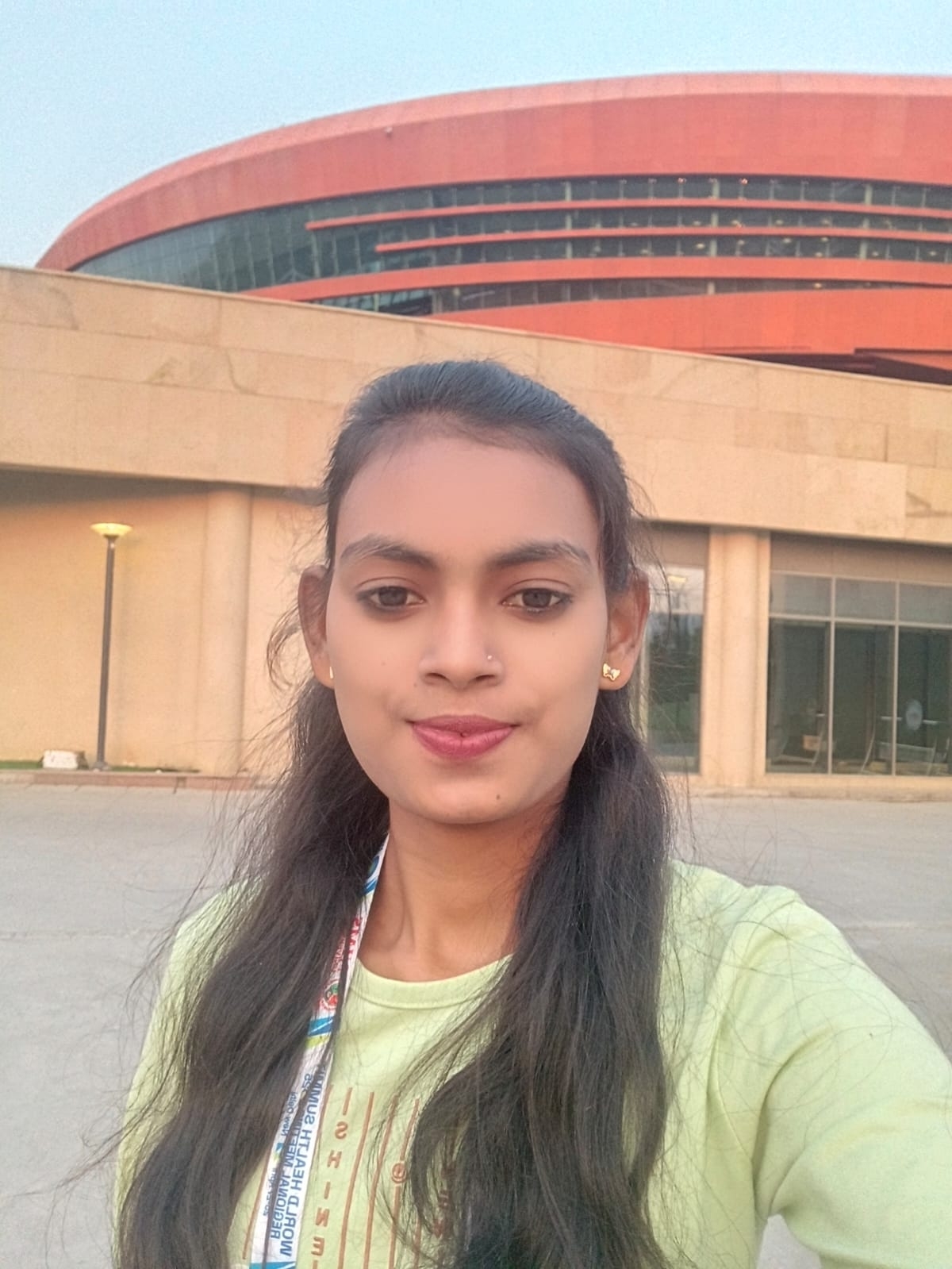
I came to know about work in the social sector when I was 14 years old. At first, I became familiar with it through a girls’ empowerment programme conducted by Karnataka Health Promotion Trust (KHPT), a nonprofit that works on health and well-being. Their community organiser visited our school in Hanumasagar village in Koppal district, Karnataka, to conduct life skills education sessions. I was in standard 8 then and attended the programme for two years. Upon completing standard 10, my family—my parents and two younger brothers—asked me to drop out of school, questioning the value of continuing my education. But the girls’ empowerment programme had strengthened my resolve to study further, so I refused.
At the time, my mother was the sole earning member of the family. I realised that if I wanted to continue my education, I would have to earn as well. In 2018, KHPT provided me an opportunity to join one of their projects as a nutrition volunteer. In this role, I collected community-level data, distributed nutrition packets, and conducted some awareness sessions. For each day I volunteered, I earned INR 100, which helped support my education. Later, after completing my BA in 2021, I joined KHPT as a community organiser, where I began conducting life skills education for adolescent girls. I was handling four to five villages in one panchayat. From 2023 onwards, I moved to Raichur to work as a field coordinator, handling three to four panchayats.
In each of these roles, my work as well as my schedule were different. Another significant shift in my day came with my life before and after marriage.

The day begins: Before and after marriage
Until 2023, I lived with my parents in Koppal, and my day started at four in the morning. I would start by finishing the household chores and cooking for my family. I simultaneously had three responsibilities to manage: my college, work with KHPT, and a vegetable shop I had set up for additional income. I had only the second Saturday off and one fixed weekly holiday from work, so I attended college on those days. I would spend the rest of the day doing fieldwork with KHPT. Whenever I got time in the mornings or evenings, I would sell vegetables.
I had a small store where I sat and sold vegetables until 10 am. By then, I had to report to work. From six to eight in the evening, I would sell vegetables again. I returned home at around 9 pm, helped my mother prepare dinner, and we would eat together before going to sleep. That was what a typical day looked like then.
Gradually, my family began to see that my work and education were contributing to the household.
I kept volunteering to collectivise girls in the community up until I turned 18, because I believed that if other girls saw me stepping out and working, they too might feel encouraged to do the same. Around that time, a permanent staff position for a community organiser opened up at KHPT, and I applied for it. I worked in that position for two years.
Gradually, my family began to see that my work and education were contributing to the household. They started supporting my decision to continue both. I also used my earnings to support my brothers’ education. I made sure that one of my brothers completed his vocational training from the Industrial Training Institute (ITI). The other brother was not interested in studying, so I helped him start a small vegetable business so that he could earn a living.
Eventually, the question of my marriage came up. I knew that after marriage, girls move to their in-laws’ homes and take on domestic and care work, and I was prepared for that. But I was clear that I wanted to continue working, stand on my own feet, and eventually start my own business. I knew I could not be with a partner who did not support these dreams.

For five years, I thought deeply about marriage and the kind of life I wanted. My mother wanted me to marry early, but the person suggested by my family didn’t align with my vision. When I chose the person I wanted to be with, it came with many challenges because it was an inter-caste marriage, and my parents were completely against it.
The issue escalated to the point that it reached the police station. Both my husband and I were called there, and I was threatened. But I drew strength from my experience in the Sphoorthi girls empowerment programme conducted by KHPT. Through the programme, we had gone on exposure visits, including one to a police station. We were taught about the law, our rights, and about how to represent ourselves. Because of that training, I knew how to speak to the police, what to say, and how to stand my ground.
My family had planned to give dowry and gold for my wedding, but I was clear that I would not take even one rupee to my in-laws’ house. Today, my partner and I are building our life from scratch in a rented home, buying everything with our own money, step by step.
Now I wake up at 7 am. My husband and I start our mornings together, sharing the household chores.
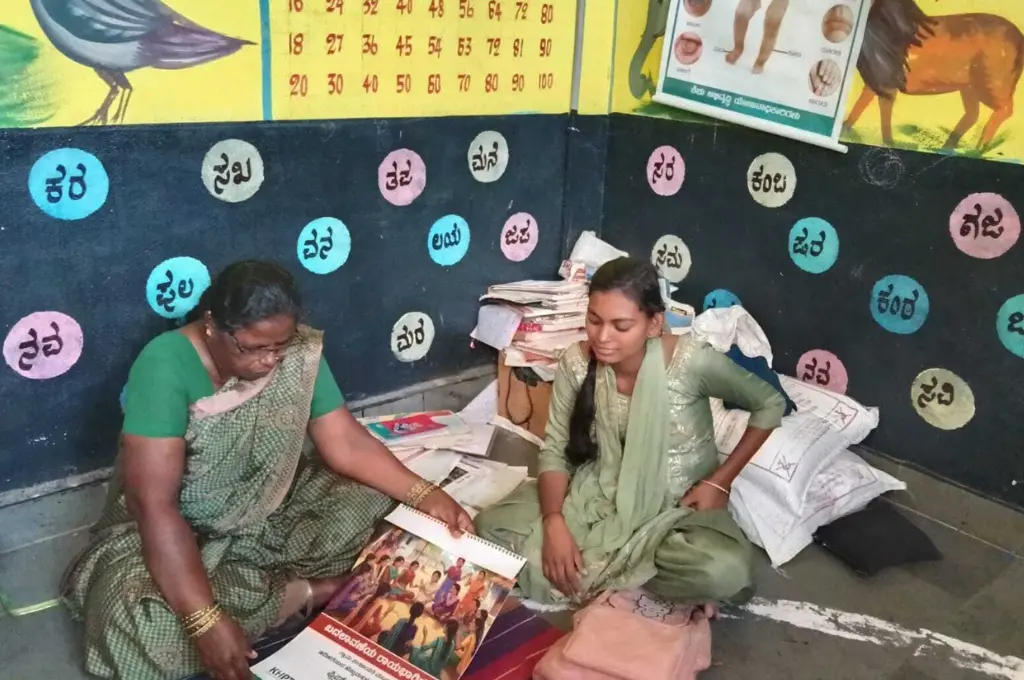
Spending the afternoon with the girls: To ensure they don’t face what I did
As a community organiser, my role was to work with girls in the community. When my parents asked me to drop out of school, I realised this was not just my problem—many girls my age were asked to leave school, and some even earlier. I knew I wanted to be a support system for them.
This was not easy at first. I looked like an adolescent myself and was working with girls who were almost my age. Many people in the community questioned what I could possibly contribute. I repeatedly visited key personnel in the village, such as Panchayat Development Officer (PDOs) and child protection officers, and patiently negotiated with them. I involved them in the activities I conducted, and slowly they began to recognise the value of the work I was doing.
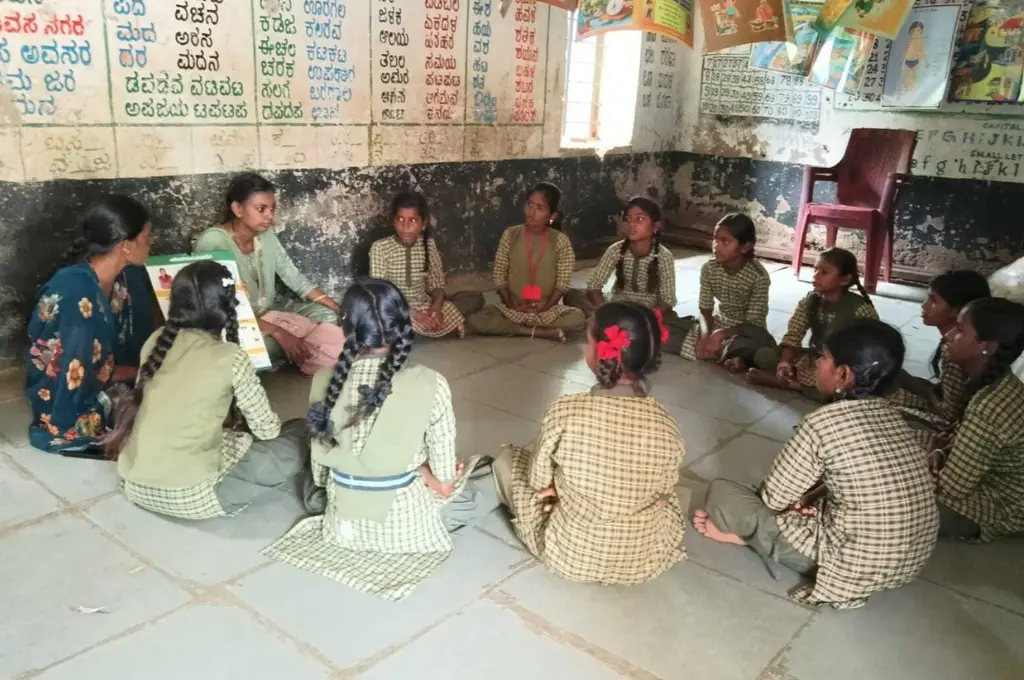
My work involved visiting homes, speaking to families, and counselling girls to return to education, improve their nutritional status, and delay child marriage. Around 4 pm, when the girls returned from school, I conducted life-skills sessions for two hours.
My field supervisor supported me throughout this phase, sharing ideas and encouraging me to go beyond the programme’s defined activities. One such idea led me to question why girls were excluded from the Ganesha Habba, a major village celebration traditionally organised only by boys.
Through my work, I brought together girls from Scheduled Caste and Other Backward Castes communities who were not expected to enter each other’s neighbourhoods.
When the Ganesha idol is taken for immersion at night, only boys participate in the procession—they dance, play music, and lead the celebration. The girls began asking why they couldn’t do the same. Why couldn’t they dance? Why couldn’t there be music for them too? We approached the panchayat again. There were objections at first—girls shouldn’t be out late at night—but after repeated discussions, we were able to convince them.
That year, the girls joined the immersion procession. There was DJ music, they danced on the streets, immersed the Ganesha, and returned safely.
As a Muslim girl, facilitating this participation was far from simple. Even my own family would comment about how I rode my Scooty to work, saying it was not appropriate for a girl. In some communities, such as Scheduled Caste hamlets, I was not initially entertained. Through my work, I brought together girls from Scheduled Caste and Other Backward Castes communities who were not expected to enter each other’s neighbourhoods. I built relationships with the girls and spoke to them openly. I told them that if we wanted things to change, we had to meet and stand together. Slowly, those conversations began to shift something.
Through these girls, I slowly started re-entering the community. Over time, the resistance softened. By building trust with the girls, they accepted me being a Muslim woman working in their area. Eventually, I was able to resume my work in the community.
We also began marking occasions, such as International Day of the Girl Child and Women’s Day, which had never been celebrated in my area before. Instead of relying only on external support, I mobilised resources from the community and nearby factories, raising INR 80,000 to provide T-shirts for the girls. While the panchayat is quick to support initiatives for boys, which include providing matching uniforms or resources for sports tournaments, girls’ needs are often overlooked. So we organised sports tournaments for the girls as well.
I also pushed for menstrual disposal systems to be installed in every school in the village. I wrote letters, submitted petitions, and persistently followed up with the panchayat. As a result, I was able to secure INR 10,000 to conduct anaemia testing for girls in the community.
During the two years I worked in Koppal, both the girls and I underwent significant change. Around 16 girls had dropped out of school, and I worked closely with their families to ensure they re-enrolled and continued their education.
Evenings with the system: For long-lasting change
Eventually, I felt the need to learn more and grow further, which led me to move to Raichur. The transition was challenging. I didn’t know the people, they were less welcoming at first, and I let go off my scooty but was unfamiliar with the bus routes. Slowly, people started responding to me, and over time Raichur began to feel like home. It was during this phase that I also got married.
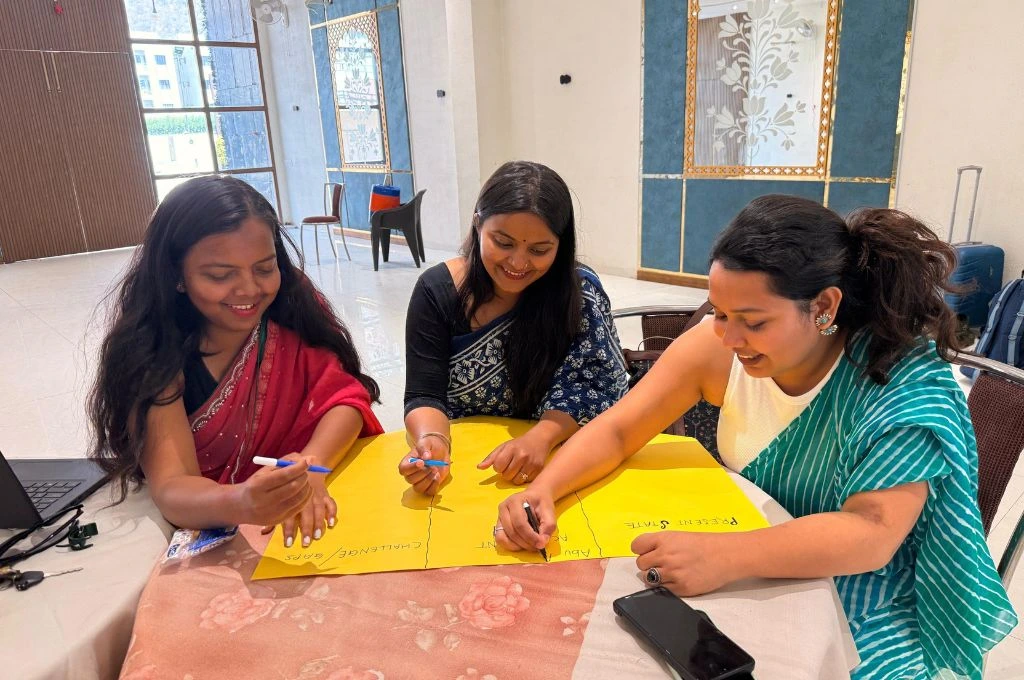
By then, I had become a field coordinator on a project which focused on structural change within the panchayat system to make it more responsive to the needs of adolescent girls. I identified mentors within the system—ASHA workers, anganwadi staff, teachers, and gram panchayat members—and trained them to continue life-skills education with girls. We realised that for change to last, the system itself had to take ownership of these efforts, even in our absence.
For example, I regularly work with anganwadi workers. I sit with them and review the life-skills content they are expected to teach. I check how many sessions they have completed and which lessons are still pending. If they find certain sessions difficult to conduct, I train them and help them understand how to engage with the girls better.
Alongside this, I also work on activating and strengthening local committees, such as the Women and Child Protection Committees (WCPCs) and Makkala Gram Sabhas, or children’s parliaments. For this, I hold discussions with gram panchayat members, visit them regularly, remind them to conduct meetings, and follow up to ensure these platforms are actually functioning. Over time, I have built a good rapport with the local participants, and they are now receptive to what I share with them. The modules and ideas I offer also support them in carrying out their responsibilities more effectively.
These experiences gave me confidence and helped me articulate my thoughts with greater clarity and conviction.
The day ends: As I always hoped it would
When I return home in the evening, I begin preparing dinner. At the same time, I support my husband with his studies. He is preparing for his standard 10 examination, and I paid his fees to enroll him. Since he works at a hotel and usually returns late, I attend his online classes on his behalf and then cook dinner for the night. When he comes back from work around 8 pm, we eat together. After dinner, I spend about an hour teaching him whatever I learned from the online session.
Later, between 9 and 10 pm, we go for a walk together. During this time, we talk about our day—what happened in my fieldwork, what happened at his workplace, our worries, and our plans for the future.
—
Know more
- Read about a young woman’s journey from a nonprofit to a corporate.
- Learn about educational challenges in rural Karnataka.