Flood after flood, Raishyabari’s farmers search for stable livelihoods
 Dhalai, Tripura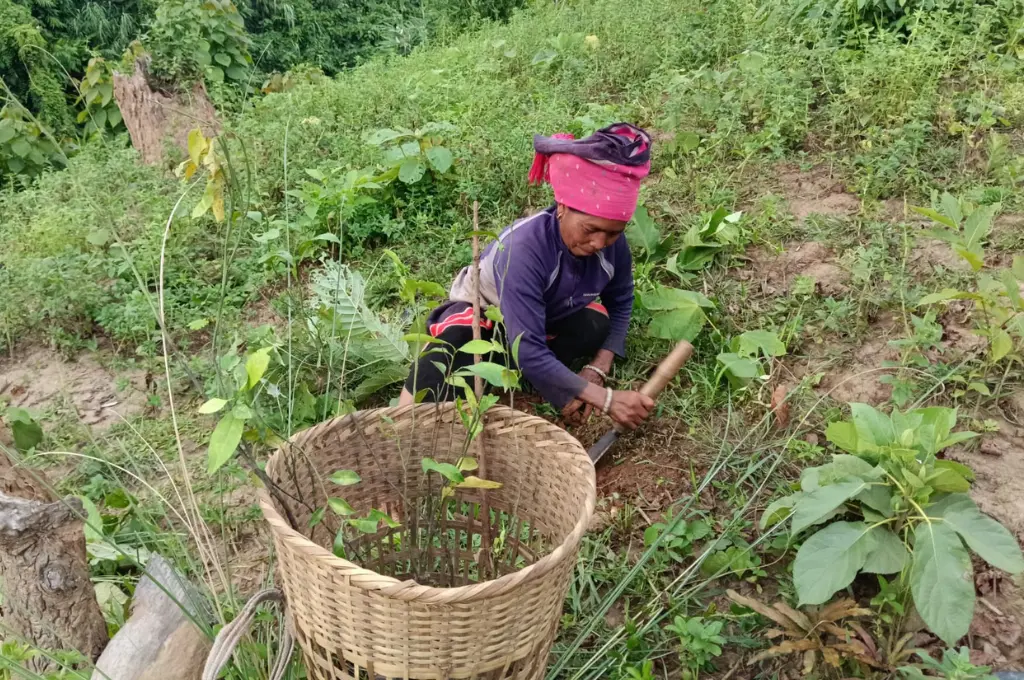
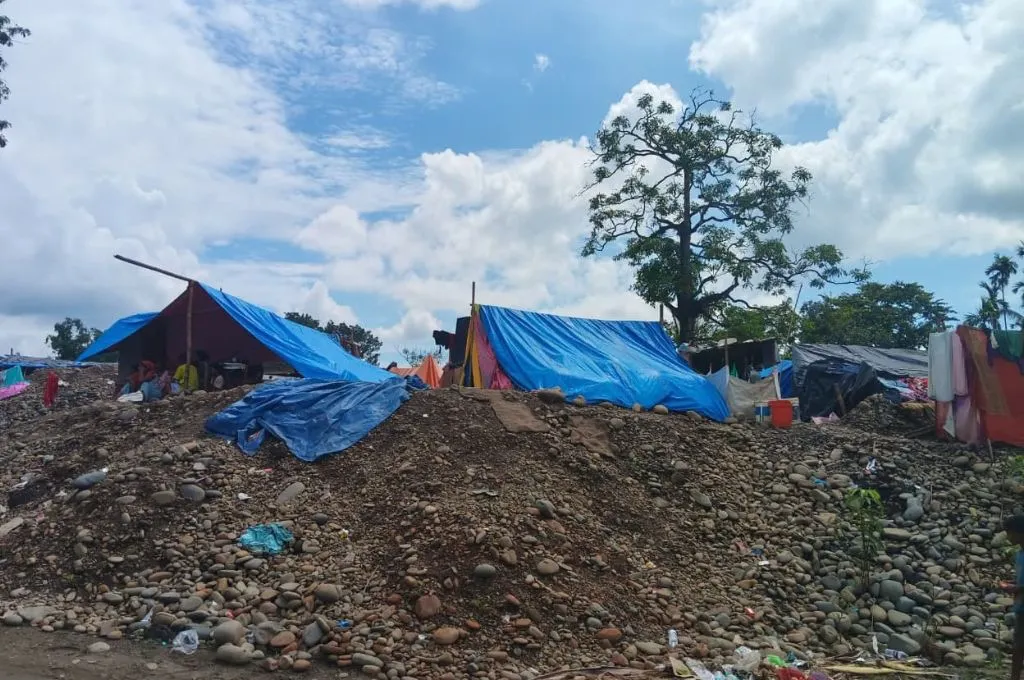
Until the 2024 Tripura floods, the hills of Raishyabari in Dhalai district were synonymous with jhum cultivation. But the calamity ravaged lives and livelihoods and brought back memories of the area’s painful past. Raishyabari’s farmers were left battling massive crop losses, household damage, and soil run-off.
Prasanta Debbarma, integrator at SeSTA (a nonprofit that works on livelihoods), says, “I spotted a farmer submerged in water right up to his waist still harvesting paddy in hopes that the flood would subside soon. It didn’t, at least not until the fields and hills had been completely wrecked by the run-off.”
For Raishyabari, floods have been a recurring event. In 1974, as part of the Gumti Hydroelectric Project, a dam was built on the Gomati river, which resulted in the artificial Dumboor lake, drowning the verdant Raima–Saima valley and along with it the low-lying areas of Raishyabari. This indelibly altered people’s lives. Thomas Malsom, a sociologist working on water issues, says, “We have fundamentally erased generations of accumulated knowledge in one fell swoop. Thousands of indigenous tribes were displaced. Those who remained had to adapt to the changing landscape, taking up fishing or paddy cultivation. Now with climate change, they are staring at another spate of displacement unless they adapt and overcome.”
The people have made multiple attempts to change their circumstances. In fact, jhum cultivation too was a product of this dislocation that forced residents to settle in the hills. In recent years, with the help of nonprofits such as SeSTA, they have opted for mango cultivation as an alternative livelihood source. But due to the floods, these attempts have rendered mixed results.
Prasanta says, “After studying the landscape, ecology, and market, we decided to go ahead with mango as our focus crop and distributed saplings of Amrapali mangoes among the farmers because they suit the climate and fetch a good price.” Riding on the initial success, SeSTA chalked out a detailed plan to target 180 landholding farmers with 1 acre and 0.5 acre mango plantations and 20 landless farmers with a pig-breeding programme to further diversify their income. But then came the floods.
“To use water from the Dumboor lake for irrigation, some farmers planted their saplings close to the water and faced losses due to the rising water level. Others had planted them higher up on the slopes, and yet faced losses due to run-offs and erosion,” Prasanta adds. As the waters receded, so did the farmers’ interest in fresh plantations.
After a lot of convincing, the farmers are giving their luck another chance. This time, they have dug contour trenches and half-moon terraces along the slopes to slow down run-off. Now the water has more time to seep into the soil, thus improving soil quality. To boost the farmers’ incomes, SeSTA is also helping them plant ginger and other spices along with mango through intercropping. Prasanta hopes that the summer of 2026 will bring a good harvest. The farmers hope the same.
Hansatanu Roy is an IDR Northeast Fellow 2025–26.
—
Know more: Learn how climate change in Assam killed gossip.
Do more: Connect with the author at [email protected] to learn more about and support his work.