Selling goat milk soap at 14,000 feet
 Leh, Ladakh
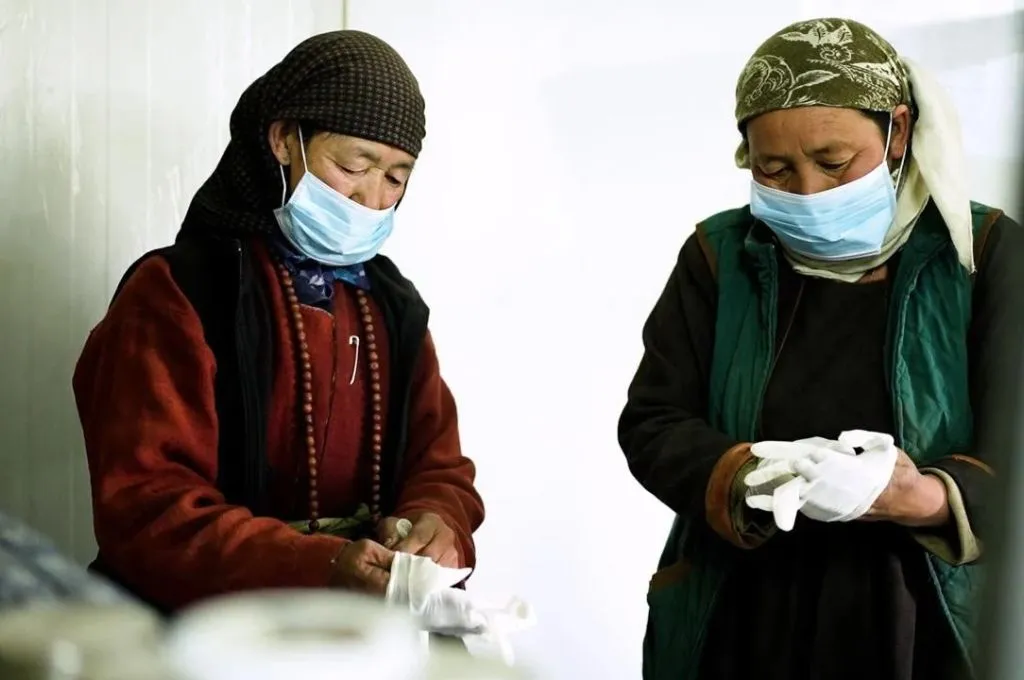
In the cradle of Leh’s mountains lies the cold desert region of Gya-Meru. While communities here have traditionally been pastoral and semi-nomadic, we began settling down over the years.
At an altitude of 14,000 feet, Gya-Meru is located approximately 80 kilometres from Leh—a journey that stretches over several hours due to poor road connectivity. Distanced from the city’s markets where we could sell milk and dairy, families here saw little benefit in having large flocks of animals. A few goats and a cow or two were all that were kept for household needs, with women managing herding, milking, and tending.
In June 2024, 42 women in the villages of Gya and Meru came together to form the Gya Meru Women’s Cooperative and set up the Lalungma Dairy Unit. Working with PHIA Foundation, we began packaging and selling surplus milk to the National Dairy Development Board (NDDB), which uses pick-up vehicles to carry our products.
In addition, we started manufacturing dairy-based products including soap made from goat milk. We melt the soap base, mix in the goat milk, and freeze the mixture in a moulding tray, making 200–250 bars in a single sitting. We also package the soaps at the dairy.
Initially, we struggled to figure out how to sell the soap. So, we started sharing updates on our personal WhatsApp, Instagram, and Facebook accounts with help from our daughters; many of them work in Leh, and they connected us to buyers there. People across Ladakh started reaching out to place orders.
Now, we also advertise the soap through the cooperative’s Instagram and Facebook pages and through a third-party website, Lalungma, where people can reach out to us directly, make a purchase, and transfer the payment to the cooperative’s joint account.
Since our digital networks are still small, we spread the word offline as well by going to government-organised flea markets, distributing samples, and selling products there. Lalungma Dairy also has an Udyam MSME registration, giving us access to MSME fairs.
The region is a tourist destination, so we sell our soaps to local homestays through our friends and local networks. We go door to door to deliver the orders in Gya-Meru and Leh. Visitors are also often keen to visit the dairy, see how it works, and purchase our products.
Additionally, the soaps are stocked at Dragon Mart, a supermarket in Leh, which has a dedicated counter for local produce and products. There, a 10 g bar is sold for INR 100. “Consciously packaging and labelling the product as manufactured by a women-led, rural dairy cooperative has helped bring attention from tourists and buyers. This also gives people an insight into why the soap is being sold at that price point, and the work involved in making it.” says Mohammad Ali Waziri, PHIA’s state lead in Ladakh. “I photographed the goat that is featured on the soap box myself—it’s real!” he adds.
Reaching consumers farther away remains difficult. While we can go to Leh and beyond via bus, the service has been erratic and stopped altogether for months between 2024 and 2025. Right now, we usually send soap orders whenever someone from the cooperative or from the PHIA team is travelling to Leh.
Although things have become easier and our networks are supportive, not having our own means of transport is still a big hurdle.
Tsering Chosdon is a dairy operator and community mobiliser from Gya. Chamba Dolkar is the president of Lalungma Dairy; she also runs a local homestay.
—
Know more: Learn how brands in Meghalaya are combining digital tools with cultural storytelling to expand their reach.