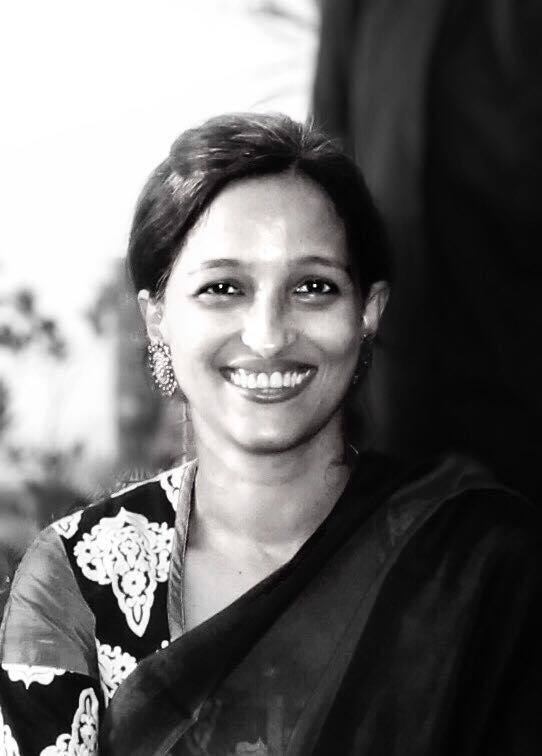
Brinda Upadhyaya, who co-founded the Upadhyaya Foundation with her husband Ajay in 2024, attended a women givers’ roundtable last year. Most participants—generational givers—were exchanging notes on the complexities of deciding what to fund and how much to fund it with. Without hesitation, she said, “Look, it’s simple for me. I don’t have to discuss it with 10 family members and dominating men. It’s mainly my husband and me.” Everyone laughed. But she was not joking.
Brinda is plainspoken, does not hide behind the buzzwords or current speak of the social sector, and is not scared to wear her emotions on her sleeve. Her work is focused on underfunded, even non-mainstream areas, such as animal welfare, disability inclusion, and the music of India—causes she quietly funded for more than two decades before setting up a foundation.
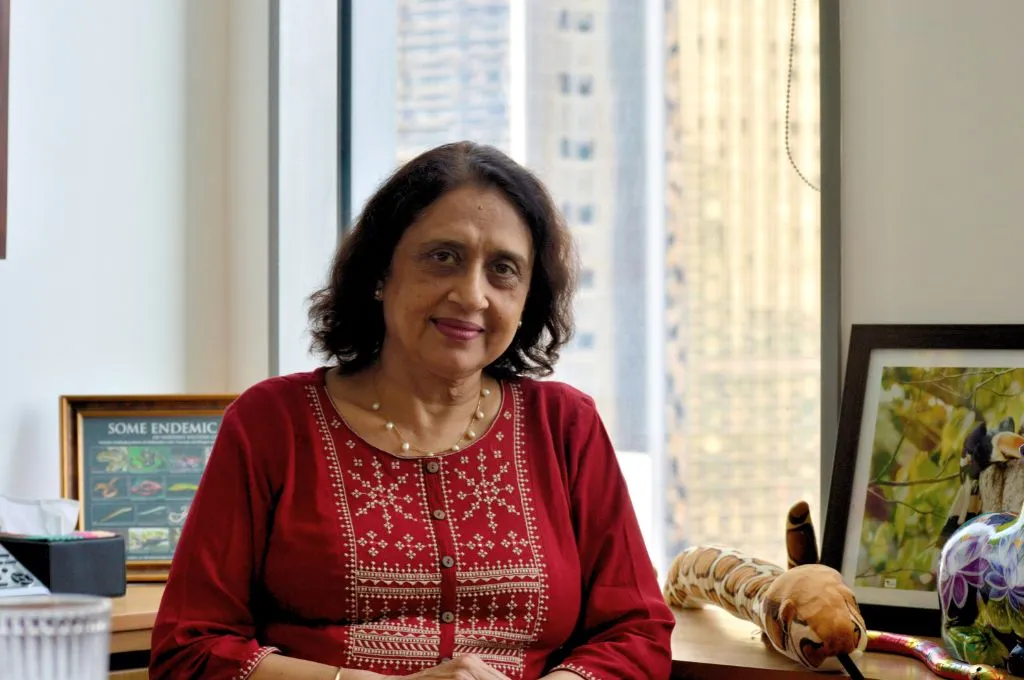
Brinda spoke to IDR about her unconventional approach to philanthropy. Excerpts from the conversation follow:

Can you speak to your early journey as a giver and philanthropist? What led you to recognise and structure your philanthropic efforts and set up your foundation?
My husband and I have been giving back for quite some time now. We did whatever we could for causes close to our hearts. For me, it was animal welfare.
In Andheri, I witnessed people struggling to take injured stray dogs to hospitals in auto rickshaws. We decided to donate an ambulance to the cause. It helped several nonprofits working with community animals in their treatment and hospitalisation in the western suburbs of Mumbai. Around the same time, I started a small nonprofit called Association for Service and Healing of Animals (ASHA), which rescued, treated, and cared for community animals around Andheri. Through the ambulance and ASHA, I met many people doing similar work and started understanding the world of animal welfare better.
In the past, during the festival of Nagpanchami, I would witness snakes being force-fed milk and being subjected to other forms of mistreatment and abuse. In later years, through my association with herpetologists, veterinarians, and like-minded people from Sanjay Gandhi National Park (SGNP), we were able to conduct awareness workshops. I have been an academician for a long time and many of my students got involved in the activities. Eventually, we were able to make the case for replacing live snakes with replicas made from clay. Through those years, I also wrote for many publications on animal welfare, women’s health, and other social issues. Eventually, we decided to institutionalise our work by setting up the Upadhyaya Foundation.
Why do you care about animal welfare, disability, and classical music, in particular?
We do not have a playbook. Most of our philanthropy comes from the heart and from issues that move me.
My mother, who was an educationist and worked with visually impaired students, was enthusiastic about nature and music. I believe she passed on that love to me. She has inspired me in the three areas we focus on—animal welfare, disability inclusion, and Indian classical music.
Animal welfare occupies a large portion of my heart and constitutes approximately 70 percent of our giving. It upsets me when animals are treated as a commodity. We must develop empathy for all living beings irrespective of their form and species. I have always admired the elegance and beauty of snakes. But whenever I talk about them, people respond with shock and disgust. Many believe they must kill a snake before it kills them. We also assign irrational values to different species and often use derogatory names and metaphors involving animals to berate one another, like ‘pig-headed’ or ‘bird-brained’. Why must we degrade animals to put humans down?
Animal welfare is particularly underfunded. Why do you think it is not considered mainstream?
Animal welfare is not only underfunded but also under-represented. People barely talk about it. Whenever I mention animal rescue, most people ask, “Why are you focused on saving animals when so many human beings are suffering every day?”
People tend not to see these themes through the lens of interconnectedness and interdependence. Over the past few years, climate change and climate action have become hot topics at every conference. And yet, we have been talking about the environment without talking about animal welfare. Rural livelihoods depend on farm animals. Our rivers and oceans thrive because of riverine and marine life. In a city like Mumbai, concrete structures continue to expand into what green pockets we have left, increasing incidents of human–animal conflict. Stray animals gather wherever there is garbage, but we do not always recognise that community animals and the problem of uncollected waste are deeply connected.
We need to understand and remember that we live on a shared planet; there is only one Earth, and we must do all we can to live in harmony. We used to be aware of our symbiotic relationships with the natural world but have now forgotten these values. The average child in Mumbai today, for instance, has very little idea of nature, because so much of it has been built over.
Your approach to philanthropy is trust-based. Can you tell us what that has meant for you, your team, and your nonprofit partners?
Our approach is simple: We do whatever is required.
I believe that someone needs to support and trust small nonprofits, especially for domains and aspects no one is willing to fund. I ran a small nonprofit myself, so I know what it is like to be on the other side. If every funder asks for proof of concept first, how will new, innovative programmes come about? How will a small nonprofit without adequate resources ever build a model? Funders are normally not willing to pay salaries. But who will do it then?
We recognise that we are not subject matter experts and that, as funders, there is a power dynamic we need to be mindful about. So, we take the time to listen, build relationships, and unlearn as we go along.
What have been some of the things that have worked well, and things that have not? What have you learned from older, more established foundations? And what would you like to do differently?
We have been effective in creating space and visibility especially for animal welfare. More funders, individuals, and institutions have started considering animal welfare for some share within their giving. What has also worked is finding the right people. I always knew what I cared about, but not how to build an institution around it. Now that we have an accomplished team, we are sure to take things further.
What I would like to do differently is to bring the heart and passion back into the room. Philanthropy should be more than just numbers, statistics, investments, and strategies. Empathy and care from a deeply feeling heart will be more impactful.
What changes would you like to see in the short term as well as the long term?
In the long term, I would like to see people become more sensitive to the dignity of all sentient beings. Compassion towards all should be the norm. A language of love and respect is a good way to begin. We can start with small things in schools, like using words of kindness and empathy, and instilling a sentiment of equality and dignity within children from a young age.
In the short term, I would like more people—especially fellow funders—to join these conversations. The intersections and interconnections are all around us. The India Animal Welfare Forum, which will host its second edition in January 2027, is a convening space for conversations on animal welfare. I also want more people with disabilities to be able to access public spaces. They should thrive, succeed, and live with dignity. We have a rich heritage of music, which should be showcased all over India and the world, so that the next generation knows about it, respects it, and carries it forward.
What would you like to say to other philanthropists?
Do not leave your wealth to your children. Your children do not need your money. They need education, discipline, and values. Make them work hard.
Keep doing what you are doing. Everybody should give back to the society they get from. We cannot keep consuming without contributing.
—
Know more
- Read about what World Wildlife Fund is doing to protect the Ganga river dolphin, India’s national aquatic animal.
- Here’s what you can do when you see an animal in distress.