What could five organisations, each working on varied issues of water and sanitation, rural livelihoods, financial literacy, food insecurity, and active citizenship across diverse geographies, have in common?
Despite working in vastly different contexts, civil society action in India has been anchored in certain shared concepts and philosophies. Among them are the works of Amartya Sen, who holds an enduring relevance for contemporary development challenges. With ideas spanning economics and philosophy, Sen’s most compelling arguments sit at the intersection of both—as an examination of human behaviour and as a set of moral arguments for how societies must function.
Sen paints a picture of the world as it should be, grounded in human dignity and agency. A professor and writer, his work has reached beyond academia to resonate with policymakers and practitioners, bridging theory and grassroots action.

In this article, members of organisations in Odisha, Rajasthan, Andhra Pradesh, Maharashtra, Tamil Nadu, and Kerala reflect on how Amartya Sen’s ideas have informed their work. While they don’t represent the entire sector, these reflections—with four of his concepts at their core—highlight how Sen’s thinking continues to guide people across Indian civil society.
Development as freedom
Sen argues that development should be seen not through the narrow lens of economic growth, but “as a process of expanding the real freedoms that people enjoy”. These freedoms include civil and political rights, social justice, economic opportunities to step out of poverty, and an end to deprivation.
Gram Vikas’s decades of work on community-managed water and sanitation services in Odisha employs Sen’s strategy and applies it in practice.
Community-managed water and sanitation in Odisha (Jayapadma R V and Liby T Johnson)
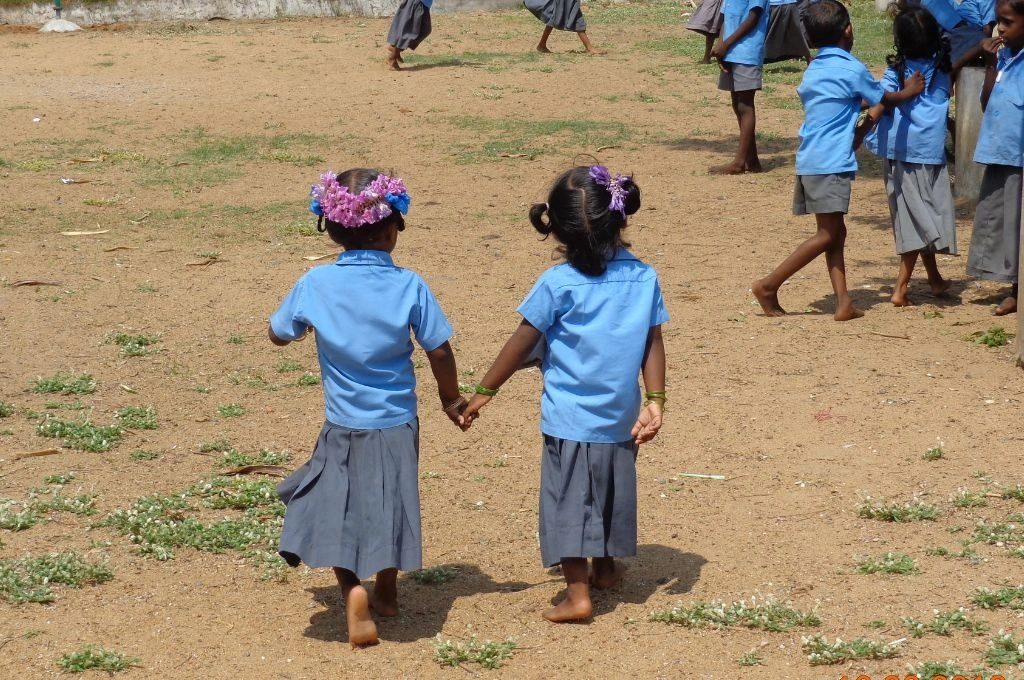
Back in the 1980s, Gram Vikas was working in several villages in Odisha, including Samiapalli and Tamana in the Ganjam district, where families did not have access to clean drinking water. As a result, people kept falling sick. Children missed school, parents lost workdays, and whatever little money they had was spent on treatment.
The technological fix seemed simple: toilets and piped water. However, an early insight was that unless all families in the village agreed to participate, the intervention would not be meaningful. The richer, higher-caste families were initially more willing to build toilets, especially with the promise of piped water supply. But what about low-income families that did not have the financial means to build a toilet? Would they be forced to continue to defecate in the open and risk contamination of water?

The answer became clear: True dignity and freedom means that every household is part of the solution. This speaks to Sen’s idea that development is about expanding real freedoms; it’s not about individual gains, but collective empowerment.
While getting everyone on board was a major step forward, the daily realities and financial constraints of poorer households required that new terms of contributions feasible for all were set. This meant creating a pool of finances, materials, and labour, where each household would contribute based on their ability. The purpose was to ensure that the poorest and the richest households got the same facilities and an equal voice in decision-making.
The ‘real freedoms’ for people were found not only in the physical infrastructure of sanitation, but also in the role that it played in upholding dignity.
In village after village, women became central to this transformation. They also spoke up about the challenges they were facing, including that they had to bathe out in the open, in ponds and around wells, and face daily indignities during menstruation. As such, they pushed for the construction of bathing rooms. Village committees, with women in leadership, were set up to manage the facilities.
In these instances, the ‘real freedoms’ for people were found not only in the physical infrastructure of sanitation, but also in the role that it played in upholding dignity. Moreover, having access to proper sanitation facilities motivated many villages to build permanent homes for all families. Theparticipating villagers echoed a similar sentiment as Lalita Malik in Tamana village, Ganjam district, who said, “Our toilets are better than our houses.”
For people across these villages, the most powerful shift was not individual prosperity but collective dignity. As families worked together, divides of gender, caste, and class began to fade, and the community’s well-being as a whole came first.
This was Sen’s idea of development as freedom materialised. He argued that looking at development as an expansion of freedoms meant focusing on the ends, and not the means. The true measure of progress then was not economic growth or industry by themselves, but what they helped people achieve—a life free from deprivation and indignity. Civil society plays a key role here, stepping in wherever the state falls short and challenging barriers that limit people’s rights and agency.
The capabilities approach
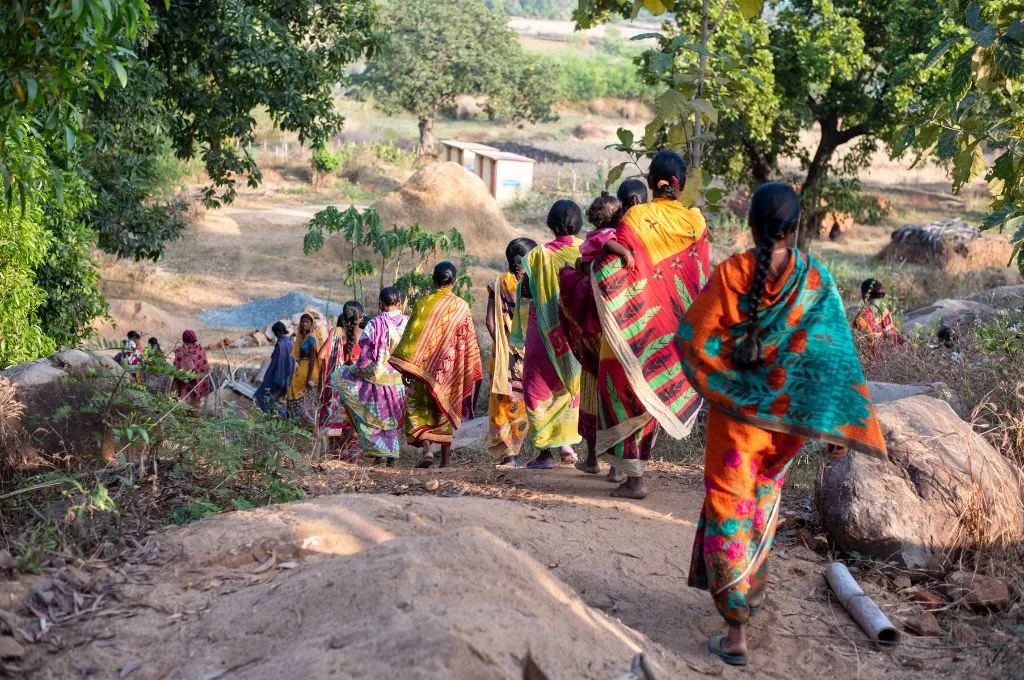
Amartya Sen argues that what a person is able to achieve is shaped by economic opportunities, political freedoms, and resources and facilities such as health and education. If development is found in the expansion of freedoms, these must not be understood simply as formal rights bestowed on people. Rather, real freedom lies in people’s ability to be and do what they aspire to. As such, well-being and quality of life are measured not in wealth or income, but in the substantive capability of people to build and lead lives they value.
1. Building people’s agency: PRADAN (D Narendranath)
For the past five decades, PRADAN has been working with rural communities across India to develop not just livelihood opportunities, but also people’s capabilities and agency.
After setting up its first self-help group (SHG) in Alwar, Rajasthan, in 1987, PRADAN subsequently spread such collectives to other states with the aim of mobilising finance for livelihoods. These included Koderma and Hazaribagh in Jharkhand, Kesla in Madhya Pradesh, and Mayurbhanj in Odisha. The purpose of the SHGs was to promote savings and credit, so that rural women could access small loans instead of relying on exploitative moneylenders. However, we soon realised that access to finance was not enough to improve women’s overall well-being and, in Sen’s words, their capabilities or their real, substantial freedoms.
Even though women were able to raise incomes through small enterprises such as poultry units, little changed in the family dynamics. In many cases, women’s workload only increased as the men refused to take up duties at home. Women also continued to be excluded from household decision-making, such as which crops to plant, their daughters’ marriages, or even how the new income was to be used. In some cases, their increased mobility for project-related work made women more vulnerable to domestic violence.
The SHGs’ approach was therefore re-assessed through a ‘capabilities’ lens, which meant going beyond financial services to support women in developing their agency. We tried different approaches and started training programmes to make women more aware of their rights, and to give them the space to talk about broader issues. This resulted in conversations about control over assets and resources, access to health and education, mobility, political participation, and otherwise taboo topics such as discrimination and gender-based violence. Women’s groups and federations began taking up these issues collectively, and platforms such as the Mahila Adhikar Manch and Nari Adalat emerged over time.
SHGs became solidarity groups, and by the early 2000s PRADAN had made SHGs a part of their community mobilisation strategies.
2. The Timbaktu Collective’s Swasakthi initiative (Jayapadma R V)
The Timbaktu Collective set up the Swasakthi (or power of self) initiative, which represents a socio-economic movement among marginalised and underserved women in drought-affected areas of Andhra Pradesh such as the Sri Sathya Sai district. Here, cooperatives like the Mahasakthi Federation have enabled them to take charge of their financial and social lives.
Timbaktu leveraged the Andhra Pradesh Mutually Aided Co-operative Societies Act of 1995 to pioneer financial institutions of, for, and by rural women. The act enabled cooperatives to operate autonomously without government financial assistance, strengthening democratic, member-owned, and managed enterprises. We set up systems for strong thrift and credit facilities by organising women into cooperatives and SHGs.
Members pool their savings to create a fund from which they can take small, low-interest loans. Starting with a monthly saving of INR 10 in the 1990s, each member now saves approximately INR 100–500 per month. They can avail loans of up to INR 2,00,000 lakhs, and while the repayment periods are defined, there are provisions for flexibility based on members’ requirements. Loan counselling efforts have helped members figure out repayment plans, and over time the proportion of loans shifted from meeting emergency spending needs to productive uses, including business establishment and asset building.
Swasakthi went beyond finance to invest in education, providing pro bono legal aid to address issues such as domestic violence, child marriage, desertion, and property rights. Focusing on microinsurance and welfare, Swasakthi championed dignity, choice, and respect while challenging entrenched gender norms.
Swasakthi exemplifies Sen’s emphasis on expanding real freedoms by creating spaces for women to explore their potential, secure their future, and be leaders in their communities. It shows how capabilities built at the individual level—including skills, confidence, and solidarity—can be combined with collectivisation to challenge poverty, discrimination, and gender-based norms.
A common thread that runs throughout Sen’s work is his emphasis on freedom and development as the ability of people to lead lives of dignity, without poverty and other forms of deprivation. Sen uses this lens in his concept of ‘entitlements’.
An ‘entitlements’ approach to development
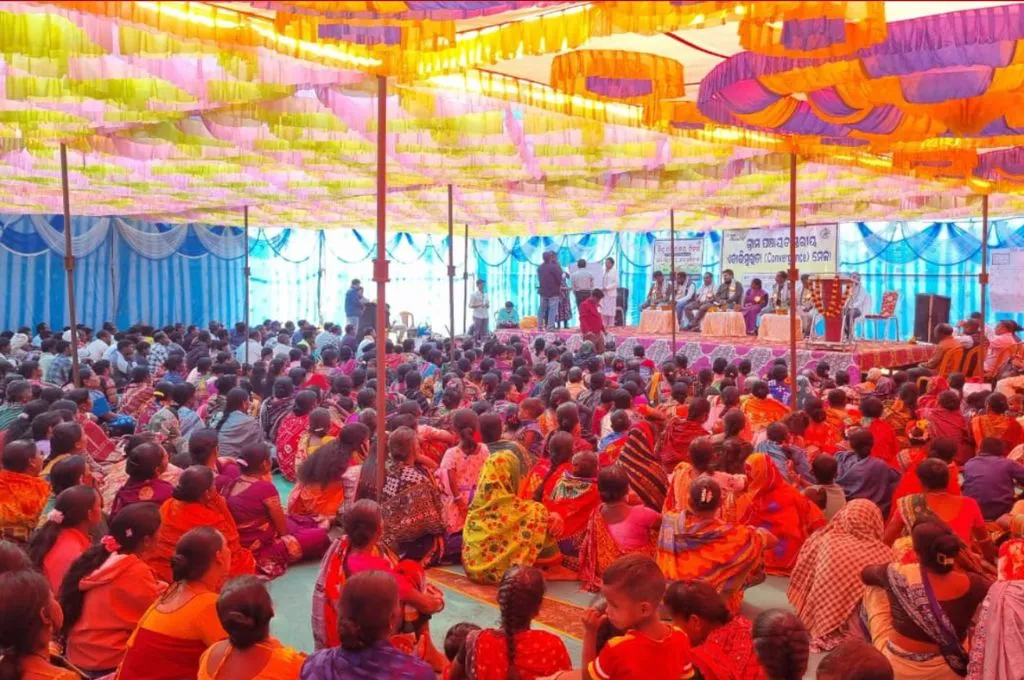
Sen explains how a person’s access to goods and services, including food, is determined by their specific social and economic conditions, rather than the aggregate availability of these resources or entitlements in a region. “Starvation is the characteristic of some people not having enough food to eat. It is not the characteristic of there being not enough food to eat,” he writes.
His research on the Bengal famine of 1943 reveals that the death of more than 3 million people was not due to a shortage of foodgrains per se, but the policies of the colonial British government that skewed resource allocation and caused the starvation of millions of people. This insight still matters today: India’s foodgrain stocks are at a record high, yet more than 81 crore people depend on free rations.
Bhavani R V from the M S Swaminathan Research Foundation (MSSRF) talks about how this approach informed their work with communities in Maharashtra, Odisha, and Tamil Nadu to address food insecurity.
Tackling food insecurity through community foodgrain banks (Bhavani R V)
Even though aggregate food production and buffer stocks have grown in India since the Green Revolution, marginalised communities, especially in tribal areas, continue to face both chronic and seasonal food insecurity. There are issues of hidden hunger, micronutrient deficiency, localised food shortages, and even famine-like situations that arise due to the volatility of food prices.
One part of MSSRF work was making people aware of their food entitlements through entitlement cards, which would list out every government programme and scheme, and supporting them in accessing food rations. Community hunger fighters (CHF) from the villages built this awareness.
The second major aspect of the work was based on the Farming System for Nutrition (FSN) approach proposed by M S Swaminathan. FSN is designed according to the local agro-ecologies and nutritional needs of a particular area. Work was taken up in a cluster of villages in Maharashtra’s Wardha district and in Koraput, Odisha, and involved measuring prevailing nutritional deficiencies, sharing the findings with the community, and jointly exploring how agriculture could be more nutrition-sensitive.
CHFs underwent training including orientation on balanced diets, the intergenerational impact of malnutrition, and the importance of good nutrition particularly for adolescent girls and pregnant and lactating women. Social taboos were questioned. CHFs became community-level spokespersons to initiate change by both encouraging a diversified basket of food as well as challenging regressive social norms such as women eating last in households.
Foodgrain banks have been set up with the help of villagers in Odisha and Tamil Nadu to ensure availability during lean seasons. This included decentralised efforts to build the capacities of communities to maintain a certain stock of foodgrains.
The experience is informed by Sen’s concerns around guaranteeing equitable access to food by taking an entitlements-based approach, which goes beyond aggregate production and buffer stocks to look at the nutrition levels of India’s most vulnerable communities, many of whom are responsible for producing the very foodgrains that make up these national figures.
Moreover, across Sen’s conceptions of entitlements, capabilities, and development, there is a focus on the improvement of people’s social lives—including civil and political rights and freedoms.
Development through participation in deliberative processes
In a 2004 address, Sen observed, “There are, in fact, two quite different ways of seeing democracy… One view, which I shall call the “public ballot perspective”, interprets democracy mainly as majority rule, focuses predominantly on the freedom to vote and the fairness of vote counting and electoral assessment. The second interpretation, which I shall refer to as the “public reason perspective”, sees democracy in terms of the opportunity of participatory reasoning and public decision-making…”
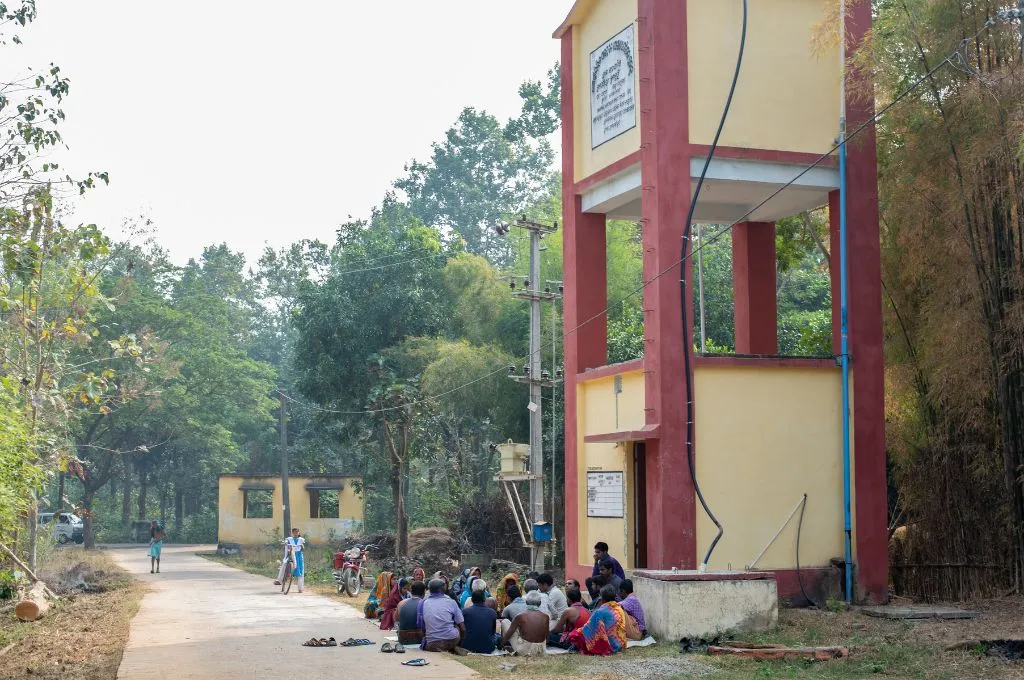
Sen’s idea of democracy as ‘public reasoning’ refers to the ability of citizens to participate meaningfully in the decisions affecting their lives. Deliberative spaces can lead to more inclusive and equitable outcomes, not only by enabling people’s access to rights and public services from the state, but also by challenging entrenched forms of power based on class, caste, religion, gender, and more.
In 1996, the government of the Left Democratic Front in Kerala launched the People’s Plan Campaign (PPC) to shift power and resources to the local level, with the aim of making citizens active participants in development. Kerala Sasthra Sahithya Parishad (KSSP), a people’s science movement established in 1962, played an important role in mobilising people during this campaign.
Opening up participatory space in Kerala (Suvojit Chattopadhyay)
The campaign was inspired by E M S Namboodiripad’s idea of socialism through people’s participation. It was about taking the state closer to the people and about strengthening local planning that would allow communities to set limits on the power of market forces. There was devolution: Nearly 40 percent of the state’s plan funds were given to panchayats and municipalities, and staff and decision-making powers were with these local bodies—turning panchayats from administrative units to genuine local self-governments.
Deliberative spaces can lead to more inclusive and equitable outcomes, not only by enabling people’s access to rights and public services, but also by challenging entrenched forms of power.
KSSP members trained government officials, local elected representatives, and volunteers to prepare them for comprehensive local-level planning. Technical ideas related to local planning and development were simplified so everyone could understand processes and participate actively to make their voices heard. This work embodied Sen’s emphasis on informed public reasoning, ensuring that deliberative processes are accessible to all citizens regardless of their formal educational background.
One of KSSP’s key contributions was developing simple resource materials such as manuals and guides, and providing scientific and technical support for locally relevant development activities including water management, education, and public health. It supported gram sabhas with turning their development priorities into projects that could be submitted to higher government levels to secure funding. By engaging community members through formal processes and facilitating development seminars, KSSP promoted inclusive decision-making and demonstrated a model of deliberative democracy adopted at scale by the state government.
These initiatives—from Rajasthan to Kerala—echo Sen’s central insight: Development advances when people gain the real freedom to shape their own lives. This alignment between Sen’s ideas and development in practice shows the reach and durability of his thinking.
Sustaining development change and collective agency (while maintaining individual dignity) at scale requires a genuine partnership between the state and civil society. That partnership remains essential to pursue development while holding on to freedom, dignity, and democratic participation—values that sit at the core of Sen’s contribution, and of the practice that his ideas continue to inspire.
—
Know more
- Understand why the social sector must take a rights-based approach to development.
- Learn how gaps in data collection and metrics lead to an underestimation of inequality in India.
- Read Amartya Sen’s Development as Freedom to learn more about his ideas.