In Sikkim, a beekeeper prioritises bee health over honey production
 Pakyong, Sikkim
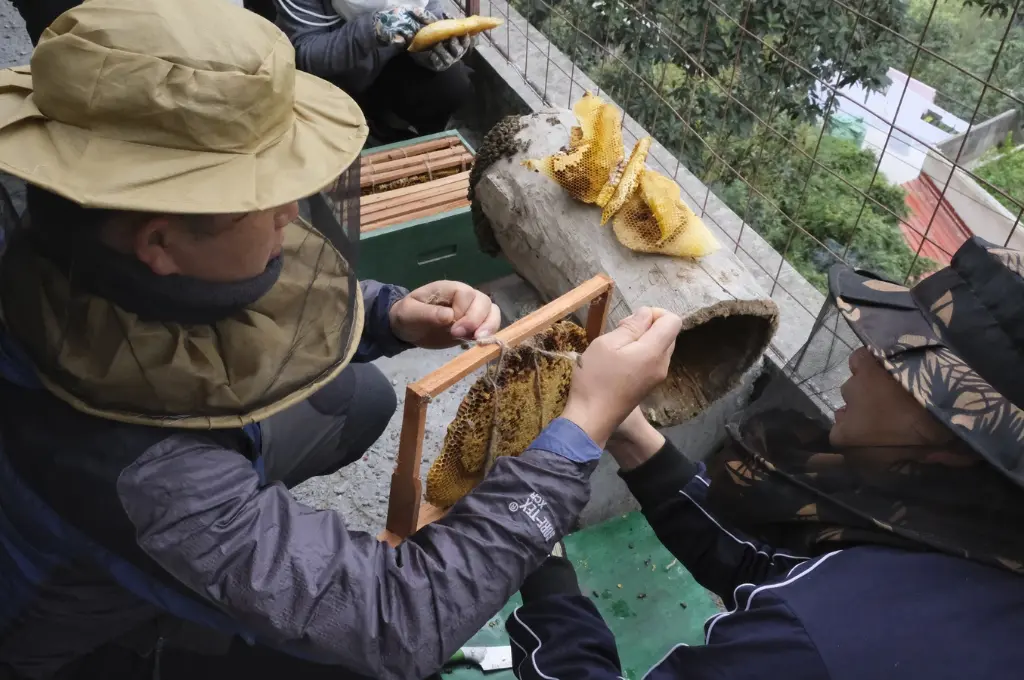
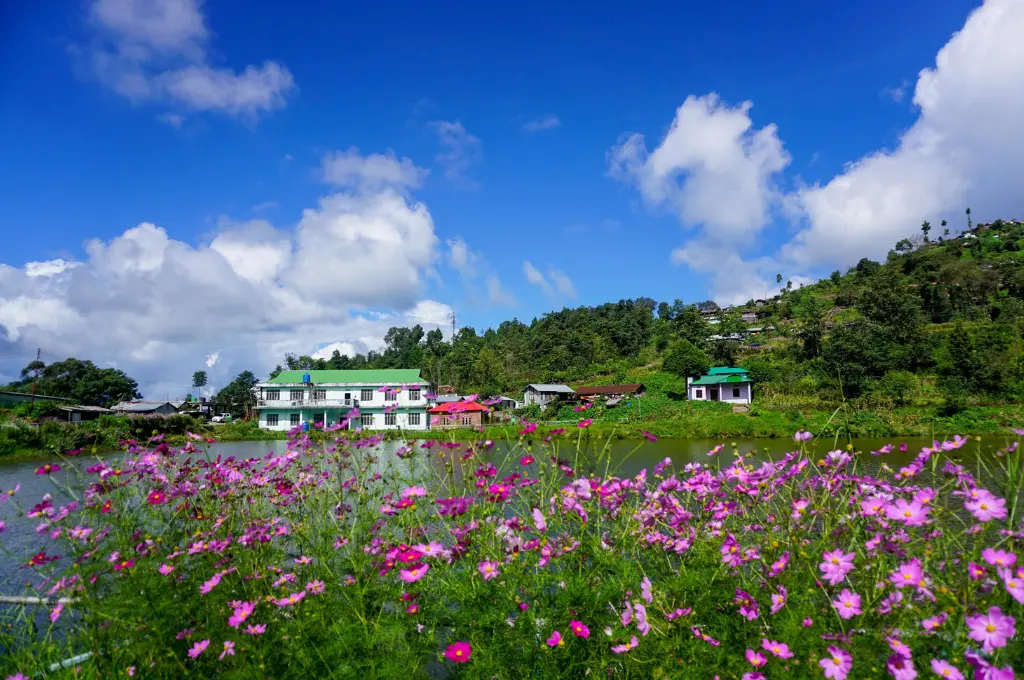
My village, Zitlang, sits at approximately 1,400 metres on the eastern slopes of Sikkim’s Pakyong district, between Rangpo and Central Pendam. A variety of trees, fruiting and otherwise, grows here, which makes for a rich habitat and grazing field for the Apis cerana bees on my farm.
My interest in beekeeping began at age 16. Since then, I have worked with them in various capacities: as a beekeeper, a honey seller, a master trainer, and most notably a bee researcher.
Until a few years ago, I kept two bees: Apis mellifera and Apis cerana (locally known as raithaney mauri).
Mellifera, the Italian bee variety, needs lots of flowers for its nourishment. Every season, I loaded the mellifera boxes onto a vehicle and took them out to graze in neighbouring villages like Misratar for mustard, which blossoms from January to March; Samkey for mango (February–April); and others for avocados (February–March) and maize (May–July). They collected nectar and also pollinated the plants. It benefitted the bees and helped the families where they grazed.
Mellifera, however, thrives in the plains. In Zitlang’s climate, which is colder compared to the climate they are used to, and forests with uneven tree heights, they struggled. We have too many trees and not enough flowers, and they can graze only up to a kilometre. They need space. Here, they could not fly high. Some even lost their way.
To save them, we also resorted to feeding them sugar syrup. This made it possible for them to give honey as often as once a month and helped the bees survive longer. But they were only surviving because of the assisted feeding.
I sat with all this and asked what I was really doing. I did not want to produce honey at the cost of the bees’ well-being. So I stopped keeping mellifera altogether and decided to go back to our local bee variety.
Today, I keep cerana since it suits our climate, resists disease better, and forages up to 2 kilometres on its own. It yields honey twice a year—in November (when the dombeya flower blooms alongside wildflowers like kuro and bilauney) and from May to July (during maize season).
Moreover, the cerana also shaped my thoughts about hives. To grow my bee numbers, I used to divide one hive into two and so on. Each new hive would get its own queen that laid eggs and built a new colony, so one colony became two. It was a difficult process; one cannot separate the old, non-working bees from the young, working ones. Sometimes, a hive would end up having only workers, and another only non-workers. Many hives died this way.
Now, I will stop dividing altogether. The cerana already multiplies on its own in November and April–May. When a colony is ready to leave, it sends out scouts. These are experienced worker bees whose job is to search for a new home. They look for a safe place, between rocks, in a hollow tree, or in a traditional hive at someone’s home, and go back to tell the others. When I locate them in their new spot, I give them a new hive or place one in the forest for a scout to find again. While it is slower than it used to be, the bees are healthier.
Both of these changes are part of what I informally call the ‘Mauri Bachauney Abhiyan’, an attempt to save our bees, forests, families, and villages.
Dal Bahadur Rai is a master trainer at ApiCare Organic Farms and Honey Production Pvt. Ltd
As told to Aakriti Thatal, IDR Northeast Fellow 2026–27.
—
Know more: Learn why a young bee entrepreneur is teaching beekeeping to others in his village.