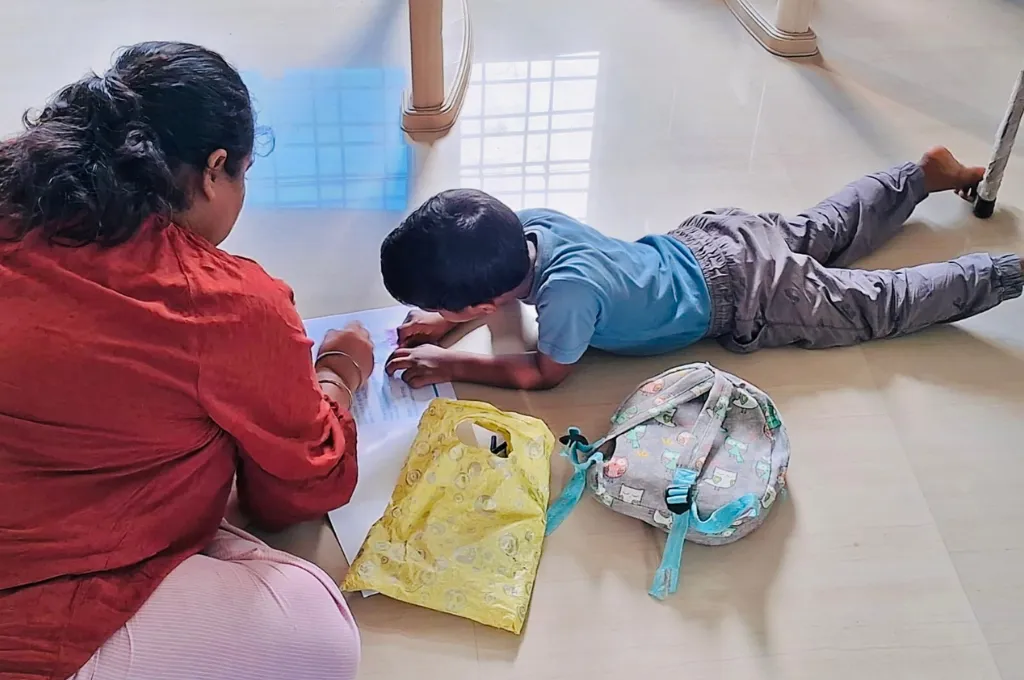
Foundational literacy and numeracy (FLN) has become a central policy priority in India. The reasons for this emphasis are clear. Early proficiency in reading and numeracy is consistently associated with later educational attainment, labour market outcomes, and civic participation.
At the same time, evidence from classroom observation research and international scholarship on social and emotional learning (SEL) indicates that treating FLN as a purely technical challenge overlooks a crucial dimension. Learning does not occur in isolation from context. It unfolds within specific institutional, social, and emotional environments that shape how children experience school.
In practice, this means that foundational learning is shaped by everyday classroom realities.

- A student who has repeatedly been corrected without explanation may stop attempting difficult reading tasks.
- In a multi-grade classroom, where the teacher must divide attention between groups, some children may remain unengaged for extended periods.
Neither of these are simply technical instructional problems. They are relational and environmental conditions that influence whether children feel safe enough to participate, persist, and learn.
Reading and numeracy are often conceptualised as predominantly cognitive domains. However, the capacity to engage cognitively is intertwined with social and emotional processes. Attention, motivation, a sense of belonging, and academic self-efficacy are central to successful learning.
These contexts influence whether children engage with classroom tasks, persist through difficulties, and come to see themselves as capable learners. Without addressing these conditions, even well-designed FLN reforms risk having a short-lived or shallow impact.
A recent national study of early-grade teaching practices in India illustrates this point with clarity. The Teaching Learning Practices Survey (TLPS 2025), one of the most extensive observation-based studies of primary classrooms in the country, documents how tasks are structured, teachers respond to learner diversity, multigrade arrangements are managed, and time is used in government schools. Although the study was not framed as SEL research, its descriptive findings provide a grounded account of the conditions under which foundational learning is expected to occur.
Classroom practice as data on the conditions of learning
The survey describes several recurrent features of early-grade classrooms:

- Multi-grade teaching arrangements are common.
- Class sizes are often large and sometimes overcrowded.
- Independent work is frequently undertaken with minimal individual feedback.
- Differentiated instruction, tailored to meet diverse student needs, is used inconsistently.
- Students spend significant periods of time off-task or disengaged from learning.
A particularly instructive finding is that children remained off-task for approximately 27 percent of the total observed classroom time. In practical terms, this means that for more than one-quarter of instructional time, many students were not actively engaged in the intended learning activities. This is not simply a matter of discipline; it signals deeper questions about classroom structure, task design, and the conditions that sustain attention and participation.
Off-task time may reflect confusion, lack of clarity, low confidence, or limited connection to the task, rather than simply the absence of discipline. These patterns are sometimes recognised solely as evidence for further teacher training. And while they do highlight areas of pedagogical weakness, they are also symptomatic of a compromised ecology of learning:
- Sparse feedback influences how children interpret their effort and progress.
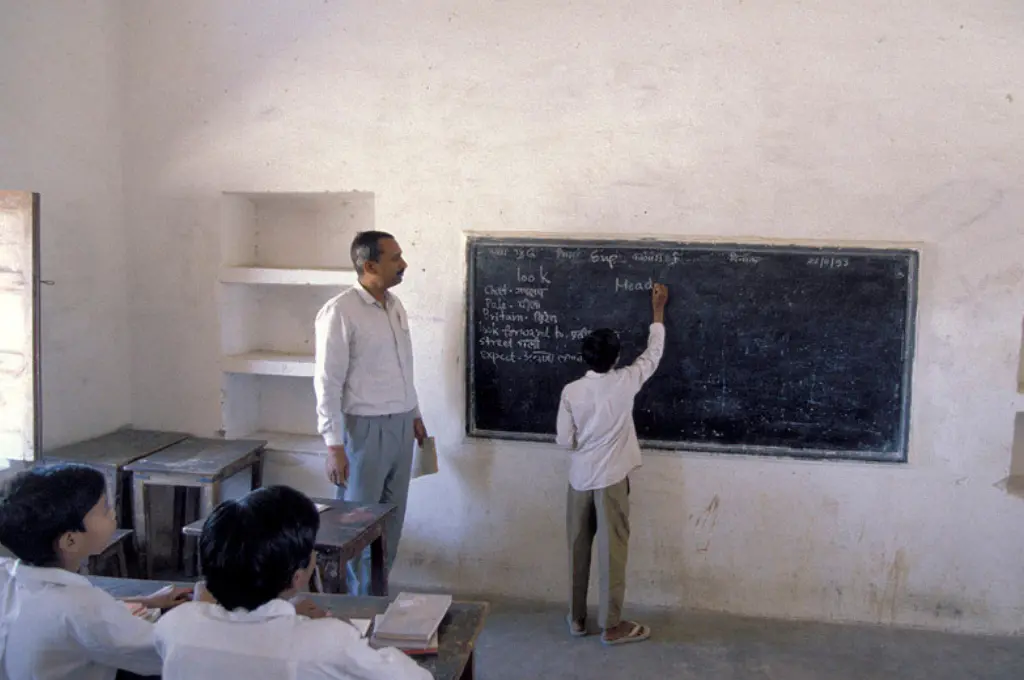
- Highly repetitive task formats, such as extended copying from the blackboard, choral repetition of answers, or completing identical worksheet exercises without discussion, shape whether participation feels meaningful or merely routine compliance.
Teachers work within constraint systems, not only individual choices
It is essential to recognise that these conditions do not arise from teachers failing to care or from their lack of commitment. Teachers operate inside systems that place significant demands on them. These include:
- responsibility for large and multi-grade classes,
- administrative and data-reporting requirements,
- pressure to complete curricula and meet measurable targets,
- limited time for planning or individualised feedback,
- and inadequate professional support or mentoring.
When relational or emotional work with students appears limited, it is often because time, structure, and accountability systems leave little space for it.
Learning cannot be unilateral
Current FLN reforms frequently prioritise curriculum design, learning materials, teacher-training modules, and assessment systems. These are indispensable elements of system improvement. However, they are insufficient if the broader ecology of schooling remains unchanged. Technical reforms that do not address classroom climate, identity, and relationships can improve procedures while leaving engagement untouched.
A more comprehensive approach recognises that:
- Student engagement and perseverance are influenced by how they are seen and heard in classrooms.
- Teacher well-being and professional agency affects interaction quality as much as lesson plans.
- Classroom norms surrounding voice, error, and participation mediate whether children approach text and numbers with confidence.
Improving FLN outcomes, therefore, requires attention to both instructional design and the social and emotional conditions in which instruction occurs.
Foundational learning as a socially and emotionally mediated process
Students participation depends on often ignored factors such as whether they experience the classroom as psychologically safe, responsive to their questions, and respectful of their identities and languages.
Consider a grade 2 child who is still gaining confidence in the language of instruction. When asked to read aloud, she hesitates. If mistakes are corrected publicly without explanation, she may gradually withdraw from participation. Over time, this withdrawal reduces her opportunities for reading practice, limits feedback, and reinforces low confidence. What appears to be a literacy deficit is also shaped by the emotional climate in which that literacy is being attempted.
Published in 2011, a US-based study of 213 school-based universal SEL programmes involving several hundred thousand students from kindergarten to high school demonstrated consistent associations between strengthened social and emotional competencies and higher academic achievement, along with improved behaviour and reduced emotional distress. Follow-up analyses found that these effects persisted over time. While the majority of these programmes were implemented in the United States, the findings highlight a broader principle: academic learning is deeply influenced by the relational and emotional conditions of schooling.
In this sense, foundational learning is socially and emotionally mediated. It is not solely the product of technically delivered instruction.
SEL helps with developing an institutional climate
The dominant framing of SEL emphasises students’ individual competencies such as empathy, collaboration, and self-regulation. While these constructs are important, classroom evidence invites a broader view. SEL is not only a property of children. It is also a property of institutions and of the everyday climate that schools create.
Three aspects are fundamental:
- Teachers’ working conditions shape the classroom’s affective climate. When teachers manage large or multi-grade classes with limited support, the emotional demands of teaching intensify, affecting patience, presence, and feedback.
- Language functions as both an instructional medium and a marker of identity. Where children’s home languages occupy marginal space in classrooms, the effects are cognitive because comprehension is affected, and emotional because belonging becomes fragile.
- Repeated exposure to procedural and mechanical tasks, including extended copying, repetitive practice exercises, and activities focused primarily on recall rather than explanation, can produce outward compliance but internal disengagement. When much of “on-task” time is spent in such mechanical routines, foundational skills risk being experienced as tasks to complete rather than as meaningful tools for thinking. This reframing shifts the question from ‘how do we teach SEL as a separate subject?’ to ‘what kinds of learning environments do schools create, and how do these environments shape both SEL and FLN at the same time?’
Does SEL dilute the focus on foundational learning?
A frequent concern is that emphasising SEL might dilute the already difficult task of improving FLN, particularly where many children are not yet meeting basic benchmarks. With time and resources already stretched, SEL can appear to be an added agenda rather than core work.
In overcrowded classrooms with wide variation in learning levels, teachers rely on trust, routine, and supportive peer norms.
But SEL should be understood as a precondition for FLN, not a competitor to it. Children’s willingness to attempt unfamiliar tasks, ask questions, read aloud, or persist through mistakes depends on whether classrooms feel safe, encouraging, and fair. Where fear of failure is high, or identities are marginalised, even strong instructional strategies have a limited effect. For instance, improved phonics instruction may not translate into better reading if students avoid reading aloud for fear of public correction. Structured numeracy exercises may have little impact if children hesitate to attempt challenging problems because mistakes invite embarrassment. In multilingual classrooms, comprehension scaffolds can remain underused if students feel their home language or identity is unwelcome.
There is also a practical reality. In overcrowded classrooms with wide variation in learning levels, teachers rely on trust, routine, and supportive peer norms to keep children engaged. These are social and emotional conditions, not optional extras.
Without them, instruction can be technically correct yet ineffective. With them, FLN is more likely to take root and endure beyond the immediate lesson.
How to improve foundational learning?
If systems continue to approach FLN primarily as a technical problem of materials, assessment, and training, they will continue to encounter fragile gains and uneven outcomes. A different design logic is needed. FLN reforms must be conceived with explicit attention to the environments in which children encounter text and numbers.
This means investing in teacher support that recognises emotional labour, creating classroom climates that make participation safe, treating children’s languages and identities as learning assets, and ensuring that time and structure exist for feedback and relational work.
SEL, understood ecologically, is not a parallel agenda. It is the medium through which foundational learning becomes possible.
—
Know more
- Learn about the role caste, conflict, and climate change play in successful SEL models.
- Read the entire TLPS report here.