It is likely that you know someone who gives money to nonprofits, volunteers their time, or speaks passionately about a cause they care about. They are everyday people—your neighbours, colleagues, friends—who give their time, talent, voice, and/or money. New research based on insights from more than 300 nonprofits across India shows that these everyday givers already provide one-third of the funding that nonprofits rely on.
Yet only 37 percent of nonprofits actively fundraise from this group.
This gap reveals that a large part of the sector may miss the opportunity and potential of everyday giving. The study behind these numbers—UDARTA:EG (Using Data and Research to Advance Everyday Giving in India)—maps current patterns and practices, and offers practical recommendations.

Why does this matter now?
Over the past few years, studies such as How India Gives and Everyday Giving in India have shown that Indians give generously, and that untapped potential runs into billions of rupees. This begs the question: What are nonprofits doing to connect with these givers? And what support do they need?
UDARTA:EG set out to answer exactly that. Co-designed and co-delivered by 13 sector organisations across India, the study surveyed 304 nonprofits and conducted in-depth interviews with 40, including a handful of sector experts.
The findings present both challenges and opportunities for the sector to consider.
1. It is well worth the effort
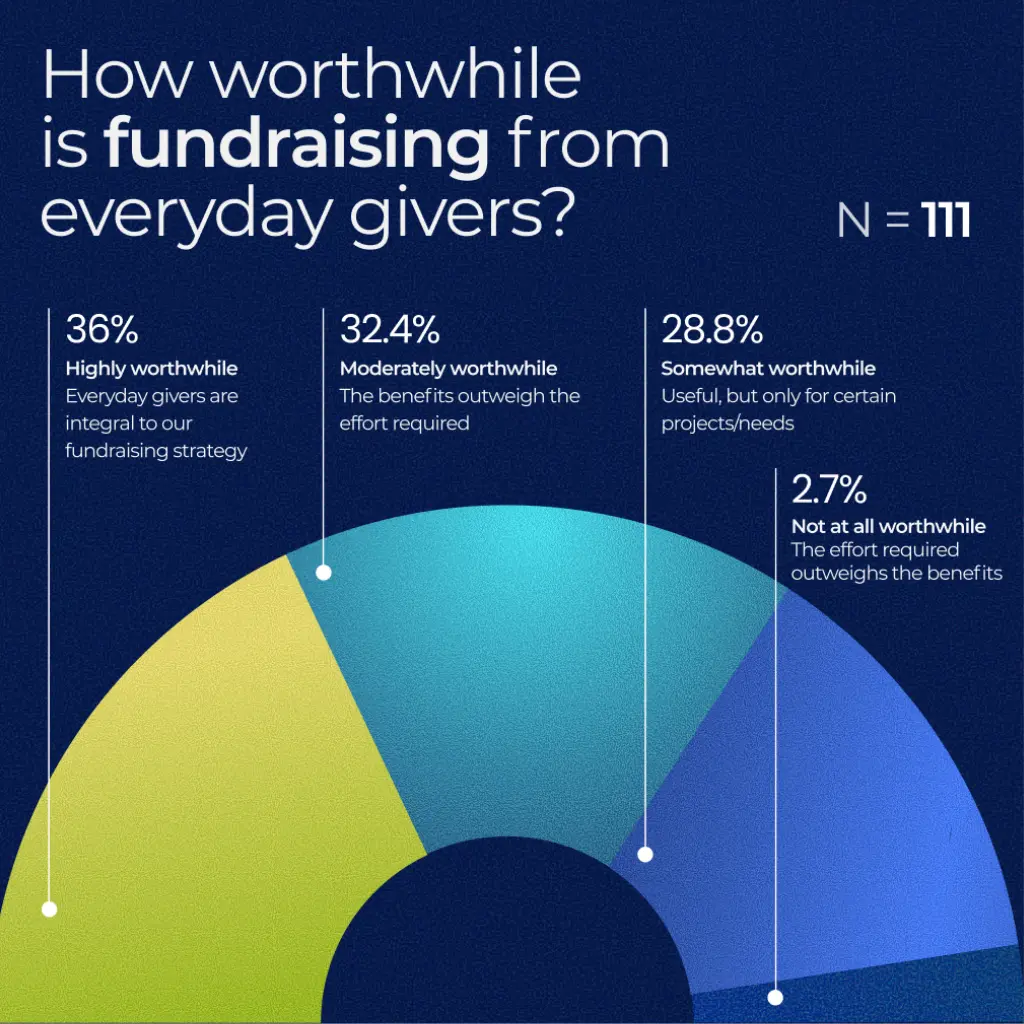
For 37 percent of nonprofits that actively pursue everyday donors, the results are striking. At least 97 percent of them report that it’s worthwhile. More than one-third consider it a core strategy, not just a nice-to-have.
Volunteering patterns tell a similar story. Of the 70 percent of nonprofits in the study that actively engage everyday givers as volunteers, 93 percent find it valuable. In short, for nonprofits wondering whether engaging everyday givers is worth their time and effort, the answer from the ground is a resounding ‘yes’.

2. It builds community
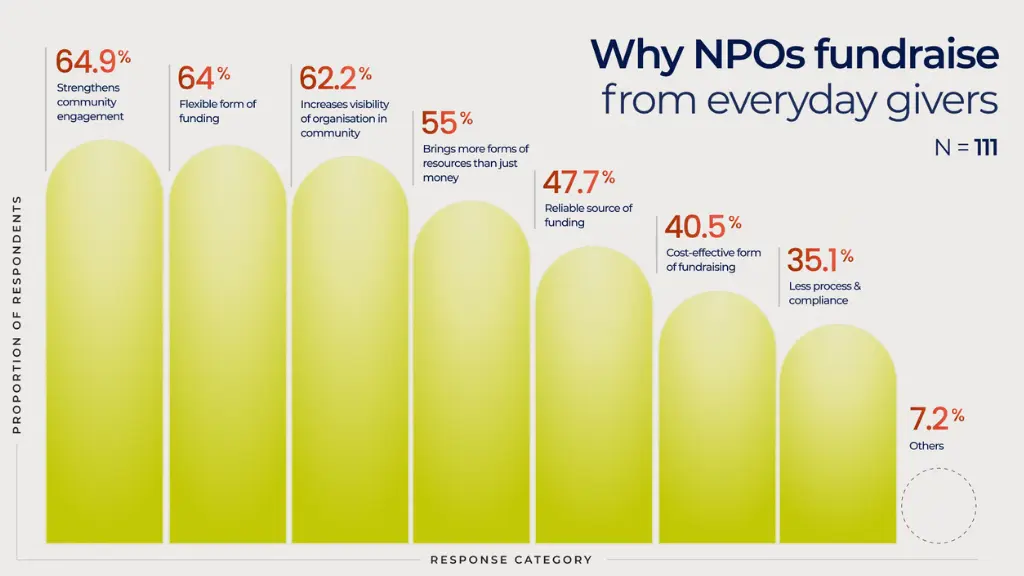
The research found clear motivations to engage everyday givers that go far beyond fundraising. Community building emerged as the primary goal: 65 percent of nonprofits reported that everyday giving builds local support and strengthens their connection to the communities they serve. Unrestricted funds matter too. Donations from everyday givers typically come without restrictions, allowing organisations the flexibility to address urgent operational needs.
Nonprofits also recognise the multiplier effect. Everyday givers don’t just donate money; they bear the potential to volunteer, advocate, and become amplifiers of the mission. The visibility and natural ambassadorship that comes when people care about your work is powerful. Supporters become storytellers, bringing energy, skills, and reach that transform how the organisation operates.
In other words, nonprofits aren’t only chasing donations. They’re also building lasting communities.
3. Size and age don’t determine success
There is often a presumption that only large, established, ‘popular cause’ nonprofits can succeed with everyday giving.
The data debunks this myth. Organisational size, age, cause area, or location don’t predict success with building thriving communities of everyday givers. In other words, a two-year-old rural education nonprofit with an INR 20 lakh budget can perform as well as a 30-year-old urban health organisation with an INR 100 crore budget.
This finding matters because it challenges what many nonprofits may convince themselves of—that they are too small, too new, or working on the ‘wrong’ cause to engage everyday givers.
What’s actually working?
The practices identified by the research as effective are neither complicated nor expensive. In fact, they are highly actionable.
The report finds that organisations with a dedicated in-house fundraising team are likely to outperform organisations that outsource the work. They see higher donor retention, more donations from individuals, and more volunteers. This increase doesn’t require large teams; it means having someone (or a small team) whose job focuses on thinking about how to engage regular donors.
Adding a simple donate button to your website correlates with a 12-point increase in the percentage share of everyday giving in your budget. Automated systems for tax receipts and customer relationship management tools (systems that track donor interactions) are linked to an 18.7 percent higher repeat-donor rate. These figures indicate that even simple technology investments in everyday fundraising matter.
Volunteer engagement yields striking data. Organisations that rely on referrals from existing volunteers have 3.7x more volunteers. And something as simple as giving volunteers a certificate of appreciation is associated with a 5.6x increase in the number of volunteers.
This tells us something important: People want to feel recognised. Volunteers aren’t motivated by the cause alone; they’re motivated by knowing their contribution mattered. Volunteers extend their trust when they recommend a nonprofit. This is far more powerful than any external recruitment effort. Recognition and trust work together. Appreciated volunteers become advocates who bring in more committed people, creating a virtuous cycle where peer endorsement becomes the most effective recruitment tool.
The biggest strategic gap
Most nonprofits don’t request donors to give, volunteer, or help more than once a year. Engagement, thus, happens on an ‘as-needed’ basis.
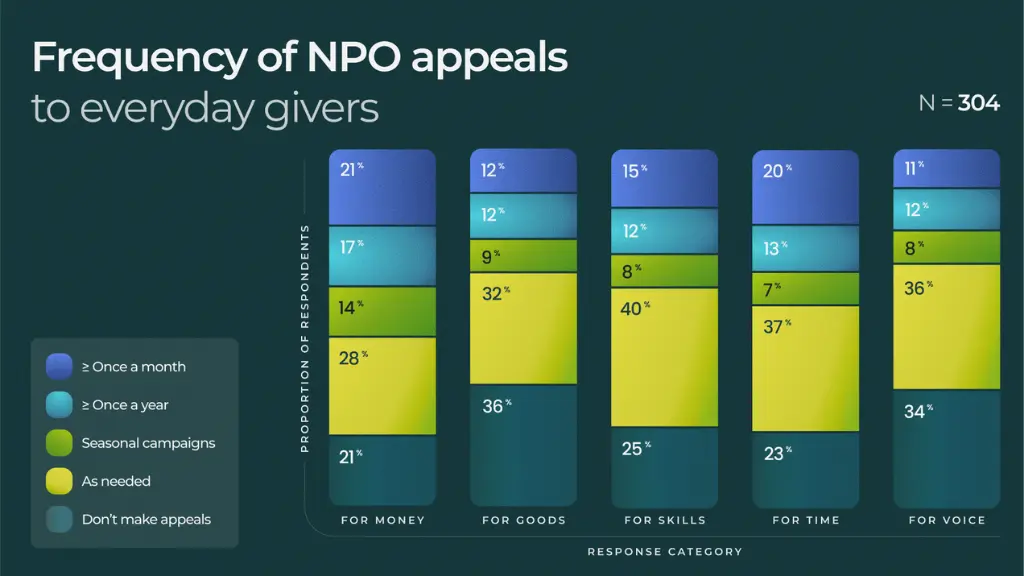
However, organisations that make regular, planned appeals are 15 percent more likely to find everyday giving reliable. This echoes with earlier research which shows that many urban Indians don’t give simply because they haven’t been asked.
Nearly half of the nonprofits lacked a structured plan for keeping donors engaged year-round. If a donor hears nothing for six months, and then suddenly receives an appeal, the ask feels abrupt to them. Regular light-touch updates make the eventual request for support feel natural and far more effective.
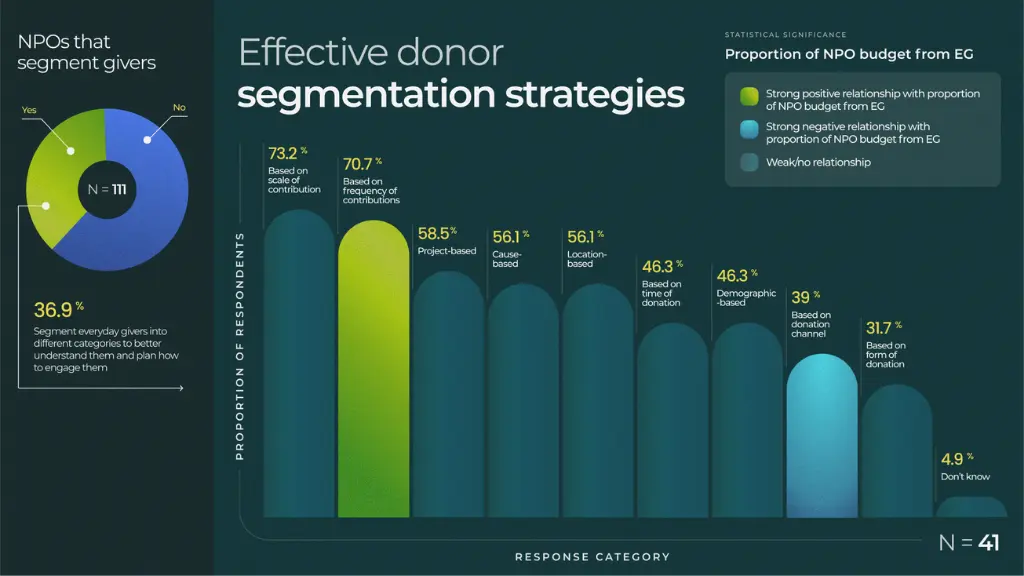
When the ask is made, is it directed at the right person? Only 37 percent of nonprofits segment their donors—grouping them based on how often they give, what causes they care about, and other relevant patterns. Organisations that do this, especially those that segment people based on how frequently they donate, raise a higher percentage of their funds from individuals.
So, the question isn’t whether people are tired of giving; it’s whether they’re being shown fresh, specific reasons to stay engaged. Could ‘donor fatigue’ just be ‘message fatigue’?
Why aren’t more nonprofits engaging everyday givers?
If everyday giving is this effective, why do only 37 percent of nonprofits actively pursue it? The research found clear internal organisational barriers:
- 40 percent cited limited team capacity
- 37 percent lack knowledge on how to engage donors
- 24 percent are not familiar with volunteer management strategies
Only 2.7 percent of the respondents noted that everyday giving is irrelevant to their work. In other words, almost every organisation that isn’t doing this sees the value of engaging everyday givers. They just need support to get started.
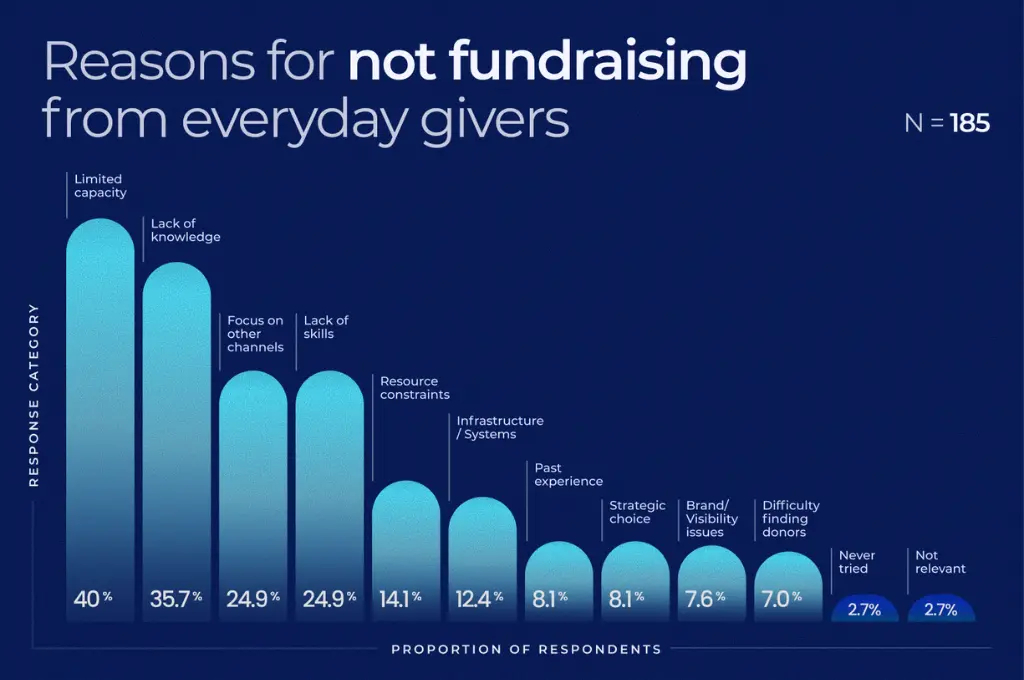
Even organisations already engaged in everyday giving point to capability constraints as a common challenge. They’re stretched thin trying to do everything.
What does this mean for nonprofits?
The research points to several concrete ways an organisation can strengthen their approach.
Build team capacities: Organisations whose team members receive fundraising training see a 19.9 percentage-point increase in everyday giving revenue.
Invest in simple technology: Small investments can lead to measurable improvements. Simple technology includes a donate button, a system that automatically sends tax receipts, or a basic tool to track donors and when they were last connected with.
Move from reactive to planned: Instead of asking for help whenever it’s needed, create a year-round strategy. Plan your asks and updates, and how you’ll show volunteers and donors appreciation. This shift makes your work more effective.
Personalise communication: Know who your donors are. Are they first-time givers or long-time supporters? Are they passionate about your specific programme or your overall mission? Different people need different messages.
Foster peer learning: Connect with other nonprofits that are doing this well. Share templates, strategies, and lessons learned. You don’t have to figure this out alone.
For funders and ecosystem enablers, the imperative is clear: Invest in nonprofit capacity, not just programmes. Build the internal capabilities that drive engagement for everyday giving. When designing training programmes, prioritise long-term relationship-building alongside acquisition, because sustained impact comes from sustained connections.
This report, and others before it, reflect that generosity in India runs deep, and everyday giving offers huge potential to civil society. The opportunity now lies in nonprofits not only recognising this potential but also building the capacity and confidence to tap into it.
—
Know more
- Read the complete UDARTA:EG report.
- Learn more about the first in-depth attempt to quantify everyday giving in India.