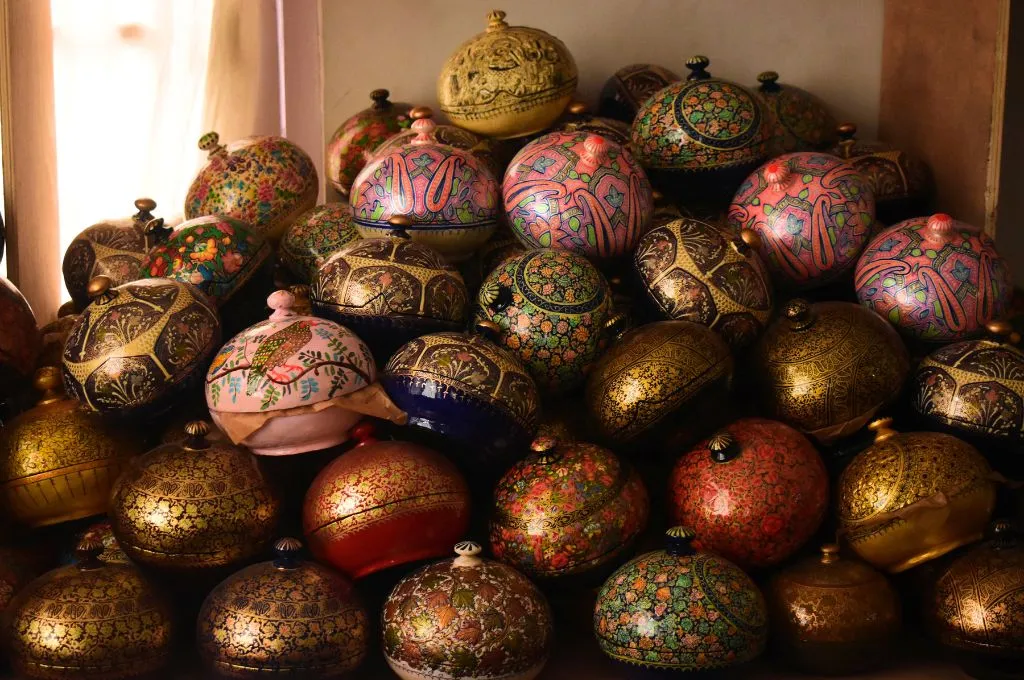
The craft of paper-mache has a long and layered history in Kashmir, dating back to the 14th century, when it was first introduced by the Persian Sufi mystic Mir Sayyid Ali Hamadani, and later gaining prominence during the reign of Sultan Zain-ul-Abidin in the 15th century. Through the centuries, artisans have transformed simple paper pulp into finely detailed objects ranging from masks and toys to decorative pieces and Christmas ornaments.
The craft once catered largely to local households, with products used for decoration, ceremonies, and storage. As demand within the region declined over time, these creations found buyers abroad, with exports forming the backbone of the industry.
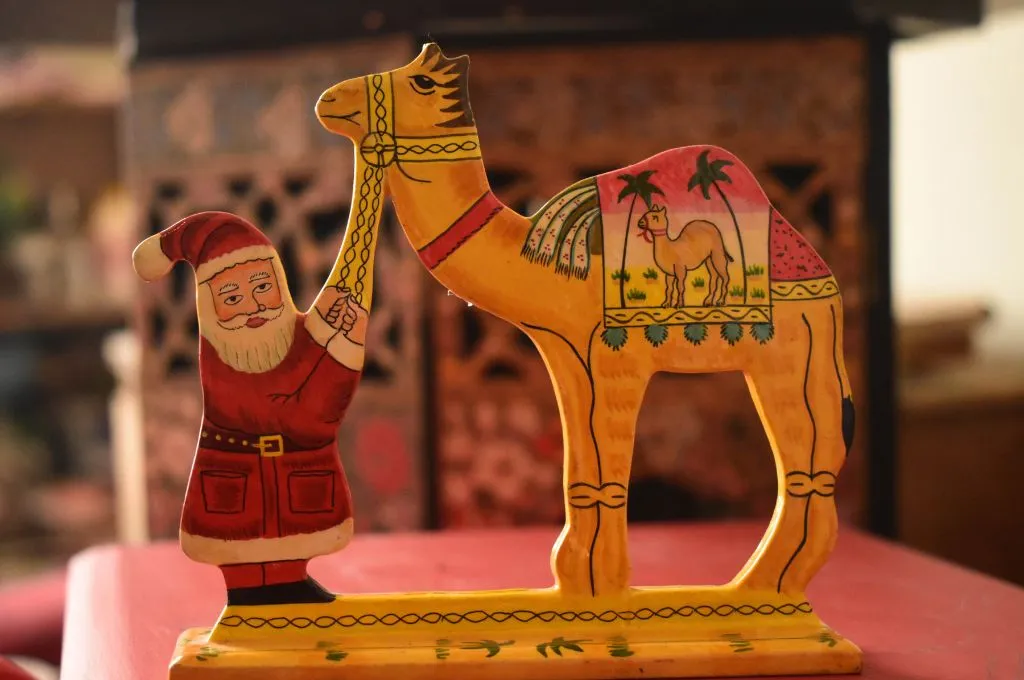
In recent years, however, this dependence on exports has made the craft more vulnerable. Global disruptions following the Russia-Ukraine war in 2022 slowed shipments and reduced orders. Exporters say routes that once felt reliable became marked by delays, higher costs, and uncertainty.

Orders that once followed a predictable seasonal cycle became irregular, with some shipments delayed or cancelled altogether as international logistics costs rose. Just as artisans were beginning to adjust to these uncertainties, a new challenge emerged in 2025—a 50 percent import tariff imposed on Indian handicrafts in the United States. According to India’s Ministry of Textiles, India’s textiles and handicraft exports stood at USD 20,401.95 million between April and October 2025, lower than the USD 20,728.05 million recorded during the same period in the previous year. Exporters say that higher US import tariffs made handcrafted products more expensive for buyers, resulting in fewer orders and tighter profit margins especially for small, labour-intensive workshops such as those producing Kashmir’s paper-mache.
A craft of care
At Shah Handicrafts in Srinagar’s Zadibal locality, this disruption has been felt firsthand.
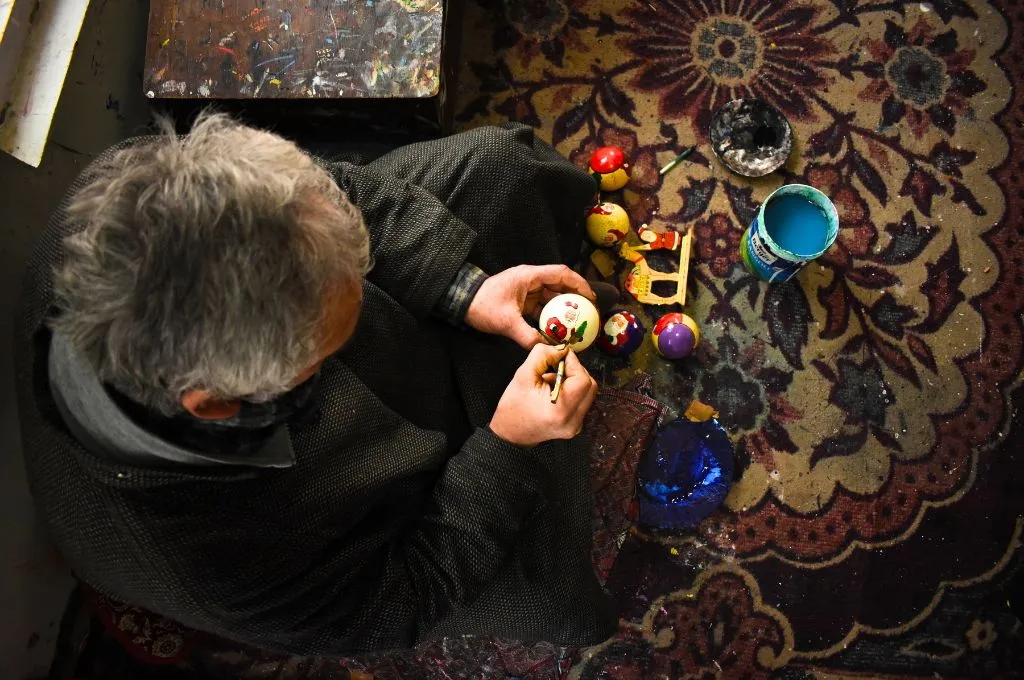
“Most of our work begins as winter approaches, especially before Christmas. That is the time when we start making Santa Claus figurines, bells, stars, Christmas balls, and other decorations. Every piece is made by hand. The work moves slowly—first we prepare (the paper-mache form), then we leave it to dry, and only after that do we begin painting,” shares Bashir Ahmad, an artisan at the workshop. He has spent more than a decade creating delicate, hand-painted pieces that have travelled far beyond Kashmir to markets in London, France, and the United States.
Orders usually begin arriving as early as March and are dispatched by September.
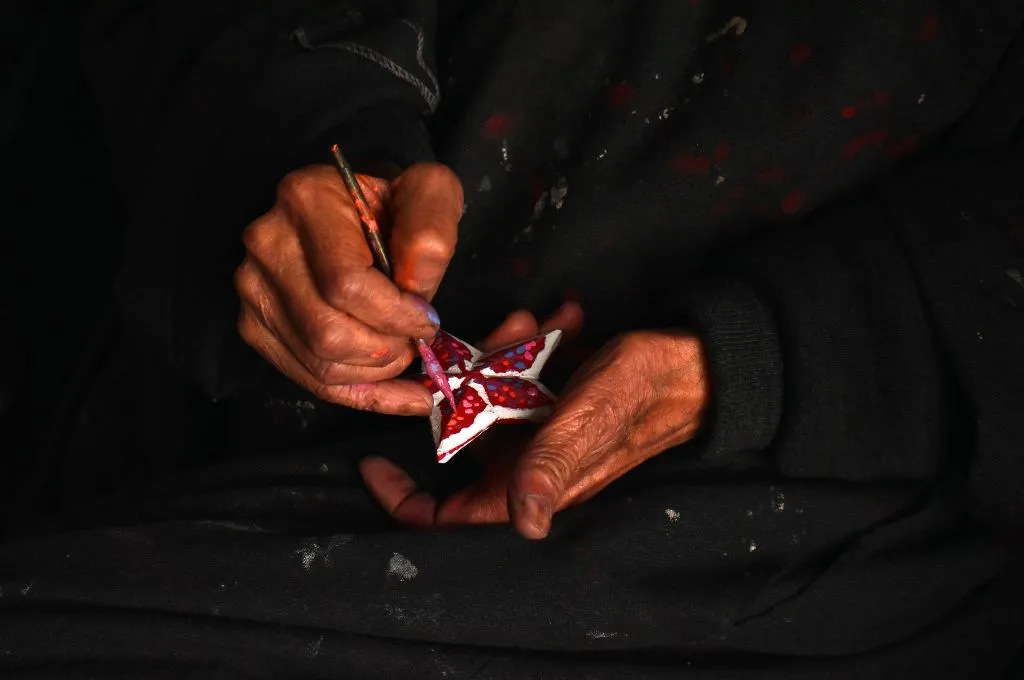
“Each design is drawn carefully with a pen, line by line. Sometimes a single piece takes a month, sometimes even longer. It requires patience, but this is how paper-mache has been made in Kashmir for generations.” Bashir says.

For many artisans, paper-mache is not just a livelihood, but a skill that is inherited. Born into a family of artisans, Bashir grew up watching his father and uncles work through long winter afternoons, shaping and painting delicate forms by hand. “This craft has been in our family for generations. I learned it at home first, by observing, and later started assisting senior craftsmen in the neighbourhood,” he says.
Today, Bashir works alongside a small group of artisans as they go over the slow and labour-intensive process of crafting different objects. Depending on the size and complexity, a single paper-mache piece can take several weeks to complete, from preparing the paper pulp base to the final layers of painting and varnishing.
1. Making the form
The first stage of Kashmiri paper-mache is sakhtsazi. Here, recycled paper is soaked in water for several days until it becomes soft. This mixture is then mashed and mixed with natural glue (like rice starch) and sometimes chalk powder to form a smooth pulp, which is then applied over wooden or clay moulds.
2. Drying the moulds
Once shaped, artisans smooth the surface by hand, and the paper-mache figures are kept aside to dry naturally. This can take a day or more, depending on the weather.
3. Painting and designing
After the form is ready, the next stage is naqashi, or decoration. Skilled artisans use fine brushes to paint the figures with bright colors and detailed patterns such as flowers, dots, or traditional Kashmiri designs.
4. Finishing touches
After painting, varnish is applied to the products to give them a sheen and to protect the colours. Once completed, the products are carefully packed in layers of protective material to prevent damage. They are collected by overseas buyers and exporters from the workshops and then shipped abroad through courier services or cargo agents.
Despite spending days carefully crafting each object, artisans face growing uncertainty over whether their handicrafts will be purchased, given instabilities in the largely international market for these products.
The cost of the craft
Bashir shares how some of these disruptions, particularly the Russia-Ukraine war in 2022 led to a decline in the demand for handicrafts. Fewer orders meant less work, and the otherwise steady flow of income started to falter.
“Earlier, during the Christmas season, when orders were high, I would start work in the workshop at 8:00 in the morning and keep going until 7:30 in the evening,” he recalls, glancing around the quiet room.
“Back then, the workshop buzzed with activity. Everyone would be focused on their tasks, their hands moving fast, barely pausing to eat lunch. We would complete three articles a day, and there was little time to rest. Now, with fewer orders, the rhythm has slowed. We often finish only two pieces a day. With the extra time, we take a proper lunch and pause for our prayers. The workshop feels quieter, the hum of work replaced by long moments of waiting, and the energy that once filled these walls has softened.”
Another major shock came with the imposition of the import tariff by the United States government in 2025. “Our products became costly for customers in the United States. People don’t buy as much now.” Bashir says.
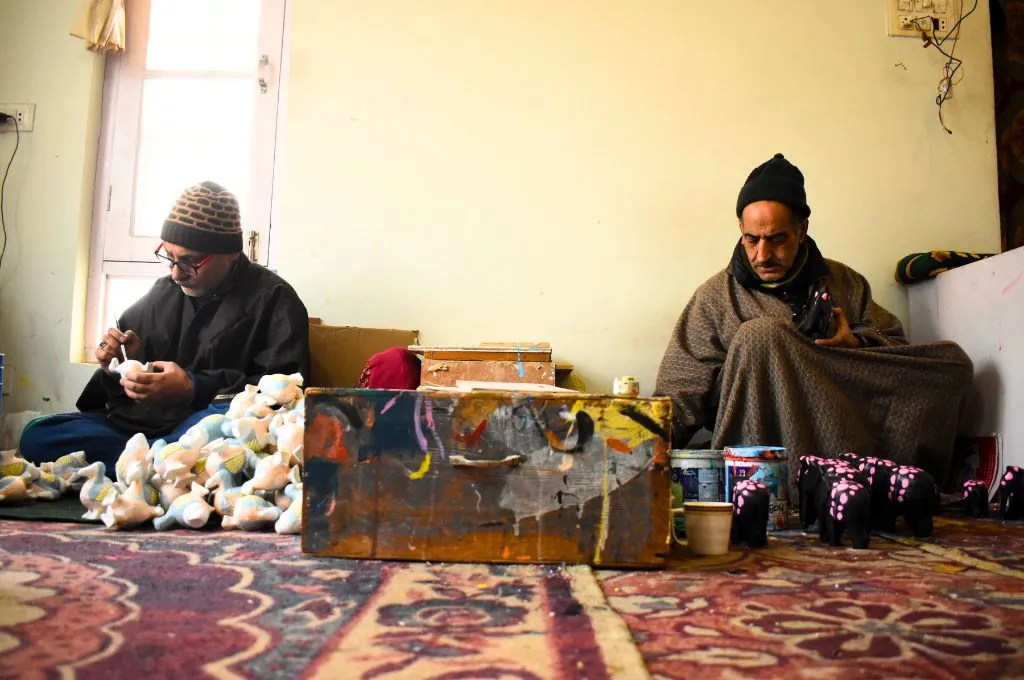
Meanwhile, the expense to keep the workshops running—be it to purchase raw materials, transport, or courier charges to export goods—have doubled, leaving meagre profits. “Earlier, if a product cost us INR 100 to make, now it costs INR 200. All these costs come first. We have to cover them. Otherwise, how will the work continue?” he adds.
For artisans, their craft is a matter of sustenance—to bear household and family expenses, to pay the school fees of their children, and to afford their basic daily needs.
An additional cause of worry for paper-mache artisans is that interest in the craft seems to be dwindling, especially among younger generations. “Paper-mache is a traditional art in Kashmir, but only about one or two percent of the youth are involved in this work. The younger generation often prefers outdoor jobs, which makes it challenging to sustain the craft,” adds Syed Amjad Ali, the owner of the Shah Handicrafts in Zadibal.
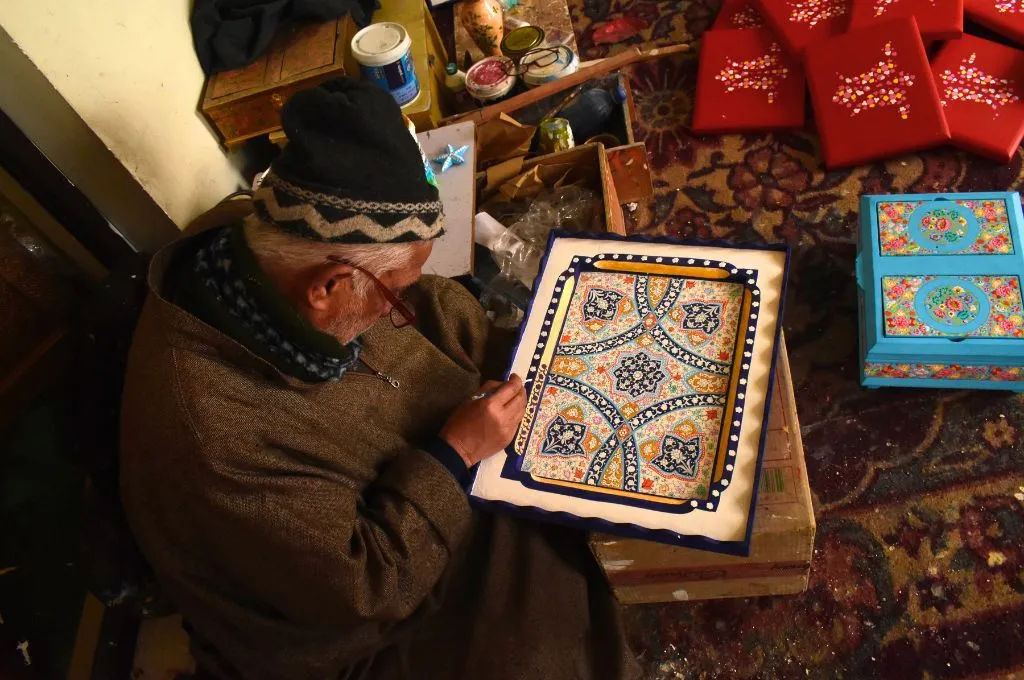
The workforce in the industry has also steadily shrunk. “Earlier, around 300 to 400 people were engaged in paper-mache work in this area alone,” Bashir says. “Now, barely 200 remain. Many have left the craft because the income is uncertain and younger people do not see a future in it anymore.”
Despite the hard work and delicate craftsmanship, perfected over years, that goes into creating these items, declining orders and interest adds to the growing sense of disappointment and loss among artisans—not only of income, but of recognition for a tradition that once defined Kashmiri identity.
However, despite these challenges, Srinagar’s paper-mache artisans remain committed to preserving their craft, working hard to adapt and sustain this cherished tradition.
All featured pictures courtesy of Danish Showkat.
—
Know more
- Learn how the felling of poplar trees is impacting livelihoods and the local economy in Kashmir’s ‘pencil village’.
- Read more about how paper-mache artisans in Kashmir are striving to keep their craft alive.