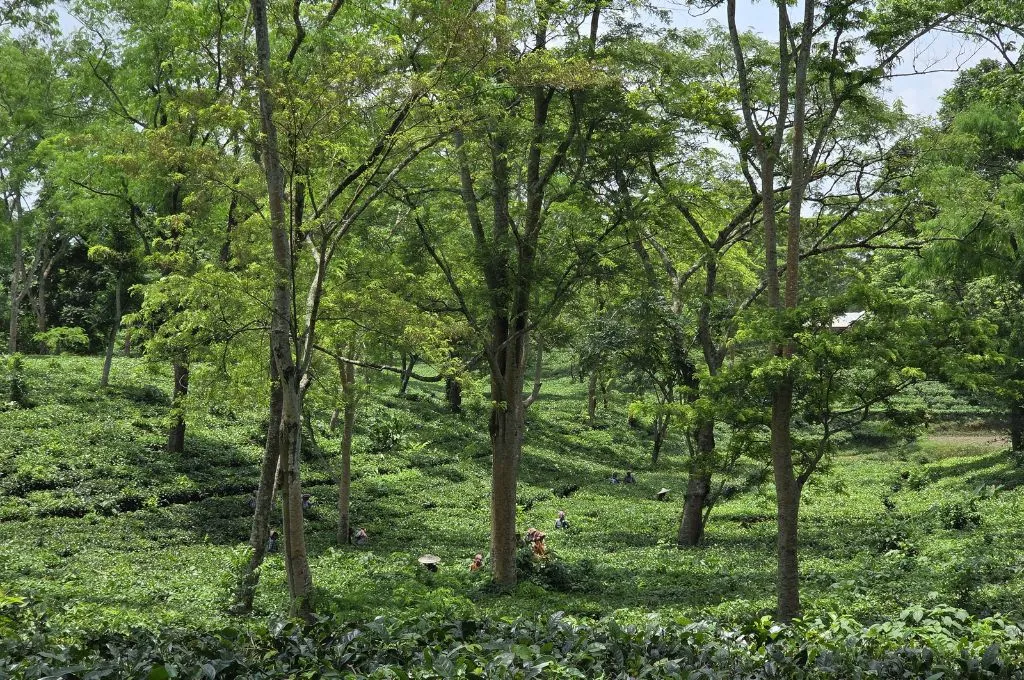
In the valley of Tripura’s Unakoti district, tea estates are spread across uneven land and connected by narrow roads. The fields are vast, green, and carefully maintained, but just beyond them lie the labour lines: a row of houses, small, unpaved pathways, and shared spaces where tea workers live and raise their families.
A place where work and life meet
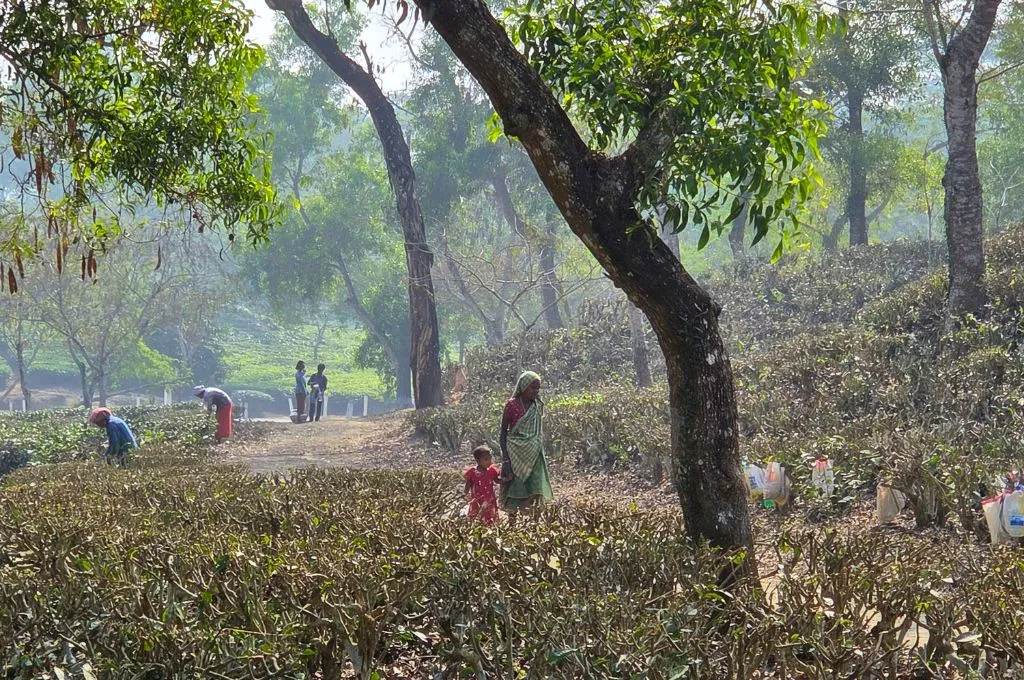
Early in the morning, women workers walk towards the fields carrying empty bags. They move in small groups, talking as they go, before spreading out across the rows of tea bushes.
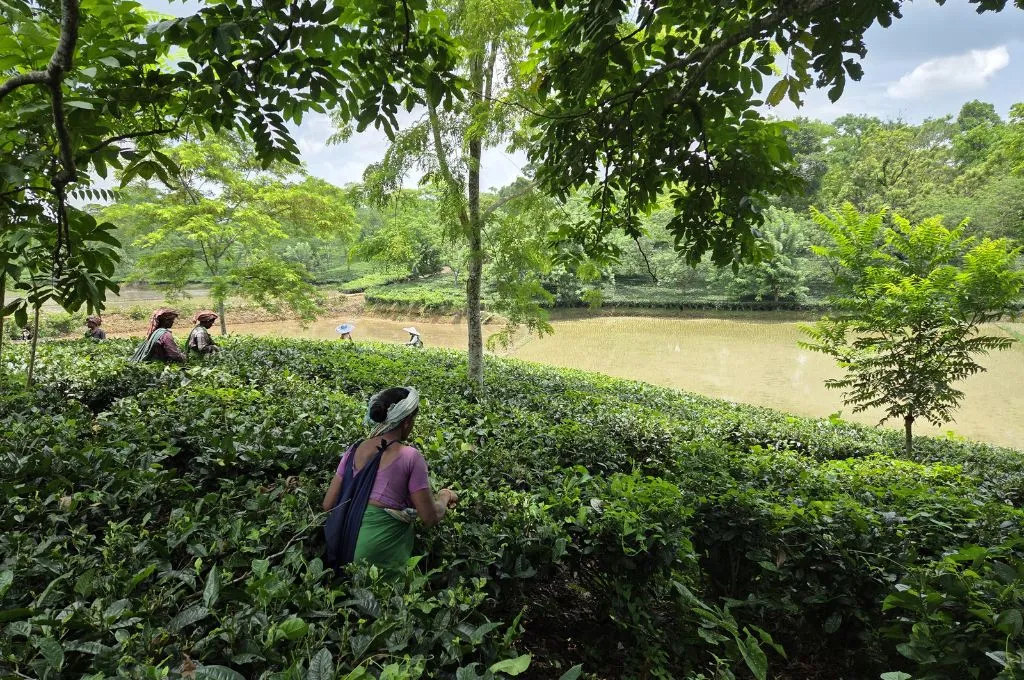
By midday, they can be found plucking leaves and placing them in their bags as they move steadily from one section to another. Back in the labour lines, children play around the houses, and older family members sit outside. These rhythms inside the tea estates have remained the same for years. However, underneath these routines lies a sense of uncertainty.

Across estates, access to housing has long been tied to work in the tea farms. Families have spent generations living in labour lines without owning the land beneath their homes. This has always raised a question: What happens when work stops?
In 2022, the state government launched the Mukhyamantri Chaa Srami Kalyan Prakalpa, a scheme to provide pattas (or titles) for small plots to workers in tea estates set up on government land. For the first time, workers were being granted a formal claim to the land on which they live. It promised a measure of stability by addressing workers’ fears of losing their homes if conditions in the estate changed.
As of March 2026, around 3,166 out of the 6,585 tea worker families in the state had received land titles under the scheme.
Although many workers have spent years in the same estate, livelihood security remains fragile.
Between November 2025 and February 2026, I engaged in fieldwork at a tea estate near Chandipur in Unakoti. Although my research was not focused on land rights, many workers would mention the patta while talking about their homes, children, and their future in the estate. These conversations prompted me to explore the issue further.
The significance of the patta becomes clearer when viewed alongside the nature of employment in the tea estates. Although many workers have spent years in the same estate, livelihood security remains fragile. Frequent labour shortages mean that employment for existing workers is relatively stable, but working arrangements are increasingly temporary and casual. Even in households with permanent workers, other family members often work as casual workers.

Moreover, wages have remained low. Tea workers in Tripura currently receive around INR 204 per day, making it difficult for families to improve their homes, save for emergencies, or invest in their futures. The patta thus offers a degree of security in terms of housing, but it does not address the economic vulnerabilities associated with the precarious livelihoods in the tea industry.
A home to call one’s own?
Across meetings with families, I observed that the patta document is usually folded carefully and stored among other important papers in the house.
Workers often take it out to show visitors or neighbours. Inside the houses, there are also signs of improvement. Some families have started replacing mud walls with brick; others have added a small extension or have replaced their roofs. But these changes are gradual and often incomplete. Construction stops when money runs out and later resumes when support becomes available.
These decisions reflect how workers manage difficult choices. The house matters, but it is one among many urgent needs. Nevertheless, the patta has begun to change how some workers think about their homes. With a stronger sense that the land belongs to them, there is more reason to invest, even if slowly.
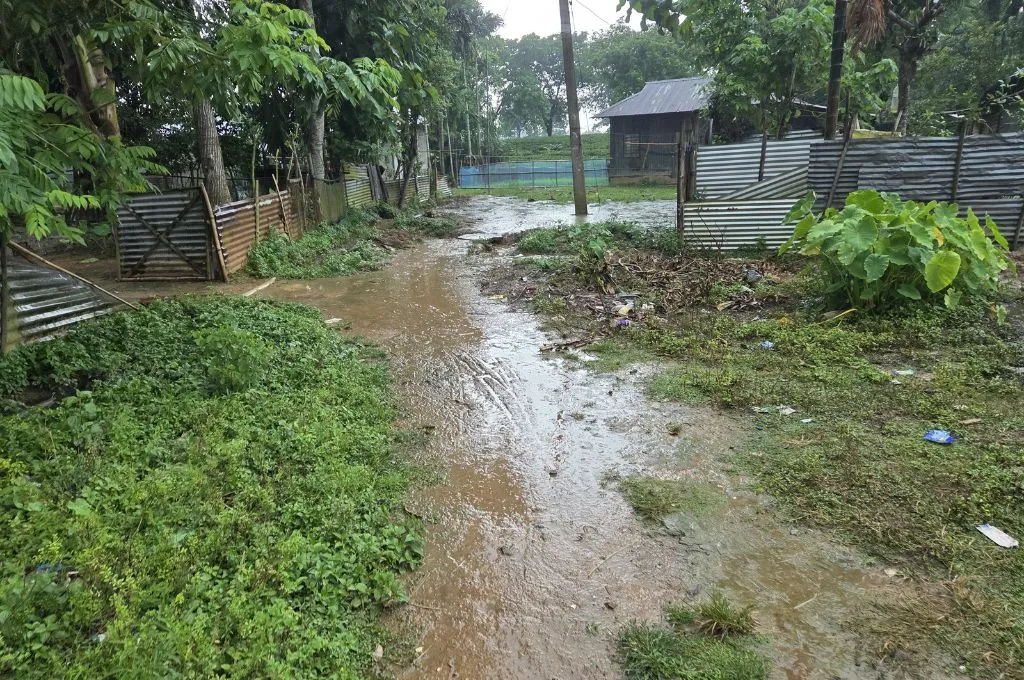
Meanwhile, the condition of shared infrastructure, including lanes separating homes, in the labour lines has seen little change. Pathways between houses are narrow and uneven. During rains, they become muddy and difficult to walk on. Water also collects in low areas owing to poor drainage. Children move carefully through these spaces while women carrying water or firewood adjust their steps to avoid slipping. The patta alone does not improve the roads or fix the drainage. The environment in which people live remains the same in the labour lines.
A life still spent among the tea leaves
By mid-morning, the conversations about land give way to work. The same women who speak about their pattas return to the field and continue their daily routine. Missing work means losing that day’s income, which is something families cannot afford.
The average size of the plots that have been allotted to workers is about two gonda/ganda (a local unit of land measurement). While this is enough to build small structures, it cannot be used to grow sufficient crops to support a family’s subsistence needs or to set up other home-based livelihoods. As a result, while the house may feel more stable, there is no real alternative to the daily drudgery of plantation work.
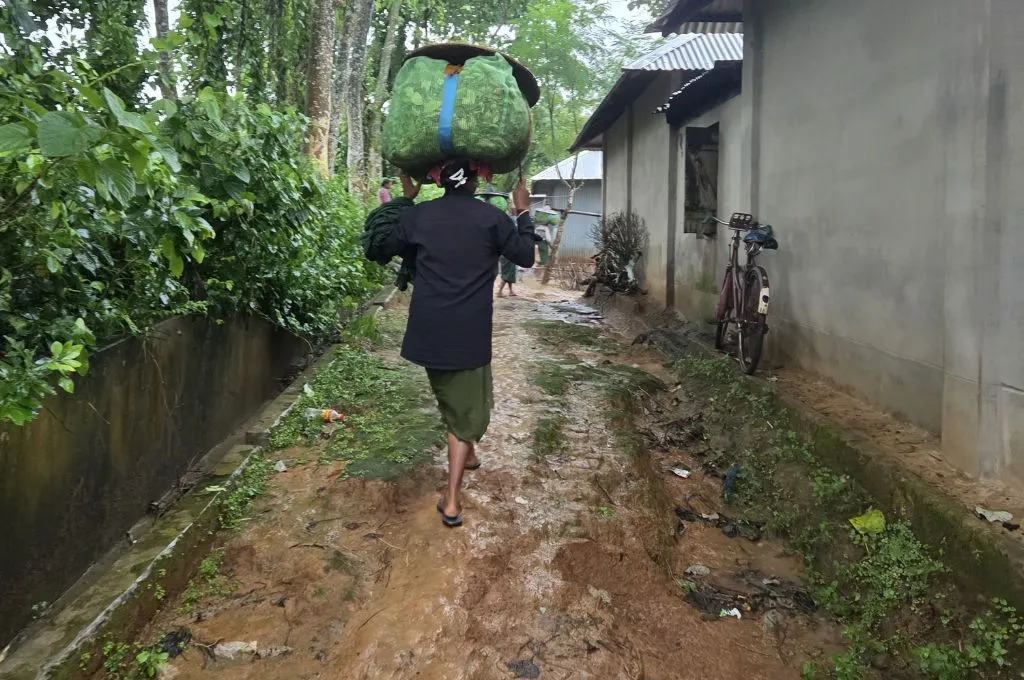
In the late evening, as workers return from the fields, the labour lines become active again. Children gather near the houses, women sit together talking, and daily life settles into a familiar pace. It is common to see different generations sharing the same space: a grandmother walking with her granddaughter, a mother watching over young children while preparing food, older men sitting outside and observing the day pass.
Since there are no formal childcare facilities in the estate, children either accompany their parents into the farms or remain within the labour lines, moving between houses and spending time with older family members. One worker pointed towards her grandchildren playing nearby and said, “They have grown up here, just like we did.”
As families grow in the labour lines, and employment is passed down over generations, questions have arisen around the transferability of the pattas. Many are unsure about the exact boundaries of their plot. The patta offers a sense of ownership, but not clarity around the terms of such ownership.
On unstable ground
In conversations with ten permanent workers whose families had received pattas, as well as with the estate manager, it became apparent that not everyone in the estate had received their titles.
Even after workers received the titles, they did not have complete information on how to use them to exercise their rights.
The allotment process is not always clear to workers. Many did recall government officials visiting the estate to map residential plots, collect documents, and verify employment histories, but had little knowledge of what would follow. Moreover, while workers understood that the estate management did not decide who received pattas, the actual process remained opaque for them. Some workers felt that those who were more visible or had connections with the estate management and local bodies may have had an advantage. One worker described making repeated visits to local offices to submit documents and follow up on the application before eventually receiving the patta.
Even after workers received the titles, they did not have complete information on how to use them to exercise their rights. While most knew that they had received land, a smaller number knew the exact conditions attached to it. The patta document is not always easy to read, and explanations are often unclear. As a result, workers have to rely on other families, local officials, and estate management for information, and often receive incorrect or competing answers.
Questions around ownership, in particular, were recurring. When the conversation turned to whether the land could be sold or inherited by their children, workers’ answers became more tentative. Some said it could only go to their children, while others said it could not be sold at all.
According to the provisions laid out in the scheme, the land is meant for housing and cannot be freely sold or transferred. While it can generally be passed on through inheritance, the allotment may be cancelled if the stipulated conditions are violated. Some of the workers I spoke to interpreted this to mean that the land could be taken away if they stopped working in the estate. This perception was echoed by an estate manager, who suggested that workers risked losing their pattas if their attendance declined or they stopped working regularly.
This points to a persistent gap between the formal rights granted on paper and how these are understood in practice.
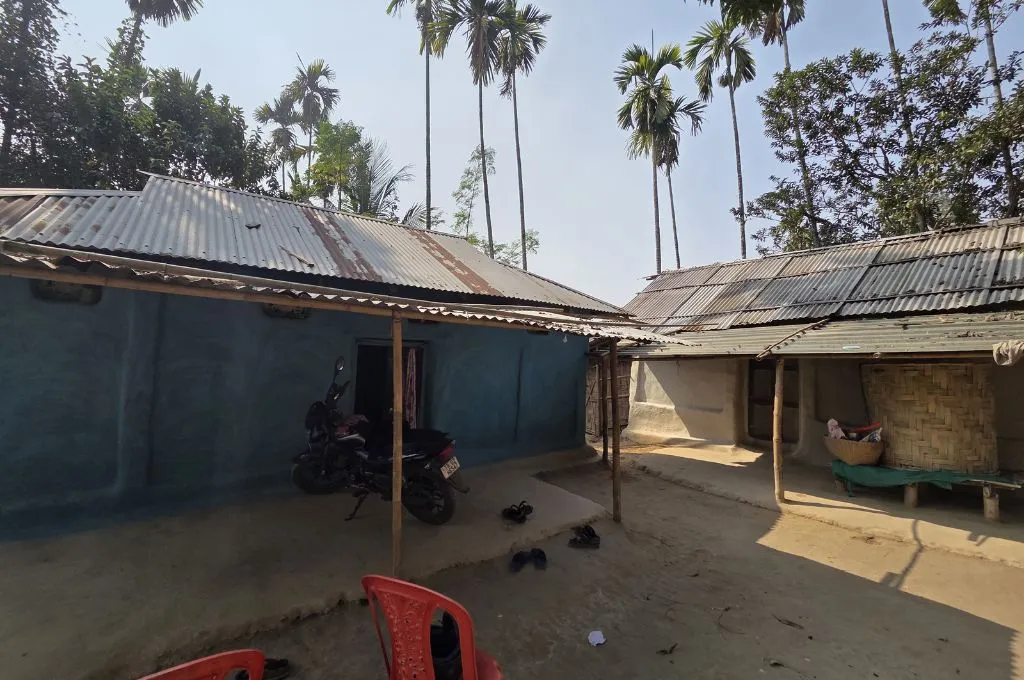
Moreover, complications have also emerged in the context of other government schemes. Most workers received money under the Pradhan Mantri Awas Yojana to build their houses. But many were not able to use the full amount for construction since the money was often spent on immediate needs, including healthcare and daily expenses. In some cases, this resulted in workers receiving warnings or show cause notices from officials when houses were left incomplete.
Inside many homes, these papers lie together—the land patta and the notice about incomplete construction. The two papers represent different kinds of claims and responsibilities, but in everyday life, they sit side by side, equally important and equally unclear.
As the night sets in, the estate quiets down. The fields empty, and activity shifts back to the labour lines. Lights come on inside houses and families gather after the day’s work. The patta may secure a place to live, but it does not by itself address the low wages, insecure livelihoods, and everyday hardships that shape life in the tea estates. For many tea workers, the journey towards security remains unfinished.
—
Know more
- Read this article on the gaps in the Chaa Sundari housing scheme for tea workers in West Bengal.
- Learn how climate change and limited state support have impacted Himachal Pradesh’s tea gardens.
- Learn more about the precarious working and living conditions in tea plantations.