‘Aachulay!’ (Life, its whole cycle in this world, and beyond, where lie the ancestors) is an interjection of praise in Róng, the Lepcha language. People shout it out on occasions of births and weddings, and even to symbolise protest.
On July 26, 2026, when I met the marching group near Tarkhola, I was greeted with a sonorous ‘Aachulay!’ This time it meant resistance and dissent. On foot were a total of 19 participants from the Affected Citizens of Teesta (ACT, a community-led movement originating from Dzongu, a dense forest mountain region in North Sikkim). They had gathered for a four-day long march from North Sikkim to West Bengal to draw attention to the need for saving the Teesta, the largest river in Sikkim, from the adverse effects of the hydroelectric power projects (HEPs) in the state. A few members of the Sikkim Bhutia Lepcha Apex Communities (SIBLAC), a regional political party, and individuals like myself had joined the march in solidarity with ACT, supporting their cause and amplifying their demands. Besides the resounding chant, I spotted multiple slogans that the group carried with them: ‘Flooded Future’, ‘Our Rivers, Our Responsibility’, ‘Every Tunnel Leaves a Wound’, ‘Rivers for Life, Free Flowing Rivers’, ‘You are the Guardians of the Rivers!’, ‘Is There Light at the End of this Tunnel?’, ‘Let Our Teesta Flow Freely’, and so on.

The roots of the march
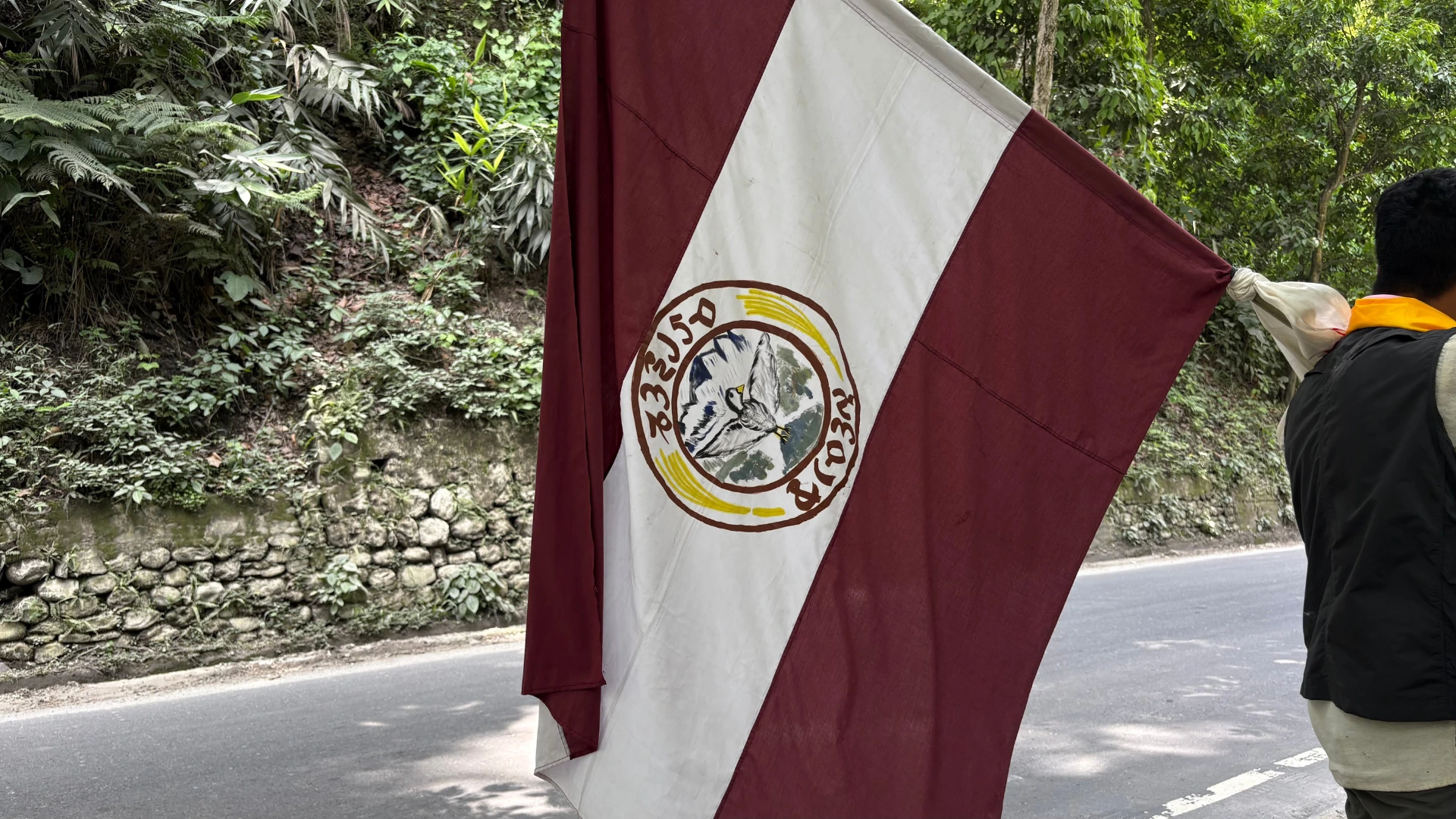
What grabbed my attention immediately was a flag with the image of a bird and two blocks of text. I approached the girl who was hoisting it and asked her what it meant. I learned that out of the three horizontal stripes on the flag, the two blood red–coloured ones represented life and the strength it requires to live; the white in the centre stood for peace; and the bird in the middle was Kohom-Fo (the hill partridge; a deity that had taken the form of a bird). In the background stood Mount Khangchendzonga, and on the sides of the circle that housed these elements were two paddy straws. The text on top, ‘Mootunchyee’, loosely translates to ‘mother’s loved ones’, while the one below read ‘Aachulay!’

In order to further explain the symbols, the girl narrated the story of a great flood that had washed away much of Mayel Lyang (the hidden ancestral land of the Lepchas), driving people from the community to climb up the peak of Mount Tendong, where they met Kohom-Fo that sprinkled millet beer over the land causing the flood to recede, re-enlivening the land as a result. When I read about the flag later, more meanings evolved.
First, the flood that Leenor, the girl I spoke to, was referring to was a result of a race between Teesta (Rongnyu) and Rangeet (the largest tributary of Teesta), a popular lore that most people in Sikkim are familiar with. To say there is an abundance of the mention of these rivers in Lepcha cosmology and folklore is to simplify the reverence that the community holds for them.
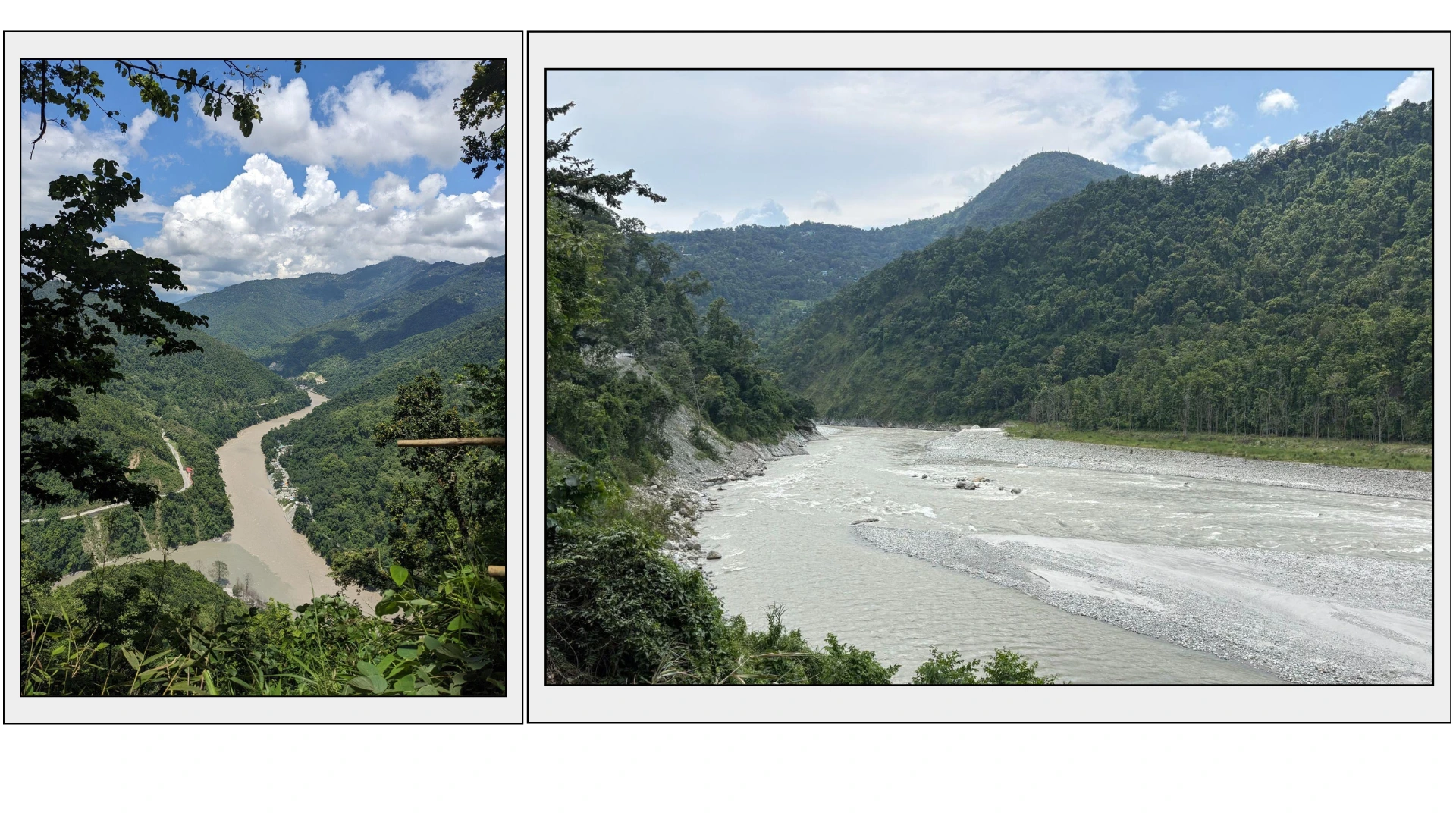
The story is as follows: Two lovers, Rongnyu and Rangeet, came from different mountains and secretly met near Mount Khangchendzonga. They desired to be one and meet near present-day Peshok in Darjeeling, which along with the surrounding region is popularly called the Tribeni. They started as rivers at the base of the mountain where Rongnyu chose Parilbu (a snake) to guide her down to the plains while Rangeet sought the guidance of Tutfo (a bird). Under Parilbu’s directions, Rongnyu reached the decided-upon site quicker than Rangeet who had to continuously remind the ever-distracted Tutfo to remain on track. When Rangeet finally arrived and found Rongnyu waiting for him, he exclaimed, ‘Thee-sutha!’ (When did you arrive?) It is widely believed that Teesta derives her name from this incident. Rangeet, in a fit of rage at Rongnyu having reached first—and in my reading, as a result of wounded male ego—turned back, causing a massive flood in the region. The story connects to ACT’s design of the march precisely because it is folklore that the entire community shares deep roots with.
Leenor is 17, one of the youngest marchers; she had skipped school to be part of the march. “Since my parents are associated with ACT, I grew up listening to stories of the Teesta River and the importance of conserving it. I am doing this for my future; it is important for me to be here. Some of my friends know I am at the march, but don’t necessarily understand why.”
ACT was founded by Athup Lepcha in 2007. In two decades, the movement has found resonance with generations of people from Sikkim. While on one hand, the march was a homage to the founder (who died in 2025) and a call to scrap and reassess the HEPs in Sikkim, it was also an attempt at reiterating that this issue is not solely a Lepcha or a Dzongu one.

A transboundary river, Teesta flows through Sikkim, West Bengal, and Bangladesh, before entering the Bay of Bengal. This means that everyone directly or indirectly associated with the river, whether through cosmology, folklore, geography, ecology, or even economy, are responsible for the well-being of the river—aptly summarised by ‘Teesta Matters to Me’, the primary slogan of the march.
Retracing the march: From Phidang to Tribeni
The march commenced in Phidang (the first exit from Dzongu in North Sikkim) by offering prayers to nature in the presence of a bongthing (Lepcha shaman), in line with the animistic practices of many Lepcha communities. Some Buddhist lamas had also joined to offer their prayers. Exiting Phidang, they crossed Mangan and entered East Sikkim to reach Makha, their first halting station. The road to Makha (a small village along the banks of Teesta) is not easy. Here, villages like Dikchu and Raley—in Gangtok district, where the National Hydroelectric Power Corporation (NHPC) Stage V dam lies—were gravely impacted by the 2023 glacial lake outburst flood, which claimed a significant number of lives. Estimates range anywhere from 40 to over 100, though such figures are notoriously unreliable in the aftermath of these disasters, as labourers and other transient workers often go undocumented. The NHPC Stage V is a 510 MW HEP, with its dam in Dikchu and powerhouse in Sirwani.
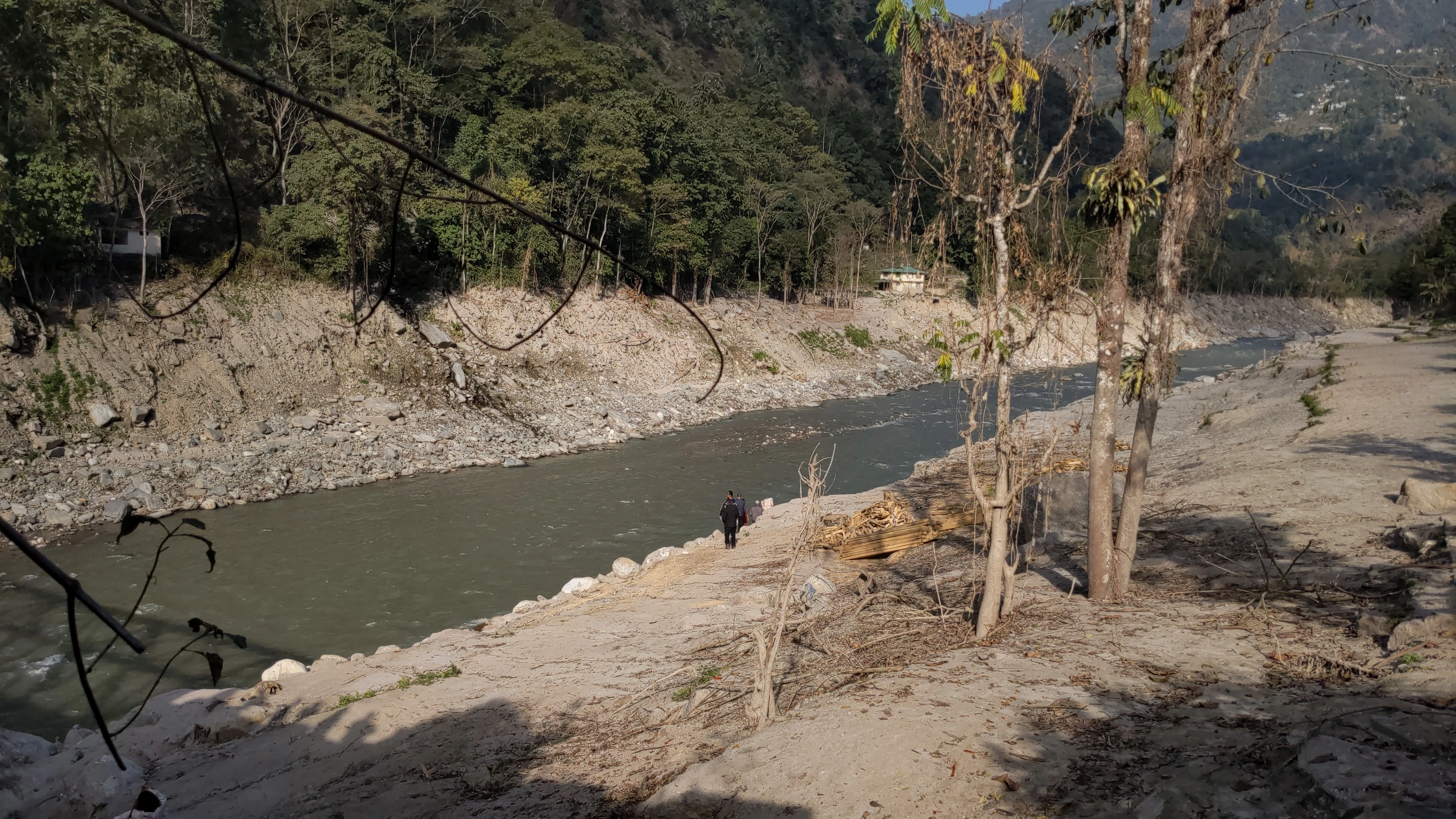
Mayalmit Lepcha, ACT’s co-general secretary, brought my attention to how the tunnels that connect to the Dikchu dam lie precariously below the roads, causing the roads to break at multiple points that made the march difficult on this stretch. Eventually, the journey was made possible through the support of the residents.
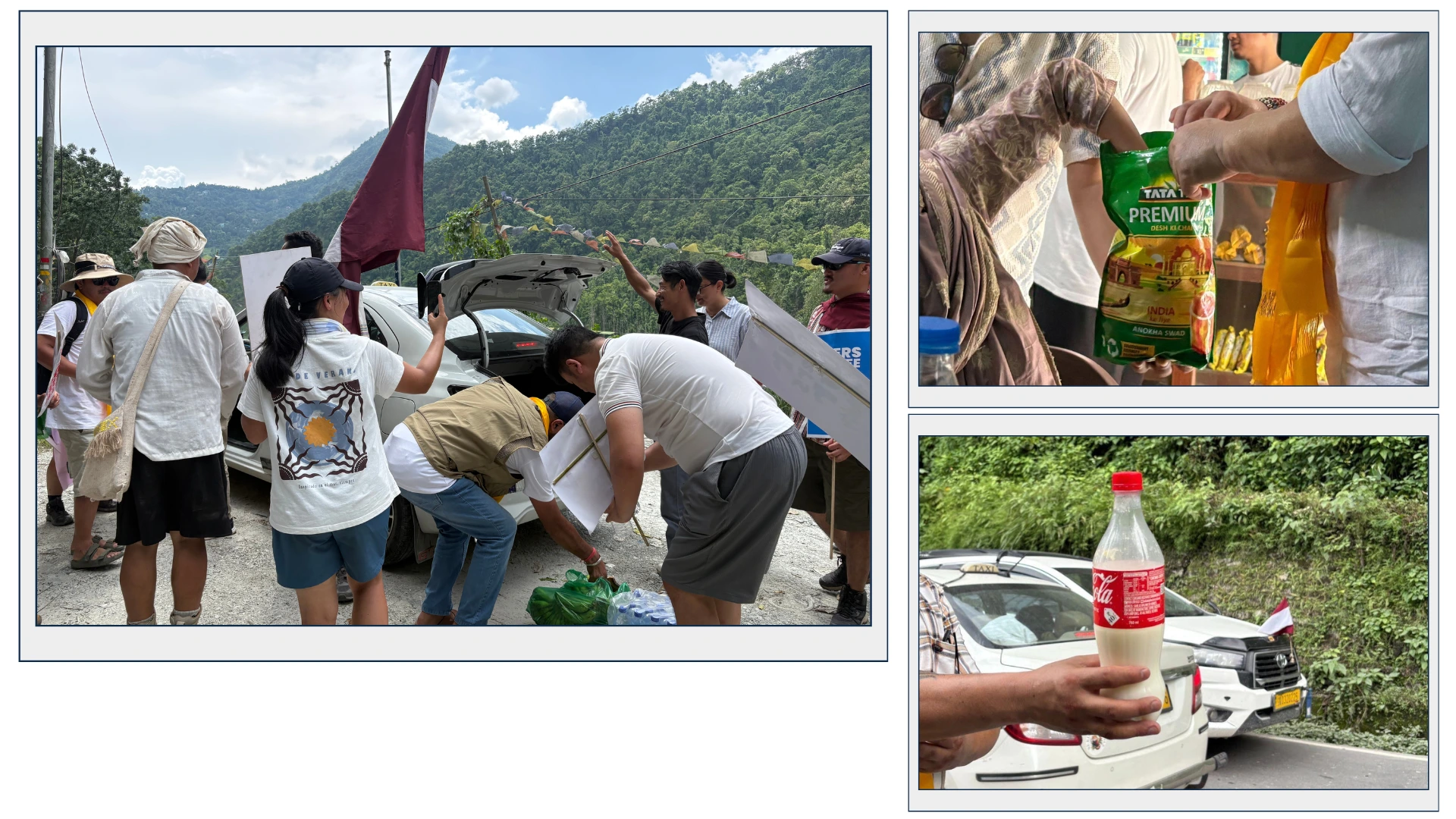
She says, “Makha is not a tourist destination by any means. However, when we reached there, the residents offered us food, water, and even a place to stay. One person we knew arranged a stay for us in their relative’s newly built house, where one of the floors was complete but there was no electricity or furniture. The gesture meant a lot to us and being received with such care left us feeling emotional.”
Mayalmit adds, “They know and understand what we are trying to do because they have also experienced and realised this…they are gravely affected by NHPC Stage V.”
On the first day, the marchers covered approximately 26 kilometres on foot. The next morning, they started from Makha towards Rangpo, a town near the Sikkim–West Bengal border. A recent landslide at 20th Mile near Singtam (a town that lies on the banks of Teesta and one of its tributaries) meant they had to take a detour, resulting in a longer march. That day, they rested in Rangpo before starting early for Melli, a small border town, the next morning.
It is important to note that the Phidang to Tribeni route was chosen deliberately so the group marches with the Teesta flowing beside them, witnessing all the damage done by the HEPs and tunnels built along the way. Additionally, Mayalmit says, “Our group chose the monsoon season for the march so we could all see the impact of the landslides and damage done by tunnels and dams.” The group recalls getting a lot of support from families in Sikkim–West Bengal border towns like Melli, Teesta Bazaar, and Gail Khola, which are almost completely underwater and buried under silt brought by the 2023 floods.
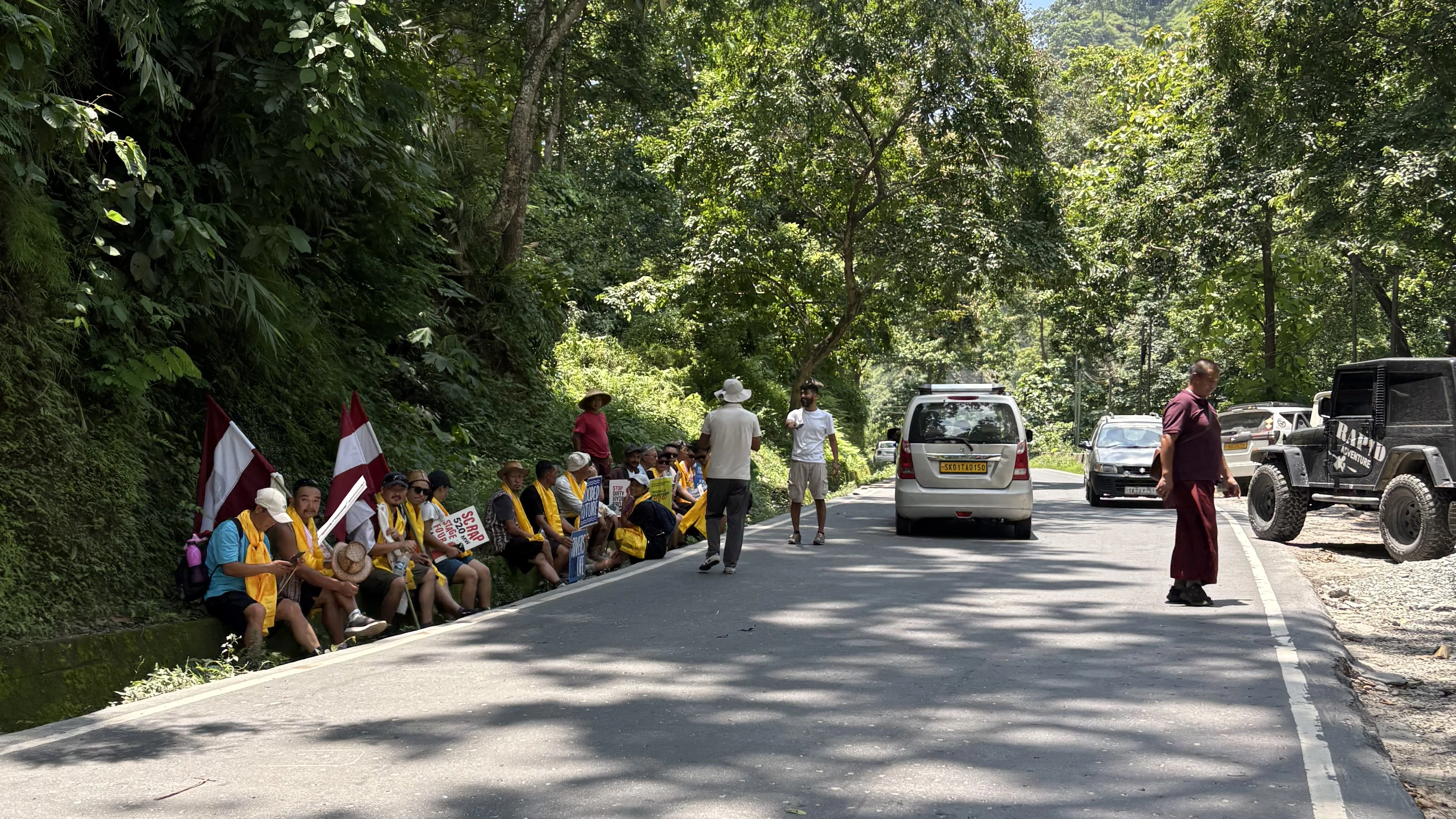
On the last day of the march, the group started from Melli and concluded by offering their final prayers to the rivers at Tribeni. Many, including bongthings and lamas, from Kalimpong and Darjeeling had joined on this day. “This solidarity is crucial,” says Gyatso Lepcha, ACT’s general secretary. “It is important for people from North Bengal to join so that they can share the responsibility of taking care of the river.”
However, getting people to agree on this common cause isn’t an easy job. Since its beginning, members of ACT have made several sacrifices to keep the movement going—from discontinued college education (in Mayalmit’s case) to imprisonment (of ACT members during the 2007 hunger strike), and even disagreements within their own community. The march is a beckoning for all to hold themselves accountable for the state of the rivers of this region.
Mayalmit says, “I am disliked by a few people for being against the building of these dams, especially in Panan (a village in Upper Dzongu, North Sikkim) where a 280 MW HEP has been proposed. While I understand that the villagers could use the money they would get for selling the land, I am of the firm belief that it is not enough compensation for the losses it will inevitably cause.”
ACT has even suggested sustainable development alternatives. She adds, “We have proposed running homestays in the region to generate revenue, if that is the major concern. This would cause much less ecological damage and we would be promoting our culture without encroaching on the land.”
Community support amidst shared loss

Winona Lepcha, ACT member, who runs a homestay in Dzongu, said, “This is the first time I am participating in a march like this. It is truly inspiring to see so many people join. I am also happy to have taken part in the march, which honours not just my grandfather’s (Athup Lepcha’s) contribution but also the work that we have been doing for years.”
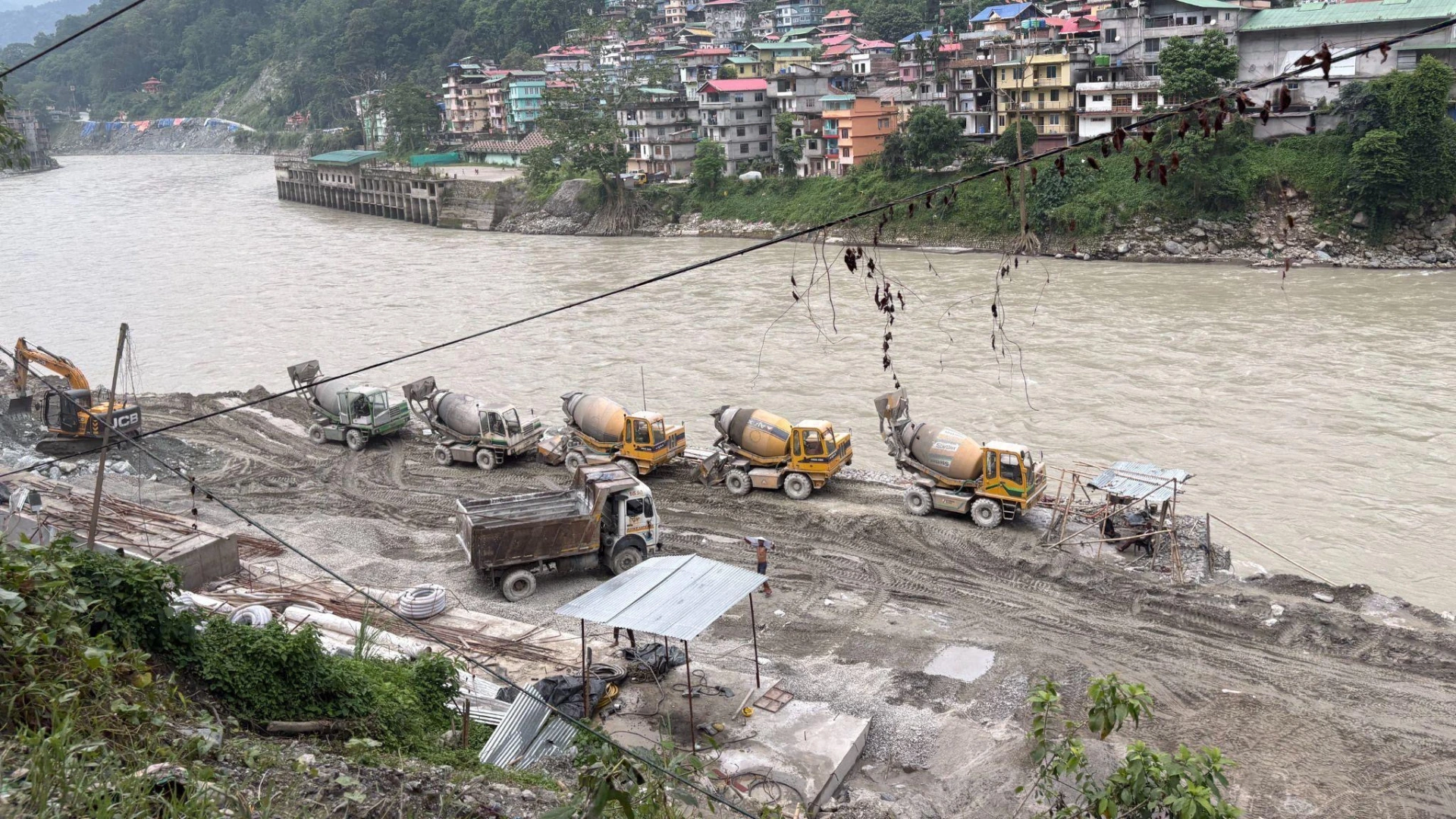
Similarly, Mayalmit, in a string of conversations about resistance, seamlessly weaves in anecdotes of community involvement and support. “Although there has been sheer negligence in the recent past (referring to the collapse of the tunnel of the under-construction 500 MW NHPC Teesta Stage VI HEP), we are hopeful that people are waking up… While a lot more people could have joined us in the foot march, it was still heartening to see them extend support in other ways. Some of the elders gave us money to buy food and water on the way, some made donations ranging from INR 100 to INR 2,000… Others welcomed us into their shops, offered washrooms and medication as well as food and space for accommodation. Even the seemingly small acts of giving us water and talking to us are ways in which people supported us, and I am ever grateful for that.”
Now that the march has concluded, ACT plans to draft a memorandum petitioning for the permanent scrapping of the 520 MW Teesta Stage IV and 280 MW Panan HEP. Another demand is for the Phidang to Sakyoung-Pentong (a village in Mangan district in North Sikkim) stretch on the Teesta and Rongyoung rivers—a hotspot for rare butterflies—to be declared a riverine sanctuary.
Having witnessed so many people’s care and veneration to the river, and the camaraderie among them, was truly inspiring. Walking along the route where the river is always in sight, Gyatso Lepcha likened the march group to Parilbu that guided Teesta from North Sikkim to the Tribeni. A sublime analogy, it served as a final reminder of how they refuse to separate themselves from the stories they grew up listening to and the nature we are all part of.
—
Know more
- Learn why indigenous communities have been resisting ill-planned hydel projects on Teesta.
- Read a version of the folk tale of Teesta and Rangeet.
- Learn why people in rural Sikkim are suspicious of largescale infrastructure projects.
Do more
- Sign ACT’s petition opposing destructive hydropower dams and calling for fresh environmental and social impact assessments.