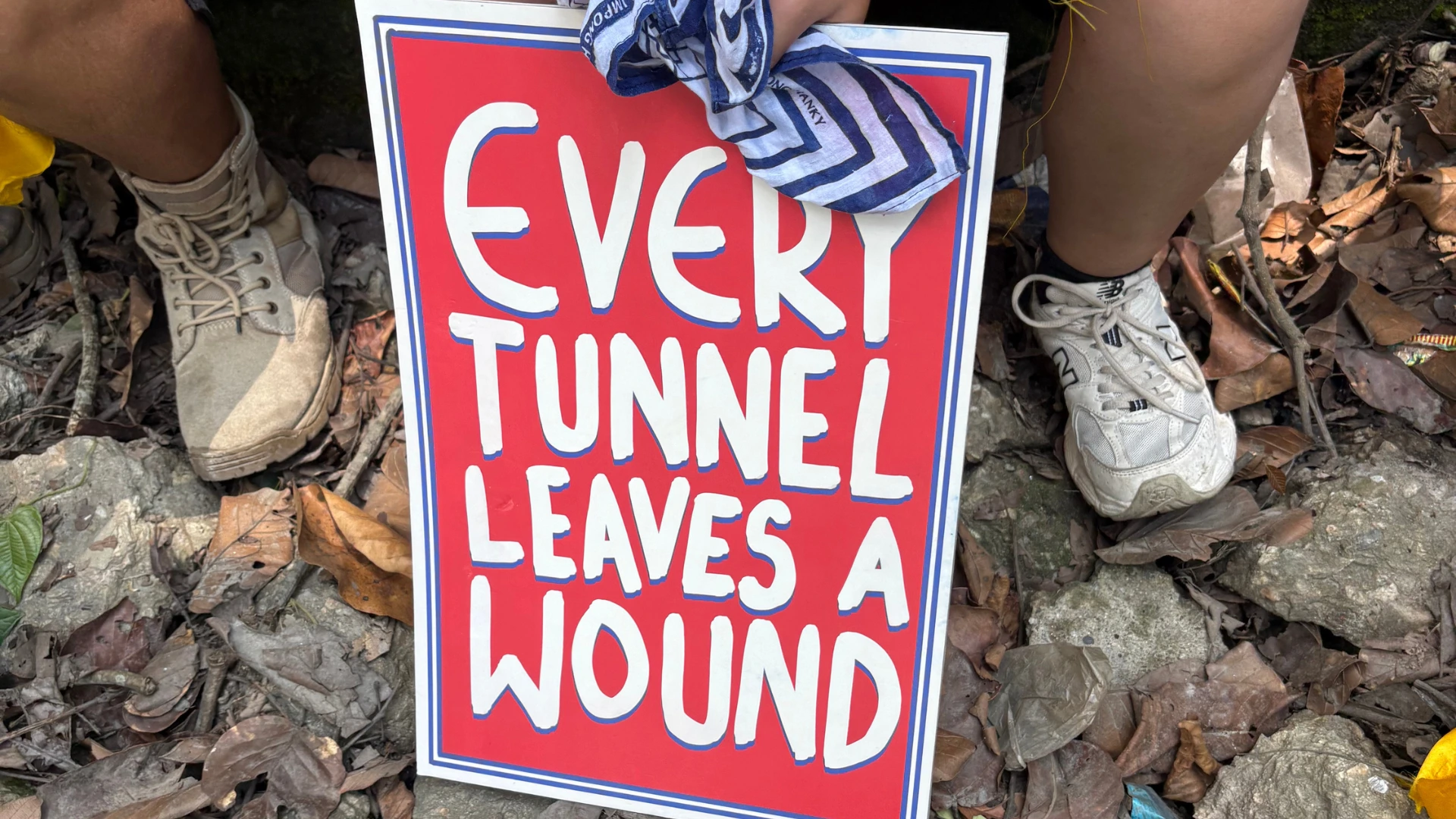
Rajpal Saini, who retired from the Municipal Corporation of Delhi (MCD)’s sanitation department, founded the Khatta Hatao Dehat Bachao Sangharsh Samiti to resist the waste-to-energy incineration (WTE) plant in Bawana, Delhi. “Residents have lost access to basic everyday spaces. People no longer sit outside or go for walks as they once did,” he says. “Respiratory issues and asthma have engulfed the area after the setting up of the WTE plant. Is it fair that our village bears the brunt of the waste generated in Delhi city?” asks Saini.
Rajpal’s question is not just about Bawana. It sits at the heart of how India has chosen to manage its growing waste problem. India’s solid waste generation is projected to reach 435 million tonnes by 2050. The Solid Waste Management (SWM) rules, which govern how the country handles this waste, were last updated in 2016. The SWM rules 2026 replaced that decade-old framework and came into effect from April 1, 2026.
Unlike the 2016 framework, which focused mainly on cities, the new rules extend regulatory reach to rural areas for the first time. And while the 2016 rules just suggested using waste as fuel, the 2026 rules make it compulsory for industries to follow a set schedule for switching to waste-based fuel. This matters because the mandate creates a direct incentive for industries to keep waste mixed rather than segregated.

Why segregation is being undermined
The government has historically framed ‘individual behaviour’ as the main reason for weak waste segregation and used this to justify centralised processing of unsegregated waste. Over the years, it has pushed the use of waste-to-energy (WTE) incineration technologies that burn mixed waste in furnaces to generate steam and produce electricity. What is often overlooked is the fact that up to 40 percent of what goes into these WTE plants ends up as bottom ash and fly ash, which is extremely toxic and requires disposal in secured landfills.
The new rules also allow waste to be burnt in ‘any furnaces’. Industrial furnaces in the paper, pulp, or sugar sectors may lack the pollution control equipment needed to handle toxic pollutants such as acidic gases and heavy metals. Furthermore, burning waste releases harmful chemicals such as dioxins and furans, called Persistent Organic Pollutants (POPs). They persist in the environment, accumulate in our bodies through air, food, and water, even in small amounts, and can raise the risk of serious illness such as cancer.
The regulatory gaps around incineration are already significant. CPCB’s report highlights systemic gaps in monitoring, including missing emission parameters, lack of data transparency, and weak follow-up on non-compliance by state agencies.Expanding the number of industrial furnaces burning waste risks making that problem considerably worse.
The 2026 rules compound this by classifying WTE plants as ‘decentralised’ waste processing. The term implies small, locally operated facilities serving specific neighbourhoods. The average WTE plant in India processes 1,185 tonnes per day. By no reasonable definition is this decentralised. Applying this label to facilities of this scale obscures what they actually are. This reclassification is happening despite a growing body of evidence documenting the environmental, health, social, livelihood, financial, and climate costs of these projects.
Below is a chart comparing the standards of incineration of India with the European Union (EU):

India legally allows waste incinerators to release far more pollution than the EU permits. For communities near these plants, the gap is not just a number on paper.
Particulate matter 2.5 (PM 2.5) refers to tiny particles small enough to enter the lungs and bloodstream. India permits WTE plants to emit ten times more particulate matter than EU standards allow, increasing the risk of asthma, breathing problems, and heart disease. Higher sulfur dioxide and nitrogen oxides harm the lungs and worsen smog. Higher mercury levels affect the brain and nervous system and can enter the food chain through fish, creating health risks for communities even far from the plant.

Bluewashing and the waste management blues
The SWM rules 2026 must be read alongside several notifications by the CPCB that have directly promoted incineration.
The CPCB’s submission to the National Green Tribunal established that WTE plants generate hazardous waste in the form of bottom ash and fly ash.
In February 2025, the CPCB issued directions for a new category of industries called the ‘blue category’, described as “facilities which are essential to control, abate, and mitigate pollution generated from domestic and industrial activities”. The CPCB placed WTE plants in this category, arguing that these facilities “may also bring value addition by producing various by-products such as secondary raw material, compost, energy, etc. and promote circular economy and sustainable development by converting waste into wealth”.
This classification sits uneasily with the CPCB’s own evidence. The CPCB’s submission to the National Green Tribunal (NGT) established that WTE plants generate hazardous waste in the form of bottom ash and fly ash. CSIR-NEERI, a government research body told the NGT in 2024 that “the mass burning of municipal solid waste in waste-to-energy plants defeats the opportunity of a circular economy for the waste sector”.
The CPCB previously had four industry categories—white, green, orange, and red—based on a pollution index that measures air emissions, water effluents, hazardous waste generated, and resource consumption. White category industries like solar are the least polluting. Red category industries such as WTE incineration are the most polluting.
WTE incineration earned its red category status through a documented record of failure. In Delhi, the Okhla WTE plant dumped hazardous incinerator ash near playgrounds and temples, affecting close to one million people. In Hyderabad, the toxic ash was dumped openly at the Jawaharnagar dumpsite, exposing nearby communities. Similarly, in Chennai, the Tamil Nadu Pollution Control Board (TNPCB) report flagged that cadmium levels in the waste incinerator ash went 200 times over the safe limit. Following sustained public opposition and TNPCB reports confirming the pollution, the Chennai corporation permanently shut down the incinerator plant.
The impact of bluewashing
This rebranding of the highly polluting incinerator industry as an environmentally beneficial public service amounts to regulatory ‘bluewashing’.
The blue categorisation followed a notification by the Ministry of Environment, Forests and Climate Change that proposed to exempt WTE incinerators from prior environmental clearance. This would allow incinerators to skip environmental impact assessments and public hearings, essentially the only procedural safeguard that alerts communities to projects planned in their neighbourhoods.
The blue categorisation also increases WTE’s consent to operate by up to 10 years. This reduces inspection frequency to once a year, removes siting constraints, and lowers environmental compensation. This move also goes against India’s climate commitments by locking cities into high-carbon waste incineration systems while undermining efforts to reduce, reuse, compost and recycle waste.
In effect, high-risk technology has been rebranded as an essential public service, weakening oversight while expanding market certainty for private operators. The new rules also introduce a compliance system that makes it easier to burn waste than to recycle it.
The certificate trap
The new SWM rules introduce the ‘Extended Bulk Waste Generator Responsibility (EBWGR) certificates’ for bulk waste generators (BWG). Bulk waste generators are large establishments such as apartment complexes, hotels, offices, malls, and institutions that produce significant amounts of waste daily and are expected to manage it responsibly at the source site. Rather than managing waste themselves, they can buy EBWGR certificates to prove compliance. These certificates are meant to ensure that waste is processed through composting, recycling, or biogas rather than dumped or left unmanaged.
MSMEs running genuine decentralised waste management services such as biogas, composting, and bio-CNG operations will be hit hardest.
The certificate system has a design flaw that undermines this intention. The certificates do not specify how waste must be processed. A bulk waste generator can buy a certificate regardless of whether their waste went to a composting facility, a recycling unit, or a WTE incinerator. Buying certificates will be far cheaper than actual recycling or waste processing. Bulk waste generators will simply buy their way to compliance rather than invest in genuine waste processing. India has seen this play out before with a similar system. Extended Producer Responsibility (EPR) certificates for multilayered plastics work the same way. Those certificates cover only one-tenth the cost of the actual recycling of plastic waste. The result is that companies buy certificates rather than recycle, and EBWGR certificates risk following the same path.
The consequences will be felt most directly by those already doing the work the certificates are supposed to incentivise. MSMEs running genuine decentralised waste management services such as biogas, composting, and bio-CNG operations will be hit hardest. If bulk waste generators can meet compliance by buying cheap certificates, there is no market left for operators who actually process waste. “We have spent decades building decentralised composting systems for apartment complexes and training our waste workers to operate them. If compliance is reduced to buying certificates, it undermines both the system and the people running it. Decentralised operators like us will not survive,” said a waste management service provider.
The certificate system also opens the door for misuse. The EBWGR certificates are vulnerable to being abused to create fake certificates, as happened with the EPR certificates scam. In 2023, the Central Pollution Control Board (CPCB) audited companies in three states and found that they had generated fake EPR certificates that claimed to have recycled about 6,93,662 tons of plastic waste. The CPCB levied a fine of 355 crores on the four plastic waste recycling companies that generated and sold fake EPR certificates. “Just four companies were able to create fake EPR recycling certificates of about 7 lakh tons of plastic waste. This is just the tip of the iceberg and physical inspection of all the 2355 registered Plastic Waste Recyclers (PWR) by the CPCB will reveal that the scam is several times bigger,” said a plastic recycler.
The rules also weaken the system before it even begins by narrowing who it applies to. The 2024 draft rules set the bulk waste generator threshold at buildings consuming 5,000 litres of water per day. The final rules raised that to 40,000 litres per day, which is eight times higher than previous limit, removing a large number of establishments from regulatory oversight entirely. Narrowing the bulk waste generator definition also shapes who the rules protect and who they exclude.
Who pays the price
Prioritising WTE incineration threatens the already marginalised informal recycling sector by diverting valuable materials away from waste workers and scrap networks. Between 1.5 and 4 million informal waste workers in India recover up to 20 percent of recyclable materials from the waste stream. “Instead of allocating thousands of crores, land, and various subsidies to centralised WTE plants, the government should support waste workers—the real ‘waste doctors’—who are addressing the waste crisis in the most scientific and efficient way,” says Akbar Ali of Basti Suraksha Manch, a grassroots civil rights organization that advocates for the housing, water, and livelihood rights of urban slum dwellers especially waste workers.
What has worked
Countries in the Global North that pioneered incineration are either decommissioning their plants or reducing their reliance on this technology because of the climate, environmental and health impacts of these plants.
Denmark, long held as a model with its ‘Copenhill’ incineration project, has announced plans to reduce incineration capacity by 30 percent by 2030 and has already shut down seven plants to prioritize recycling.
This shift did not happen in isolation. Countries set high recycling targets, imposed landfill and incineration taxes, introduced carbon taxes, and, in some cases, placed caps on incineration capacity to avoid overdependence on waste burning. Countries have also invested heavily in segregation at source, decentralised composting, and material recovery systems, ensuring that organic and recyclable waste is processed locally rather than burned. Stronger extended producer responsibility (EPR) frameworks pushed companies to reduce packaging and improve recyclability. Stricter emission standards and public opposition reduced the political and economic viability of incineration. Even China, which was rapidly adding incinerator capacity a decade ago, now finds its plants running at an average of 60 percent capacity. Stricter rules on sorting, recycling, and food waste separation mean less waste reaches the incinerators.
India has its own proof of concept. The SWaCH cooperative in Pune was formed by waste pickers and is supported by the Pune Municipal Corporation. It runs a door-to-door collection system that serves over 9 lakh households and integrates 3,000–4,000 waste pickers into formal waste management. Waste workers collect segregated waste directly from households, recover recyclables, and support on-site composting and biogas systems in housing societies and hotels. “Decentralisation does not take us to the Stone Age,” says Lubna Ananthakrishnan, the CEO of SWaCH.
Communities and civil society must resist WTE expansion through policy loopholes, demand stricter emission monitoring, and push for waste workers’ inclusion in policy. Local bodies should invest in decentralised systems—home composting, ward-level facilities, and material recovery. Policymakers must prioritise waste minimisation by phasing out single-use plastics, redesigning products, and backing reuse systems over disposal. Financial institutions must shift funding from capital-intensive incineration toward decentralised, labour-intensive models that support local economies and circular recovery networks.
–
Know more
- Read why rural plastic waste is undercounted in India’s waste policies.
- Learn how India’s waste policies exclude the informal workers behind recycling.