Social sector fellowships promise an alternative model for nurturing leadership and driving change, which is especially vital for grassroots development in a country of India’s scale. This is why such fellowships have existed for decades. Yet their focus has been unevenly distributed, often overlooking the Northeast region, which continues to be on the margins of dominant development narratives.
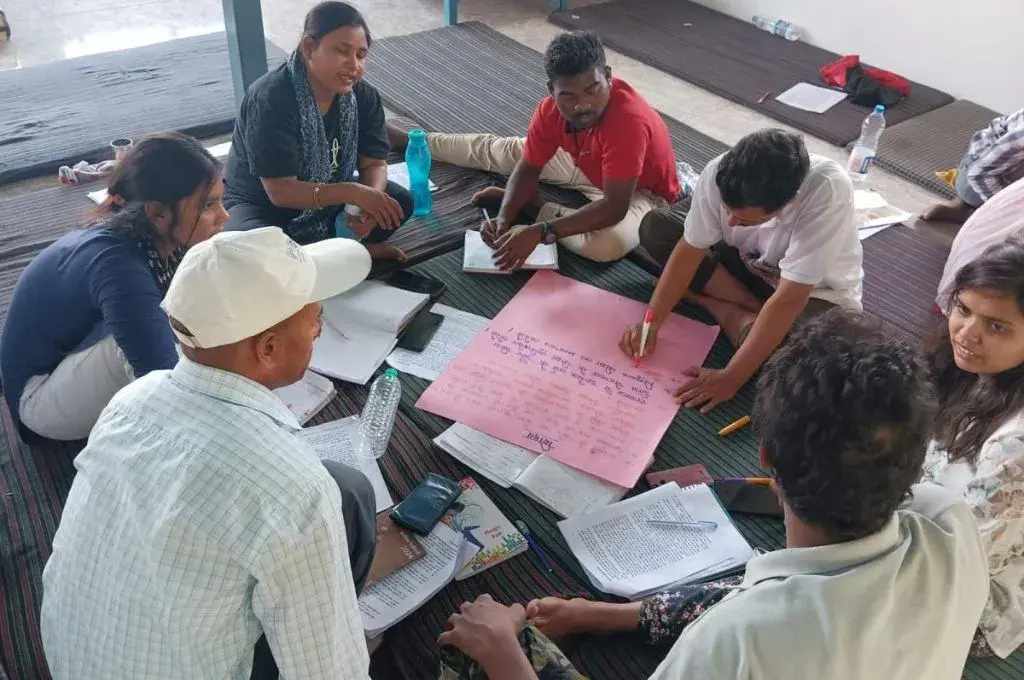
For the past decade, this landscape has been gradually changing. Homegrown fellowships such as the Green Hub Fellowship and Youth Involve Fellowship have designed programmes tailored to the needs of local communities in the Northeast. More recently, organisations such as India Development Review—through its IDR Northeast Fellowship—and Bring Back Green—through the National Youth Climate Consortium (NYCC)—have also joined this effort. These fellowships aim to work closely with young people in the region to build dialogue and leadership around issues of climate change, livelihoods, gender, and education.
But what does participation in these programmes actually mean for the fellows themselves?

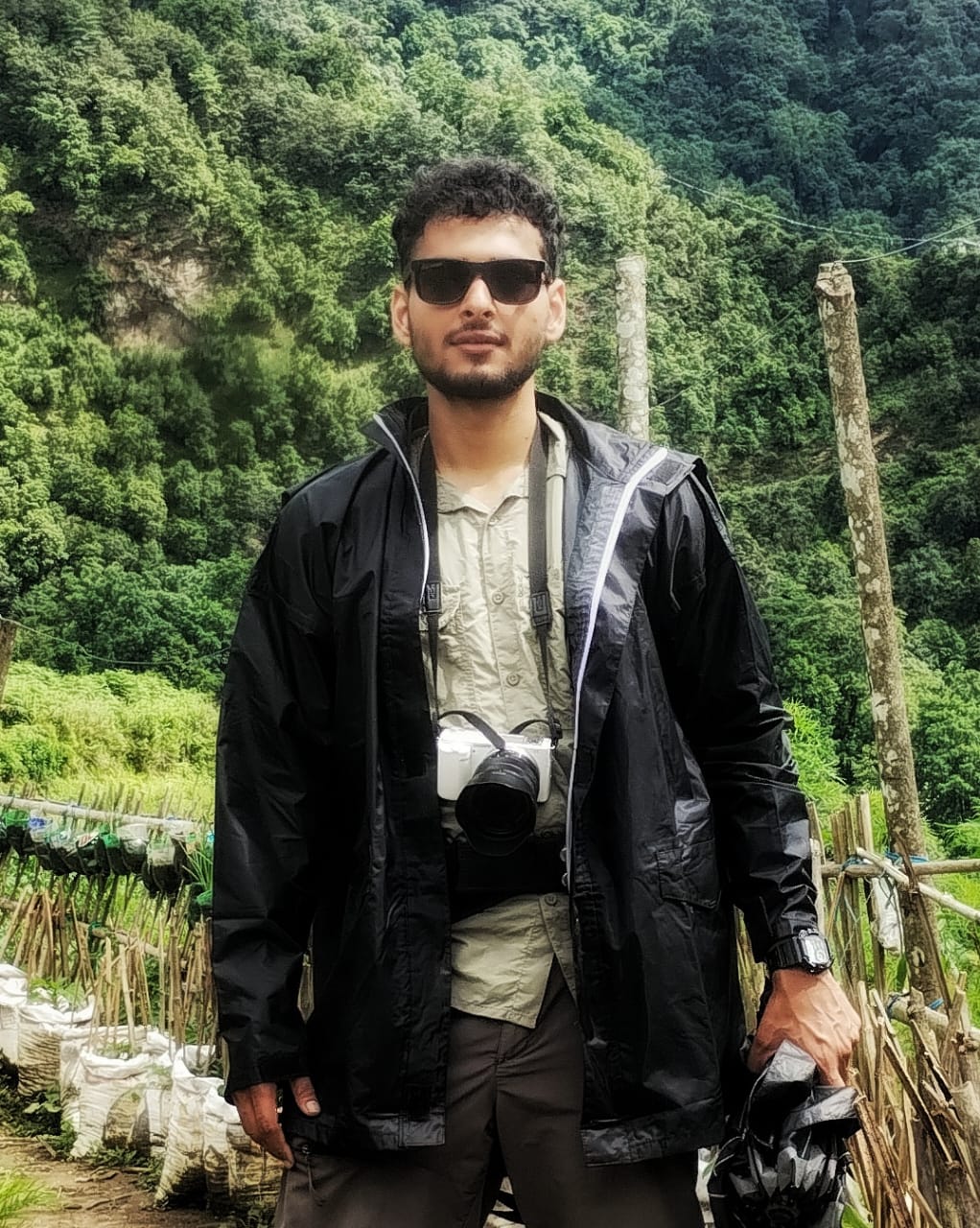
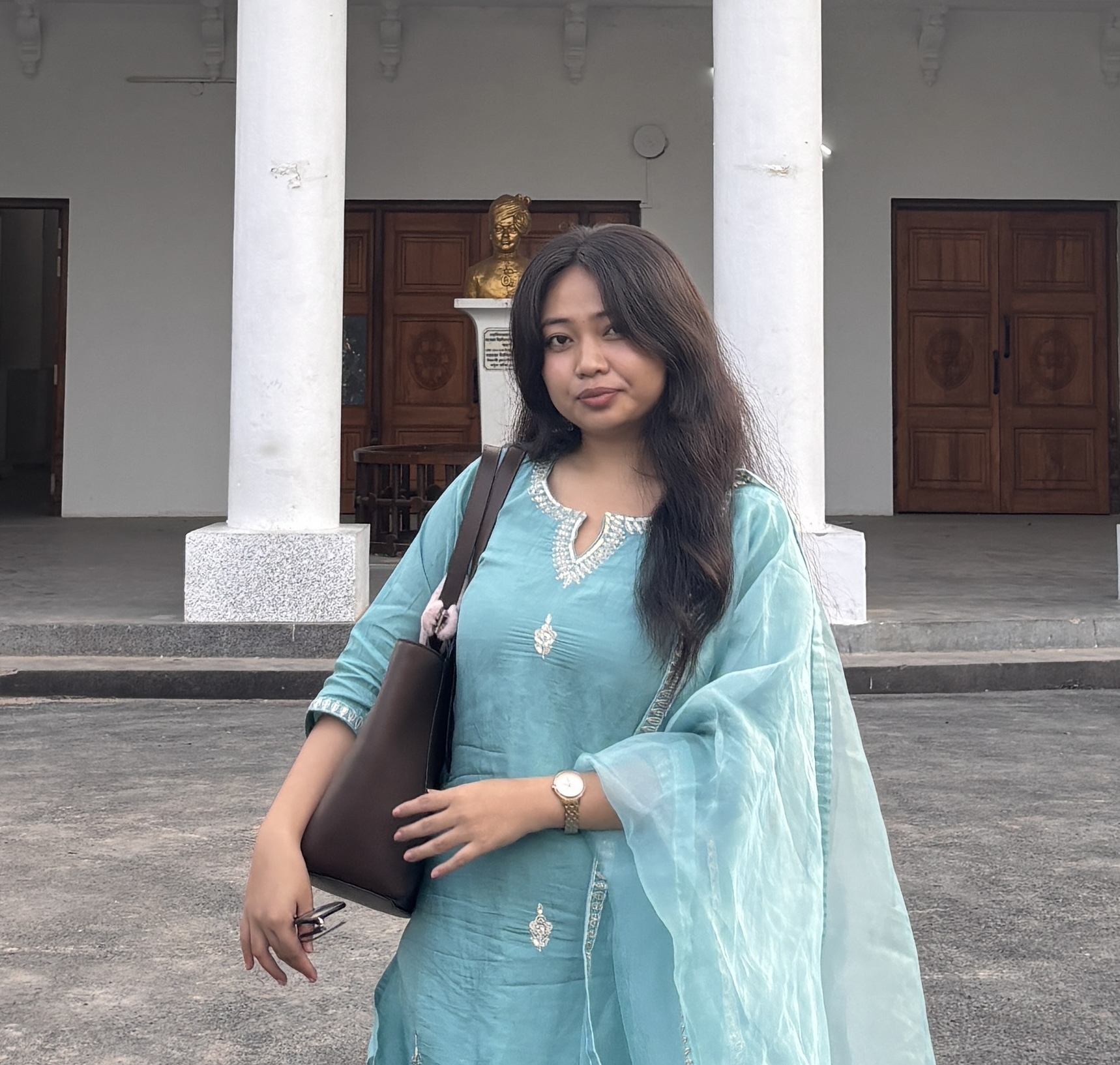
In search of answers, three fellows from Tripura—Anupam Sharma (former IDR fellow), Ishika Chakma (NYCC fellow), and Hansatanu Roy (former Green Hub and current IDR fellow)—sat down at Mezang, a Chakma restaurant in Agartala, to reflect on their journeys, aspirations, and expectations from these fellowships.
How does it feel?
The glass door at Mezang opens directly onto the streets of Chakma Adam, a Chakma settlement in Agartala. Anupam sits angled towards the door, sipping on his cup of tea. A journalist based in Agartala, he has a keen interest in Tripura’s socio-economic developments. Across the table sits Ishika, a young lecturer and environmentalist. Anupam’s gaze shifts between his tea and the empty chair beside them.
“So, what was Green Hub like?” he asks.
The question lands just as Hansatanu walks in with a large blue rucksack and settles on the empty chair. A fresh cup of tea waits on the table, blowing tufts of steam into the air.
“It was a life-changing experience,” Hansatanu replies. “You know, before the Hub, I had practically zero idea of how fellowships worked or what they entailed. I went in without any knowledge, and perhaps that’s why it was so rewarding.”

“Yes! Same here,” Ishika interjects. “See, I was only a fresh graduate when I felt the urge to do something in the environmental sector. I heard NYCC had a fellowship application going on, and I just applied. When I got selected, I was elated, thinking it was some sort of award. Only later did I realise the significance of this fellowship and the responsibilities that come with it. Turns out, this was exactly what I needed. Anupam, what about you?”
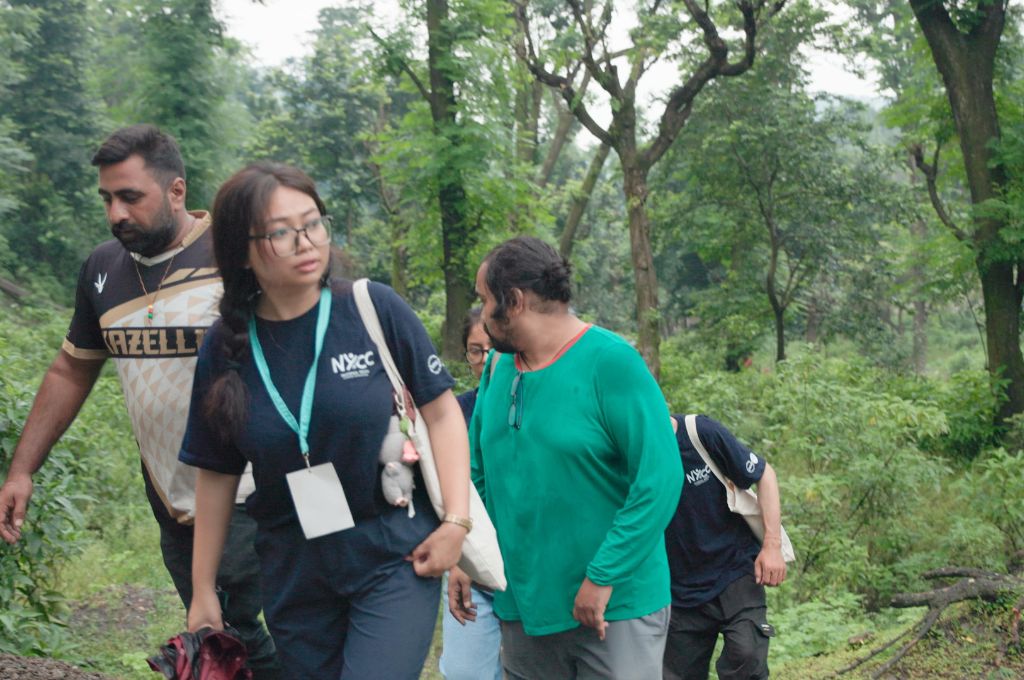
“I wanted to get more exposure and expand my journalistic skill set,” Anupam responds. “IDR’s fellowship, with its focus on development storytelling, seemed quite interesting and I decided to give it a shot. To this day, that one decision has helped me make several connections, study and cover a wide variety of issues in great depth, and understand the vastness of the development sector. I’ve evolved as a journalist through the course of the fellowship.”
Though they come from different communities, the three fellows share the same landscape and overlapping histories. Hansatanu is a Sylheti from North Tripura; Anupam is a Manipuri from Bamutia, an area near Agartala; and Ishika is a Chakma who traces her origins to Gandacherra in Dhalai district. These distinct regions are bound by several common challenges as well as possibilities, many of which reflect Tripura’s larger historical trajectory.
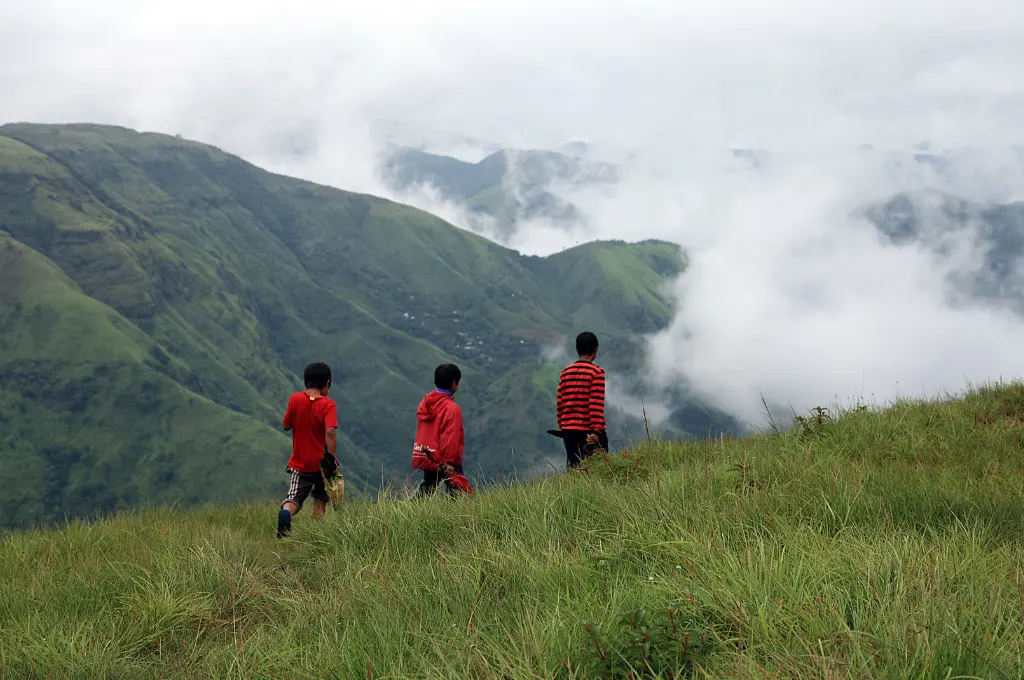
Tripura was a princely state that acceded to India in 1949 and gained full statehood in 1972. As a landlocked state with a small habitable area, its unusually high population density and diversity have been decisive factors in Tripura’s socio-economic path. While the plains are dominated by agrarian societies and urban centres, the hills are home to tribal communities that have sustained distinctive ways of life through hereditary and community-based resource ownership. However, as public welfare schemes were designed for society at large, these hyperlocal realities of social organisation, land rights, and community interactions, were not factored in. This led to the lopsided development in the state we see today. Additionally, youth aspirations come up against both geographic and perceptional walls that are difficult to overcome.
But things are gradually changing and unsurprisingly, it is the youth who are leading it.
In search of our own context
“You know, among us Chakmas, awareness of our own cultural history and problems is very low,” says Ishika. “Most people who can migrate end up leaving for cities, and nobody addresses the issues faced by our community here. That’s one reason I feel policy-level change cannot work without a pioneer.”
As a young social worker from the community, she is actively involved in youth mobilisation and activism around climate change and environmental issues. Her fellowship with NYCC has encouraged her to look beyond the obvious and trace problems back to their structural roots.
“Now that I’m working on monoculture and its environmental impacts, a number of important issues are coming out,” she continues. “For instance, rubber plantations were sanctioned on traditionally forested knolls across the state, which meant a complete disruption of the soil structure and microclimate. This disruption is now showing up in lower soil productivity and stunted crops. This forces a higher dependence on inorganic fertilisers, damaging the soil even more until it turns completely barren. So you see, a critical policy gap has now compounded into a widespread agronomic issue, and it puts the onus on the youth to act today. To really drive policies, there must be dialogue within and between communities. It is only through communication that we can address the emotional disconnect between the average youth aspiring for a better life and the problems at the grassroots level. This fellowship has been a coming together of these two strands.”
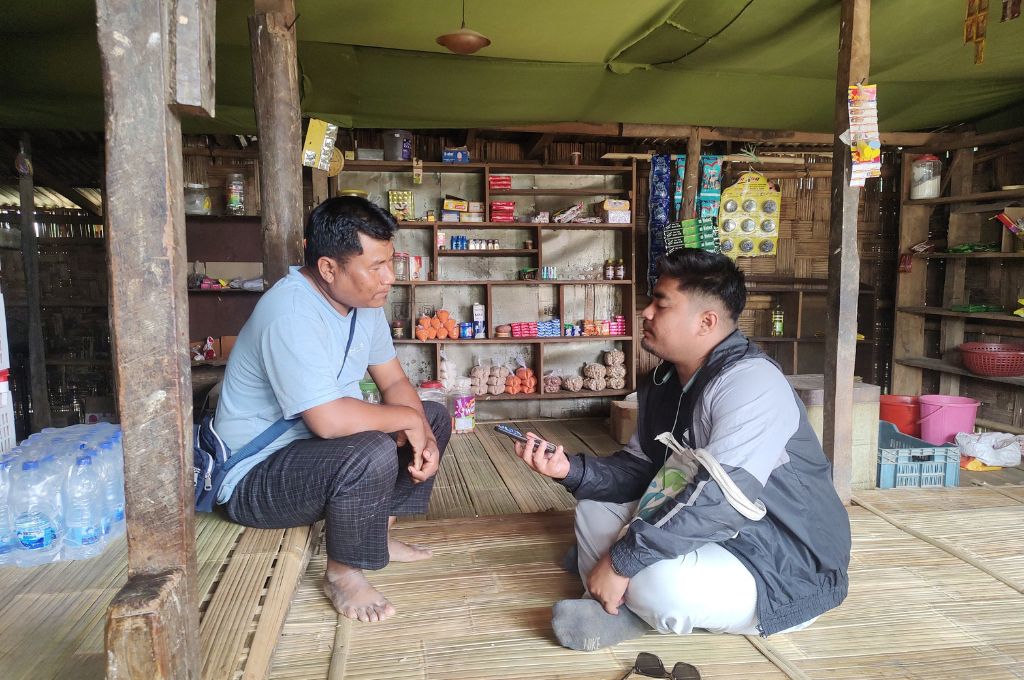
“And what gaps have you witnessed between youth aspirations and the opportunities available here?” asks Anupam. “You mentioned that you had very little idea of fellowships before applying, and that’s true for a large section of our youth. Many don’t know what their roles could be, or how change actually happens.”
“Quite right,” replies Ishika. “In fact, I would argue that in our community at least, there’s an urgent need for more people who are willing to invest their time and effort in spreading awareness, and who will prioritise conservation of our culture and landscapes. We need more functional talent.”
Hansatanu agrees. “I remember when in 2023, I walked into Green Hub’s campus, I had almost no idea of my state’s realities. I needed multiple trips to national parks and pristine habitats across the Northeast for me to realise how similar our challenges and structural gaps were, and how simple the solution was. Whenever a landscape or ecology is disrupted, it is always due to a fundamental disconnect between the land and its people. If we focus on rebuilding the human-nature connection and restore a sense of ownership among the primary stakeholders, conservation goals become easier to achieve. For a small state like Tripura, where land rights and ownership are fragmented among diverse communities, this becomes a critical need. Communities must take ownership of conserving their own geographies.”
Anupam nods in approval. “As a journalist, it is my job to seek the truth. And in my journeys, I have been faced with this one unresolved issue: context. I have witnessed my own community lose touch with its own heritage and history due to a lack of contextualisation in this modern, increasingly urbanised setting.”
He offers an example. “Take the sharp decline in thatched-roof houses, a symbol of tribal heritage in hills. It is directly connected to a lack of interest among the youth in preserving their heritage. This is not a surprise, since young people are looking for opportunities outside the state and consequently getting disconnected from their roots. I’m not saying this is always the case, but mostly the absence of context fuels the disconnect.”
“Imagine a young Manipuri man who wants to start a cafe,” he continues. “Without a sense of rootedness, he is less likely to incorporate organic Manipuri aesthetics into his design. Without context, cultural rootedness quickly loses relevance in our highly globalised world. That said, I do see this changing now, in a sort-of ‘back to the roots’ movement.”
“For me,” Anupam reminisces, “the IDR fellowship was like an extended bootcamp that pushed me to reconsider a variety of issues from an entirely different angle. For example, with the ecological crisis in Tripura, much of the framework in place needs a re-evaluation and close integration with contemporary realities. Reporting on these stories helped me see those connections more clearly. As a journalist, the fellowship gave me tools to navigate complex interactions and understand the intricacies of developmental issues in a more structured manner.”
“And how did you relate to the field post-fellowship?” asks Ishika.
“I can say this with confidence,” Anupam replies, “that as a fellow, I straddled the roles of both a researcher and a journalist, and that helped me immensely in reconnecting with my roots. I could locate issues in their right places and weave them into an effective narrative. That is empowering on a whole different scale.”
Films, words, memes, and a better story
As the three fellows rowed their boat and explored islands of challenges, the need for reaching out and building awareness about Tripura’s stories felt more pertinent than ever. How can fellowships become the proverbial engine that propels this boat towards social change?
Hansatanu says, “I am a conservationist, and I teach physics at a government college.” “Films and words are my preferred mode of communication. But unless there is an underlying connection with communities, it takes a herculean effort to communicate with the grassroots through documentation alone.”
“And what learnings did you gather from Green Hub, Roy?” asks Ishika.
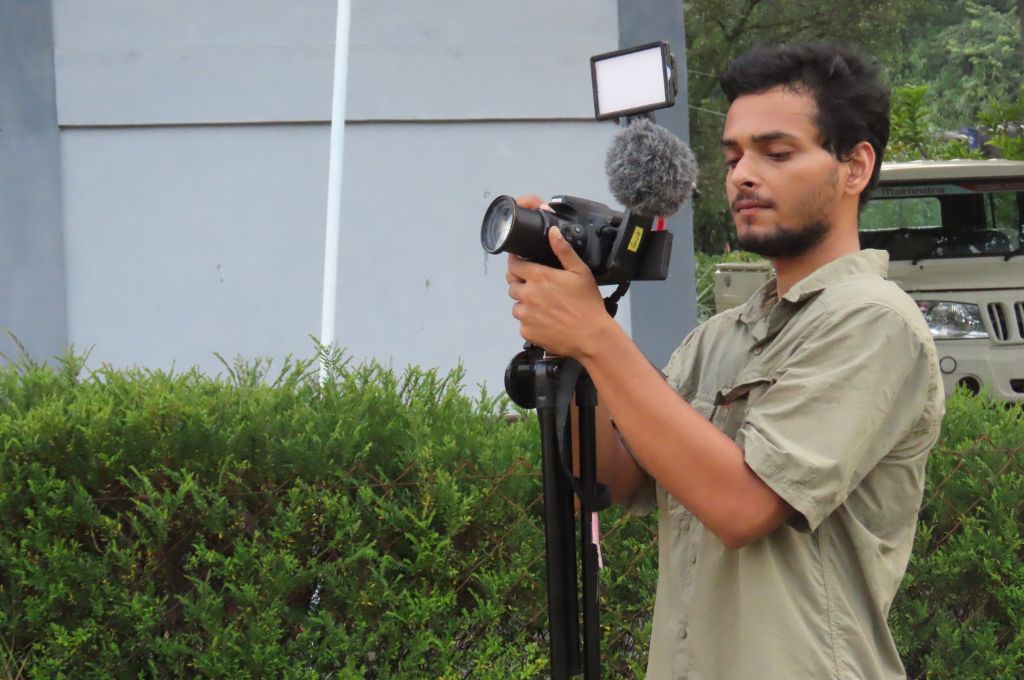
“During my fellowship, I made films,” Hansatanu replies. “Working on them helped me understand that storytelling makes all the difference. Once you identify a story, it is crucial to understand it inside-out, grappling with every angle, every stakeholder, and the larger context.”
“Every film has two sides: the story and the audience,” he explains. “Now think of our state, with all its challenges. Each challenge is proof that some communities are living with this reality daily. What is their life like? What are the possible routes to the future, and what is the dominant narrative? That is the story. And now the audience needs to get engaged with this in a way that really drives the narrative home. In the end, it is about making the communities’ voices heard. So, can we tell a better story now? We can, and we must.”
“That is so true!” Ishika agrees. “And I also want to add that unless we reach out to the youth with stories of our landscapes, this emotional disconnect cannot be bridged.”
She shows them memes and reels from Chakma pages and says, “For example, we recently worked on the story about melye-amiley (fermented bamboo shoot). A lot of young Chakmas post memes about it in our groups and forums, jokingly comparing it to French croissants or playing on Chakma quirks. That humour keeps it alive. Now think about how interesting storytelling through different formats can engage the community and help connections.”
She turns to Anupam. “What do you think about all this?”.
Anupam stares at the road for a few seconds, gathering his thoughts.
“Well, I do believe in the effectiveness of storytelling. But what can really boost this is what Ishika mentioned earlier, to build more community leaders and pioneers. We need more young people to explore fellowships, both within and outside the state. Only an empowered youth can drive change in a rooted manner.”
Ishika adds, “Imagine if we could have a society where fellows and volunteers could meet and exchange ideas, and collaborate on various activities and projects. I seriously feel we need to build more cohesion through outreach, and get more of our youth involved in fellowships and collective activities. We need more representation, and the time to act is now”
Hansatantu says, “We should reach out to schools and institutions, spreading the word about these opportunities. Reaching out to remote schools can really bring a breath of fresh air into the traditional curriculum, and this will in turn foster a greater sense of belonging among our communities. Tripura has a vast pool of untapped human capital. If we can create a regional base where fellows from diverse programmes can meet and interact with each other, we can really create ripples of growth and change.”
“Don’t forget the journalists!” chimes in Anupam.
The room echoes with laughter and the scent of spiced pork and sauteed vegetables.
—
Know more
- Learn how storytelling fuels community-led development.
- Read how fellowships can be mutually beneficial for nonprofits and fellows.