Social issues can be complex, deep-rooted, and difficult to solve. Whether we look at the climate crisis, economic insecurity, or inequities in education, many systems and stakeholders—who themselves face unprecedented challenges—are involved and shape outcomes in unpredictable ways.
Over the past two years, we at SwaTaleem Foundation have been exploring how changemakers can confront this complexity. Through our multi-stakeholder project called Girls’ Education for Transformation,[1] we seek to identify road maps for gender transformation in Uttar Pradesh, with the goal of supporting greater agency, better education, and improved life outcomes for marginalised adolescent girls.
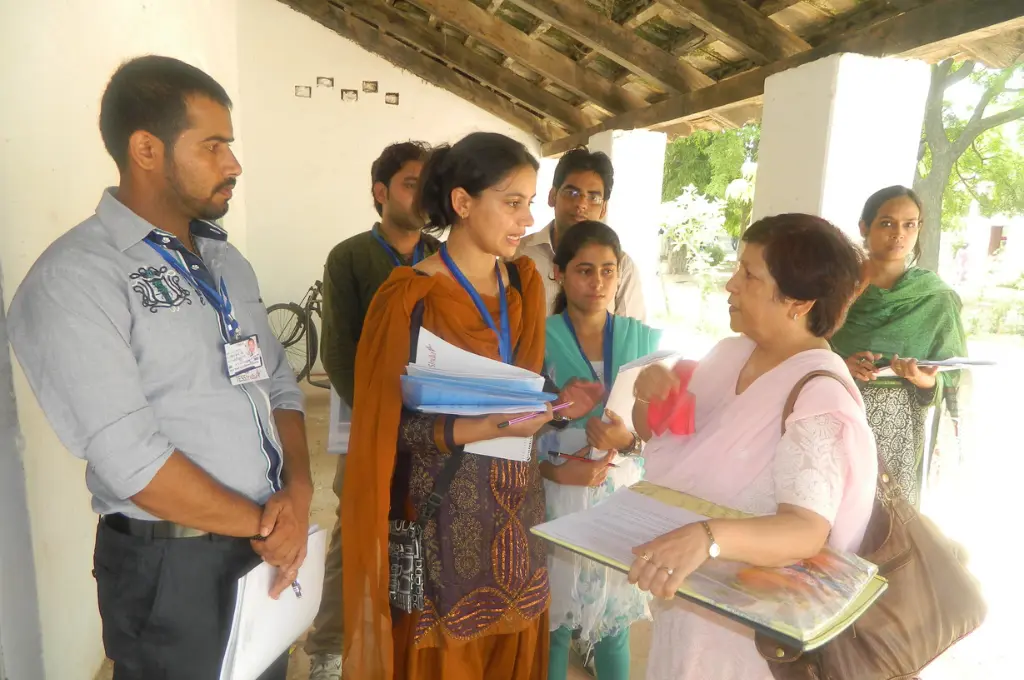
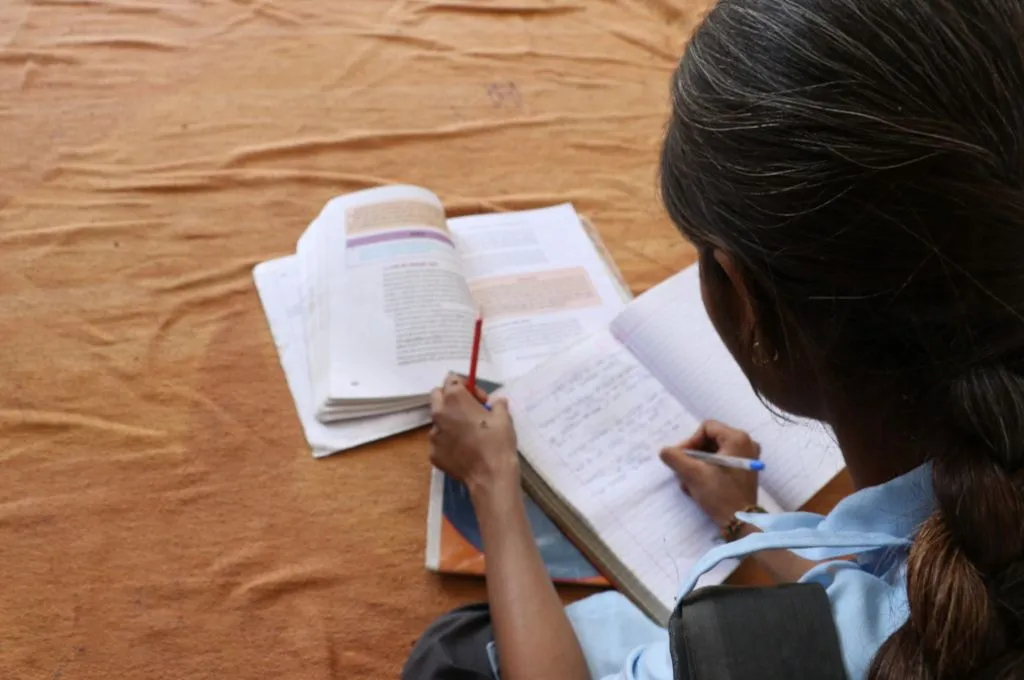
We engaged with girls and educators in Kasturba Gandhi Balika Vidyalaya (KGBV) schools across two districts in northern Uttar Pradesh, along with nearby communities, village leaders, civil society organisations (CSOs), and government stakeholders. It became essential to understand the prevailing social hierarchies and power dynamics among and within stakeholder groups, as they determine who is affected by a problem, how different groups are impacted, and whose interests influence the decision to address issues.
Over the course of an intervention, organisations often rely on traditional research methods, researchers positioned as experts, or representatives to understand and navigate the social context. Given that many of these researchers are situated in positions of power and privilege, their leadership risks reproducing the very power dynamics they seek to disrupt. More importantly, when outsiders design interventions and programmes, they often fail to account for the stakeholders’ own analysis of the systems they live and work in, as well as the prevalent structures and hierarchies of power.
In our project, power mapping emerged as a tool that bridges this gap between researcher and stakeholder perspectives, encouraging deep collaborative learning, context-sensitive intervention design, and greater collective ownership over change.
What is power mapping?
Power mapping is a visual tool to identify key stakeholders relevant to a social problem, and understand their power, influence on other stakeholders, and the degree to which they align with the cause.
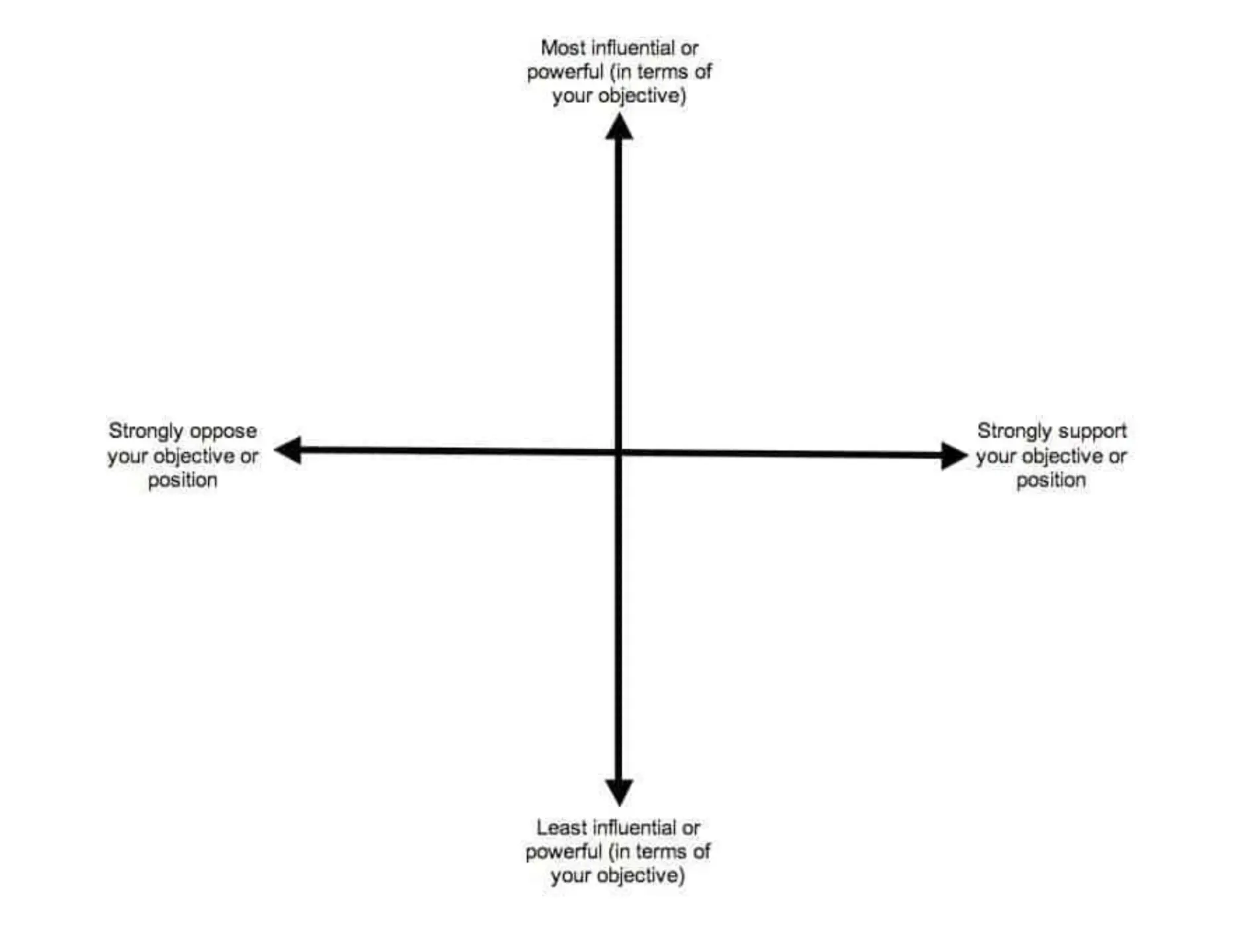
Typically, power mapping is used within an organisation or group to identify potential allies and sources of resistance to a particular campaign, programme, or policy. A common framework is the power–interest grid, in which researchers, practitioners, or programme representatives place relevant stakeholders on a graph. The x-axis traces the extent to which a stakeholder agrees with the initiative’s goals (that is, if their interests align with the initiative) and the y-axis marks how much influence they are believed to have. For example, social workers seeking to improve school resources may find that state education authorities have significant influence over their supply but differ on priorities and needs. Therefore, they might prioritise engaging with authorities to build consensus, and ensure that poorly equipped schools’ requirements are met on time.
However, power mapping is especially effective as a participatory exercise where different stakeholders co-create the power map. It opens up a platform for them to share their perspectives, participate in knowledge-building, and directly inform intervention design. What emerges is a richer, more comprehensive understanding of systemic and sociopolitical realities, a stronger strategy for change, and trust and collective ownership.
Power mapping as a participatory tool
Facilitating power mapping exercises with KGBV teachers, community-based fieldworkers, CSO representatives, and adolescent girls illuminated far beyond what we expected. First, on a strategic level, it helped us deepen our work with CSOs and mid-level government bureaucracy due to their high interest in and influence on girls’ education.
Second, participatory power mapping revealed why some stakeholders may not currently support change. For example, families may be compromising on schooling in favour of marriage or employment due to income constraints, or local authorities may not support teachers due to lack of gender sensitisation and high administrative workload. Participatory power mapping enables the collective analysis of factors related to a problem.
Finally, power mapping makes diverse experiences and knowledge visible, as no two stakeholders view the system in the same way. For example, community fieldworkers engaged in increasing girls’ enrolment highlighted the role of neighbours and religious leaders. These actors exercised informal sociocultural power through mechanisms like praise and insult, quite different from the formal institutional power of stakeholders traditionally identified as big players, such as the state education department.
Facilitating a power mapping exercise
Below, we outline how nonprofits and researchers can effectively facilitate participatory power mapping exercises. We also share strategies that can help organisations successfully navigate the dilemmas, risks, and constraints power mapping can present.
1. Identify the problem and stakeholders
Begin by articulating a clear question or problem. Name systems and stakeholders that shape the problem. Select as many stakeholders as feasible, making sure that stakeholders from marginalised communities are well represented.
For instance, we first worked with community fieldworkers, teachers, and CSO leaders, and subsequently with adolescent girls and parents, to explore what factors and power dynamics shape the poor status of secondary education for girls in Uttar Pradesh.
A fundamental dilemma we faced at this stage was whether power mapping should be a multi-stakeholder exercise or separately conducted with each stakeholder group. While the former would provide an opportunity to mediate inter-stakeholder dialogue, we chose the latter model as it would ensure all actors had an equitable chance to think and express freely, without being constrained by power dynamics and other stakeholders’ perspectives. With your own goals, priorities, and constraints in mind, you can decide on a basic model.
2. Design the appropriate session and space
The power–interest grid gives us useful conceptual measures, but a graph may not always be appropriate or helpful. Tweak the format and logistics depending on the participants, prioritising their needs and ensuring equal opportunities for engagement. For instance, with adolescent girls, we conducted power mapping as a game, where stakeholders were drawn as circles on the ground and girls could rank their level of influence by walking over to the relevant circle.
3. Introduce the session
Power mapping should begin by establishing the core problem, question, or goal. Before introducing the exercise, we would discuss the status of girls’ education, persisting issues, and the role that participants played.
Informed consent is crucial. Share with participants the purpose of the exercise, and how you will use their responses. Guarantee anonymity and confidentiality, and set ground rules so that personal or sensitive information stays within the room. Ensure that sessions are conducted in the language(s) that participants are most comfortable with, so that they are able to convey their knowledge precisely, illuminating their understanding of power in the system.
4. Make maps
The exercise itself involves a few simple steps:
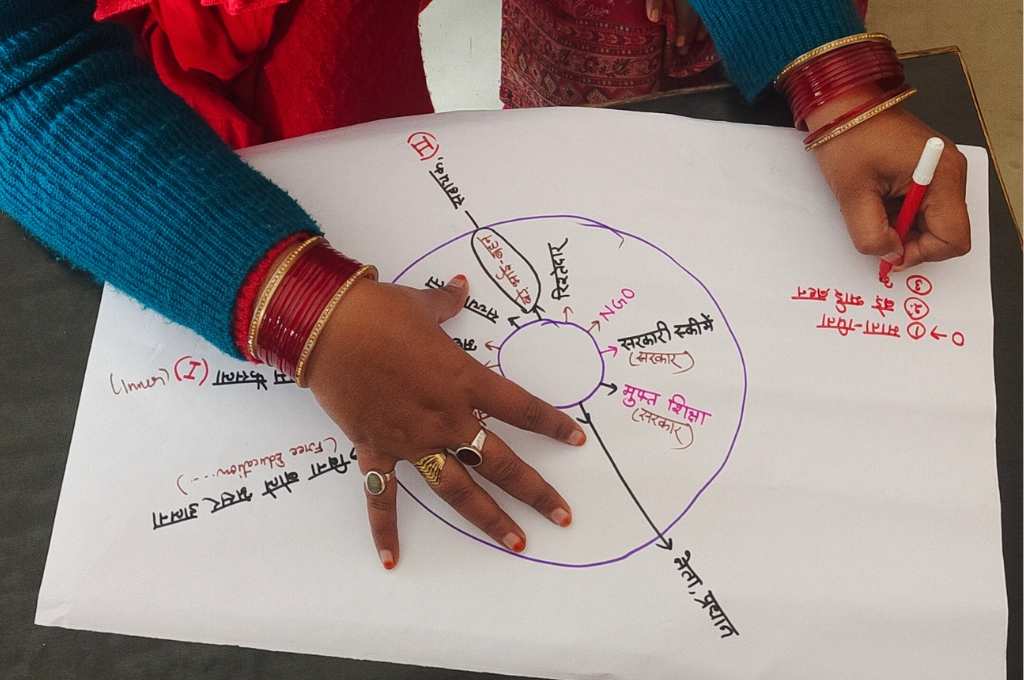
- Instruct participants to identify all the stakeholders relevant to the problem discussed. We asked participants to draw a map visualising the education system, but a list would also be sufficient.
- Split participants into small groups, introduce the template of how the map works, and provide necessary materials such as pen, paper, or whatever the design of the activity requires.
- Ask groups to use their judgement and place each stakeholder according to their interest and influence.
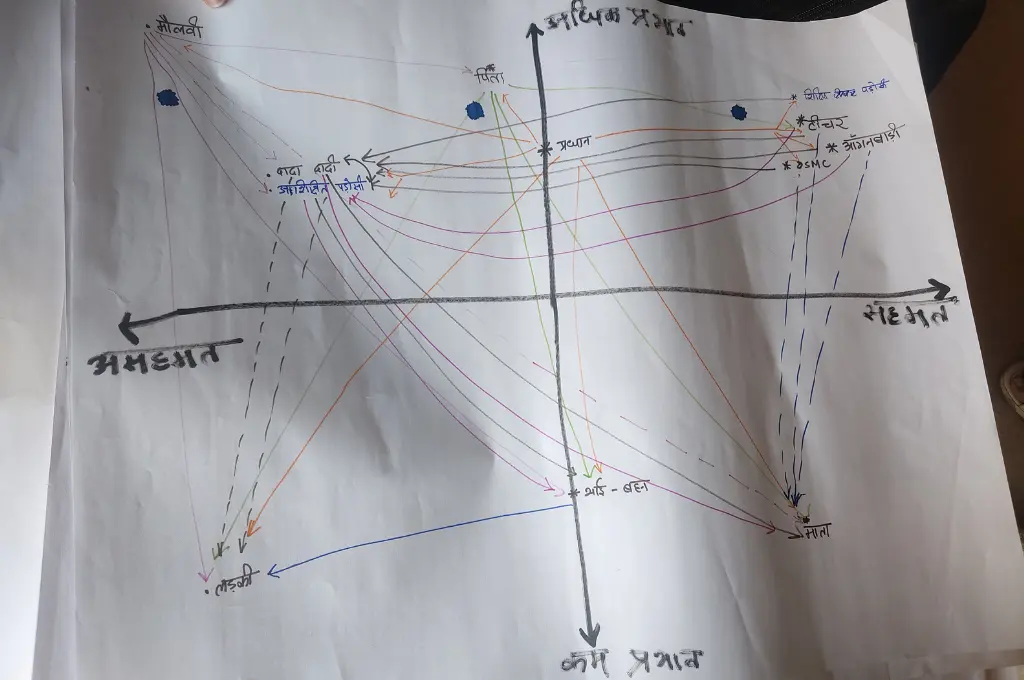
- Finally, encourage participants to define the relationships of influence between them. For example, the community fieldworkers’ power map above uses arrows to show the maulvi’s impact on girls and the anganwadi’s influence on the mother. Bidirectional arrows depict how two stakeholder groups unsupportive of girls’ education—paternal grandparents and neighbours—affect each other. Arrow colour and thickness can be used to mark the strength of influence.
Observe the dynamics, disagreements, and concepts that help groups make decisions while creating maps. These will provide themes for discussion. In our sessions, participants often debated the causes of systemic failures and challenges, or attributed greater responsibility to some actors over others. Some thought that challenges emerge due to decontextualised, top-down policies, while others emphasised the lack of investment from communities. These discussions showed how different problems unfold on the ground, and how different stakeholders analyse situations. We also noted how participants resolved or moved on from these tensions in the conversation—by arriving at a middle ground, deferring to someone, or converging on their own role in the system—to understand the role of power within the session.
Since there are no stringent rules or ‘right’ or ‘wrong’ answers, power mapping allows for endless innovation, both by facilitators and participants. For instance, our community fieldworkers refused to flatten the diversity in stakeholder groups such as neighbours, marking ‘educated neighbours’ and ‘uneducated neighbours’ in two different positions on the map. Such iteration was invaluable to understand unique perspectives and is more representative of stakeholders’ lived reality.
5. Moderate a discussion
Analysing maps together is essential for co-creating knowledge. Below are some initial prompts for discussing the maps:
- Who has the least/most influence, and why?
- Who is likely to challenge our efforts, and why?
- Who are the three most critical stakeholders we should work with?
- What are some major steps we can take together?
- What kinds of power exist on this map (for example, control over material resources, cultural status)? How do stakeholders exercise it?
- What kinds of relationships exist between stakeholders? Have these relationships changed over time?
- How can we work with stakeholders who do not agree with our shared goals at the moment?
- What should the ideal power map look like? How can we change the distribution of power in society?
Participants may also ask many questions. Questions such as ‘what counts as power?’ are great opportunities to arrive at a shared understanding, based on participants’ own insights.
At the same time, stakeholders’ disagreements with the exercise can also enrich discussion and learning. For example, when leaders from our CSO partner organisation refused to make a power map, the resulting conversation revealed that they did not analyse roles or institutions as abstract categories such as ‘teachers’ or ‘school management committees’. Rather, they thought of the specific individuals who occupy each position. They also felt that the power to influence change lies with all stakeholders, regardless of their position. In sharing their concerns, they pushed us to be more contextually precise when analysing problems, and adapt to their theory of change.
To close the discussion, allow participants to summarise key insights from the exercise.
6. Identify learnings
To synthesise learnings across maps, we use multiple approaches:
- Identifying points of consensus in characterising stakeholder relationships, power, and actionable strategies.
- Identifying disagreements to analyse why such differences in perception may exist.
- Analysing maps in the context of the mapmakers’ own structural positions, roles, shared beliefs, and relationships to other stakeholders.
Finally, discuss learnings and gather participants’ feedback on the process. Their analysis may shift as you work with stakeholder groups, and it can be valuable to repeat or add layers to the exercise as new questions emerge. For example, mapping types of power (formal/informal, power over vs with); spaces, levels, and places of power; or the mechanisms of power.
Navigating challenges
The power mapping process can become tricky for various reasons.
First, discussions about power can feel sensitive, especially for stakeholders who occupy vulnerable positions. For example, teachers felt hesitant to put their views about powerful stakeholders in writing or to let us record the discussion. In some cases, literacy barriers, mobility constraints, or fear of scrutiny made sessions inaccessible or intimidating. In such situations, we prioritised participants’ comfort, abandoning chart papers, audio recorders, and strict templates in favour of curious, free-flowing conversation. We spoke to participants one-on-one, and saved sensitive themes for follow-up sessions. We offered support with power mapping tasks, making sure not to influence the discussion strongly. These steps ensured that the exercise remained anxiety-free and constructive.
Second, hierarchies or conflicts of interest lead to imbalances in participation, with some participants dominating the discussion while others self-censoring or being silenced. In our sessions, dynamics related to participants’ position and experience in the system—between wardens and teachers, senior and junior teachers, or team leaders and members—often shaped whose voices were heard. Participants with connections to local leaders or organisations could sometimes command more space and attention. Similarly, the power held by facilitators too could introduce inhibitions among participants. Facilitators must recognise and actively balance these dynamics to create a more level playing field in the session. Ground rules and turn-taking must be established. Facilitators should actively invite quieter participants to contribute and take dissent seriously without putting anyone on the spot. At times, we have asked highly assertive participants to pause so others can contribute. Follow-up discussions can also surface perspectives left unsaid, giving participants space to disagree, self-correct, or reflect on earlier discussions.
Third, participants’ varying familiarity with the context can affect the session; however, facilitators can effectively moderate the discussion, engaging with everyone’s knowledge to enrich understanding of the system. For example, our sessions with CSOs and teachers were attended by both locals and those who travelled daily or had moved there to work. Through conversations that focused on the local context, drew comparisons with other districts, and highlighted everyday bureaucratic processes such as transfers, participants were able to explore different dimensions of power and privilege within the system.
Finally, conversational challenges such as overlapping speech, use of multiple languages and dialects, and diverse cultural norms or ways of speaking may require facilitator preparation, as well as the leadership and support of local representatives.
Power mapping is especially valuable in diverse and deeply unequal contexts. It recognises participants not merely as sources of data, but as knowledgeable subjects to think and collaborate with. The crises we face today require multifaceted solutions, collaborative ways of working, and long-term commitments—supported by an evolving and collective knowledge of social structures. A wider use of power mapping can help unlock these pathways.
Dr Anupam Ahuja, Disha Srivastava, and Vaibhav Kumar contributed to the article.
—
Footnotes:
- This project is supported by Spencer Foundation’s Vision Grant.
—
Know more
- Read more about what power mapping is and how to use it.
- Learn about how to create inclusive spaces for marginalised voices.