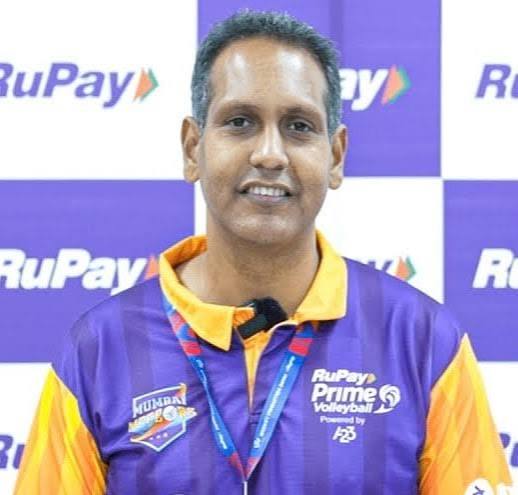
I grew up in Tezpur in the 1980s, when Assam was living through political unrest and insurgency. There were marches and rallies around us, but for my friends and me, sport was one of the few ways to spend our free time. I was interested in badminton. Then Dibyajyoti Bhagawati, a volleyball coach from the state, came looking for a tall boy he could train to join the national team. Until then, no one from Assam had represented India in volleyball.
His method was unusual. He went around the shoe shops in Tezpur looking for people who bought size-10 shoes, thinking that somebody with feet that large might be tall enough for volleyball. Eventually he heard about my father, who wore shoes that size. That was how he found me. He told me that if I played well, volleyball might take me to Delhi and Bombay. For a boy from Tezpur, that was a huge incentive. There was a practical reason too: unlike other sports, volleyball was cheap to learn. Training at the Tezpur District Sports Association’s facility cost only INR 2 a month.
At that age, I did not associate sports with leadership, community development or social change; I simply wanted to play and perhaps travel. The court gave me teammates, a place to channel my energy, and a routine. In 1996, I was selected for the Indian school volleyball team. The sport brought together children from different communities, and there was a strong girls’ team playing alongside us. Gradually, I made it to the senior men’s national team, which helped me find a job at ONGC, Dehradun in 1998. After retiring from competitive sport, I moved into regular office work with ONGC and was later posted to Delhi. What had begun with a pair of shoes had opened a world I had not imagined.

Taking volleyball to places
In 2009, I was nearing retirement and was on a holiday in my hometown, Tezpur, when a friend asked me to visit Thelamara village in Sonitpur district of Assam. He had seen how passionate the children there were about volleyball and wanted me to talk to them and play some matches with them. When I arrived, I discovered that their only volleyball had been punctured the previous day. They wanted to play, but they could not afford to buy a new ball.
After years of professional sport, I was struck by something I had not fully appreciated before—the match belonged not just to the players but to the entire village.
That visit became a turning point for me. I had once been a boy whose future changed because somebody noticed him. Now, it was time for me to pay it forward. I began to wonder how many villages had children like these, and how little it might take to give them a start. We organised a small tournament in Thelamara. Parents came to watch, local girls helped prepare the ground, some people bought fish and others cooked lunch. My family and a few former players joined us. It was only a one-day event, but everyone found a way to contribute. After years of professional sport, I was struck by something I had not fully appreciated before—the match belonged not just to the players but to the entire village.
We began organising matches in other villages of Sonitpur, with local communities helping to make them happen. In 2019, former volleyball players from Assam approached me about doing something together at a larger scale. We started Assam Volleyball Mission 100 with the simple idea of collecting 100 volleyballs from well-wishers and distributing them to village clubs that loved the game but lacked equipment.
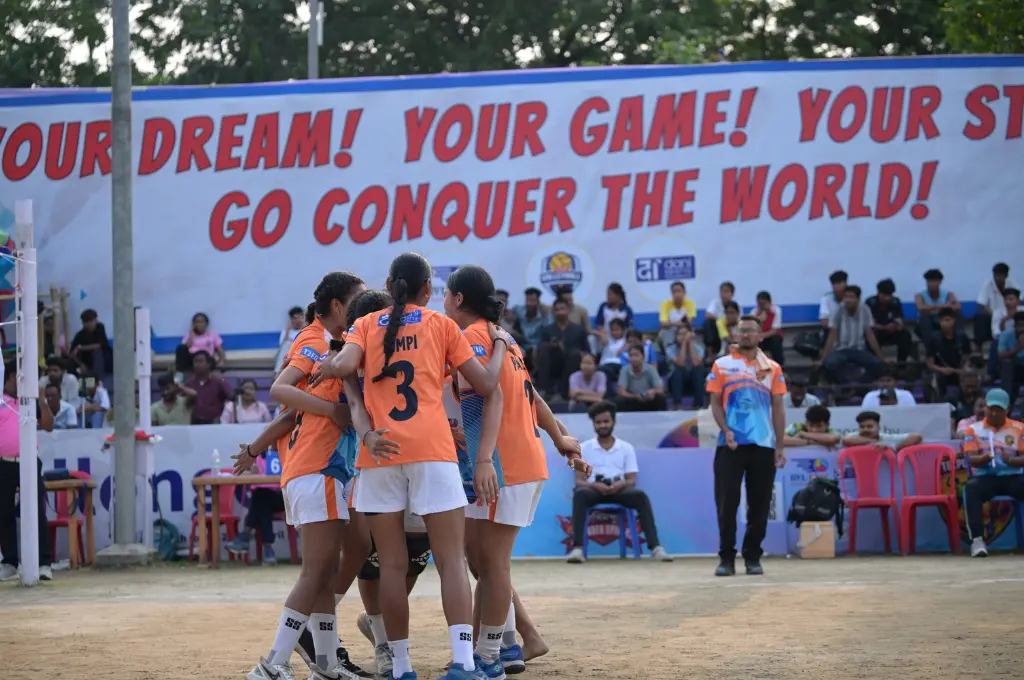
Within a year, as more villages became involved, we developed it into the Brahmaputra Volleyball League (BVL). Our first season brought together 50 teams and around 400 children. By its seventh season in 2026, the league had grown to more than 400 teams and 5,000 players across 29 districts. It now has under-12 and under-16 competitions at village, district and zonal levels. The numbers were encouraging, but the stories even more so.
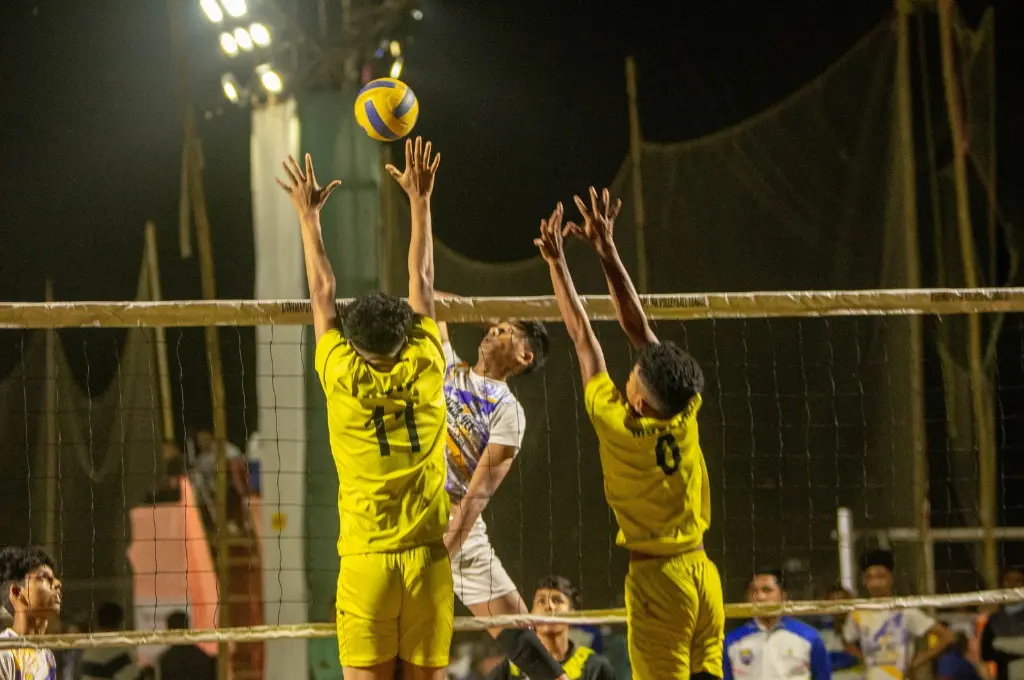
The community that keeps the game alive
In a village in Morigaon district, children were ready to play a match but had no net. A group of women stayed awake through the night knitting one, and by the morning, the children could play. Nobody had asked the women to do this. They simply decided that the match mattered. I think about them whenever someone asks what keeps a community league going. Equipment and money matter, of course, but so does the feeling that the game belongs to the people around it.

In 2021, Oil India Limited invited me to Duliajan to engage village teams in the oilfield areas of Dibrugarh and Tinsukia. We organised a one-week coaching clinic for 30 former players. One of the participants was Bornali, who had played for Assam in the past. By then she was raising two children, looking after her household, and earning an income through agricultural work. She wanted to join the clinic but asked whether she could bring her young daughter and son. I told her she could, and that we would arrange for someone to look after them while she trained.
Some parents worried that volleyball would interfere with their children’s studies.
At the end of the week, I gave the trainees four balls each and asked them to start volleyball centres in their own neighbourhoods. With her husband’s support, Bornali brought together four teams for BVL’s second season and organised matches in her village. Alongside her, 27 other coaches started centres in their villages. That was the outcome of the Oil India initiative that mattered most to me: former players becoming people who could create opportunities for the next generation.
Sometimes the obstacle is not equipment but time. Some parents worried that volleyball would interfere with their children’s studies. Rather than dismissing those concerns, coaches began tutoring the children so that they could complete their syllabus in advance and have time to play. Like Bornali’s question about bringing her children, these experiences reminded me that making sport accessible means understanding people’s everyday lives, not expecting them to reorganise those lives around our programme.
A league that villages call their own
We had little money when BVL began. Families contributed rice, lentils and eggs. When teams travelled to another village, we asked the hosts whether they could provide a simple lunch; they agreed. The cost of travel, kits, and volleyballs was harder to cover, so we invited sports enthusiasts and well-wishers to adopt a village team by contributing INR 15,000. One by one, all 50 teams in our first season found sponsors. We wanted those sponsors to feel responsible for the teams, not simply to donate and disappear.
Now it is a norm that every participating village must host at least two matches. Hosting means that families and neighbours prepare the ground, welcome visiting players and make the match possible. We also learned to let villages choose match weekends that suited their schedules rather than imposing dates from the centre. If people are to take ownership of something, they must be able to shape how it works.
The point is not to keep everyone in volleyball. It is to give them a beginning.
Our meetings follow the same principle. We sit on the floor in a circle, like a baithak, without somebody presiding from a chair. Whether a person contributes INR 1,000 or INR 100, they have equal representation and say in the decisions. I have spent enough time in organised sport to know how easily decisions become top-down. I wanted this league to grow differently.
Producing professional volleyball players is not our only purpose. For some children, travelling to another village for a match is their first opportunity to leave home, meet new people, and discover what they can do. Girls playing before their families and neighbours can also challenge assumptions about who belongs on a sports ground.
Some young people who began with BVL have gone on to win medals in other sports, including arm wrestling, fencing, and yoga. This makes me happy. The point is not to keep everyone in volleyball. It is to give them a beginning. Volleyball is inexpensive and can be played on a modest ground, but it also demands something from everyone: you must pass, listen, adjust and trust the person beside you. Even teammates who disagree must work together. I have watched children learn these lessons through play without anybody giving them a lecture on leadership.
The court inside Dhemaji jail
In 2026, Studio Nilima approached us to bring volleyball into correctional homes in Assam. Studio Nilima works with incarcerated and formerly incarcerated people through legal assistance, well-being, and reintegration initiatives. A prison was not a village ground, and I did not know how people would respond, but I was willing to try.
The first time I walked into Dhemaji jail, I wasn’t quite sure what to expect. There were more than 100 men in front of me, and when I tried speaking to them, there was hardly any response. I had spent much of my life on volleyball courts, with children, coaches and communities across Assam, but this was unfamiliar territory. I wondered whether they would be interested in what I had come to share.
We put up a net with bamboo poles, and I told them that I had come all the way from Delhi, that the one thing I knew in life was volleyball, and that I wanted to teach them whatever I knew.
We began with a simple underhand drill and then divided ourselves into teams. I joined one team and a volunteer joined the other. Within an hour and a half, the atmosphere had changed. Men who had been hesitant when we arrived were now playing, calling out, and encouraging their teammates. Afterwards, I asked whether the players had enjoyed themselves and wanted to play again. Most said yes. I asked them to clap for five or ten seconds if they had enjoyed the game. They kept clapping for 20–30 seconds.
Since then, a coach has been visiting the place regularly, six teams have formed, and we are working towards a tournament inside the correctional home.
I would not claim that volleyball can solve the difficulties people face in prison or after release. But I saw people who had been hesitant become teammates, and I saw how much they craved a chance to play. In a place where choices are restricted, that opportunity matters.
I still think about my coach walking through the shoe shops of Tezpur. He could not have known where his search would lead. Nor could I have imagined that a game I chose because it was low-cost would take me into the national school team, into a career, and eventually back to the villages of Assam.
When I think about BVL now, I think of the children in Thelamara with their punctured ball, the women who knitted a net overnight, Bornali bringing her children to a coaching clinic, and the men who kept clapping in Dhemaji jail. These are different places and different lives, but all of them, despite their talent and enthusiasm, needed encouragement and support. When I was young, someone provided that for me. I hope we can keep doing it for others.
—
Know more
- Learn how Kabaddi is enabling holistic development of children.
- Read how frisbee is bringing communities together in Assam.
- Read how access to books create opportunities for prisoners in Nagaland.