In Bannerghatta, a nomadic community renegotiates its gods
 Bengaluru Urban district, Karnataka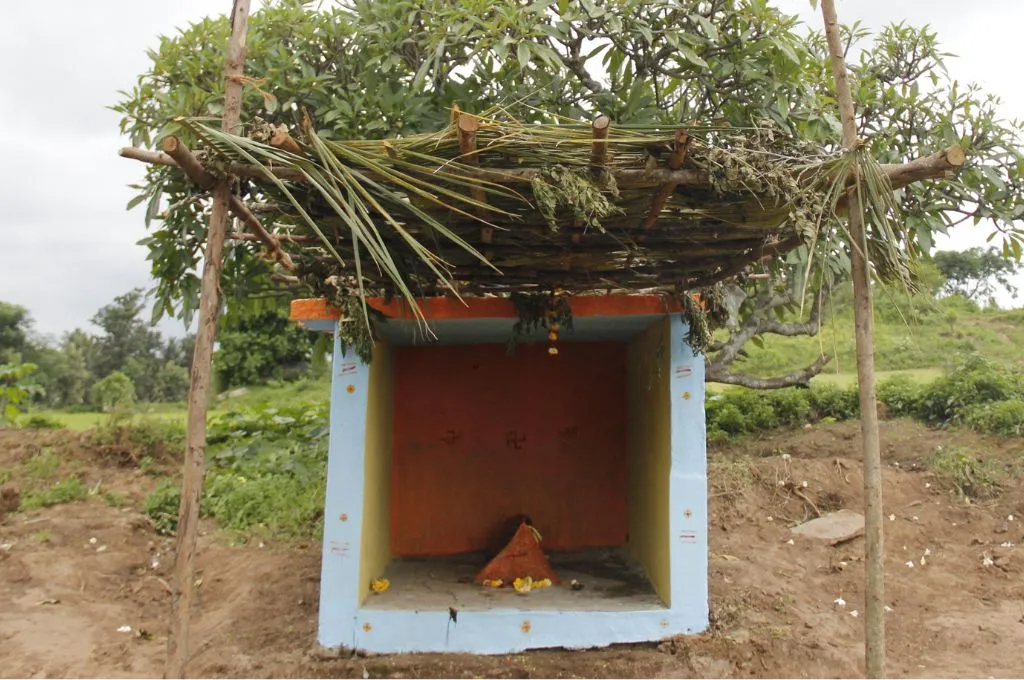
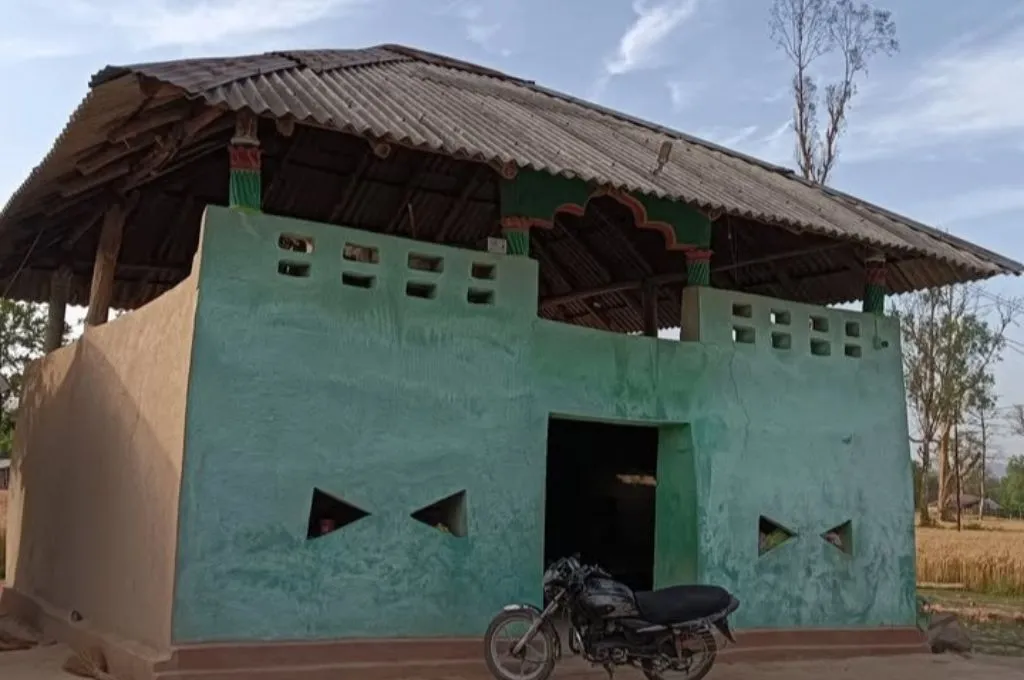
Situated on the southern outskirts of Bengaluru, Bannerghatta National Park is home to tribal, agricultural, and pastoralist communities that have lived and intermingled here for centuries.
For more than three years, I have been visiting the area as part of my work with the Land Body Ecologies network to to explore the impact that displacement and climate change can have on communities’ relationship to land and their mental health. During these conversations, we also began to understand how socio-economic and political currents are reshaping the lives and cultural fabric of Bannerghatta’s land-dependent communities. Among them are Lambanis, who reside in a small hamlet called Ramanayakana Doddi.
Traditionally a nomadic group who used to transport salt and other goods during British rule, Lambanis settled in Bannerghatta generations ago and started using the forests for their livelihoods, according to official records. They brought with them distinct customs, styles of dress, food traditions, and a pantheon of their own gods. However, over the years, instances of ridicule and ostracisation by ‘outsiders’ have impacted how the community practises its customs.
“Historically, we have been known as dacoits, feared for our anger and big numbers. They (people from outside the community) only remember us as thieves. In those days it was easy to identify us by our clothing, tattoos, and bracelets. We used to wear (the Hindu goddess) Kali’s dress. This is why they humiliated us. Eventually, we stopped wearing this dress,” recalled Thimarayappa, a community elder.
While Lambanis have long identified as Hindus, they have maintained a unique relationship with the religion. This proximity has led to a dilution of the community’s distinct worship and oral traditions.
For instance, a 1971 gazette published by the Government of Karnataka notes: “Their (Lambanis’) chief deity is Krishna. They also worship Balaji among other Hindu deities. Every settlement has a shrine for Sevabhaya, also referred to as Sevalal, who was believed to be a reincarnation of Vishnu (a mainstream Hindu god).”
Many Lambani families refute this. “No no no! We don’t worship Krishna. Balaji is our main god. We worship Sevabhaya too, but I don’t know much about him. All I know is that he was one of us, and he saved our community during a difficult time,” shared Susheela, a schoolteacher.
Thimarayappa further clarified, “Sevalal was not an incarnation of Vishnu. Who told them this? He was the son of Dharminibhai and Bheemanayak. He had a divine birth, and he dedicated his life to the worship of Kali and the upliftment of Lambani people.”
This moment reveals a deep friction between recorded history and oral memory. While official accounts often try to fit local beliefs within mainstream religious and cultural frameworks, community members assert their own accounts of the past.
Lambani elders continue to hold their gods and deities sacred. However, as younger generations aspire to move to Bengaluru in search of new opportunities, they are more willing to adapt to the dominant cultural traditions of the city—often as a means of economic and social mobility and acceptance.
Ravi, a young farmer in Ramanayakana Doddi, explained, “Look here, sir. We vote for him (points to a man on his phone) because we know this party cares about Hindus. Let them say that Sevalal is a reincarnation of Vishnu; it does not bother me, it only helps. That way, they will think that I worship the same god as them. Maybe this will make it easier for me to find a job.”
For Lambanis, their gods today sit at the crossroads of memory, identity, and the growing force of urban influence.
Anush Kumar is a senior design researcher at Quicksand.
—
Know more: Learn how losing access to the forest has impacted the identity and livelihoods of the Baiga community in Chhattisgarh.

 North West Delhi district, Delhi