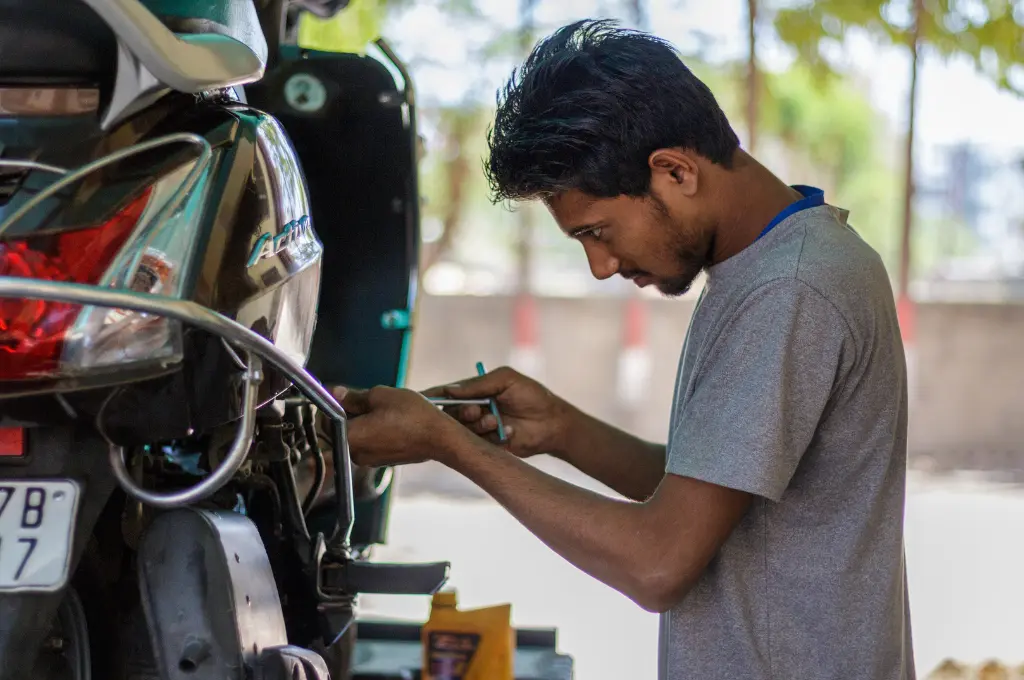
When 23-year-old Raju* opened his two-wheeler repair garage on the dusty main road of Gogunda, a village in southern Rajasthan, he believed he was finally escaping a cycle that had trapped his family for generations. He no longer needed to migrate to Gujarat’s industrial sites for uncertain daily-wage work. After completing a short technical training, he pooled INR 15,000 to buy tools, rented a small tin-roof shed, and began offering his services to local customers.
Two years later, Raju’s garage still stands on the village’s main road—a small but steady hub for neighbours who rely on him to keep their two-wheelers running. He works long hours and earns around INR 12,000–15,000 a month, which is enough to cover basic household expenses and repay small debts. His shop is one of hundreds of micro-enterprises that come up each year in Rajasthan’s villages, built by skilled and motivated young people determined to earn locally.
Many young entrepreneurs like Raju succeed in carving out a livelihood close to home. With the right support, these small beginnings could grow into thriving businesses that create jobs and strengthen local economies.

Raju’s story is embedded within a vast yet fragile ecosystem of micro and small enterprises powering India’s rural non-farm economy. But while skilling programmes often end when the trainee receives a certificate, the real struggle begins afterwards—when young people try to convert a skill into a stable income opportunity.
The promise (and limits) of rural micro-enterprises
Micro, Small, and Medium Enterprises (MSMEs) are widely described as the backbone of India’s non-farm economy. Government estimates show that MSMEs contribute about 30 percent of India’s GDP and provide livelihoods to nearly 12 crore people. Within this expansive sector, the overwhelming majority are micro-enterprises—small, mostly informal businesses run by individuals or families.
What happens when a young person returns to their village, sets up a shop, and tries to survive in a small market?
Over the years, government policies, skilling initiatives, and financial inclusion schemes have tried to harness this potential. Programmes such as Start-Up India, Mudra Yojana, and Skill India aim to encourage rural youth to become job creators instead of job seekers. Skilling organisations working in rural and tribal regions play a vital role in this ecosystem, reaching young people who otherwise have little access to formal vocational education.
However, while India’s skilling ecosystem has expanded rapidly over the last decade, far fewer programmes have invested in tracking what happens after training ends. What happens when a young person returns to their village, sets up a shop, and tries to survive in a small market? What enables some enterprises to grow, while others plateau?
What the data shows
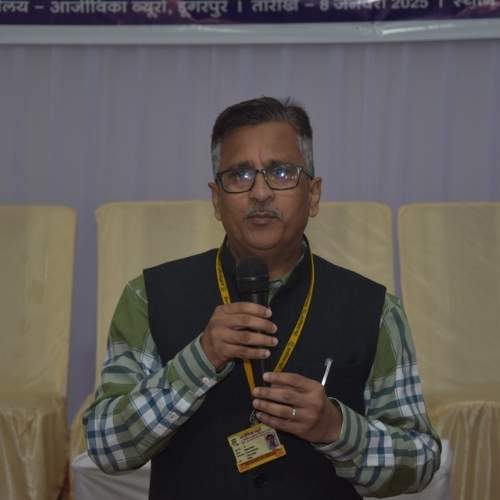
Aajeevika Bureau, a grassroots organisation working with migrant and informal workers across Rajasthan and Gujarat, runs skilling programmes for rural youth aimed at enabling local livelihood opportunities. As part of this work, we also track post-training outcomes to understand how young people transition from skills to income.

In a recent study across Aajeevika Bureau’s intervention areas in southern Rajasthan, we tracked over 150 rural entrepreneurs trained in trades such as motor winding, tailoring, mobile repair, electrical wiring, and two-wheeler maintenance. While the findings are context-specific, they reflect challenges commonly observed in rural enterprise ecosystems across India.
The picture at first glance is encouraging:
- Around 70 percent of trained youth reported working in the same trade they trained for, indicating that their skills matched with real local demand.
- Most enterprises provide practical everyday services, such as bike repair, tailoring, mobile servicing, and E-Mitra kiosks.
- Many entrepreneurs are first-generation business owners, with nearly 63 percent reporting no family history of enterprise.
- The majority are between 18–25 years old, a demographic window that holds both opportunity and vulnerability.
Yet a closer look reveals a consistent pattern. While many young people manage to launch small enterprises, most remain stuck at a subsistence level. Businesses run by most of these youth often plateau within the first two or three years—earning just enough to meet daily needs, but not enough to expand operations, hire others, or build resilience.
Why do rural enterprises struggle to grow?
Our field discussions, in-depth interviews, and focus groups point to five persistent constraints that limit rural enterprise growth.
1. Small, saturated local markets
Most rural businesses operate within the village or nearby markets. Unlike urban entrepreneurs who can tap into larger demand or scale digitally, rural youth are constrained by a small customer base—often with limited paying capacity.
Two-wheeler garages, for example, thrive only if enough households own bikes. Beyond a point, the market saturates. A garage owner in Rajasthan’s Banswara district explained how, during the lean seasons, he sells spare parts to supplement repair work because repairs alone cannot sustain his income year-round.
2. Limited business skills
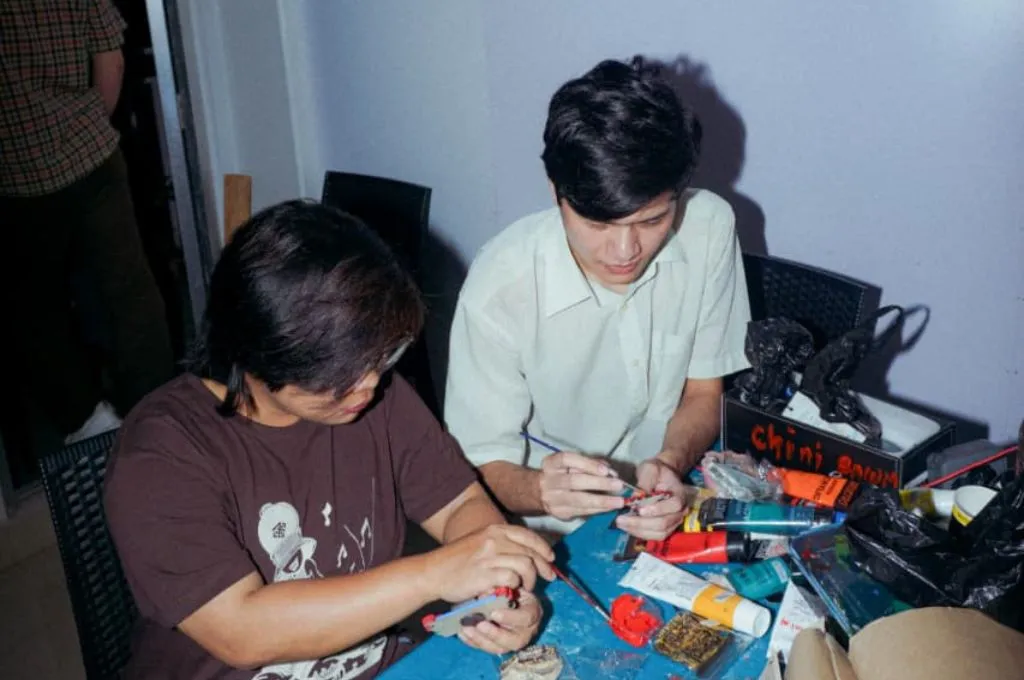
Technical training equips youth with a trade, such as fixing bikes, stitching clothes, and repairing mobiles, but not with skills required to run a business. This includes skills like maintaining accounts, managing stock, tracking credit, calculating profit margins, or pricing services realistically.
As a result, many underprice their work, struggle with cash flow, and cannot assess when or how to reinvest. Some entrepreneurs earn money consistently, but cannot tell whether they are making a profit.
3. No clear path to formalisation
Formalisation opens doors to credit, government subsidies, MSME support schemes, and legal protections. But most rural entrepreneurs remain informal due to fear of taxation, paperwork hassles, and low awareness.
Only a small number—such as E-Mitra operators—pursue registration. Even then, many struggle to follow through on compliance requirements.
4. Minimal diversification
Many rural businesses remain rigidly tied to a single trade: a tailoring shop stays a tailoring shop, a motor garage only repairs bikes. Very few expand into complementary services or products.
In our study, only 19 percent of entrepreneurs reported diversifying their income streams by starting spare parts sales, additional trades, or small retail add-ons. Yet diversification is often what helps micro-enterprises survive lean periods and grow steadily.
5. Gender gaps and social norms
Although self-employment skilling aims to reach both young men and women, only four percent of rural entrepreneurs in our sample were women.
Social norms, mobility constraints, lack of family support, and safety concerns prevent women from running customer-facing enterprises. Even when women complete training, many are pushed into home-based work with limited earning potential.
What needs to change: From skilling to enterprise support
The lessons from our work point to a simple truth: skill training alone is not enough. It must be paired with sustained business development support, if rural entrepreneurship is to become a viable pathway to livelihood security.
1. Make business literacy a core part of training
Every skilling programme that promotes self-employment must embed enterprise skills: how to keep simple accounts, track cash flow, manage credit, use digital payments, and price services. This literacy is often more important for survival than the technical skill itself.
In our work, for instance, we have begun piloting simple record-keeping modules where youth maintain daily income–expense registers and track credit given to customers. We also conduct sessions where trainees map their expected income from the business alongside the costs and investments required to establish and sustain it. This is particularly useful for first-generation entrepreneurs, many of whom have limited exposure to financial planning.
2. Mentoring for diversification
The youth need exposure to real stories of businesses that grew by adding products or tapping new markets. A bike mechanic can add spare part sales; a tailor can expand into school uniforms or seasonal bulk orders.
Diversification support must be practical and grounded in local market realities, not generic business advice.
For instance, some entrepreneurs we work with have begun supplementing repair work with spare part sales during lean seasons, helping stabilise incomes across the year. Similarly, E-Mitra kiosk operators often expand into stationery shops, printing, and basic documentation services to increase footfall and income. Tailors, too, diversify by stocking small tailoring accessories or ready-made clothing alongside stitching services.
Diversification support must be practical and grounded in local market realities, not generic business advice.
3. Handholding for formalisation
Rural entrepreneurs fear formalisation, but it unlocks credit, subsidies, and protection. Nonprofits and skilling organisations can support youth to register as MSMEs, obtain trade licences where needed, and link to relevant schemes.
In practice, we have seen that mentoring support—helping entrepreneurs understand documentation, navigate local processes, and access relevant schemes—can significantly reduce this barrier. As part of this, we introduce them to different pathways for formalising their businesses, such as Udyam registration, GST registration (where applicable), and other basic business identification processes.
The goal should not be forcing formalisation, but making it accessible and beneficial.
4. Better access to microcredit, paired with trust
Financial institutions must design small-ticket, low-collateral loans for rural entrepreneurs. But credit alone is not enough. Many youth avoid formal loans due to fear of default, distrust of institutions, or stories of harassment.
Community-based collectives, self-help groups (SHGs), or local facilitation models can help reduce risk and build confidence. For instance, we facilitate linkages to financial service providers that support low-income workers, helping simplify the credit process and making it more accessible for first-generation entrepreneurs.
5. Women-focused enterprise support
Women need targeted handholding in the form of safe workspaces, family counselling, mobility support, and peer networks.
Our experience shows that engaging with families, especially male members, can play a critical role in enabling women to run enterprises. In a few cases, women who completed training were able to start home-based or nearby enterprises when families were involved early and support structures were in place.
Without addressing these social barriers, skilling alone is unlikely to translate into viable enterprises for women.
6. Local mentorship hubs
Pairing new entrepreneurs with successful small business owners in nearby areas can fill the gap between training and the day-to-day grind of running a business.
We facilitate alumni meets where youth who have previously undergone training come together, including those who have established micro-enterprises and others who are running relatively stable businesses. These interactions create opportunities for peer learning and experience sharing.
Over time, these meetings can also function as informal support circles, where young entrepreneurs regularly discuss challenges, exchange practical solutions, and learn from each other’s journeys. Such spaces foster peer mentorship and help entrepreneurs navigate day-to-day business decisions with greater confidence.
Mentorship hubs can also help youth troubleshoot challenges, build networks, and access market linkages.
We know that skilling alone will not stem distress migration or rural underemployment. Only when young entrepreneurs move from fragile survival to resilient growth will they become true local engines of jobs and hope.
From survival to growth
Rural youth do not lack skills, courage, or ideas. What’s absent is a supportive ecosystem that helps them turn small stalls, garages, or tailoring units into thriving, resilient businesses. As policymakers, funders, and nonprofits, we must not stop at counting how many youth were trained. We must track whether they are earning sustainably, growing their ventures, and hiring others.
Only then will rural entrepreneurship deliver on its promise, not just as a tool to escape poverty, but as a pathway to build thriving local economies.
*Name changed to maintain confidentiality.
—
Know more
- Learn more about how the barriers faced by women-led MSMEs can be addressed.
- Read more about how India’s MSME sector faces a skill gap.