The regal realm with the sorrowless name
they call it Begumpura city, a place with no pain,
no taxes or cares, none owns property there,
no wrongdoing, worry, terror, or torture.
Oh my brother, I’ve come to take it as my own,
my distant home, where everything is right…
They do this or that, they walk where they wish,
they stroll through fabled palaces unchallenged.
Oh, says Ravidas, a tanner now set free,
those who walk beside me are my friends.
Composed by Sant Raidas, a 15th-century poet-saint and anti-caste reformer, this verse speaks about Begumpura, a utopian imagination of a city where there is no casteism, no injustice, and no social segregation. In Begumpura, all professions are equally respected and there is nothing limiting a person from entering a palace or a park.
Kanwal Bharti, in his essay ‘Raidas Saheb and the Idea of Begumpura’, calls Raidas’ Begumpura ‘an expression of revolt’. The essay is part of required readings for the anti-caste diploma course on mental health practices at The Blue Dawn, a collective that aims to make mental healthcare more accessible for people from caste-oppressed communities across religions.
At first glance, it may seem unusual for a mental health programme to include political literature in its curriculum. Some might ask: What will psychology practitioners gain from reading about the thoughts of a social reformer from 600 years ago? But for a mental health practitioner, it is important to move past the notion that they can remain apolitical or neutral in therapy rooms. How can someone working with human emotions claim neutrality and be confident that their own biases or prejudice would not impact their consultation? Can a practitioner, for instance, be Islamophobic in their private life and attend to a Muslim woman with trauma from communalism?
Our curriculum accounts for such biases. For instance, it includes readings on how caste shapes poor nutritional outcomes for children from marginalised communities, stories about the lived experiences of oppressed caste groups, and excerpts from poets like Gaddar whose life and poetry resisted the status quo.
The programme spans eight months and participants come from various social backgrounds, which includes people from privileged castes as well as Dalits, Bahujans, and Adivasis. No prior experience in mental health work is necessary. Our teaching methods account for the fact that participants will have varied levels of awareness about the direct impact of structural inequalities on people.
Without explicitly grounding the programme in its sociopolitical context, our training risks slipping into the same standardised pedagogies taught in universities across the country.
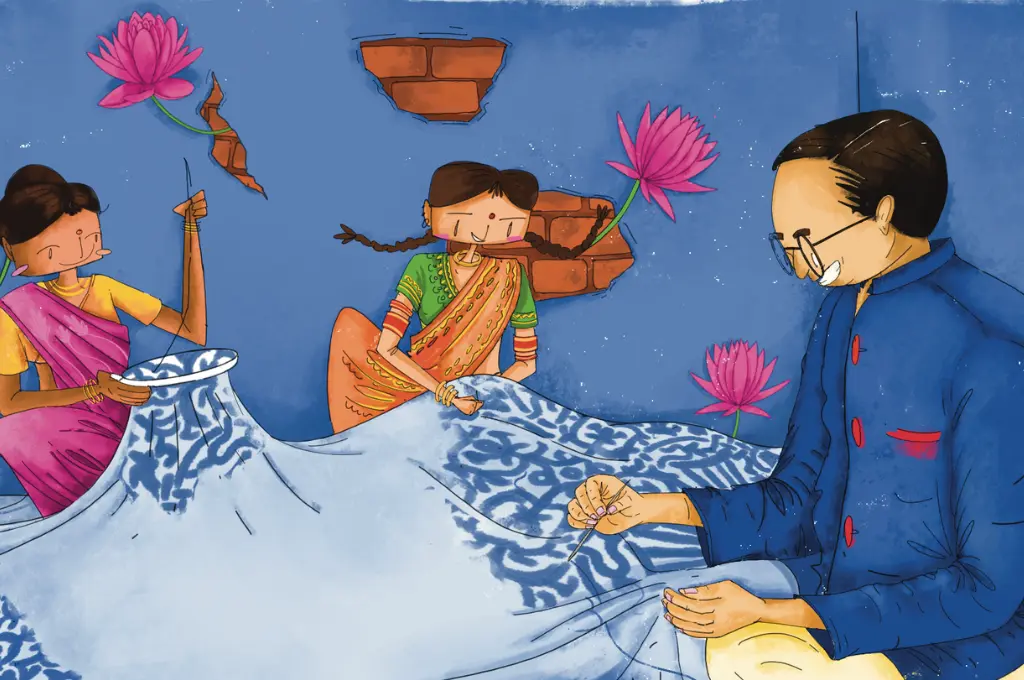
Narrative practices for therapy and politicising mental health
I learned about narrative therapy in 2021, and discovered that it helps with separating a person from their problem. One of its primary focus areas is externalising the problem; for example, it ensures that a person seeking therapy is not viewed as ‘depressed’ but as someone experiencing depression. The pedagogy is based on the central idea that everyone is capable of finding a solution to the issues they are facing. Therefore, in this practice, the therapist’s job becomes that of a guide rather than a preacher.

While learning about narrative therapy, I also engaged deeply with the works of Black psychologists and social workers on decolonising mental health and introducing a race lens to therapy. I learned how even standard practices like IQ tests have racist origins. In 2022, I got in touch with Narrative Practices India Collective, and after two years of discussion we carefully designed our diploma course.
We made a conscious decision to invite people from a wide range of fields—academics, historians, lawyers, artists, writers, journalists, and social sector professionals—to teach at our programme. Their perspectives bring a multidisciplinary approach to the curriculum, revealing how mental health intersects with history, academia, the justice system, and other domains.
Within this structure, The Blue Dawn’s role shifts to that of a co-creator and facilitator; we add a therapy lens to the programme. We bring in the texts that are specific to psychology and embed important narrative therapy exercises, such as the ones that teach how to externalise a problem, by:
- Naming the problem, concern, or struggle: At this step, the therapist tells the client to describe their problem in their own words without the burden of clinical terminology. This helps identify the problem in a more personalised way, using language that makes sense to the person.
- Mapping the impact of the problem: Here, the therapist tries to discover as much as they can about why the problem began, and how and in what context it operates. As the conversation progresses, the therapist invites the client to share their thoughts with the help of questions such as “Is this the first time you’ve put words to what you have been worried or upset about?”, “When did you first realise this?”, and “Have you noticed if this seems to take hold at certain times of day?”
- Helping the client evaluate the impact: Gradually, the therapist asks questions that invite the client to self-evaluate the effects of the problem. Questions such as “Are you okay with the effects of the problem?” and “How do you feel about these developments?” help the client arrive at their own assessment of the challenge.
- Understanding the client’s position: At this stage, the therapist asks the client what they want their life to be, in line with what is important to them. Questions such as “What key thing in your life, if any, is the problem complicating?” can help the client explain their position.
- Creating foundations for action: These questions invite people to make predictions about the particular actions they can take based on what they have spoken about and given value to. These plans for action would have them stepping more into their own preferred directions in life and away from the influence of the problem. The queries can include: “Can you tell me a story about your life that would help me understand why you would take this position on this development?”
As anti-caste literature and narrative practices combine, our curriculum becomes more lifelike where mental health is measured alongside lived experiences of poverty, capitalism, casteism, and other structures of inequalities. We also try to go beyond this.
Skits, plays, and participatory therapy
In 2019, we ran a five-day workshop in Dooars, West Bengal, with young people working in tea gardens, who are primarily from Adivasi communities. On the first day, we simply introduced the concept of mental health using accessible language. On the second day, we asked them to talk about physical health and mental health in their own words.
For physical health, they identified factors such as water pollution, dam construction, and mosquitoes as causes of illness. When discussing mental health, they listed the challenges they experience in their everyday lives. We then asked whether they saw any connections between the two.
As the discussion deepened, participants also began to describe their locations. They were speaking about themselves in relation to their gender, as people from a particular community, or from a particular village with specific social contexts.
And after three days of speaking about the issues, they designed a play that brought together all the nuances of layered oppression that complicates mental health.
The scene was set inside a household. A mother is cooking while her child tries to study but cannot concentrate. The family is struggling for resources, and the mother is frustrated and often lashes out at the child. When the husband returns home drunk, a fight breaks out between the couple, with the child witnessing the recurring violence.
When mental health programmes open themselves up to a diversity of perspectives and practices, they are also primed for diverse outcomes.
The play could have ended there, as a portrayal of domestic violence and its impact on the family’s mental health. But the community went a step further. They added a flashback scene showing the husband, a tea garden worker, asking the upper-caste estate owner for his minimum wage. He is denied and fired, and that is how he turns to alcohol. This is not a justification for violence but an attempt at showing how mental health has a deep connection with capitalism, patriarchy, and caste hegemony. In order to find a solution, a therapist needs to address both.
Communities know the problems that they are dealing with and can communicate it through mediums they are comfortable with. If they find play as a better mode of communication, as mental health practitioners we should be open to listening to them in that format and not be stuck in our ways.
When mental health programmes open themselves up to a diversity of perspectives and practices, they are also primed for diverse outcomes.
Outcomes and the utopian dream
In our short existence, we have had people complete their diploma and go on to adopt anti-caste practices in their lives. For example, an upper-caste therapist who was part of our programme has now designed a series of workshops that enable those from privileged castes to learn about the importance of caste in therapy rooms. Another one has created a website to collate scholarships and academic resources for students from marginalised backgrounds.
Mental health interventions can only ever be partial responses unless accompanied by a sustained commitment to dismantling caste itself.
For organisations and practitioners seeking to understand the relationship between caste and mental health, the first step is deep internal reflection. This requires questioning who is seen as an expert and who is treated merely as a data source. Too often, knowledge about marginalised communities is extracted from them while authority and decision-making remain concentrated elsewhere. If organisations are serious about caste justice, they must examine whether their own structures, cultures, and hierarchies reproduce the same caste dynamics they claim to challenge.
But internal reform alone is not enough. Any meaningful response must also engage with the broader structural reality of caste oppression. As long as caste continues to organise social life in India, shaping access to dignity, safety, and opportunity, its psychological consequences will persist. Mental health interventions can only ever be partial responses unless accompanied by a sustained commitment to dismantling caste itself. This is why mental health cannot be treated as an afterthought within movements for social justice. The violence of caste has deep psychological consequences. Addressing it requires placing mental health at the centre of conversations about justice, dignity, and liberation.
We know that our efforts won’t magically solve all problems, but they can be the starting point to question the norm and not settle for the bare minimum in the name of empowerment. It is time that we build our own practices, talk about the wisdom of our communities, and challenge mainstream ideas of mental healthcare. As the Dalit, Bahujan, and Adivasi communities work towards realising Begumpura, ours is one more step in that direction.
—
Know more
- Read about the research gap on the relationship between mental health and caste in India.
- Learn more about the intersection of caste and mental health
- Learn how therapist training in India overlooks queer experiences
Do more
- Attend Building Begumpura, a conference on anti-caste mental health practices, on 14 and 15 April.