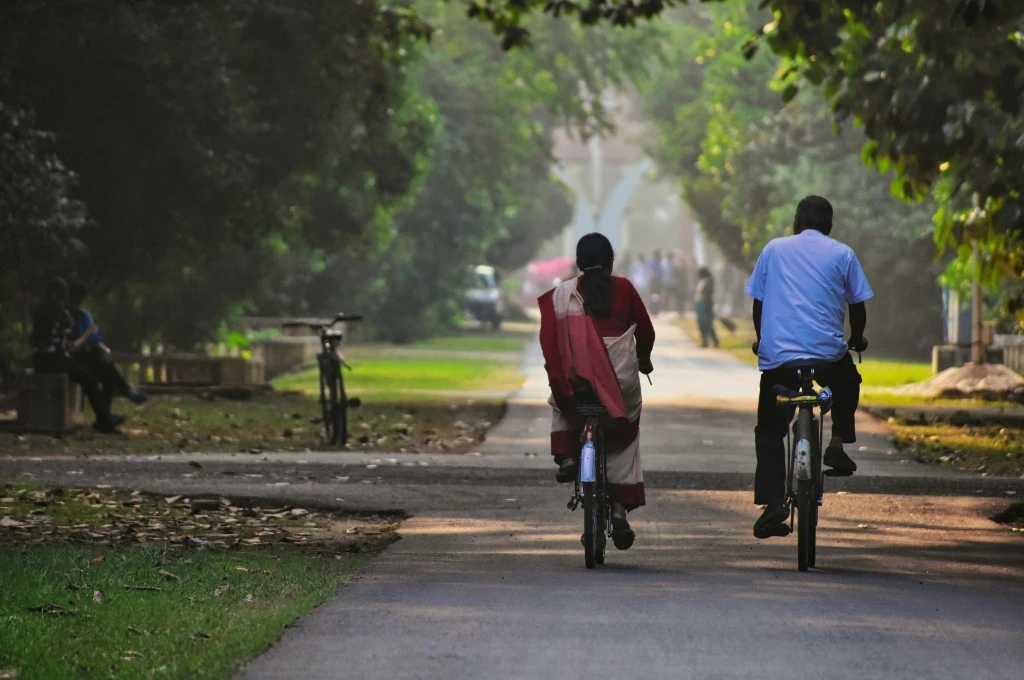
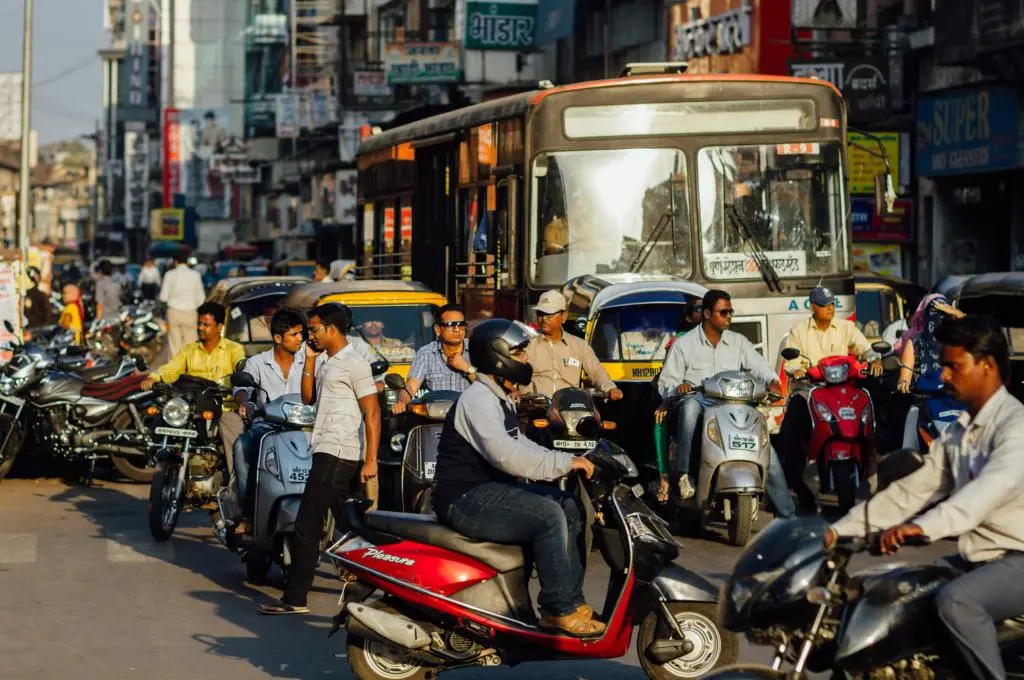
Set in the foothills of the Eastern Himalayas, Dimapur is a city of contrasts. On one hand, it is Nagaland’s largest urban centre and economic hub, drawing traders, farmers, and informal workers from the borderlands of Assam and the Naga hills daily. On the other, the mention of Nagaland still conjures images of lush landscapes with a pleasant climate.
Over the years, however, urbanisation has outpaced planning and existing infrastructure, turning the city into a rapidly warming urban island. Built-up areas have tripled over the past two decades, vegetation cover has sharply declined, and expanding peri-urban settlements have reshaped Dimapur’s microclimate.
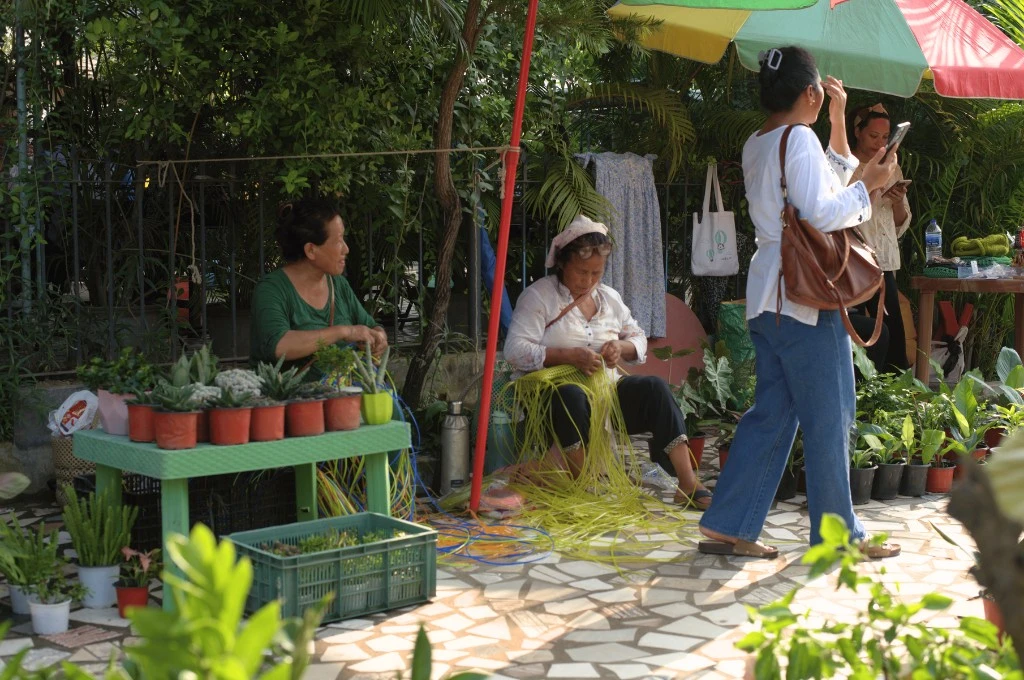
In a city where it ‘feels like’ 38°C even in September, heat seeps into the way people move through their day-to-day lives. The exposure to heat is especially high for Dimapur’s street vendors, more than half of whom are indigenous women from communities such as Naga, Karbi, and Kachari. Women in the city spend more than 10 hours a day vending under tarpaulin tents and open skies. Approximately 80 percent have been directly affected by seasonal variations, illustrating how climate stress intersects with gender, informality, and urban precarity.
Yet within these constraints, locally led efforts by these women reveal an alternative, more intimate model of urban resilience—one that is not about large-scale interventions but focuses on everyday acts of adaptation.
Women street vendors turn to traditional practices
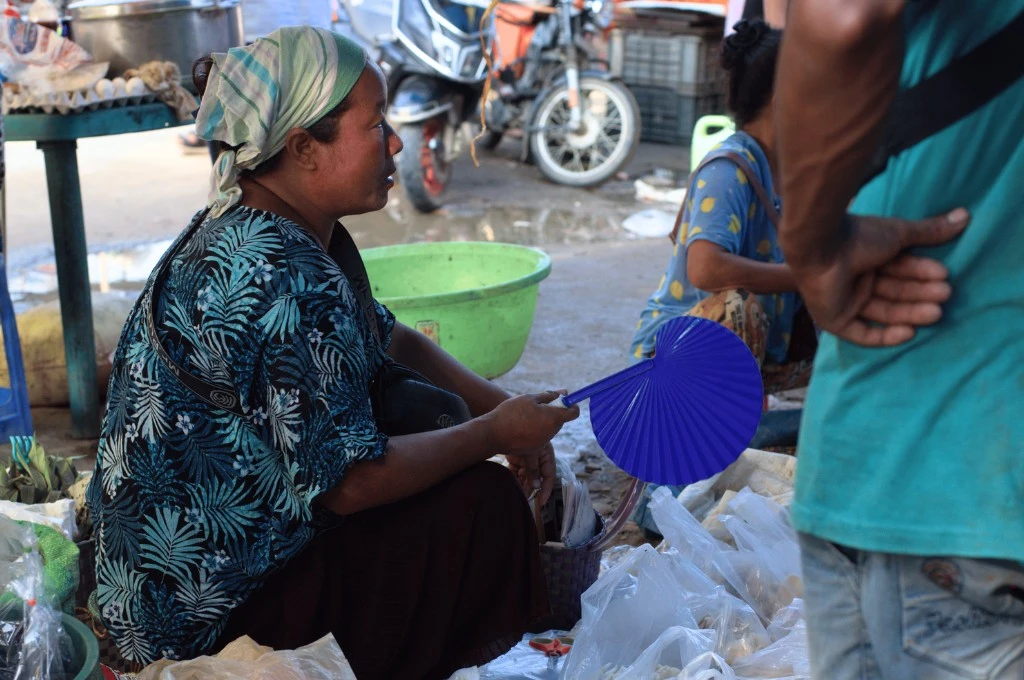
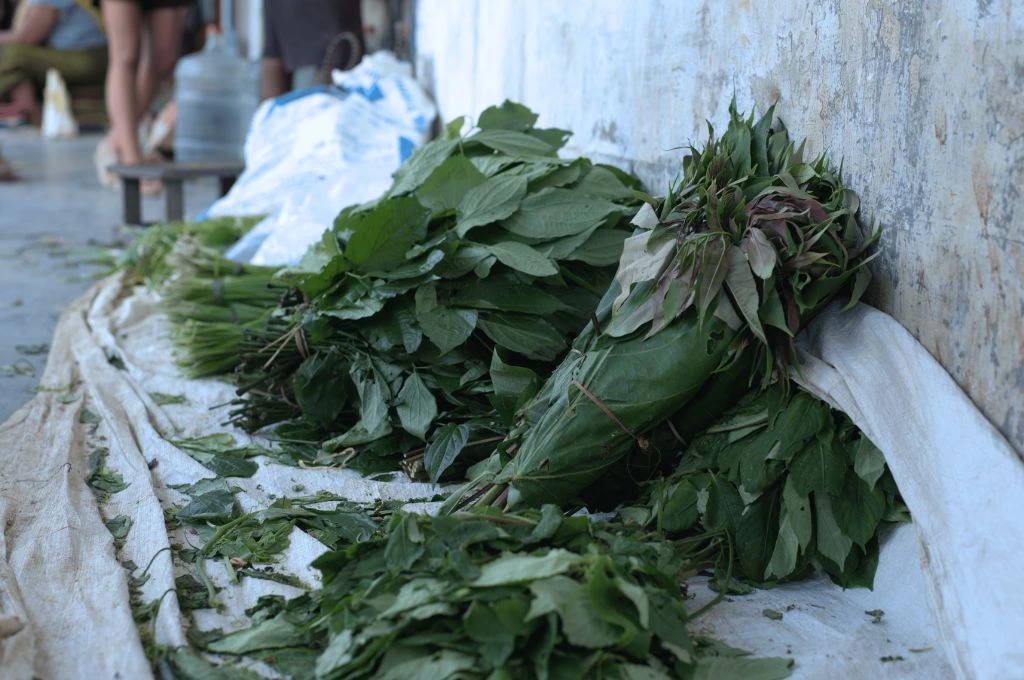
In Dimapur, more than 60 percent of women street vendors are engaged in selling vegetables. This work is especially vulnerable to heat stress and extreme weather. “Earlier we could keep and sell our produce for at least two to three days,” one vendor recalled. “But these past few years, it barely lasts a day before we have to throw it away.” These added pressures have deepened an already fragile reality, where the absence of basic support systems such as cold-chain infrastructure and proper storage facilities have undermined women’s incomes and long-term livelihood security.

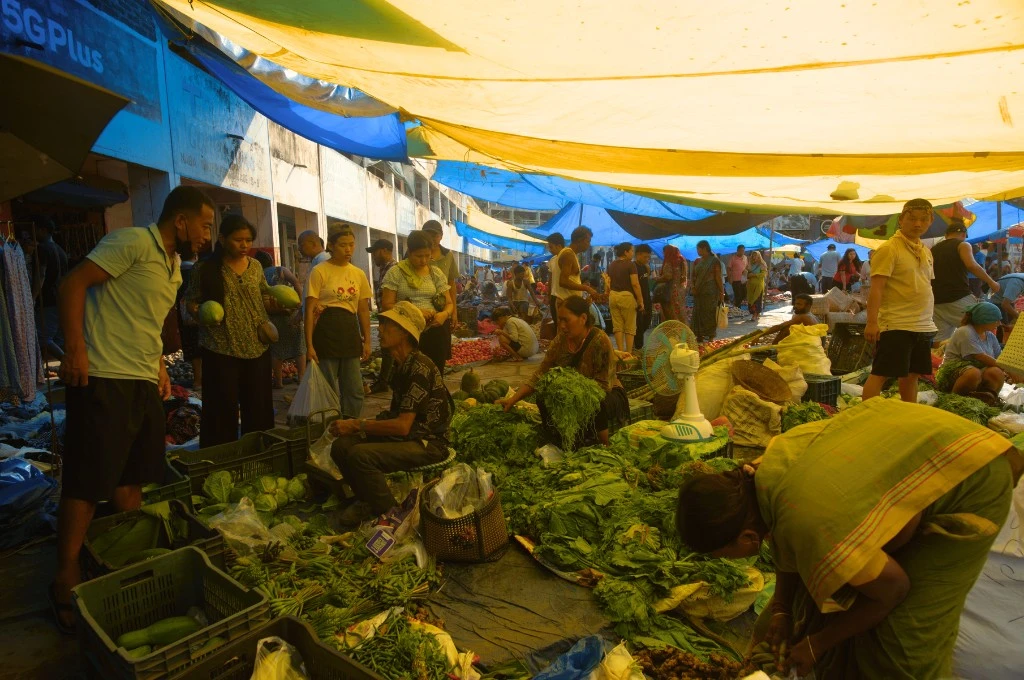
However, in a region where formal climate adaptation and sustainability ecosystems are either nascent or non-existent, these women are leveraging traditional practices to adapt to the changing weather and its impact on their livelihoods. Many of these practices reflect what are otherwise framed as Nature-based Solutions (NbS)—approaches rooted in indigenous knowledge that communities here have relied on for generations to care for the environment. For instance, practices such as wrapping produce in banana leaves naturally discourage the use of single-use plastics, while choosing foldable, reusable steel cups over disposable alternatives reinforces a culture of mindful, low-waste consumption.
Even as women are adopting these measures, daily heat exposure continues to cause quicker spoilage of produce. This has meant that more vegetables and fruits go to waste, creating new challenges for vendors and the markets they rely on. This has prompted local groups to revisit older, low-cost practices of managing organic waste, such as composting what has been discarded.
Ilibo Sema from SEWA Bharat, Nagaland, one of the organisations working on collective composting efforts, shared, “Waste has always been a major challenge for our vendors, but now it’s being turned into something resourceful. Organic waste from stalls is collected, heap-composted in low-cost units, and the nutrient-rich liquid runoff is reused to water nearby trees.” These trees, once scattered or absent, now offer pockets of natural shade around vending areas, creating cooler microhabitats that provide respite from the urban heat.
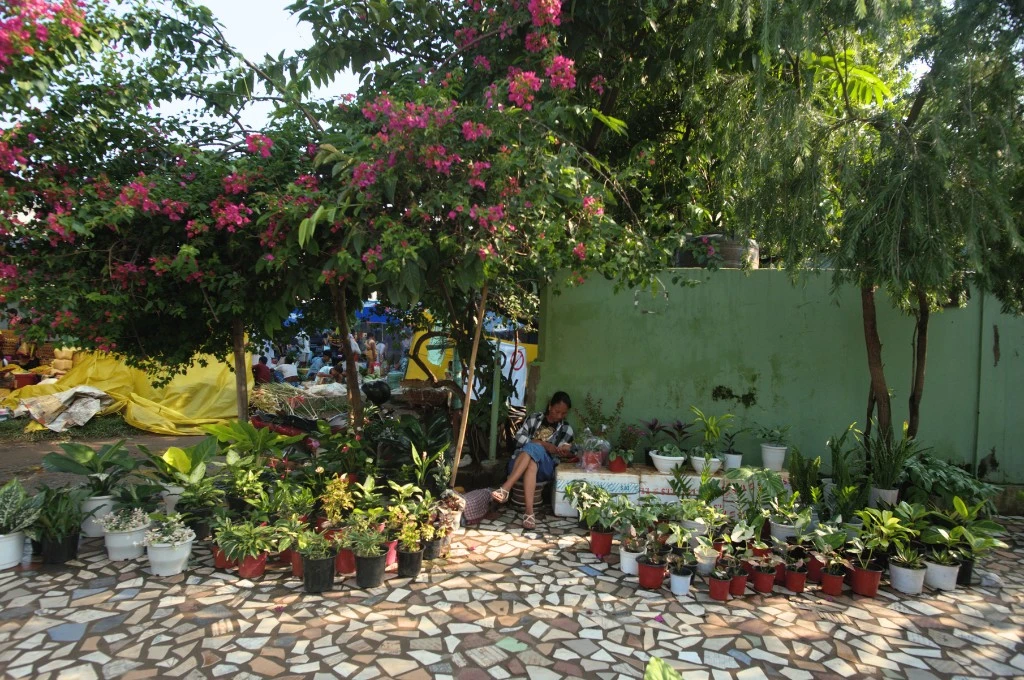
Many women vendors also maintain small kitchen gardens nourished by compost-enriched soil. Across the markets of Dimapur and Chümoukedima, rows of saplings and small planters mark a subtle but powerful shift. They reveal that adaptation is not only a technical process, but also a cultural one rooted in care, community, and indigenous knowledge practices around sustainability.
Local networks lead adaptation
Behind these visible transformations lies an equally important, but often invisible, system of distributed governance. Even as people migrate to urban areas, they maintain the ties to their village and clan and follow their collective norms. In places such as Dimapur, it is these networks, tribal civil society organisations (CSOs), student unions, and faith-based groups that step in to provide essential infrastructure like public toilets and drinking water facilities, especially where municipal schemes fall short. As such, these actors form a hybrid governance ecosystem that is layered across tribal, municipal, and informal institutions.

When formal planning frameworks and heat action protocols fail to account for such places, this hybrid ecosystem works to provide infrastructure and support. For the city’s women street vendors, CSOs act as vital intermediaries, helping them to navigate systemic gaps and to build small, self-sustaining systems of care.
Given that much of these collective efforts are woven into women’s working lives, they end up transforming market spaces from simply commercial zones to shared commons, looked after by those who depend on them most. Dimapur’s story reveals that resilience often begins in the everyday negotiations of women striving to maintain dignity, income, and well-being. Their actions, though small in scale, reimagine systems of waste, work, and well-being as interconnected.
Strengthening systems around everyday adaptation
Locally led adaptation in frontier towns like Dimapur is a grounded reminder that innovation need not always be new. In the city’s informal markets, the re-emergence of traditional practices, such as using banana leaves, organic composting, and communal resource sharing, are NbS in their truest form—born not from project blueprints, but from lived experience and an ethic of care that centres community action.
These efforts, however, also reveal the limits of adaptation in frontier urban contexts. The strength of these women vendors lies in their capacity to adapt collectively, yet their everyday acts of resilience often unfold in the absence of enabling systems.
As Temjemlemla, a grassroots leader associated with SEWA, notes, “A meaningful, just, and dignified right to the city for women street vendors can only be realised when enabling policies like the Street Vendors Act, 2014, are implemented in both letter and spirit.” While key provisions of the act including the Town Vending Committee (TVC) have been formally set up, they have not been fully operationalised in practice. The issue has been exacerbated by broader gaps in the formal urban governance system of the city that impact day-to-day functioning.
In such circumstances, strengthening policy linkages is crucial, not to replace local ingenuity but to augment it. This will ensure that the everyday innovations of these women are met with the institutional support they deserve.
Additionally, Dimapur’s story of adaptation and NbS rooted in communities offers insights that extend well beyond its boundaries. Many rapidly growing towns across the Indian Himalayas, be it in Sikkim, Arunachal Pradesh, Uttarakhand, or the hilly districts of Assam, share similar typologies: fast-paced peri-urban expansion, fragile ecologies, heterogeneous populations, limited municipal capacities, and reliance on informal systems of care.
In these contexts, therefore, adaptation cannot be designed solely through formal planning templates. Instead, it must begin by understanding the social infrastructures already operating beneath the surface and paying attention to three key aspects:
- Strong community networks capable of collective action
- Hybrid governance spaces that allow civil society and informal actors to fill institutional gaps
- Local knowledge systems that hold ecological memory and cultural practices of reciprocity
For adaptation to be both just and lasting, solutions must begin where adaptation already lives, that is, in the hands of communities, and be strengthened by systems that build on their knowledge.
This article is an outcome of the Stories of Hope Media Fellowship by IUCN India under the Himalaya for the Future initiative.
—
Know more
- Understand the importance of locally led adaptation in building climate resilience.
- Read this interview with Seno Tsuhah, an activist who is reviving traditional ecological practices in Nagaland.
- Learn more about how climate change is impacting street vendors in Dimapur, and their demands for better support and planning.