Who counsels the children’s counsellors in Shillong?
 East Khasi Hills district, Meghalaya
View the entire series here.
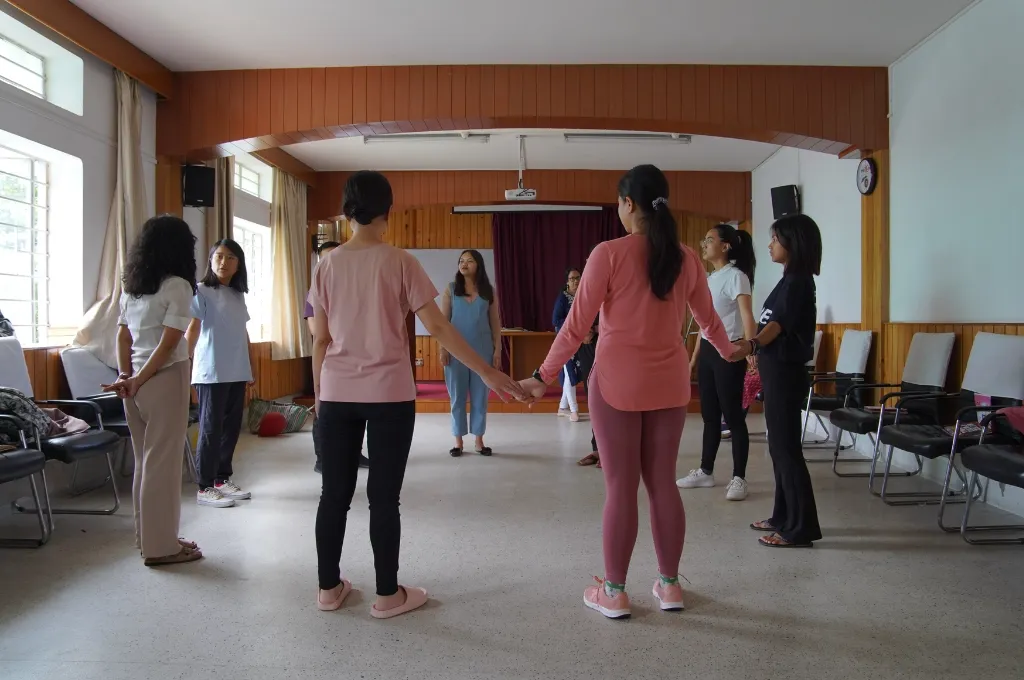
Apart from being an IDR Northeast Fellow, I also work as a communications developer at Faith Foundation, a nonprofit based in Shillong, Meghalaya. The organisation is one of the few nonprofits in the state that focuses on preventing child sexual abuse and supporting survivors.
We have a team of counsellors who provide psychosocial support to survivors, conduct sessions with their families, and collaborate with the Child Welfare Committee for the rehabilitation of children and adolescents.
Empathy and consistent conversations are necessary to make children and their families feel safe enough to overcome inhibitions and stigma and share their experiences. In order to do this, Cheryl Linda Ryntathiang, a counsellor, says, “We use active listening, play-based therapy techniques, and trust-building activities.
But listening to people talk about their traumas and tragedies can often be triggering. While deeply fulfilling, the counsellors admit that the job results in psychological burden, which only increases with time.
For example, certain cases stay in their minds long after the interactions, affecting them emotionally and disturbing their work–life balance. A counsellor says, “There are nights I think about that one child. You can’t just switch off.”
Since the counsellors are women, they also face gender bias in communication because the community expects them to be passive listeners. Many families perceive them as interfering in family matters, especially in cases of inter-familial abuse. Further, things are complicated by rigid religious beliefs that discourage reporting and protect the offenders.
Since mental healthcare in the social sector in Meghalaya is still at a nascent stage, the counsellors lack a support group where they can share their challenges. Moreover, it is rare to find a space at home for open conversations about their feelings. In the absence of these, they fall back on their colleagues to discuss their troubles.
Rosa Badarishisha Kurbah, a caseworker, says, “Evening walks too help me clear my head.” On the other hand, counsellor Aitilin Wanniang says, “When I feel emotionally full, I pray for the children, and somehow I feel lighter.”
There are others who listen to music, which acts as a distraction and helps them in temporarily separating their professional and personal lives.
The satisfaction of making a difference helps them continue with their work, but they advocate for small changes at the workplace.
Aitilin says, “We would hugely benefit from skill development workshops on trauma-informed care, behaviour management, and stress management.” Additionally, they suggest monthly emotional debriefing sessions to share their experiences in the field and how they are affected by them. As the mental healthcare space expands in Meghalaya, they also hope for platforms where they can connect with other professionals in the state and learn collectively.
In the meantime, the space for rest, creativity, appreciation, and even someone asking ‘how are you?’ helps.
Rosa says, “We need to remember to rest and remind one another that it is okay to take breaks after cases that are mentally exhausting.”
Baiakmenbha Wankhar, a counsellor, contributed to this article.
Samme Massar is an IDR Northeast Fellow 2025–26. He is related to the co-founder and director of Faith Foundation.
—
Know more: Learn why child sexual abuse survivors struggle to receive compensation.
Do more: Connect with the author at wanmi0007@gmail.com to learn more about and support his work.