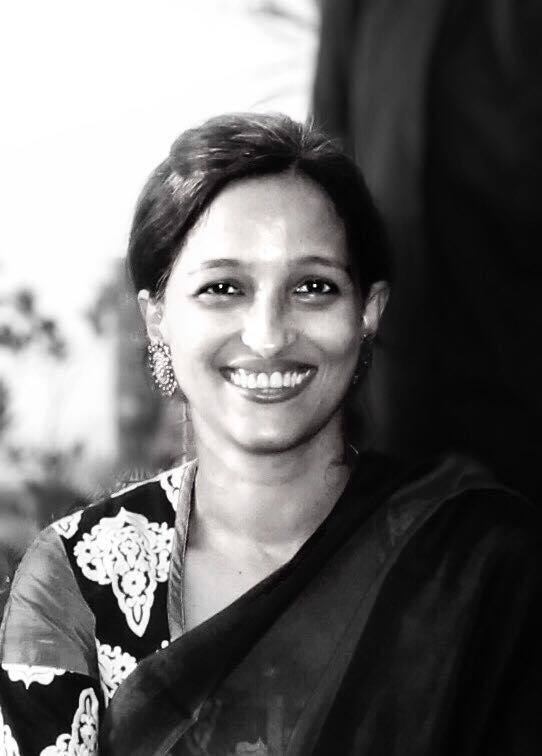
Ingrid Srinath has been a passionate advocate for human rights and social justice for the last three decades. She is the founder-director of the Centre for Social Impact and Philanthropy (CSIP) at Ashoka University, and currently serves on the governing council of the BSE Social Stock Exchange, as well as on the boards of Co-Impact, The Resource Alliance, and Majlis Law.
In this conversation with Smarinita Shetty at the International Fundraising Congress (IFC) 2026 in Amsterdam, Ingrid reflects on the changing relationship between funders and nonprofits, the limitations of target-driven philanthropy, the importance of trust-based funding, and why nonprofits need to invest in building values-led brands.

You’ve been an activist and a fundraiser for most of your career. How do these two worlds come together?
Personally, I think fundraising flows from purpose and the desire to see a change in systems.

If you are doing charity, where you are happy to say, “My job is done as long as a few children are better off,” it is a legitimate way to think as well. There are children in immediate need who are dying, starving, falling into child labour, and you are helping those children directly here and now. But direct service delivery must only be stage one. It cannot be the end goal.
I think the important question to ask is what is fundraising and why do we do it? One way to build a constituency of support for a cause is to raise funds. Because when you engage with people and say you must contribute to this cause, you are changing hearts and minds, and building support for the cause that you serve and the communities that you serve. So, to me, that’s good fundraising.
Getting money from somebody sitting somewhere in isolation is also fine because all money is good, but it is limited. Nothing changes in the heart and mind of the giver. On the other hand, even non-monetary contributions that focus on real engagement have a lot of value. Goonj does it.
One of the most valuable things that Goonj does is turning thousands of Indians into philanthropists. They give ordinary citizens a way to make a difference in society by just donating used clothes and other materials. Even though there is no money changing hands, it is great resource mobilisation because it is changing people’s behaviour and changing people’s ideas of why people are poor.
Let us take vehicular emission standards, on the other hand. There are some people who lobby for and against these standards with their funds. But the average motorist, the average truck driver, is totally left out of this conversation. So you get environmental standards, but you do not get behavioural and attitudinal change. Whereas if you had raised money from those constituencies, then the process of doing the fundraising would have actually helped achieve the goals.

In the last 30 years in India, what are some of the changes that you have witnessed in the fundraising space?
Not a lot has changed. One of the things I was told when I first joined the sector was, “Oh! we’re just professional beggars.” And I was like, “No, we’re not”. As fundraisers in the social sector, we are giving people and donors an opportunity to have meaningful impact. Otherwise, their money is just money.
I think there is just a little more self-respect and dignity in fundraising now. Systems are better, whether it’s donor management software or managing outbound communications and data analysis. There are spaces like fundraising conferences where fundraisers can learn, connect, and amplify their voices. There are more programmes for capacity building of fundraisers.
At the same time, in the recent past, the power balance has shifted dramatically in favour of the funders. Nonprofits too often compete on cost-per-beneficiary, and it is now a commodity market.
Nonprofits are going to have different overhead ratios at different stages in their life cycle.
It is just horrifying to me that we’re still having conversations about overhead ratios, given that it measures nothing of substance. It does not measure efficiency, and it certainly does not measure effectiveness. And of course, it is going to differ based on what a nonprofit does. A policy think tank is going to have a substantially higher overhead ratio as compared to that of a hospital. It therefore makes no sense to compare the two kinds of organisations.
Additionally, nonprofits are also going to have different overhead ratios at different stages in their life cycle. In a friends-and-family kind of operation, overheads are very low because everyone is a volunteer. The day an organisation decides to invest in tech, systems, and professional skills, costs will go up.
When Rippan (founder of CRY) bought the office at Sane Guruji Marg, half his board resigned, saying how can you spend money on the organisation? They were operating out of a garage at that point. If he had not invested in the organisation then, CRY would have been a very different organisation today—a bunch of well-meaning volunteers doing their best against the odds but not actually achieving impact at any scale. So, many things affect overhead ratios, but funders are still stuck on it as a metric to measure.
I think the good news is trust-based philanthropy—which is the kind of work that MacKenzie Scott, Co-impact, and others are doing now. Philanthropists like her understand that change is slow and that it requires long-term commitment. They also understand that local leaders should get to decide on how to spend the money instead of forcing them to do line-item budgeting and onerous reporting on random parameters. But trust-based philanthropy is still small and is growing gradually.
You said that power dynamics have become more skewed in favour of the funders. Is it because of the political changes across the world?
It has been happening for some time now. In the Indian context, this started in the early ’90s with liberalisation, which brought to the fore a new kind of wealthy person. These were younger people at early stages in their careers who had gotten incredibly wealthy fairly quickly. They have been bringing some of the norms from their business experience such as ‘move fast and break things’, short-termism, and the metrics obsession to the sector.
Today, because a large part of the money comes from this form of thinking, civil society has started complying with that mindset, and replicating it as well. To me, the real conquest has been of mindsets where nonprofit leaders believe that they must think like this new set of funders and align with how they think.
They either decided themselves, or were told, that if they wanted access to the big money, they would have to put wealthy business leaders on their boards and hire corporate executives to senior positions. So now the governance and leadership of nonprofits carry this mindset.
Political changes have definitely impacted philanthropy and civil society. There is more private philanthropy than ever and worse conditions for civil society everywhere. You cannot access foreign money if you are doing certain kinds of work and you cannot access Indian money if you are doing other kinds of work. So now the attitudes and the regulations both push you into a corner.
If the work is being dictated by money, how does this impact fundraising?
It has become about scale. If you raise INR 200 crore this year, then you’re going to have to raise INR 300 crore next year and then you’re going to have to raise INR 500 crore the year after and so on. It’s a scramble for everyone, and not just the smaller nonprofits.
I remember when I joined CRY, we would have these quarterly leadership team meetings where the fundraisers would weep out of sheer frustration because there was no hope of targets being met. I used to head resource mobilisation then at CRY, and the first thing we did was take a two-year hiatus from targets. We said, “We’re going to run resource mobilisation a different way. And for two years, we will accept no targets. We will focus internally and try to figure out how to do this better and more sustainably.”
We asked how targets were being determined, and whether the resource mobilisation team was even consulted, or did somebody just come up with a budget and then hand that as a target to them. We put our foot down and said, “That won’t work anymore. We’re going to be at the table to decide how money is going to be spent and therefore how money is going to be raised. We will not be your ATM where you come and stick a card in, and we dispense whatever you ask for.”

What according to you could the nonprofits do differently when it comes to raising funds?
Nonprofits should be comfortable with brand building. Organisations like CRY, Civicus, Childline, CSIP—all the places where I worked—were able to attract funding because people were aware of them. People knew what they stood for, even if they did not know what exactly the organisations did.
At least three major funders at CSIP, including two CSR funders, came to us and they said, “We like what you’re doing. We want to fund you.” At CRY, when fundraisers would go to collect money from people’s homes, people would say, “Oh, I’m so glad you came. I wrote a cheque and I’ve been meaning to mail it, but I haven’t gotten around to doing it.” That is what it means to have a brand.
Unfortunately, the idea of marketing in the social sector is being imported from the for-profit space.
So, the singular difference between marketing in the for-profit world and the not-for-profit world for me is that in the for-profit world, the brand goes where the money is; it changes according to what people want. In the nonprofit world, the money must come to where the brand is; the brand sticks to its values. It plants a flag on a mountain and says, “If you believe in this, you will come to the mountain. The mountain will not come to you.”
But these are not the conversations people are having in the sector; no one is teaching these marketing skills.
Unfortunately, the idea of marketing in the social sector is being imported from the for-profit space. Nonprofits are being taught to go where the money is, but it isn’t working. Strong, well-established organisations with proven track records are being driven off their missions because of this approach.
Do you have any advice for fundraisers in India?
I want fundraisers to remember that fundraising has enabled social change across ages. Whether it is a fountain in a park, the right to education, or the fight against slavery and apartheid, all of it was enabled by fundraisers. And I want fundraisers to have the confidence, the self-image, the self-belief that comes from this. Without us, no worthwhile human endeavour would be possible.
I think if you get that, then you get everything else. Then you get a functioning association, you get a collective draft of a model CSR contract, you get a donor bill of rights kinds of things. We need fundraisers to remember that we are such a cool bunch of people and that the world needs us. Because if more fundraisers went into meetings with the belief that they are putting more on the table than the donor is, whoever the donor is, then it’s a very different conversation.
India, like the rest of the world, is poised at a crossroads where one path leads to democracy, justice, and freedom and the other to authoritarianism, majoritarianism, and billionaire-driven governance. One side is funded more than adequately. As civil society organisations and fundraisers we could play a significant role in determining which path we choose. It has never been more critical that we make our vision for a more just, equitable, free society compelling to citizens everywhere. Can we find the skills, tools, solidarity, and courage to make ourselves, and the communities we stand with, count?
Ingrid Srinath was a speaker at the debate Can Civil Society Fund Itself? at IFC 2026.
Debojit Dutta contributed to this article.
—
Know more
- Learn how fundraising can be turned into a shared organisational responsibility.
- Read why nonprofits need to invest in brand building.