For more than two decades, I have been working with communities in Mumbai to secure access to water. While our network is spread across approximately 90 informal settlements in the city today, our struggle began in the 2000s with a far narrower question: Were Mumbai’s municipal governance reforms being implemented as promised under the 74th Constitutional Amendment? What started as work around ward committees and public participation in local decision-making slowly revealed a deeply rooted problem of governance and people’s rights to basic necessities and dignity.
At the time, various proposals were being presented to address the problems in Mumbai’s water system. As we studied these proposals that were framed as ‘technical fixes’ for Mumbai’s water system, it became clear that policy decisions about who would receive water, and who would not, were motivated by interests of exclusion, privatisation, and the use of water as a subtle tool of control—specifically targeting urban poor, migrant, and other marginalised communities.
In response to this, we started connecting with communities and building our campaign around a central idea: We would not allow water to be turned into a for-profit commodity. This realisation pushed the struggle in unexpected directions, and amid this, we organised ourselves into the Pani Haq Samiti. Over the next 20 years, our work moved from administrative engagement to research, from research to community mobilisation, and from jan andolans to the judiciary.

What follows, therefore, is not a story of absolute triumph. It is an account of how a movement can stay alive, based on years of trial and error, setbacks, and small victories.
‘Technical problems’ often have political roots
In the early 2000s, the World Bank held a public consultation in Mumbai for the Water Distribution Improvement Project that they were about to undertake. During the consultation, the city’s water crisis was framed in overtly technical terms, those of leakage, pressure, efficiency, or capacity affecting the quantum of supply. However, for us, these explanations raised more questions than answers, because the water department of the Brihanmumbai Municipal Corporation (BMC) runs a significant surplus, and is one of only a few in Asia that own dams.
As we studied the documents for the project, it became clear that while the language focused on technical and logistical challenges, it was being used to hide explicitly political choices, particularly a push towards privatisation. Once we understood this, everything changed. We stopped debating the number of pipes and pumps and started asking: Who decides? Who benefits? Who is excluded?
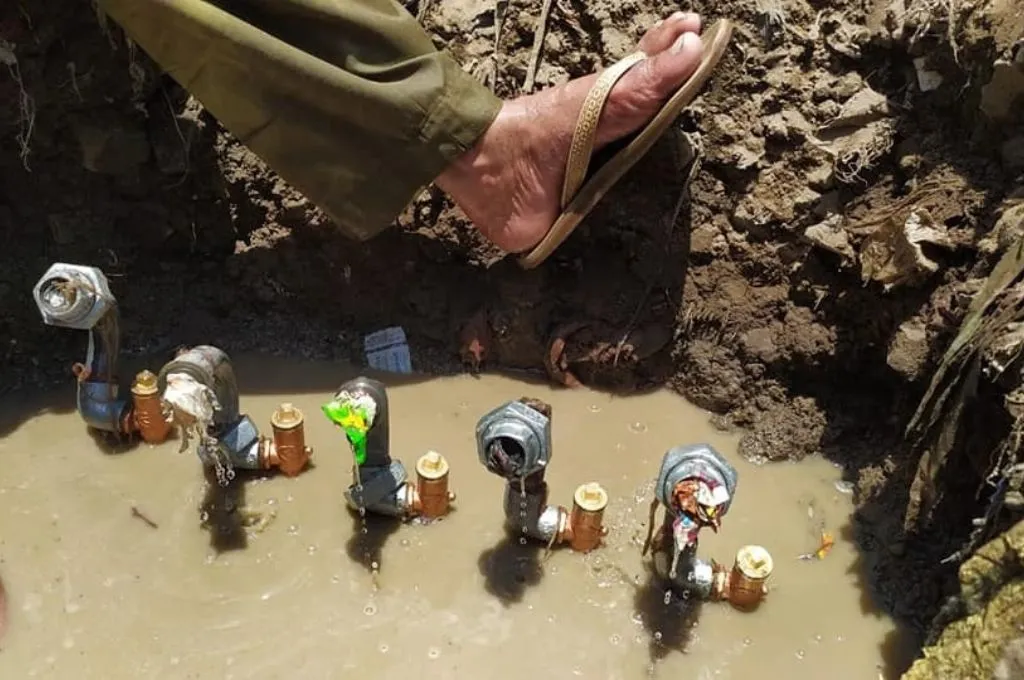
Itbecame clear to us that the issue of water access is intrinsically connected to who is perceived as belonging to the city, and by extension, who has a right to its resources. This belonging has been determined along the lines of caste, religion, economic status, and migration. In many places, pipes pass right beside, or even run directly through, settlements that have been denied water connections. When you look a bit closer, a pattern emerges. Many of these settlements are named after Dalit and Bahujan leaders—Jai Bhim Nagar, Ambedkar Nagar, Ashok Samrat Nagar, Shivaji Nagar, Siddharth Nagar, and Gautam Nagar. The communities who live here are predominantly Dalits, OBCs, and Muslims. The naming of these localities is in itself a form of assertion—an attempt to claim dignity in a city that otherwise deems certain people as illegal.
Moreover, while the technical language of ‘efficiency’ is used to conceal the political decision-making behind water distribution, there is a simultaneous use of administrative jargon and legal categories to dispossess vulnerable groups. Our own reading of the minutes from BMC meetings revealed how predominantly Muslim settlements are labelled ‘Bangladeshi’ or ‘Rohingya’ (in other words, non-citizens), migrants are called ‘outsiders’, and the poor are branded as encroachers. By fundamentally excluding these groups from their right to exist in the city, the denial of their right to water is therefore considered justified.

Another tactic is related to the classification of the land upon which these settlements have been built. For instance, the authorities claimed that Jai Bhim Nagar had been built on ‘vital land’. However, when we filed RTIs and collected information through our own network, we found that the land was under the control of the collector, and was not in fact vital land under the Mumbai Metropolitan Region’s (MMR) authority. With this information, then, we were able to go and make our claims before the BMC.
Here lies a key part of our work, which is building an information base to inform awareness, advocacy, and organising. This includes not only accessing official data, but creating and documenting knowledge of our own. When we present the information we have collected in the communities we work in, it builds both trust and a sense of agency.
Evidence strengthens agency and sustains legitimacy
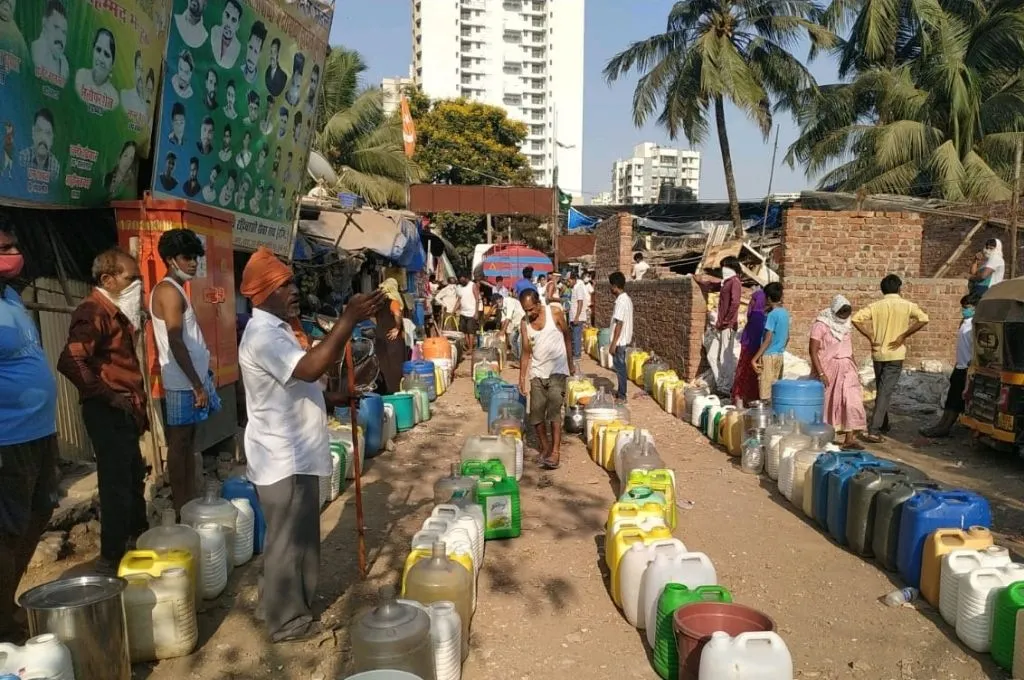
Through the 2010s, our strategies evolved. We began focusing on studying areas systematically, as we believed it was essential to position the demand for water as not only a human rights issue, but one backed by data. With the support of community-led collectives including the Girni Kamgar Sangharsh Samiti and Ghar Bachao, Ghar Banao Andolan, we studied around 106 informal settlements that were not receiving water.
Our study revealed that approximately two million people in Mumbai had no legal access to water. As such, families were spending up to 25 percent of their monthly income buying water or being forced to drink contaminated water. This led to disease, disruptions in children’s education, and extreme exploitation by water mafias operating under political and police protection.
Moreover, we realised that instead of only looking at where water does not reach, we should also be looking at where it comes from. So, we began building relationships with communities living near the dams that supply Mumbai’s water, including Kalu and Vaitarna.
We found that many of the people who had been displaced during the construction of Middle Vaitarna Dam, who had sacrificed their land for the promise of a water connection, had not received supplies. We placed all these findings before the communities and sought their opinion on the path forward. Out of this emerged the idea of organising a Pani Parishad in 2010. The discussions at the Parishad ultimately drove the decision to come together and form the Pani Haq Samiti.
Based on our findings, we approached every possible civic authority—the municipal corporation, the state human rights commission, and the state government. The Maharashtra Water Resources Regulatory Authority even wrote a letter to the BMC, but no action was taken.
So, in 2011, we took to the streets, organising rallies and protests to bring more attention to this issue. While a few elected representatives expressed solidarity with our mission, nothing meaningfully changed. That’s when we decided to approach the third pillar of our democracy—the judiciary.
We consolidated all our studies, solicited expert opinions, and prepared our petition. We grounded our arguments in constitutional provisions: Under the 74th Amendment, municipalities are responsible for water supply, and under Article 21, access to water is part of the right to life with dignity.
In court, the BMC admitted that over 53,000 unauthorised buildings received water on humanitarian grounds, yet informal settlements were denied the same. Noting the contradiction in the corporation’s approach, the court ultimately ruled in 2014 that the BMC must devise a policy to provide drinking water to informal settlements that had previously been excluded. The case lasted two years, and during this time we held public meetings after each hearing to make sure that people remained connected to the struggle and did not feel demotivated.
Although the court ruled in our favour, there was little progress made toward fulfilling the order. So, we intensified community organising, attempting to reach every settlement without water. This resulted in the creation of a large coordination network that consisted of more than 40 groups. Out of this emerged the Pani Pilao Abhiyaan in 2016.
Coalitions make movements strong
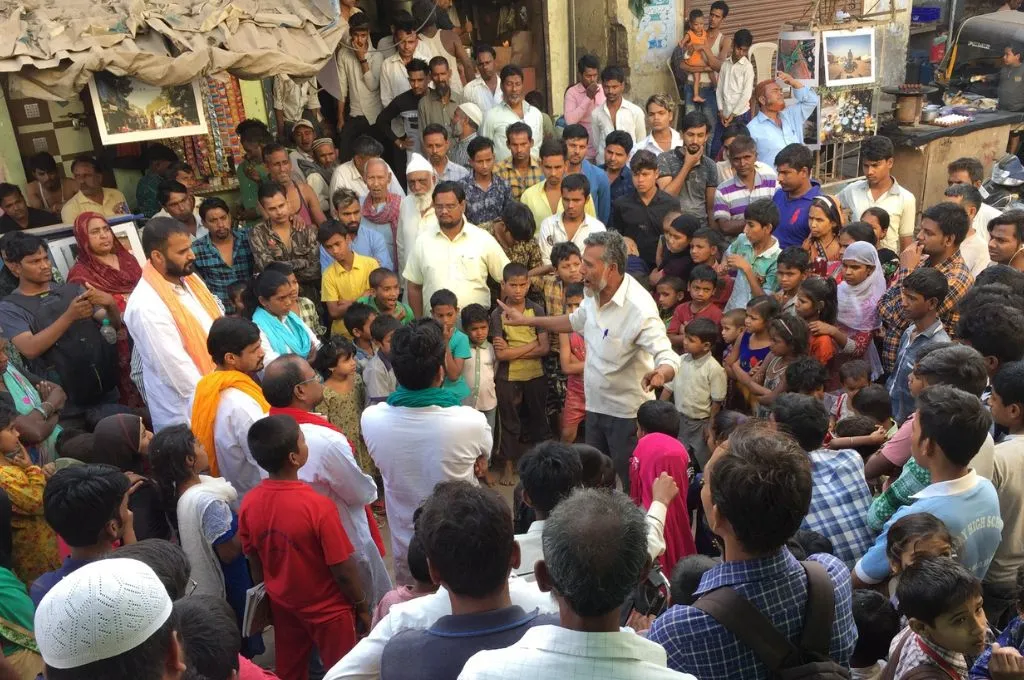
Our movement did not take shape overnight. It was built slowly, through relationships with trade unions, youth collectives, civil society organisations, and community leaders. When hundreds of informal settlements in Mumbai were being demolished in 2005, we worked with many communities to resist eviction and secure resettlement. In this process, we forged connections with housing rights groups, who subsequently allied with us in our struggle.
Building these coalitions also taught us that movements cannot afford to remain confined to a single issue, because the problems they confront rarely exist in isolation. Recognising the intersections of housing, water, and health allowed us to build broader alliances that could sustain our efforts.
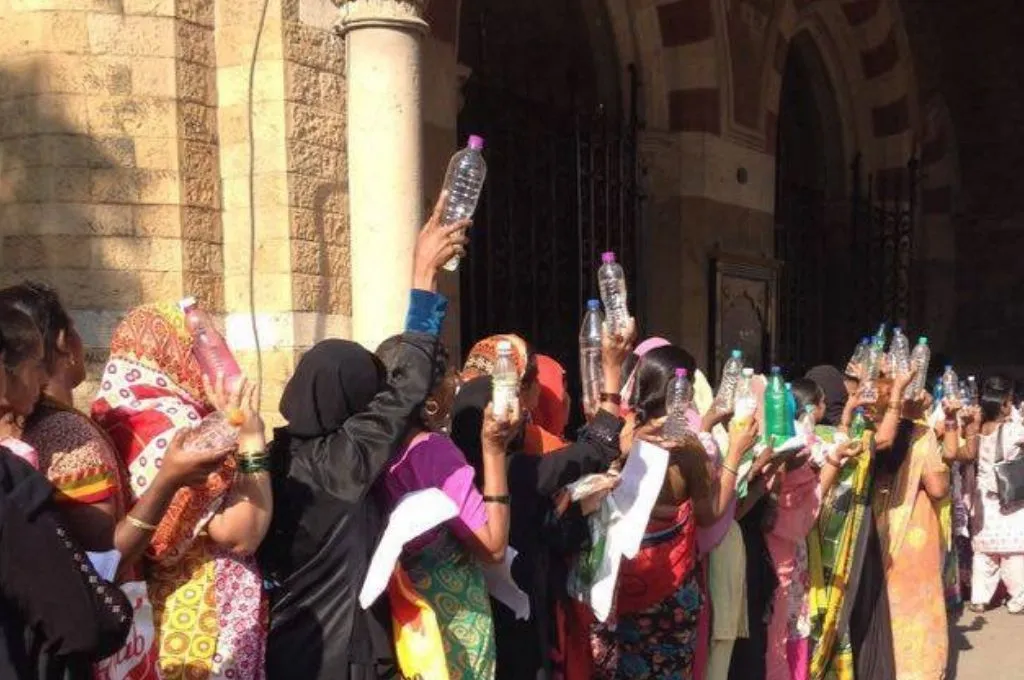
On November 28 2016, which marked the anniversary of the death of Mahatma Jyotirao Phule, we launched the Pani Pilao Abhiyaan, mobilising around 2,000 people who marched to the BMC’s office with bottles of water from their household and sent letters to the municipal commissioner asking a simple question: “Would you give this water to your own child?”
Sustained collaboration helped us to keep the pressure up. It taught us that coalitions are infrastructure, and a movement without allies eventually collapses under its own weight.
Wins are often incremental, and may surface new problems
In 2017, three years after the High Court’s judgement, the BMC put forth the ‘Water for All’ policy. However, it was immediately evident that the policy was exclusionary and had many gaps. For instance, those living on central government land, salt lands, forest lands, and railway land had to get a No Objection Certificate from the landowning body before acquiring a connection. This became a significant obstacle for many communities.
In response to the policy, we immediately began mobilising people to file applications for water connections. Between 2017 and 2019, we filed applications for 8,000–10,000 families. We also continued to build evidence to support our struggle. When COVID-19 hit, we conducted telephonic surveys to understand its impact on those without water access. The study drew the media’s attention, forcing the BMC to engage with us again. In 2022, it released a revised ‘Water for All’ policy.
The introduction of a more desirable water policy did not end our struggle. Instead, it shifted the movement into a new phase focused on implementation, monitoring, and defence of gains.
We continued to help communities navigate applications, counter new bureaucratic hurdles, and prevent rollbacks. Our approach was that of simply opening the gates, in a way, so that people could claim their rights. For instance, we formed basti sangathans (collectives) of five to 10 people in each settlement and trained them to monitor the status of water connections in their locality. Today, there are approximately 80 community leaders across Mumbai who independently handle these responsibilities.
In the past two decades, our struggle has been fought on many fronts—from demanding legal and political action to challenging myths that malign and exclude the marginalised.
Narratives and ownership matter just as much as policy
We have repeatedly encountered the claim that residents of informal settlements are illegal, that they default on payments, or are non‑citizens and therefore disqualified from public services. These narratives continued to justify their exclusion even when policies changed.
We realised that unless these narratives are challenged, policy gains will remain fragile. Thus, we worked on debunking such myths: We highlighted that more than a third of the water coming into the city was considered non-revenue water, and a big share of it was routed informally to big companies, the hospitality industry, and building complexes. Our argument was that it is these institutional defaulters, and not the urban poor, who should be scrutinised. Doing this helped us to shift the media line from ‘illegal slums stealing water’ to ‘settlements being denied water’.
Our struggle also raised a deeper question: Whom does the city belong to? Asserting a community’s right to the city requires treating basic necessities such as water as more than just mere concessions. This reframing changed everything for us, linking rights with people’s responsibilities as citizens. So, if we vote, we are citizens. Crucially, we emphasised that even if people did not vote, and were not citizens in this narrow sense, the constitution still upheld the right to life of all people.
These experiences taught us that communities must move beyond asking to be included and begin to claim ownership.
Positioning residents of informal settlements as citizens with just as much of a right to water as those living in sprawling apartments, we argued for regulation instead of eviction, and fair tariffs instead of water denial.
The movement is now at a stage that may be less visible, but is no less political. While thousands of households have gained access to water, the work has shifted to ensuring that gains are implemented fairly, sustained over time, and extended to those who remain excluded. Bureaucratic hurdles and shifting political priorities continue to threaten hard-won progress. Sustaining the movement now means remaining vigilant, adaptable, and rooted in collective ownership.
—
Know more
- Learn about a day in the life of Pravin Borkar from the Pani Haq Samiti, as he works with communities to ensure universal water access.
- Understand how exclusions based on caste and class have shaped the design of cities in India.
- Read about how Mumbai’s water demand estimates have been used to justify more dam constructions, even as informal settlements remain without water.