The global market for organic cotton is projected to grow to USD 25,890 million by 2032, with the apparel industry driving much of this increase. India is the largest producer of organic cotton in the world, accounting for more than a third of the total global production. However, even though demand is rising, only a small fraction of India’s total cotton production is certified organic. Despite targeted policies and the overall benefits of cultivating organic cotton, farmers in India still find it difficult to completely transition to organic methods of farming.
Between 2016 and 2022, Catalyst Management Services conducted an impact evaluation of an organic cotton training and certification support programme to understand if there was a sound business case for cotton farmers to switch to organic production. We spoke to farmers across four cotton-producing states in India: Gujarat, Rajasthan, Madhya Pradesh, and Maharashtra. During our interactions, we found that some farmers were not fully adhering to organic practices, rather they were doing just enough to meet the certification criteria.
At the same time, farmers described the positive impact of organic cultivation—how it improved soil quality, allowed them to grow food crops on the same piece of land since it was free of chemical inputs, and led to a decline in instances of sickness. Moreover, for almost all farmers, organic seeds, fertilisers, and pesticides had been provided by the on-ground implementing partner of the training programme. This reduced input costs as compared to non-organic cultivation.

Despite the seemingly clear benefits of organic cotton production for farmers, their hesitation to fully shift to these practices raised questions about the viability of organic farming and the specific challenges that farmers were facing.
Disproportionate risks
During our fieldwork, most of the farmers we met said that they had been using non-bio inputs. They also tweaked some of the organic farming practices to save their crop from pests, both due to insufficient supplies of protective organic inputs and because they were unsure of their effectiveness.
In fact, most of the risks associated with organic farming disproportionately fall on farmers.
1. Expensive and lengthy certification process
In order for a farm to be certified organic, cultivators must use the organic variety (not hybrid or BT) of cotton seeds as well as organic manure and pesticides instead of chemicals. Currently, organic seeds and inputs are provided to farmers by on-ground implementation organisations as part of technical and financial support.
A certification agency (either government or private) visits the farm—typically once at the time of sowing and then at any point during the plant’s growing stage—to take a sample of both the soil and the plants, which is then tested for traces of non-organic seeds or chemical inputs. This certification process takes three years.

During the initial phase of the transition from non-organic to organic cotton cultivation, as the soil detoxified and rebuilt biological life, productivity levels were low—a general constraint in organic farming. Productivity rose gradually over the second and third years, and the levels finally recovered in the fourth year, by when soil health had also improved. As a result, while the transition to organic farming could ultimately be beneficial for the land, and by extension for farmers, the initial productivity loss poses a serious challenge for day-to-day survival and livelihoods, especially for small and marginal cultivators.
Moreover, the certification process itself can prove difficult for small and marginal farmers. Obtaining a certificate as an individual is expensive and, in the case of domestic markets, only possible for an interim period under the PGS-India certification. As such, farmers who are part of farmer producer organisations (FPOs), cooperatives, or self-help group (SHG) federations apply for group organic certification. In order to be eligible, an internal control system (ICS) is set up within the farmer group. This ensures that organic standards of production set under different regulatory frameworks are being maintained. Individual farmers in the ICS have to be in the small and marginal categories, typically owning less than 4 hectares of land.
In farmer groups, the costs are borne by the ICS; in some cases, they may be covered under a grant from an apparel company directly or by contracting agencies who are their on-ground partners. These costs also vary from ICS to ICS, depending on the total size of land and number of members. Usually, the cost is approximately INR 1 lakh for 1,000 hectares per year.
At present, certification is always covered by someone for the farmer. The high cost and other requirements often mean that proactive small or medium farmers who set out to do organic farming cannot get certifications on their own. Moreover, while government schemes for organic production support FPOs, they were largely inactive in the states covered in our research. Even in cases where implementing organisations had tried to mobilise farmers, their awareness of membership status and responsibilities in the FPO were limited—ultimately preventing them from accessing benefits.
2. Limited availability and efficacy of organic seeds and bio-inputs
Farmers across the four states reported that organic seeds did not flourish as well as hybrid seeds and had lower productivity and lower resistance to pests. “No matter how much organic manure we use, we still need to add chemicals. With chemicals, the insects die easily. But if we use nimboli (the fruit of the neem tree)instead, it is not effective and does not do much to keep the insects away,” said a farmer in Maharashtra engaged in organic farming. “Sometimes I spray inorganic pesticides while producing organic cotton because of the high growth of weeds and worms,” another farmer noted. Farmers also said that if neighbouring plots were using chemical pesticides, it would drive pests to organically sown fields. Farmers often do not have sufficient organic manure, except for those who own cattle and can use the dung for this purpose.
Meanwhile, inadequate availability of organic seeds itself has been a roadblock. Farmers added that organic seeds were also less suited to changing climatic conditions.
3. Labour-intensive practices
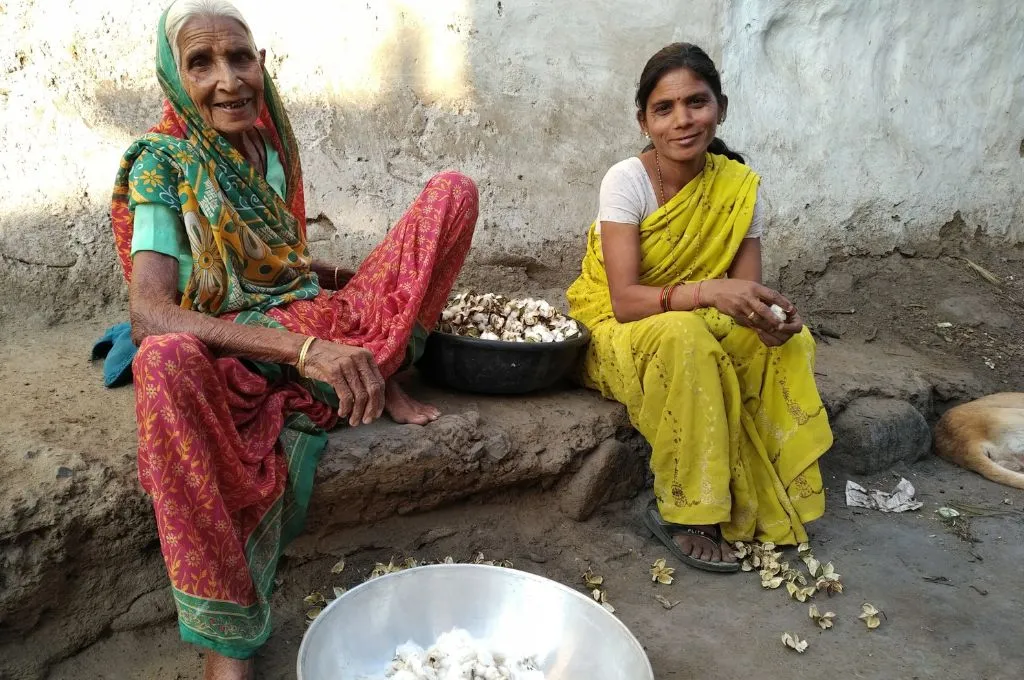
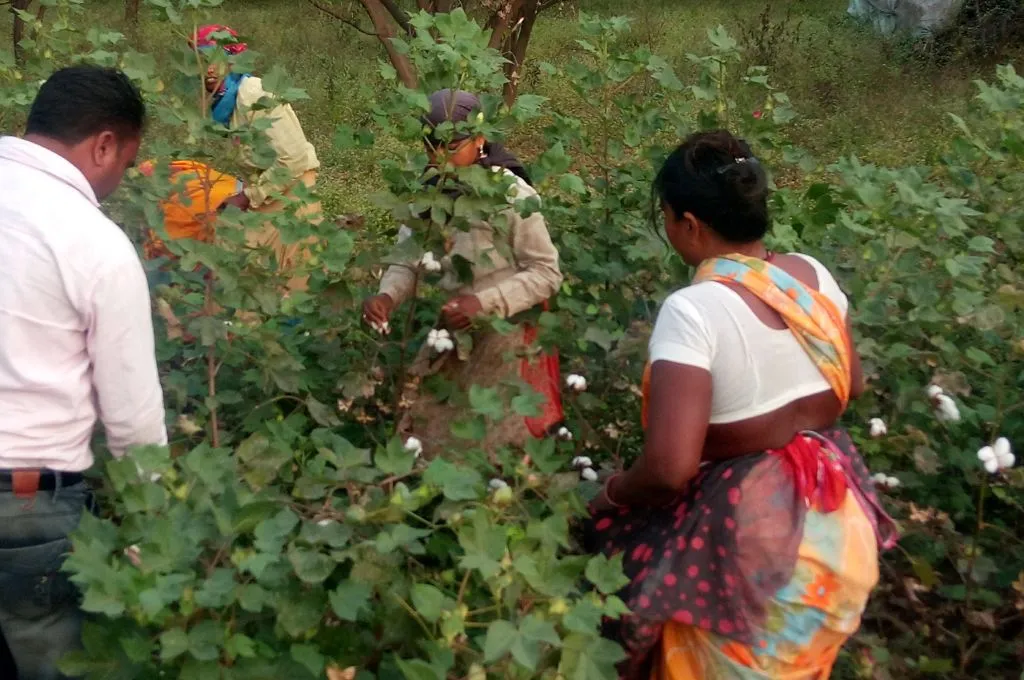
Over the years, the brunt of strenuous manual labour in India’s agricultural sector has largely been borne by women. In cotton farming, this includes tasks such as weeding, plucking the cotton flowers, and separating the fibres from the cotton seeds. This work becomes more intensive in organic farming. For example, in conventional farming, weeding is required once, but in organic farming farmers need to do it up to three to four times. A similar level of labour intensity applies to plucking as well, as flowering increases in organic cultivation. Such practices further burden women who are already reeling under the dual pressures of managing domestic responsibilities and farm work.
4. Cross-mixing with non-organic cotton
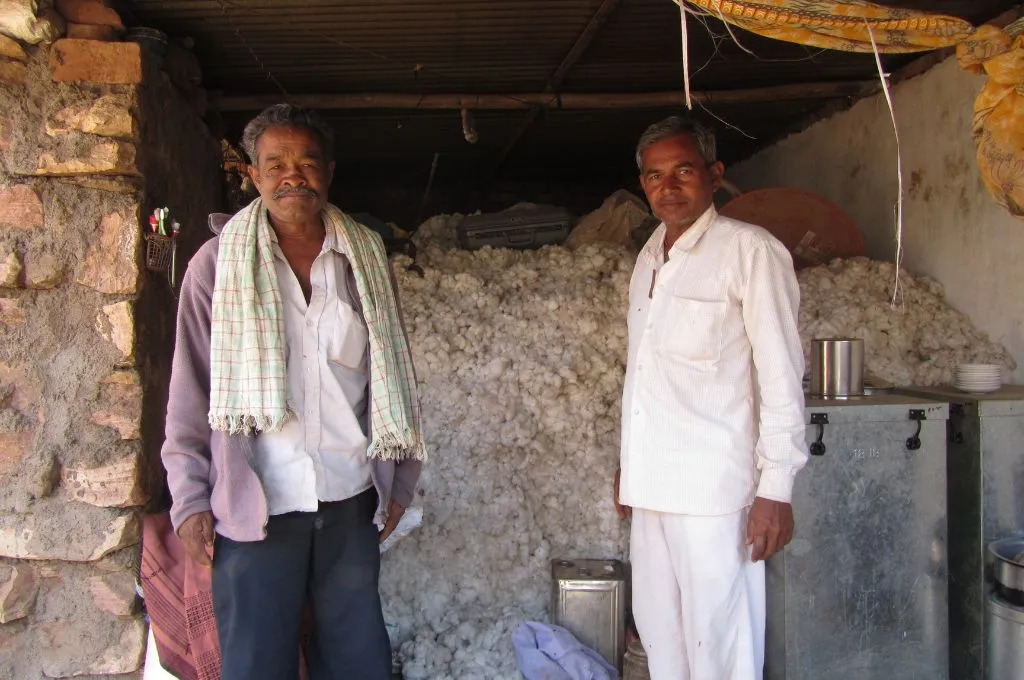
After it is plucked, organic cotton has to be sent to ginneries where it is prepared for sale. In our evaluation, we found that specific storage and ginning facilities for organic cotton were largely absent in the four states. As a result, when farmers take their organic produce to these facilities, it gets mixed in with non-organic varieties. The resulting product is sold and bought at the same rate as regular or non-organic cotton in the open market, failing to fetch farmers the premium prices set for organic produce.
5. An erratic market
The onus of selling organic cotton at a fair price falls on the farmer. Apparel companies usually procure cotton directly, by adopting a land parcel or contracting a set number of farmers based on their material needs. However, these arrangements are not guaranteed on a year-by-year basis. As a result, the value chain for organic cotton largely exists based on the buyer’s needs. So, if a buyer is interested and establishes a value chain, it functions till their goals are met. Other than this, the value chain is frail, and mostly absent. “We don’t get premium prices,” a farmer said.
Who profits from organic cotton?
Against the backdrop of these challenges, a cursory comparison of garments being sold by different brands revealed that organic cotton garments were priced at least 10 percent higher than their non-organic versions. Apparel companies are also shifting to organic materials due to a growing emphasis on sustainability.
For farmers, organic cultivation boosts soil health and productivity, and reduces health risks posed by harmful pesticides and fertilisers. The farmers we spoke to had been able to grow chillies, cumin, and soya bean on the same land in the same year, and their irrigation costs had also reduced.
So, where is the disconnect? For farmers, the high costs of certification, insufficient and ineffective bio-inputs, and the impact of initial low productivity are not offset by the price at which they have to ultimately sell their produce. Thus, there is a need to build supportive infrastructure on several fronts.
Improving support for farmers
1. Graded norms
At present, the all-or-none, purely organic or non-organic certification ends up excluding many farmers who wish to transition to organic production but may not be able to fully shift to organic inputs. One practical solution already in place in the tea industry, for instance, is the creation of graded slabs to classify different kinds of produce and to then price it accordingly.
In cotton cultivation, categories such as cotton grown from hybrid seeds but in the absence of chemical pesticides, or cotton grown with organic seeds and only an initial, one-time use of fertilisers, can offer flexibility both in terms of input costs for farmers as well as the pricing of products. It can also support farmers through the initial drop in productivity when switching to organic methods.
Bodies such as the Cotton Advisory Board and Cotton Corporation of India can help shape a national-level plan to set up such grading norms and promote different varieties of cotton products on national and international forums.
2. Better investment in R&D of organic inputs
There is a need for more investment in the research and development of organic inputs that can withstand risks, such as pest infestations and changing climatic conditions. Standardised efficacy checks of organic seeds and bio-inputs must be set up to test their viability and to reduce the risk of crop failure. The Indian Council of Agricultural Research, and several other public research organisations, in collaboration with private sector research centres and foundations can lead the work on the R&D of organic inputs.
3. Protection mechanisms for farmers
Current farmer protection schemes such as the Pradhan Mantri Fasal Bima Yojana do little to alleviate the risks associated with the lean period in transitioning to organic cotton. There should be a mechanism to mitigate financial loss if weather conditions or organic inputs result in partial or total damage of crops, or a reduction in quality of produce. Even the Paramparagat Krishi Vikas Yojana (PKVY), which promotes organic farming by offering financial assistance to farmers, does not address the initial years of low productivity and risks associated with organic inputs.
The Agriculture Insurance Company of India, which is the implementing agency of large-scale agriculture insurance schemes, is well suited to formulate insurance schemes that can support farmers during the initial lean period of organic farming. A transition to organic production without carefully calculating risks and mitigation mechanisms can have severe economic consequences, the food crisis in Sri Lanka being a recent example. This underlines how important it is to meticulously plan the shift in farming practices.
4. Strengthening of farmer and producer collectives
Since much of the present value chain for organic cotton is buyer-led, there is a need to strengthen farmer and producer collectives, including FPOs. These organisations can not only support farmers in terms of the purchase of inputs but also enable collective sale and negotiation of prices.
In areas where FPOs are weak or inactive, cluster-based business organisations must step in to provide support. Focused drives should be conducted to mobilise registered members and restore the functioning of the enterprise.
A secure purchasing value chain, training and implementation assistance, and government schemes that can protect farmers against any market volatilities are necessary steps for a shift to organic cotton that is sustainable not just for the environment but also for farmers’ livelihoods.
“If we move to organic only, we suffer a huge loss. We get no funds for organic farming; that is the only issue. Otherwise, we are aware that organic farming is very good for our health as well as for the land. But it is not feasible for us. Medium-grade farmers who do not have surplus money cannot carry on like this,” a farmer told us.
As such, it is imperative that the rising trend of sustainable clothing is mindful of the needs of farmers, who make this transition possible. India’s place as the largest producer in the global value chain for organic cotton must mean that farmers are fairly compensated and supported as they make the switch to organic practices, especially under conditions of increasing climatic uncertainty, low prices, and lack of safeguards that plague much of India’s agricultural sector.
—
Know more
- Understand the importance of taking an ecosystem-centric approach to agriculture.
- Read more about the challenges farmers face in organic cultivation and what needs to change.
- Learn how community ownership and institutional capacity building can strengthen FPOs in India.