Over the past few years, India’s social sector appears to be losing its voice in the race for scale and impact. The question is not about scale itself, but about what we are risking in its pursuit. The usual counterarguments are that scale dilutes the complexity, the diversity, and, most importantly, the voice of the people we serve. But the bigger concern should be about the voice of the social sector as a collective.
This feeling crystallises further when one engages with the recent discourse around India’s Union Budget announcement. The budget was called pro-capital by academic voices, who argued that it reduced budgetary allocation to social welfare initiatives. However, development sector leaders and civil society organisations celebrated the budget from their vantage point. While some admired its intent (despite it lacking any specifics around reform), others praised its recognition of youth as ‘builders of the future’.
These responses, among others, share a common characteristic: They align seamlessly with government priorities without offering substantive critique. This mirrors the recent instance of tech leaders in the US attending political inaugurations, despite publicly disagreeing with many stated policies. Their presence signals a simple calculation: Maintaining access and influence requires visible alignment, even when private reservations persist. In the nonprofit domain, the imperative is to scale as efficiently and effectively as possible. In this context, public critique of government policies becomes a ‘risk’ that organisations cannot afford. The moral obligations that distinguish nonprofits as the ‘third sector’ face pressure from these pragmatic considerations.

Our sector is at a crossroads
At present, nonprofits and social enterprises in India are being recognised both domestically and globally. For instance, Madhav Chavan, who built Pratham, was awarded the WISE Prize for Education. Similarly, the prestigious Ramon Magsaysay Award was given to Educate Girls. Numerous nonprofits have been running for more than a decade with organisational budgets exceeding INR 30 crore—demonstrating the sector’s capacity to manage large, complex teams and projects. Philanthropic foundations too are increasingly pushing beyond CSR mandates to co-build meaningful impact.
These achievements suggest that the nonprofit ecosystem is thriving. Yet, beneath this success lies a troubling paradox: As the sector grows more capable and influential, it seems to be less willing to exercise its critical voice. Three visible pressures shape the contemporary nonprofit landscape. Each is legitimate, even necessary. Together, they create powerful incentives that may be reshaping the sector’s fundamental character.
1. Imperative of scale
India’s population demands solutions that reach millions. Hence, scale is essential for meaningful impact. The larger an organisation’s reach, the more visible and fundable its work. Nonprofits thus feel continuously compelled to expand their scale or scope so they can remain relevant and compete for resources. But does the pressure for scale sometimes distract from the core mission?
2. Constraint of funding
As we ponder on the need for constant relevance, a natural question arises: How do we ensure that the resources flow to the most effective solutions? Like research and development in medicine, defence, or artificial intelligence, social innovation requires sustained effort over long periods to test, iterate, and build context-relevant solutions. However, the imperative to scale rapidly in order to attract funding creates a dilemma. Nonprofits increasingly seek existing channels of scale to reach their target populations. In most sectors, the answer is obvious: the government. This practical reality that government systems offer the fastest (and most sustainable) path to scale shapes strategic choices throughout the sector. Government partnership becomes not just an option, but also often a necessity for organisational survival and impact.
3. Acceleration through technology
Over the past decade, technology and the growing use of AI have transformed nonprofit operations in two ways. First, as organisations work at increasing scale and complexity, founders’ time and energy have become scarce. Technology promises to preserve this precious resource by making internal operations efficient.

The burden of using tech and integrating it into nonprofits’ daily routines often falls on frontline staff.
Second, nonprofits have adopted technology to gain better visibility and control within government systems without proportionally scaling their own operations. This, aligned with the Digital India initiative, created the policy support for ‘impacting’ even more people by leveraging technology. As a result, ‘innovation’ and ‘technology’ have become virtually synonymous in the sector discourse. Combined with preferential funding for technological solutions, this creates pressure on nonprofits to build scalable, tech-enabled capabilities. The burden of using the tech and integrating it into their daily routines often falls on frontline staff.
These visible challenges, while significant, are not insurmountable. Many organisations have attempted to achieve and maintain a balance through careful planning. Organisations such as Gram Vikas, Educate Girls, and Leadership for Equity have chosen depth over breadth, working intensively in select states. Others including Akshayapatra, Central Square Foundation, and Janaagraha have focused on specific problem statements while reaching across diverse contexts. Some organisations, such as Rocket Learning and Adalat AI, have built innovative tools that reshape entire sectors’ approaches to shared challenges.
These achievements demonstrate that mid-sized Indian nonprofits today have the potential to become institutions comparable to BRAC or other global exemplars.

The invisible truth
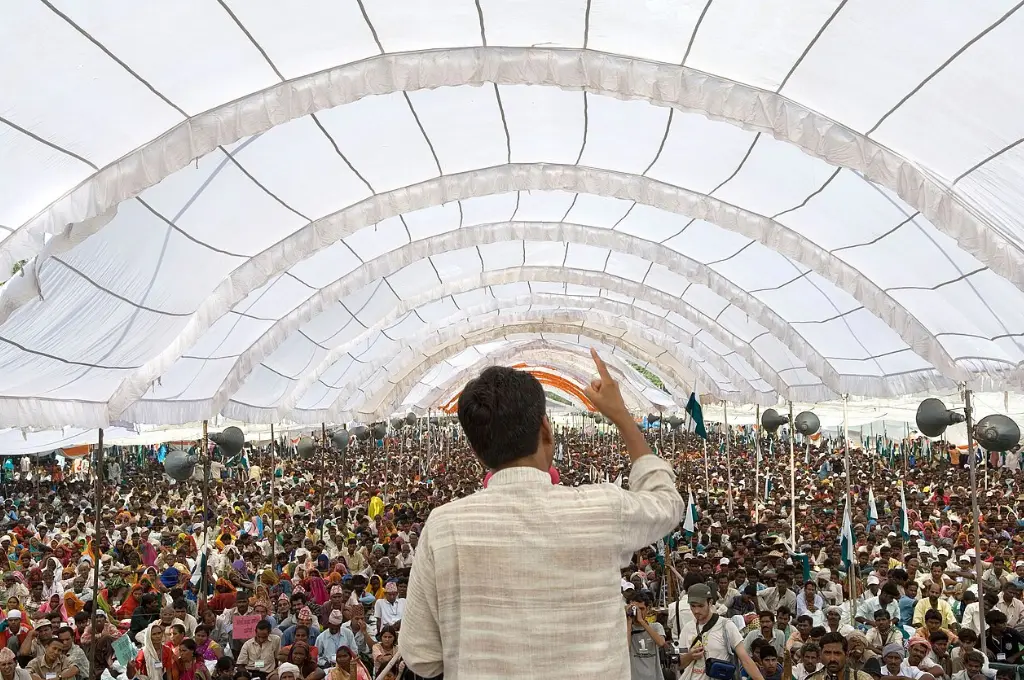
What worries me lies beneath the surface. These are the challenges discussed in closed groups and private conversations, but rarely documented in public discourse. The last well-documented evidence of impact at scale by a nonprofit is the Right to Information, in its earliest forms, led by Mazdoor Kisan Shakti Sangathan (MKSS). The organisation systematically advocated to ensure that people have the right to information and that public works are executed with transparency. In the following example from 1994, the voice of MKSS is clear and unambiguous. Reading out line items from the record of a sanctioned public works project worth INR 80,000 in a village meeting, they highlighted that while 78 trolleys of stone, 18 trolleys of sand, and 40 trolleys of cement had been budgeted for, these materials never reached the village. This was the voice of India’s third sector.
Let us consider another instance. In an ASER Report from 2006, Madhav Chavan says, “Much can be written about the fundamental right that has fallen by the wayside, the need to provide funds, to improve monitoring, to build schools, to appoint and train teachers of this kind or that. There is nothing new to be said except, ‘Just do it!’ like the younger generation says these days.” This was his call to the government.
There’s tension between what the role of nonprofits is and what role nonprofits should play, and how we can fulfil that obligation while being fundable.
Now, let us travel 20 years from there and hear from leaders who are far more influential than the MKSS of 1994 or Madhav of 2006. They say, “We are gratified that the Ministry of Education has highlighted the green shoots of this nationwide effort. We are with the Government of India for Viksit Bharat.” The green shoots discussed is an improvement of 2.5 percent over an eight-year period for children to read a simple paragraph in their mother tongue. Critiques concerning core challenges that plague the quality of education—teacher fatigue, agency, small schools—are often left unexpressed by those working at scale.
The launch of Sarlaben, Amul’s AI assistant for boosting dairy farmers’ productivity, similarly received a lot of praise for the impact it has had. Prominent members of civil society lauded the vision of the government in outlining the problem statement and the readiness of the nonprofit ecosystem to deliver a solution. These efforts are certainly commendable, but what is the market failure here that neither businesses nor governments could solve? Was philanthropic intervention necessary for this endeavour?
These examples are by no means representative of the sector as a whole, but they do illuminate a feeling. There’s tension between what the role of nonprofits is and what role nonprofits should play, and how we can fulfil that obligation while being fundable.
What is civil society or the nonprofit sector?
In his seminal work on nonprofit organisations, author and educator Peter Drucker defined the third sector as serving people whom both government and market have failed to reach adequately. This points to the fact there will always be people whose needs remain unmet, because markets cannot profitably serve them and governments cannot nimbly adapt to their circumstances. Hence, civil society’s primary role is to listen to these stakeholders, understand their problems, and work towards solutions. This often requires lending a voice to challenges that are unglamorous to funders or policymakers. As nonprofits become more influential, gaining seats at policy tables and access to corridors of power, one might expect their advocacy capacity to strengthen correspondingly.
However, the opposite seems to be the case. Recent years have seen increased regulatory pressure on the sector. The number of nonprofits with FCRA licenses has dropped from 22,678 to just above 14,000 over a period of five years. Simultaneously, the strategic imperative to partner with the government for scale creates disincentives for public critique. The result is a sector that increasingly appears silent on pressing issues affecting the populations it serves. An astute observer might note that notions of efficiency and scale, borrowed from the corporate world, have begun to overshadow the social aspect of social work. The sector’s voice thus grows quieter precisely when its influence could be greatest.
For India’s nonprofit ecosystem to fulfil the promise of the influence and capability it has fought so hard to build, the questions guiding our decisions must evolve. The choice is no longer simply whether to scale or adopt technology. The deeper question is whether we can sustain the courage to maintain an independent voice, even when our survival depends on powerful partnerships.
Nonprofits have gained enhanced capacity to raise funds, expand reach, adopt technology, and innovate. However, this evolution risks ushering in an era of what might be termed ‘corporate-influenced civil society’. This is not an argument against efficiency or scale, both of which have essential roles in India’s development journey. Rather, it is a caution against losing sight of what makes civil society distinct—its responsibility to voice what is working and what is not and to hold both itself and public office-bearers accountable, particularly for ensuring justice and delivering intended outcomes.
The voices of nonprofit leaders are often heard because the sector has a long tradition of raising difficult issues in a non-partisan way. Hence, we must practise the courage to engage in genuine deliberation and debate, even when such engagement carries risks. Without this, annual reports may grow glossier, impact numbers larger, partnerships more prestigious, but the questions asked will be gentler, and the silences more strategic.
Can we celebrate achievements while also asking hard questions? Can we partner with government systems while maintaining the independence to critique those same systems? Can we accept invitations to policy tables while ensuring those tables hear the voices of those we serve, not merely the echoes of official priorities?
These are the questions that will determine whether India’s civil society fulfils its potential as a genuine force for social change, and not just an implementer of programmes. Our voice matters. The question is whether we choose to use it.
—
Know more
- Read this article on the importance of civil society engaging with politics.
- Learn more about how the roles of the state and civil society organisations are shaped through their mutual interactions.