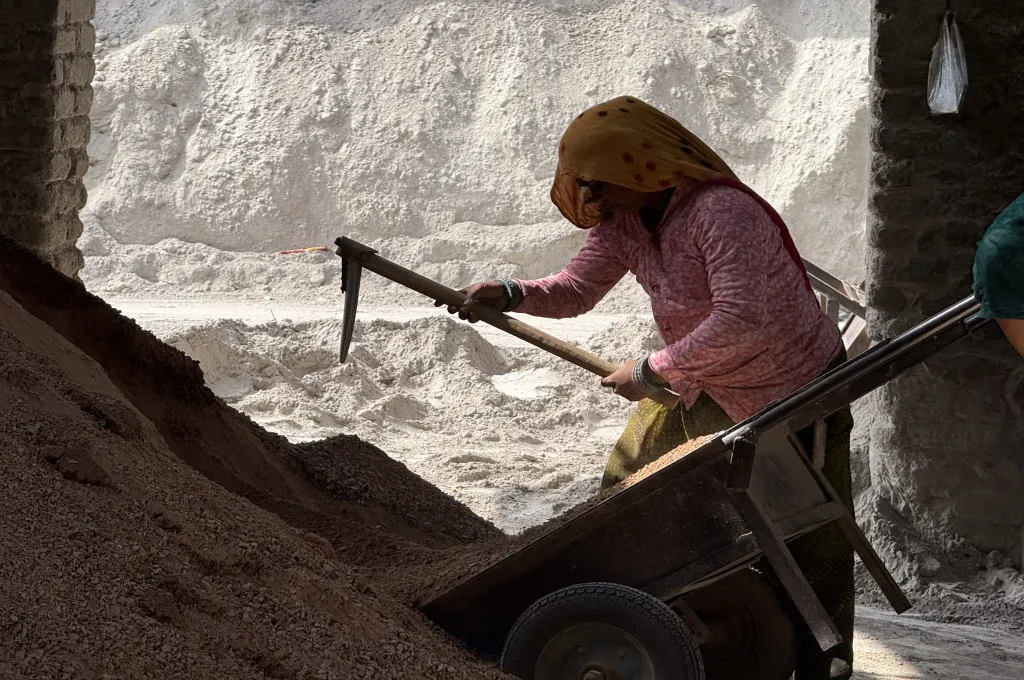
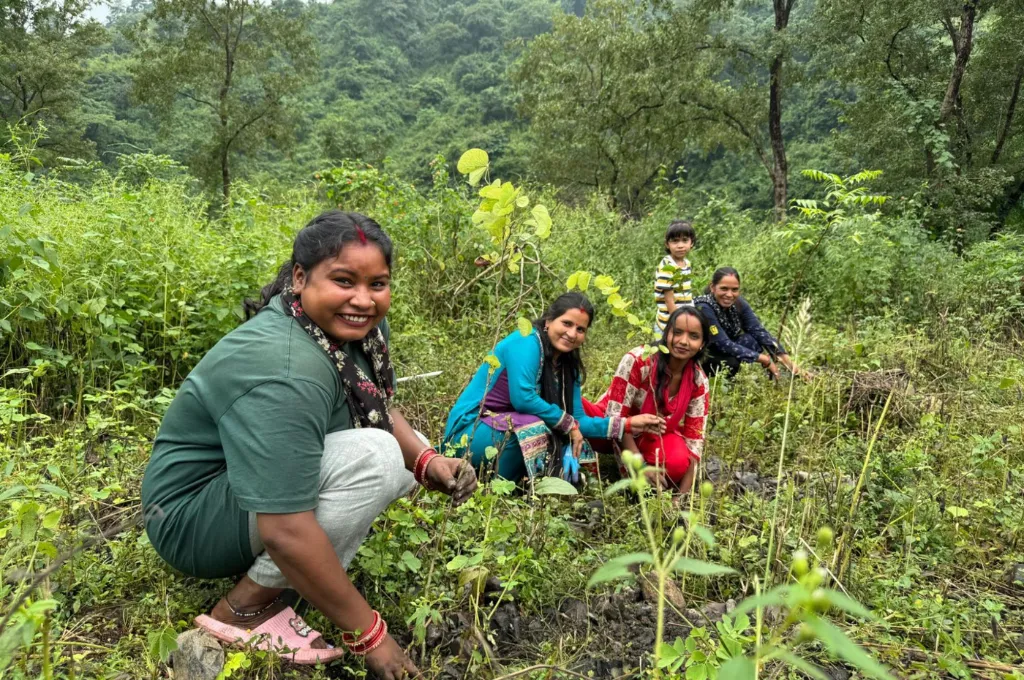
A team from Vivek PARC Foundation, a development-oriented think tank, spent three days embedded in a nagar panchayat in Maharashtra, closely observing how waste is managed on the ground. While the visit was meant to inform a new waste management intervention process, conversations with the region’s chief officer soon exposed a deeper problem: the near-total lack of data on both solid-waste composition and plastic waste.
Just behind a community space in the nagar panchayat, stood a shed overflowing with months’ worth of discarded sachets, milk packets, and food wrappers. The chief officer knew it should have been sorted, measured, and documented. Instead, most of it had only been estimated—quietly revealing the scale of what the system wasn’t capturing.
The team saw similar waste leakages by the roadside, near nalas, and at the outskirts of the main nagar panchayat limits. This story repeats itself across rural and peri-urban India. None of this appears in the data systems that shape India’s national understanding of its plastic burden. This raises the question: How much of India’s data related to waste is missing from the map?

Measuring the invisible
India has built an impressive data system for urban waste under the Swachh Bharat Mission-Urban platform. It tracks how thousands of city bodies segregate, collect, and process waste every day. The Central Pollution Control Board (CPCB) Annual Report 2022–23 estimates national plastic waste generation to be nearly 4.1 million tonnes a year. Additionally, more than 43,000 producers and 2,600 recyclers participate in Extended Producer Responsibility (EPR), indicating broad engagement across the plastic and electronic waste value chain. However, this reflects only urban and formal systems. Data on plastic waste generated in villages, where nearly two-thirds of India’s population lives, remains missing.
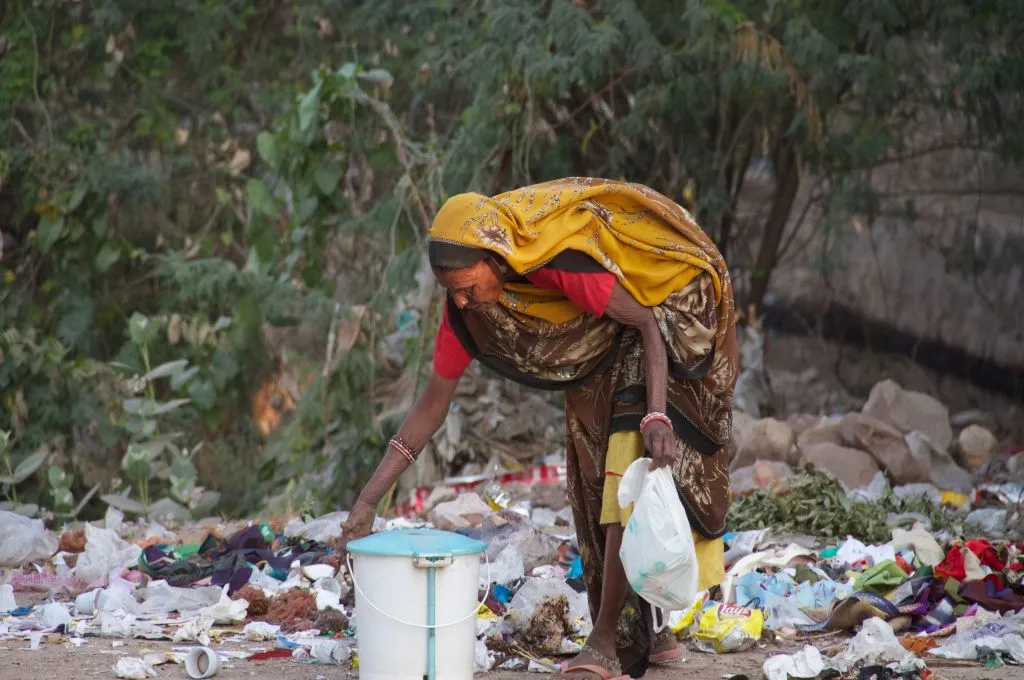
Under the Solid Waste Management Rules, 2016, gram panchayats and nagar panchayats are recognised as local authorities responsible for waste assessment and reporting. Yet reports highlight gaps in training and systems needed to measure the plastic generated within the jurisdiction of local authorities. Until these rural and peri-urban flows are captured, national plastic waste figures will remain underreported, weakening both planning and EPR compliance.
Rural consumption has surged as per capita expenditure in villages reached approximately INR 4,100 in 2024. Packaged goods are now common, but packaging waste is rarely reported. Existing research suggests a continuous flow of low-value plastic in villages, which is burned, reused, or dumped, leaving no record. If rural India generates even 0.5–0.8 kilograms of plastic waste per capita annually, this amounts to 0.44–0.76 million tonnes of waste that remains unaccounted for. Total household estimates then could be somewhere around 6.5 to 10.8 million tonnes per year—significantly higher than the reported 4.1 million tonnes annually.
A recent study placed India’s annual microplastic emissions at approximately 9.3 million tonnes, far above official CPCB baselines. These emissions do not come only from large cities. They reflect uncollected waste from dispersed settlements, farms, and markets that is openly burned, dumped, or left in piles. The fact that this number far exceeds official Indian estimates points to a structural blind spot in national waste accounting.
The cost of not counting
This gap in reporting is not only an academic concern. It has consequences across multiple systems.

- It affects funding: It is well established that rural local bodies struggle to access grants when they cannot demonstrate outcomes through documented data. Without reported plastic waste quantities, rural bodies cannot make evidence-based cases for waste infrastructure investment or access schemes that require baseline measurements. When they cannot report, they cannot demonstrate need.
- It limits recycling market expansion: Recycling markets will struggle to reach rural areas without accurate data.
- It influences EPR credits: These credits allow producers to meet their recycling obligations by supporting waste collection and processing. They are typically allocated based on brands’ distribution networks or sales data across states, meaning rural collection efforts go unrecognised and unrewarded.
- It impacts infrastructure planning: Without accurate data on rural waste generation, infrastructure investments—from recycling facilities to collection systems—are designed for only a fraction of the actual waste stream. In practice, this means cities move forward in waste management, while villages lag behind.
Why this hasn’t been fixed
Key challenges stand in the way, the most notable of which include:
1. Limited capacity at the ground level
Most gram panchayats and local bodies do not have basic systems to measure how much plastic waste is generated or collected within their boundaries. As noted by the CPCB in various annual reports, waste quantities are often estimated or incomplete, rather than measured, especially outside urban areas.
2. Absence of formal training in waste measurement
Official reviews of the Solid Waste Management Rules show that local officials and sanitation workers receive little training in waste segregation, classification, and reporting. This makes accurate accounting difficult even where collection exists.
3. Behaviour change has not been designed from a citizen-centric perspective
Public awareness campaigns still rely on messaging rather than on behavioural design. Research by the NITI Aayog and the World Bank indicates that without incentives, feedback loops, and social norms, littering and open burning persist despite awareness.
4. Rural waste is dispersed and harder to aggregate
The Swachh Bharat Mission-Grameen guidelines acknowledge that rural waste is generated in small quantities across scattered settlements. Reports show that weak collection logistics make aggregation and reporting structurally more difficult in rural areas.
5. Sanitation workers remain under-skilled
Studies by the International Labour Organization and Social and Political Research Foundation highlight that sanitation workers operate without formal training, despite the essential role that they play in sanitation services. With structured upskilling, they could assume a central role in segregation and waste data collection.
India already has a solution at hand: the CPCB’s Standard Operating Procedure (SOP) for Plastic Waste Characterisation and Assessment. This document lays out a rigorous but workable method for quantifying waste at the local level. However, translating the SOP into action requires training, coordination, and administrative support. Through conversations with stakeholders across various city bodies, we found that though many cities attempted to apply SOPs from various pollution control boards, they had their reports returned for revision due to technical gaps. Expecting rural bodies to follow the same format without support is unrealistic when cities themselves are finding it hard to match expectations.
Despite persistent challenges in rural waste measurement and reporting, the urgency to address these gaps has never been greater. After recognising these existing limitations, it is essential to shift the narrative from highlighting barriers to identifying practical pathways. By focusing on actionable reforms and inclusive strategies, India can close this data gap and ensure that rural communities are fully integrated into the nation’s circular economy ambitions.
Building an inclusive circular economy
1. A road map for rural inclusion
The cost of ignoring rural waste is much higher than the cost of recording it. Every uncounted tonne represents open burning, informal dumping, and loss of economic value.
The next phase of Swachh Bharat Mission-Grameen presents an opportunity to correct this imbalance. A simple but transformative reform would be to integrate rural plastic waste data into national reporting systems through phased and practical measurement.
The process can begin at the village level, where frontline workers already engage with households. Sanitation workers, self-help group members, and other local actors can record basic indicators, such as types of plastic waste generated and disposal practices, through quarterly, sample-based assessments. Even limited measurement would create a baseline that does not exist today.
At the gram-panchayat level, this information can be consolidated into simple plastic waste registers, building on existing sanitation records under Swachh Bharat Mission-Grameen. Digital entry can be enabled through platforms such as e-GramSwaraj, reducing the need for new systems. Block and district offices can focus on validation and aggregation rather than collection. This mirrors the current Swachh Bharat Mission-Grameen approach, where layered verification ensures consistency without centralising data gathering. At the state and national levels, rural plastic waste data can be integrated into existing sanitation and waste management dashboards. States such as Kerala and Maharashtra have already demonstrated that rural–urban integration is administratively feasible.
This hierarchical approach distributes responsibility across levels rather than overburdening villages. It enables communities to generate data, local governments to plan effectively, and national agencies to align investment and producer responsibility with on-ground realities.
Once rural data is included in national systems, the EPR framework can evolve to support collection in rural areas, where the cost of retrieval is higher and waste material is more scattered. EPR works through recycling credits, producer compliance requirements, and regulatory frameworks, but these systems currently do not reflect rural conditions. Reliable rural data would allow the system to better represent the entire waste production and disposal landscape. Producers and recyclers could then develop programmes that address rural needs, instead of focusing mostly on cities. Informal collectors and small aggregators, who already play an important role in rural areas, could also be formally recognised.
2. Aligning policy with national vision
India’s leadership on resource efficiency places great emphasis on inclusivity and transparency. During its G20 presidency in 2022, the country argued strongly for circularity that includes every community, and behaviour change. Extending this principle to rural waste accounting would bring policy into alignment with these national aspirations. It would allow rural waste management to move from broad estimates to measurable outcomes, mirroring the accountability and planning approach already embedded in urban sanitation management.
As ministries prepare the next stage of India’s circular economy road map, the timing could not be better. Rural plastic waste data could be integrated into Swachh Bharat Mission-Grameen, making it a part of this conversation. This integration would also provide valuable lessons for urban systems about how natural or bio-based materials are processed as resources in rural natural ecosystems.
Counting what we have ignored for decades is not an admission of inadequacy. It is an act of fairness and a step towards a truer national picture. If India is serious about a circular economy that reflects every citizen, its waste journey must move beyond city boundaries. In the quiet corners of gram panchayats, the future of India’s circular transition is waiting to be recognised, measured, and included. Without rural visibility, India cannot meet its national targets.
—
Know more
- Read this article on the myths of rural waste management.
- Learn more about the each state’s solid waste management data as per the Central Pollution Control Board (CPCB).