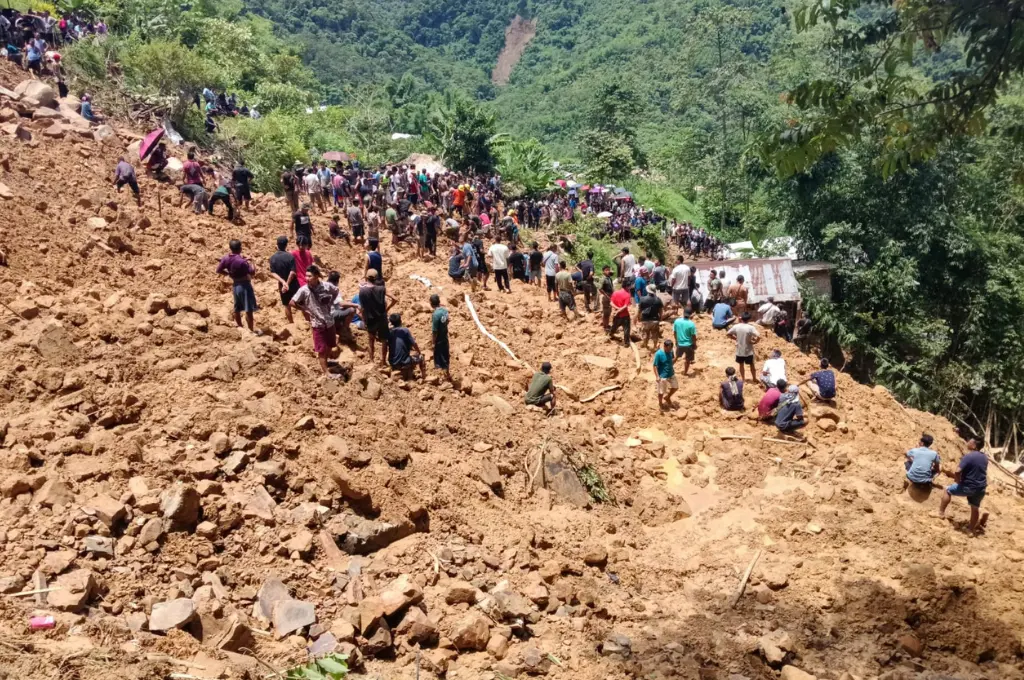
Nearly 9 in 10 Indians now report that they have personally experienced the effects of global warming. As climate impacts become harder to ignore, younger generations are increasingly looking to businesses and institutions to take responsibility for environmental challenges.
Innovators are responding. India now has more than 6,400 environment-tech companies, and climate-tech investment reached a record USD 9.41 billion in 2024. From cooling and water management to agriculture, biomaterials, mobility, and energy access, entrepreneurs are building solutions for some of the country’s most pressing climate challenges.
The gap is what happens next. For climate solutions to reach the people experiencing the crisis, they need to travel from a startup pitch deck to an institutional procurement order, to a state irrigation department, a district administration, a large corporate buyer, a foundation programme, and to the public at large. That journey is where Indian climate solutions are stuck. The technology exists, but are institutions ready for it?

The missing procurement framework
One part of the problem is structural. Public procurement is one of the most important pathways for climate solutions to scale. This is the machinery that builds roads, equips hospitals, sources materials for public housing, and funds district-level programmes. In India, public procurement accounts for at least 20 percent of GDP.
A draft green public procurement policy would have mandated 25 to 37 percent low-carbon steel content in public projects.
But India has no green public procurement law. A December 2024 report by the International Institute for Sustainable Development (IISD) found the barriers are exactly what one would expect: incomplete policy frameworks, perception of higher costs, limited market availability of sustainable alternatives, and, listed first among them, low awareness and skills among the officials doing the buying. The General Financial Rules of 2017 technically allow purchasing authorities to include environmental criteria. However, procurement officers lack training, standardised criteria, and a clear way to evaluate whether a climate solution is credible, cost-effective, or even eligible under existing schemes.
A national policy push has come close to remedying this and stalled. A draft green public procurement policy would have mandated 25 to 37 percent low-carbon steel content in public projects, but the proposal for a centralised procurement agency to implement it was rejected by the Ministry of Finance in 2024. Until institutional infrastructure of this kind exists, every climate company entering the public procurement market has to explain its offering from scratch to every buyer.
Where the conversation breaks down
Procurement is only one half of the challenge. Even when pathways for adoption exist, climate companies still need to navigate institutions that are unfamiliar with their technologies.
We see this up close in our work with climate and deep-tech companies. The founders can explain their technology to an investor or a research audience fluently. But the moment they are in front of a district programme manager, a procurement committee, or a funder evaluating potential for expansion, the conversation breaks down. This often results from differences in the language, framing, and institutional grammar that both parties understand. The company speaks in terms of technology readiness levels, but the buyer needs to hear about scheme eligibility, implementation economics, and what a rollout actually looks like.

Let us consider the example of an Indian biomaterials company turning agricultural waste into industrial inputs across cosmetics, packaging, adhesives, and construction. What would it look like for this company to actually close the translation gap?
On the brand side, that might mean leading with clear applications and case studies rather than generic sustainability claims. For example, instead of emphasising that a material is made from agricultural waste, the company could highlight how a consumer goods brand used it to replace new plastic packaging while maintaining durability and reducing costs.
Fewer than 3 percent of Indian climate startups have raised Series B funding or beyond.
On the procurement side, it means shifting the conversation from technical specifications to cost, performance, and implementation. A procurement team might receive material samples alongside information on potential use cases, because a physical sample in a buyer’s hands can often be more persuasive than a 20-slide pitch deck. The buyer encounters a solution they can evaluate, not just a technology they need to understand.
Some Indian climate companies have built parts of this. Almost none have built it across all of these surfaces. The result, on the ground, is what climate-tech practitioners call “death by pilots.” A company can run a dozen successful pilots and still not convert a single institutional buyer because each buyer is encountering the solution for the first time and has no reference point for evaluating it. Fewer than 3 percent of Indian climate startups have raised Series B funding or beyond. The companies stuck below Series B are disproportionately the ones whose growth depends on institutional adoption rather than consumer or investor traction.

Helping institutions say yes
The fix has two halves that need to happen in parallel.
1. On the policy side
What India needs has already been mapped. The IISD’s recommendations include a green public procurement competence centre with dedicated training for procurement officers, ready-made environmental criteria they can apply without being climate experts, and verified labels so buyers do not have to evaluate every new technology from scratch. Denmark and several EU countries already operate procurement mandates on this model, and the draft Indian policy that stalled in 2024 contains the architecture for something similar. The work here is policy advocacy: building the coalition, evidence base, and institutional support to legislate and implement a procurement framework across the Union, state, and district levels.
2. On the company side
What India needs is institutional communications infrastructure tailored to climate concerns. This involves two aspects:
Speaking the language of the buyer: Produce procurement narratives instead of pitch decks, cost-benefit frameworks designed for government accounting rather than investor returns, case studies written for the next programme manager being asked to adopt the same solution. These are the documents that let a buyer say yes inside an institutional process, whether that buyer is a state department, a corporate procurement head, or a foundation programme officer.
Building a strong brand story: In the climate sector, this is too often dismissed as marketing. Its actual function is to rally the public to a cause. A climate company with a built brand attracts media coverage, becomes a category reference, and turns a niche solution into something the public is asking for. That public momentum is what makes institutional buyers act. State procurement committees, district water authorities, FMCG procurement heads, and government departments respond to demand they can see in their constituencies. A brand the public is asking about gets pulled into a procurement decision, whereas a startup nobody has heard of has to argue its way into one. At the speed climate adoption now requires, brand work is one of the few mechanisms that encourages demand alongside the slower work of policy reform.
The climate ecosystem has become increasingly sophisticated at funding innovation but not at adoption. Until procurement reform, institutional translation, and public-facing narratives are treated as core infrastructure rather than optional extras, promising climate solutions will continue to stall between pilot and scale. Building the infrastructure that lets a solution travel from a pitch deck to a procurement order is climate work, and it deserves the same seriousness as the science.
—
Know more
- Read this article on the need for funding long-term systemic solutions to address extreme heat.
- Read this report on the barriers to and recommendations for green public procurement in India.