Shahnaz Kucheravala, a 44-year-old master craftsperson in Ahmedabad, describes how the making of handicrafts is shaped by seasonal patterns. “Block printing is done during the summer when the dye and fabric can dry easily. Periods of low humidity are better for embroidery and stitching, as natural fabrics tend to expand, get mouldy, or stained during the monsoon.” However, rising heat, humidity, and unseasonal rainfall in recent years have begun disrupting these traditional rhythms. “We get most of our work in the summer ahead of the festive season. But with artisans or their family members falling sick because of the heat, it becomes hard to complete orders and sometimes we even lose clients,” she explains.
Globally, extreme weather events such as heatwaves are becoming more frequent and prolonged, with urban heat island effects intensifying in densely populated cities. Gujarat is no exception. The state ranks among the world’s top fifty regions most at risk from climate hazards. Ahmedabad district in particular has seen a consistent increase in the duration and intensity of heat waves over the last three decades and is projected to see a fivefold increase by the 2030s. These climatic shifts pose major risks to the health and livelihoods of informal workers and exacerbate existing socioeconomic vulnerabilities. Studies have also linked rising temperatures with productivity losses and increased burdens of illness and medical costs.
In 2024, Urban Design Square and the SEWA Cooperative Federation (SCF) conducted a study with women handicraft artisans associated with SCF’s Abodana Mandali to understand how they were coping with extreme heat and excessive rainfall. At the time, the cooperative was operating out of a heritage haveli in Ahmedabad’s Dhal-ni-Pol locality, which served both as a workspace and an aggregation point. Abodana has since shifted to a different location in the same area.

Meanwhile, production is primarily done by a network of home-based artisans across the city and the neighbouring Mehsana district. Because they operate within the informal economy, the challenges of these artisans remain under-documented and frequently overlooked in policymaking. Moreover, the recognition of the home as a workspace, particularly in relation to hot ambient indoor environments, has also been limited.
Based on our findings, we have been working with Abodana’s artisans since 2025 to co-create solutions to mitigate the impact of heat and rainfall on their work and daily lives. This article captures some of our key findings and learnings from this ongoing process.
How workspaces shape risk
Like much of the city’s informal workforce, artisans in the cooperative typically reside in informal settlements characterised by inadequate and deteriorating infrastructure, and insufficient access to basic services such as sanitation and transportation. Workers’ homes are also ill-equipped to withstand heat waves due to factors including poor ventilation, lack of cooling, open spaces, and green areas. For home-based workers who tend to spend the majority of their time indoors, high ambient temperatures make them vulnerable to physiological distress and impact productivity.
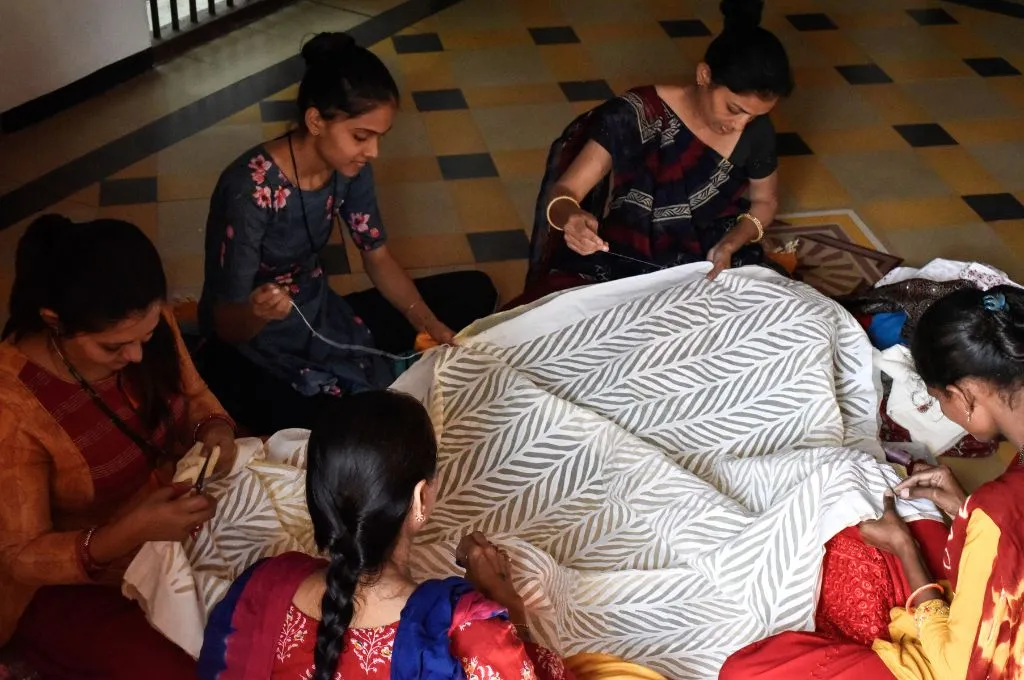
Since some artisans used the shared workspace while others worked at home, we conducted an activity mapping exercise at the haveli in Dhal-ni-Pol to understand its layout and to see how women used the space throughout the day for logistics, storage, sales, and production work. In addition, we conducted interviews with home-based artisans, who were living in homes that measured ~10×5 feet on average, to similarly learn about their use of space and its specific challenges. We analysed the data based on four key themes: availability of space, access to amenities, cooling and ventilation, and availability of light.
Artisans at the haveli needed to keep curtains and windows open for most of the day to make use of natural lighting for fine detailing and minute work, which caused hot air or ‘loo’ to flow in. This made any limited relief from fans or the only cooler in the space doubly ineffective.

Moreover, cutting fabric for garments or applique work required fans and the cooler to be switched off altogether. This led to greater discomfort, especially during periods of high heat and humidity.
Managing ambient heat and limited working space in the haveli also required artisans to spend time opening and closing windows, changing the position of cooler and pedestal fans, and moving around to accommodate overlapping activities—lunch times, hosting customers, spreading the cloth for cutting. These created unnecessary interruptions and delays in their work.
In their homes, artisans worked on orders for three to four hours in the afternoon as the early and late hours of the day were usually spent on household chores or other alternative income-generating activities. However, a lack of proper lighting in the home needed for fine work resulted in artisans having to strain for long periods of time, with many reporting eye problems. Artisans would often also sit in the doorways or verandah spaces outside to work in the natural light, but this put them at risk of heat exposure and stress.
Exposure during transit and routine disruptions
In some cases, gendered access to private vehicles meant women artisans had to plan their travel schedules around that of their spouses. Artisans located further away, and those who didn’t have their own vehicles had to rely on multimodal (rickshaws, buses, and walking) to pick up and deliver orders. The ‘transfer penalties’ of moving from one form of transport to the next included added expenses, more time, and likelihood of exposure to excess heat. This also deterred artisans from travelling for delivery, or taking new orders on hot days, ultimately limiting their earning opportunities.
Monsoons posed similar constraints, especially for artisans residing in low-lying areas prone to waterlogging. Avoiding damage to products was especially challenging as artisans’ homes got flooded. In one case, an artisan reported that she could not complete an order for “badla work” because her family had to suddenly move to a rented house after their own home filled with water.
Increased care responsibilities
The majority of women artisans interviewed were the primary caregivers for children and the elderly in their homes. During periods of extreme heat as well as monsoons, instances of illnesses in the family increased due to heat stress and vector-borne diseases, leading to women taking more leaves from work to provide care. Aside from additional responsibilities within the home, the withdrawal from paid work also meant a loss of income. Moreover, the artisans themselves were also at a heightened risk of illness. Women reported experiencing symptoms such as fever, dehydration, vomiting, headaches, and lethargy during summers, with some even having to be hospitalised. In such circumstances, older artisans with pre-existing health conditions are particularly vulnerable, given that prolonged heat exposure can exacerbate ailments such as migraines and cardiovascular diseases.
Meanwhile, a separate preliminary rapid assessment of 40 informal women workers, across four districts, conducted by SEWA’s health and social security wing, along with the National Institute of Occupational Health also found that women workers spent a median of three hours daily on household chores in addition to an average of nearly six and a half hours of work. This leaves limited time for recovery, which is necessary for the effective thermoregulation of the body.
Access to amenities
Disruptions in the supply of drinking water and electricity for artisans varied across neighbourhoods. Fluctuations in the regularity and quantity of these services were more pronounced for artisans located in Vadaj–an area where Ahmedabad’s largest informal settlements are located. During summers, despite a scheduled twice-a-day distribution of water, the municipality’s evening supply often fails. Power cuts are also more frequent during peak summer in these areas.
Artisans also faced difficulty in accessing facilities at the haveli. The toilet was located outside the building, and on the ground floor. To avoid having to step outside in the heat, many artisans deliberately reduced their water intake. This is an increasingly common form of maladaptation borne out of poor or absent toilet facilities, which heightens the risk of dehydration.
Normalising excess heat, negotiating exposure indoors
While artisans noted that the usual climatic conditions of the city had changed—with higher temperatures and extended summers—most did not explicitly acknowledge rising heat as a risk, even as they detailed the various ways in which it was reshaping their routines and livelihoods. Feelings of “thaak, kantalo, aney garmi (feeling fatigue, a lack of energy and heat)” were perceived as seasonal inconveniences. Moreover, women highlighted their ability to ‘manage’ work, stating that they were accustomed to working during high temperatures. Coupled with limited awareness of the health risks of heat stress that could otherwise encourage the uptake of preventative measures, this puts artisans at higher risk of heat-related illnesses.
Women detailed the various ways in which they were adapting to the extreme heat so as to continue working. They would drink lemonade and cover their heads with a wet cloth to keep cool, while others worked in the evening or later at night when temperatures were lower. Even when artisans had access to cooling devices (coolers or ACs) at home, they compromised comfort during the day to save costs on electricity, and reserved the use of these devices for when their families could use them together. However, while working under natural light during the day meant heat exposure, working at night meant relying on artificial and often inadequate lighting, causing eye strain.
Importantly, these adjustments also did not reduce women’s overall workload. When handicraft production was shifted to the evening or night, it was layered on top of existing household chores and caregiving responsibilities. In this way, adaptation to heat often meant extending their working hours at the expense of rest and recovery.
Bottom-up adaptation and co-creating solutions
Since Abodana Mandali is owned and managed by the artisans themselves, its members have been able to implement certain measures to prevent or minimise heat exposure and account for additional family and care obligations. This includes flexible working hours, the delivery of raw materials and collection of products from artisans’ homes and giving members the option to take orders home to complete them. It has also facilitated linkages with governance schemes and health insurance for its members.
This worker-led decision-making presents a model for similar kinds of collective adaptation that is responsive to the needs of informal and home-based workers.
The 2024 study was the first step in this direction. Since last year, we have been working with artisans to explore practical, low-cost, and easily adaptable solutions which can be integrated within their routines without any additional effort or financial burden.
Women were already implementing some measures in their own homes. For example, hanging wet khus mats on windows to cool the incoming air or adding thermocol sheets to the rooftops to reduce the absorption of direct heat.
In addition, we also tested out other potential solutions.
The first was a neckband fan which could be used when ceiling fans or coolers had to be turned off for specific tasks such as cutting fabric. Although it was not expected to be a complete replacement solution, the neckband fan not only failed to provide enough cooling but also created a physical hindrance while cutting. Even if it was affordable, this was ultimately not suited to the women’s needs and reinforced the importance of trialing solutions with artisans before recommending or scaling them.
Another proposal was for a solar powered portable light for use both within the haveli and in artisans’ homes. The light offered an effective solution for women to be able to work in dim spaces or during low visibility hours, giving them an opportunity to work during cooler parts of the day such as the evening or nighttime. Importantly, the light also didn’t add to the electricity bill, and provided enough brightness for women to comfortably do intricate embroidery without straining their eyes or using overhead lighting which might disturb other family members, especially in shared spaces.
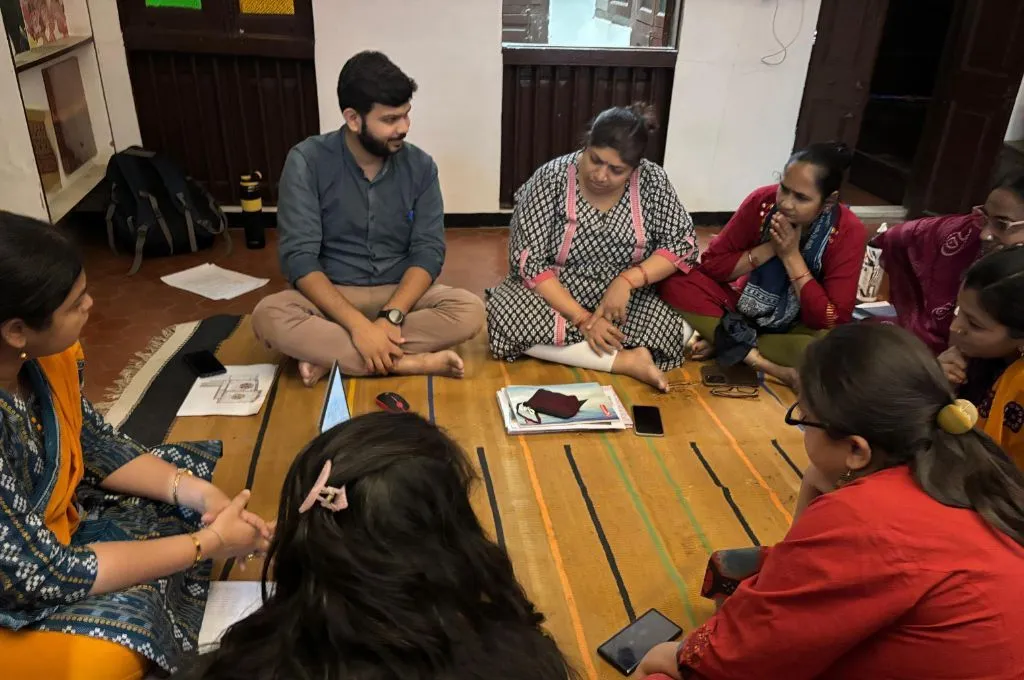
Meanwhile, a cooler and fridge have been set up in the cooperative’s new workspace in a different haveli. Additionally, we have placed a temperature and humidity sensor at the SCF office. When readings cross critical thresholds, the cooperative can now send timely WhatsApp broadcast advisories to artisans on what precautions to take. This is intended to work as a low-cost, replicable warning mechanism for the community. The messages are aligned with those shared by the public health system, which is also informed by Ahmedabad’s Heat Action Plan. Suggestions include staying hydrated, avoiding stepping out during the hottest times of the day, and keeping heads covered while outdoors. Based on the effectiveness of the sensors and artisans’ responses, this measure will be decentralised, with sensors placed in key work locations including the haveli and the Kadi Common Facility Centre.
The cooperative’s board, who are selected from among the artisans, have suggested ways to provide access to cotton clothing for artisans’ family members. One idea that the women are considering is to connect with organisations active in the circular economy who could help organise monthly community-level thrifting. While artisans from the Rajasthani Darbar community felt this would be difficult as cotton fabric is considered ‘too plain’ in their community, this was mostly accepted by other members of the collective.
Based on our experience, given that home-based artisans live and work within the same space—which means that heat exposure or climate-related stressors more generally are ambient and ever present—effective climate adaptation requires layering practical, low-cost solutions and timely information that can address these challenges holistically. While these solutions are not foolproof and leave much to be done in terms of managing the impacts of heat, they are a step in a direction where women workers recognise heat as a risk, and nudge behaviours towards preventive action at both a collective and individual level.
Though these discussions are still in progress, the process of trial and error and co-creation of solutions has offered important learnings. It also emphasises the need for policy makers to integrate an occupational safety lens into addressing heat, including addressing the specific needs and vulnerabilities of home-based workers.
—
Know more
- Read the full Workspace Mapping report by Sewa Cooperative Federation and Urban Design Square.
- Understand the impact of rising heat on informal workers in cities across the Global South.
- Learn how women street vendors in Nagaland are using traditional practices and community networks to adapt to climate change.