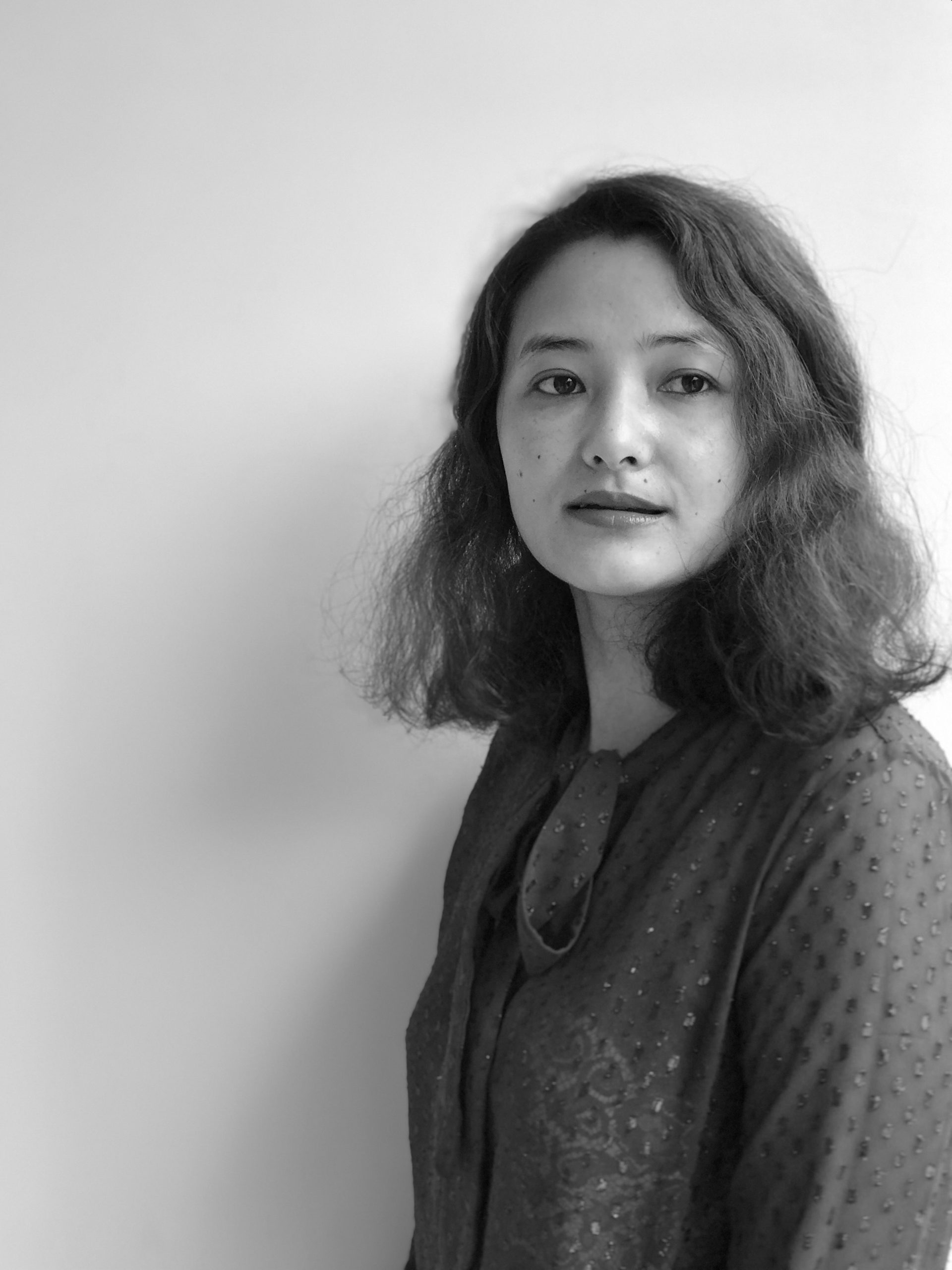
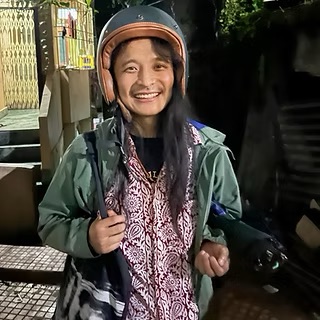
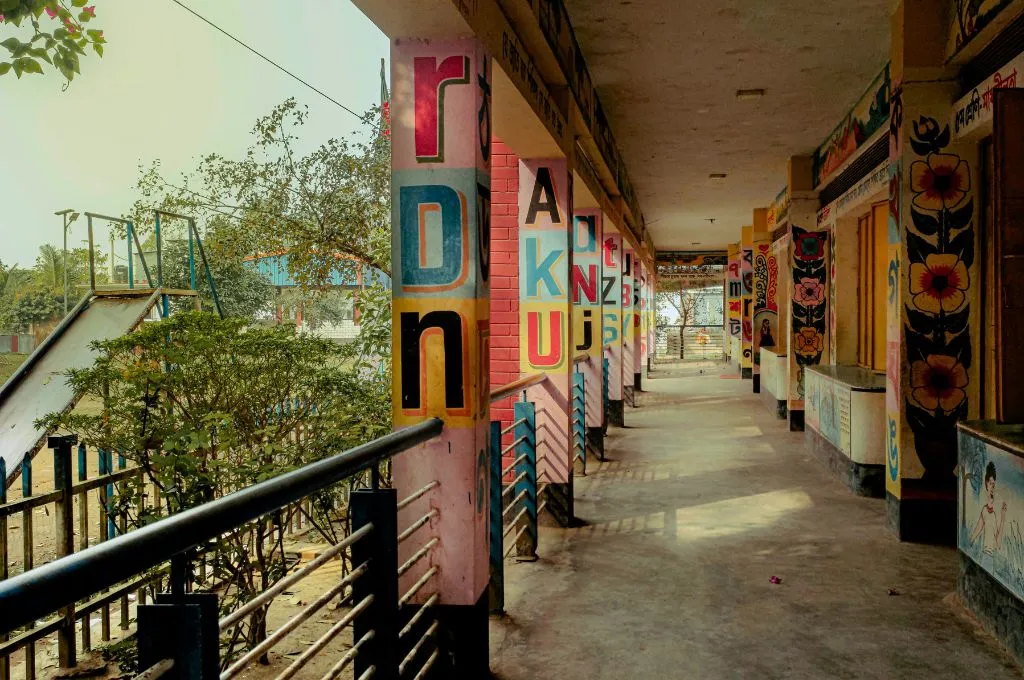
Photographs from the Darjeeling-Sikkim region have long been concentrated in institutional and private collections, often far from where they were made. These collections predominantly reinforce colonial and elite narratives, centring imperial administrators, and European travellers and monarchies, and so offer an incomplete visual history of the region. Alongside them are vernacular photographs that are largely absent from formal repositories but preserve the personal histories and collective memories central to the region.
These images live in family albums, carried alongside the oral histories of the people who keep them. The Confluence Collective (TCC) Photo Archive exists to create a space where these visual records and lived memories intersect, ensuring that those who shaped these histories remain the custodians of their own stories.
Rooted in the Darjeeling-Sikkim Himalayas—a region with intertwined histories and its own nuanced differences in political and administrative realities, identity politics, and shared regional and cultural identities—TCC is a non-profit, voluntary organisation which began as a passion project by a group of photographers and researchers, seeking to tell the region’s stories on our own terms. We came together in 2020, during the COVID-19 pandemic, and work from different places across the region. Our commitment to this region also shaped our collective’s name, derived from Tribeni, the confluence of the rivers Teesta and Rangeet, which symbolises the coming together of Sikkim and the Darjeeling Hills.

What a community archive can do
Our aspirations to reclaim and retell the stories from our region emerge as a counter-narrative to dominant colonial and mainland narratives, which often flatten the nuances of this place and the communities here by under-representing or misrepresenting them.
We wanted to tell the region’s stories on our own terms. And a part of the answer to why we decided on visual archives lies in how histories travel here. Many histories in this region have survived through people rather than institutions, in what elders in the family remember, in conversations at family gatherings and festivals, and in collective cultural recollections. Photographs have helped us further attest to these stories and memories.
For instance, many of us grew up hearing about the Chyaasi Andolan. Later, we received some incredible photographs from that period that helped us place the stories we’d heard beside images of the people who lived them. Over time, we have looked at images as more than authenticators. They are also signifiers of histories both told and untold. Bringing photographs and oral histories together therefore allows us to approach the past (and even the present and the future) from more than one direction. One can fill in what the other leaves out, while differences between them can also reveal how memories and histories are shaped and remembered.
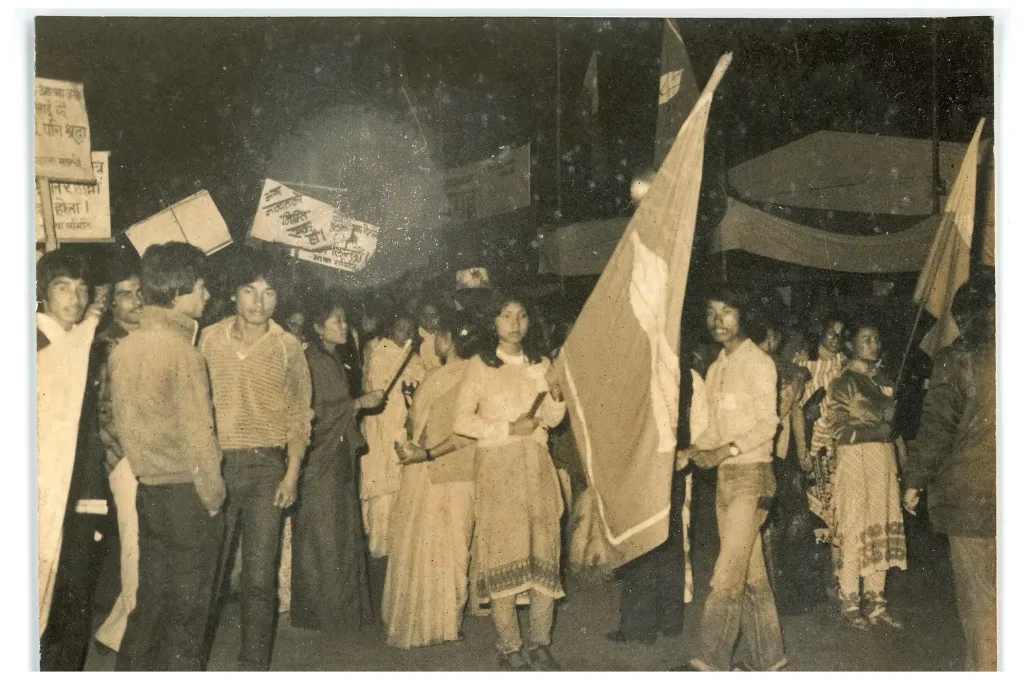
We do not see photographs simply as authenticators of history. They can also point towards histories that have been told, forgotten, contested, or never recorded. A photograph can raise questions as much as it answers them: Who is this person? Whose house is this? Why was this photograph taken? What was happening outside the frame?
This matters because much of the earlier photographic record of the region was produced by outsiders including colonial administrators, ethnographers, travellers, and surveyors. Those images entered colonial records already carrying that gaze, filed by type rather than by name, under labels like ‘tribal’, ‘hill people’, or ‘exotic’. An archive built this way repeats what it inherits.

Community archives such as ours and the many similar initiatives across the Darjeeling Hills and the Northeast region also help us push back against misrepresentation and exoticisation.
A family album works differently. It might contain photographs of a wedding, a festival, a school year, a new house or simply a lazy Sunday afternoon. The people in it are not anonymous ‘types’. They are someone’s sister, friend, cousin, neighbour, or grandfather. The photograph is held together by relationships and memories that may never have appeared in an institutional catalogue. This is one of the possibilities we see in a community archive where we aren’t simply correcting an institutional record, but allowing people connected to photographs to participate in determining what those photographs mean.
Further, we believe community archives, such as ours and the many similar initiatives across the Darjeeling Hills and the Northeast region, also help us push back against misrepresentation and exoticisation. The habit of filing by type carries into how the region is pictured in the media. A single generic photograph is often used to stand in for an entire region, such as a photograph from Meghalaya being used in a story about Sikkim. One might attribute this to the absence of images, but it also reflects how images are kept and circulated. Stock libraries often index by broad labels like “Northeast India,” and places and communities and everything in between are lost.
A community archive is organised differently. The TCC Photo Archive does not claim to provide every kind of photograph, but it intentionally resists this flattening by keeping each photograph tied to its place and the people and stories here. It also makes an attempt to preserve what communities remember about the photographs.
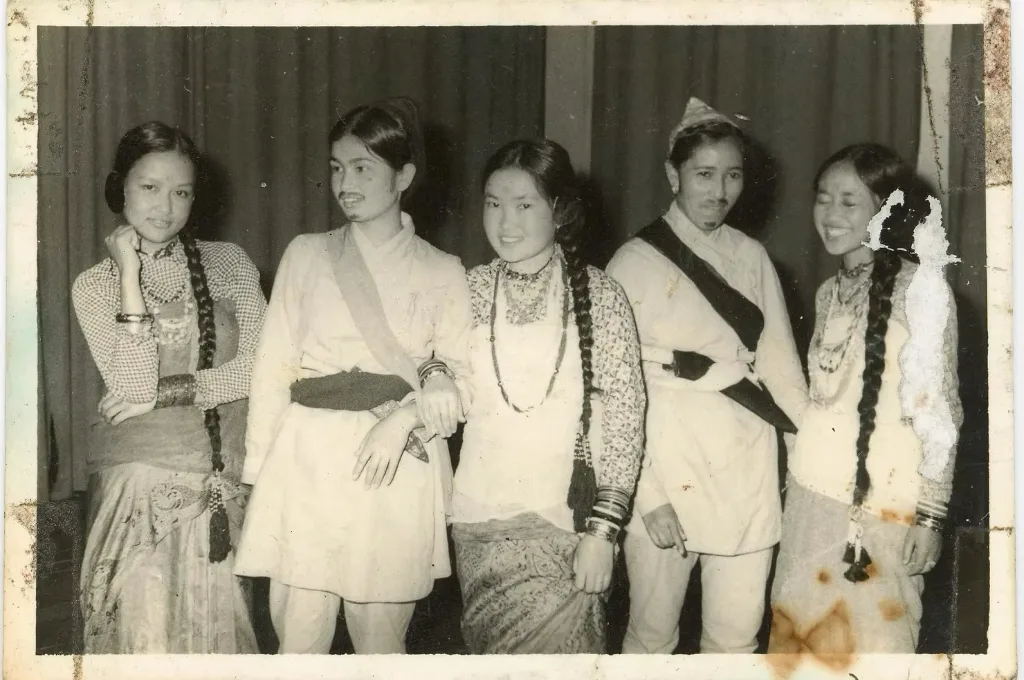
This specificity has always mattered, and it is heartening that establishments are now connecting with us for images specific to this region. Rachna Books, a Sikkim-based publishing house working on a book on Sikkim’s history, asked for a photograph of a royal hat because no generic stock image would do. It needed to know which hat, whose, and from where it was. Sikkim Project, a website on the Eastern Himalaya, regularly uses photographs from our archive for its blog for the same reason.
A photograph that arrives with its context can be recognised, added to, and argued over by the people to whom it belongs, but a catalogue entry in larger institutional records and museums rarely invites that. Therefore, beyond ‘correcting’ how the region is seen from outside, we hope the archive lets the images remember themselves, and talk back, wherever necessary.
But an archive that keeps photos attached to people must answer to those people.
Holding someone else’s memory
Every album that comes to us belongs to a family or an individual before it belongs in an archive, and we try to hold that fact carefully, using it to guide and shape our archival process.
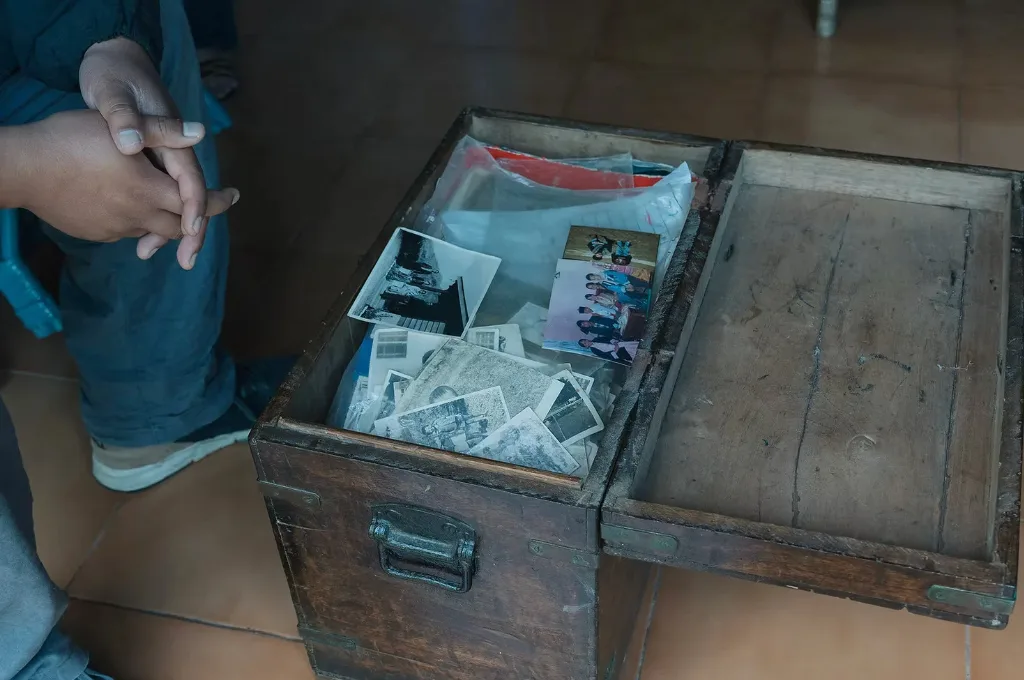
Before we digitise anything, we sit with the people bringing photographs to understand what they have and why they want to archive it. If given consent, we record them going through their albums. Conversations about who is in the photographs, what was happening that day, and what they remember about it emerge in these dialogues. At this stage, we also explain what happens once photographs are digitised and come to an understanding about how they may be used, including on our social media and website.
Naming a photograph is an ethical act, prompting a separate process and discipline in itself.
The technical process is also an important and laborious part of the work. The photographs we receive come in many forms and conditions, from studio prints from the early twentieth century, black-and-white photographs, negatives and slides from the 1950s to the 1970s. We have to sit with the materiality of each and every photograph and assess the different kinds of care they necessitate. Even details that may seem minor such as a tear, a faded edge, a stain, or handwriting on the back are vital physical traces of the lives of these photographs and the people who held them, and we need to be able to preserve them.
And then there is the cataloguing, which is an extremely challenging process. Naming a photograph is an ethical act, prompting a separate process and discipline in itself. The captions, tags, categories, and any other accompanying text of the photograph, collectively known as metadata, is an avenue we are currently exploring and reflecting on. Questions of what terms to use, which categories to build, which classification systems to rely on, and who gets named have not evaded us. While we do not have a concrete answer yet, we regularly reflect on how and what makes our practices different from larger institutional archives.
A more concrete step towards metadata filling, however, is that we have decided that it should come from people who understand the context within which a photograph was made. We ask families to provide their own captions, as an act of narrating their own stories, and interns and volunteers from similar contexts join the conversation. Almost all our volunteers come from humanities and social sciences backgrounds like history, media, anthropology, and sociology, and they also bring their own cultural sensitivity and attentiveness the work requires.
Negotiating access
At present, we have deliberately chosen not to put the entire archive online. Instead, it lives physically in Kalimpong and Gangtok. Anyone who wants to use it can either visit our repositories in these places or write to us explaining the kind of images they require and for what purposes. We ask researchers engaged in funded projects to make small donations back to the collective, if they can. And people have been extremely generous in this regard.
A completely public digital archive might appear to offer greater access, but this itself raises ethical questions. Who can download an image? Who can reproduce it? What happens when a family photograph travels beyond the context in which it was shared?
And of course, there are practical reasons too. Building and maintaining a secure, searchable digital archive requires financial and infrastructural resources that we do not currently have. As a young community archive, without prior experience, we are still in the process of reflecting and negotiating these questions instead of finding quick fixes and working within our means. We are more than open to suggestions and conversations with the community.
Can we fill the absences?
During a digitisation project, one of our volunteers pointed out that their family had far fewer photographs than the family whose album they were archiving. This opened up a bigger question: Whose photographs make it to the archives, institutional or private, and why?
Owning photographs has always been a marker of class and caste, suggesting who had the resources to own a camera and who had the privilege of photographing. While we try to keep the archive inclusive, most photographs come from families with that privilege, who could preserve their memories in photographic form.
What then can be done with this absence? We have let the question sit unresolved, for fear of rushing to a solution that might not hold. But we have also been moving beyond urban centres like Gangtok, Kalimpong, and Darjeeling towns to build a fuller and more diverse archive. In Parengtar, a village roughly 110 kilometres from Kalimpong, this took the form of a community workshop where residents themselves digitised what they could gather from the village. Alongside this, we set up the Sitting Room Studio, an installation recreating the living room where family albums were traditionally kept and displayed, furnished with tables, chairs, and other objects borrowed from the village.
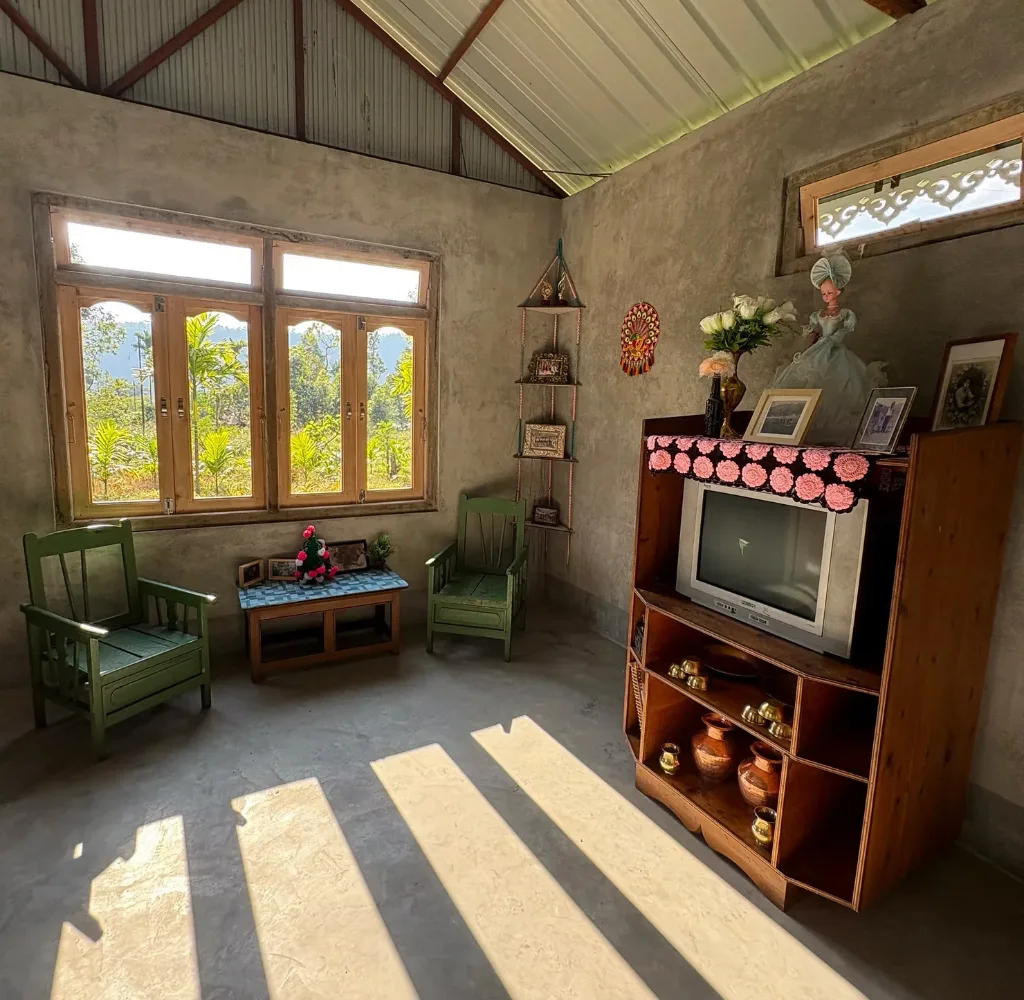
In Munsong, another village near Kalimpong, we are running a community-led pilot in which local youth learn photo digitisation and develop a research centre using the digitised images, while family members learn how to document their own photographs. We hope this furthers our aim of making the process of archiving more interactive, collaborative, and community-led, and eventually a model we can carry to other villages.
There is an equal exchange between the volunteers and us. They give us their time, knowledge, and memories, and in return, we try to offer skills like digitising, building connections, and a new way of seeing their own families and photos. Some go on to explore opportunities outside the ambit of TCC. For example, through like-minded artists, one intern has begun experimenting with the nearly forgotten practice of hand-painting on photos. These exchanges sustain our community-building efforts.
But working with communities does not fully settle the harder question of our own position.
Can we avoid becoming what we’re resisting?
An archive built to document and preserve the stories of our region and people can still end up deciding whose photographs get named, or who has access, even though that’s not our intention. The risk is real, especially because though we are archivists from the region, we are both insiders and outsiders. Even in our community-led projects like in Munsong, we remain outsiders in some sense, and the community’s trust must be earned each time.
We also do not consider ourselves owners of these photographs. We are caretakers, holding them on behalf of the people who trusted us with them, and answerable to that trust for as long as the archive exists.
At times, we have also heard concerns about the possibility of TCC becoming a gatekeeper. We take these concerns seriously, particularly as the archive grows and more people engage with it. As a small group working voluntarily, there are inevitably limits to what we can take on and how quickly we can respond. We are also working across different careers and places, while contributing what we can financially to sustain the collective. These limitations are part of the reality of how we work, even as we continue to think about how the archive can remain open and accountable. Alongside these concerns, we have also received immense support, which has sustained us and the work.
We have made mistakes along the way, and these have made us more attentive to the questions we keep returning to such as who gets named, who gets to use it, who holds a memory, and on whose behalf. Rather than assuming we have found the right way of doing things, we are trying to remain open to being questioned and to changing our practices. We want to build an archive where the people whose stories we are preserving have enough ownership to participate in shaping the work themselves, even in small ways.
An important question we are also thinking through at present is the legacy of the TCC Photo Archive and the collective itself. How do we bring in new members and pass on the custodianship of the archive? The archive cannot depend indefinitely on the same small group of people, particularly when much of the work has been sustained through voluntary labour. We are thinking about how knowledge, skills and responsibilities can be shared so that others can take the work forward, while also ensuring that the principles that shaped the archive are not lost in the process.
So can we avoid becoming what we are resisting? Perhaps the closest we have come to an answer is recognising that our archive is still nascent and not finished by any means. Nurturing the archive takes slowness, deliberate care, and attention, and it leaves questions unresolved. For now, we would rather leave some of those questions open than close them too soon.
Ashwin Sharma, Brihat Rai, Kunga Tashi Lepcha are also part of the collective and have contributed to this article.
As told to Aakriti Thatal, IDR Northeast Fellow 2026–27.
—
Know more
- Learn how a young nonprofit is conserving Tani language in Arunachal Pradesh.
- Understand how community archives challenge power hierarchies.
Do more
- Connect with The Confluence Collective to contribute to their visual archive of the Darjeeling–Sikkim region.