In Toni Morrison’s celebrated novel The Bluest Eye, Pecola Breedlove, its protagonist, longs to have blue eyes just like the Hollywood movie star Shirley Temple. It was a novel, Toni says, she was “compelled to write” because she wanted to read a book that spoke about the experience of racism and “racialised self-loathing” faced by a young Black woman in USA.
The novel was published in 1970 in the USA, and, even today, Toni’s experience resonates with people across the world who don’t find themselves represented in the books they are asked to read. In India, where the exclusions are gendered, casteist, and classist, students in schools are still supplied reading materials that are often discriminatory and divisive.
Educators believe that inclusive schooling—reflected not only in books but also in teaching methods and classroom diversity—helps in teaching equity and tolerance to young minds. Otherwise, children run the risk of growing up in isolation and fear, which is detrimental to society.

In recent years, there has been a growing focus on social emotional learning (SEL). It is a learning process that combines self-reflection and deep listening with interactive games, art, and storytelling to nurture confidence, dignity, and empathy among children and adolescents.
Despite being a relatively new concept in India, SEL has been in adopted in many states, including Assam, Chhattisgarh, Delhi, Jharkhand, and Uttar Pradesh, where it supplements formal curriculum. India is a country of diverse communities and cultures. Therefore, the pedagogy and curriculum for SEL should be mindful of caste, gender, and class, apart from being relevant to geographical, socio-economic, and political contexts.
To understand how this can be done, we spoke with the Northeast Centre for Equity Action on Integrated Development (NEAID), Shiksharth, and Upkram, nonprofits based in Guwahati, Assam; Sukma, Chhattisgarh; and Sonbhadra, Uttar Pradesh respectively. They are part of the REACH Collective, a group of nonprofits focused on building educational equity in remote regions. All three organisations are contextualising SEL to tackle the adversities faced by children enrolled in government schools.
Localising the narrative
Sukma is in Bastar, a region in Chhattisgarh which has seen decades of militancy. Ashish Srivastava, co-founder at Shiksharth, says, “People in Sukma have witnessed and experienced violence firsthand. There is a lot of trauma, but it isn’t discussed and there is a high level of tolerance. We see this with children too. They don’t talk much, or complain, but it doesn’t mean that they are happy (with the situation).”
He adds, “Violence has been normalised. Children are scared of outsiders and people in positions of power because their community has always been ill-treated by them.”
More than 85 percent of Sukma’s population is Adivasi, which means that apart from violence, they have also faced discrimination due to their identity.
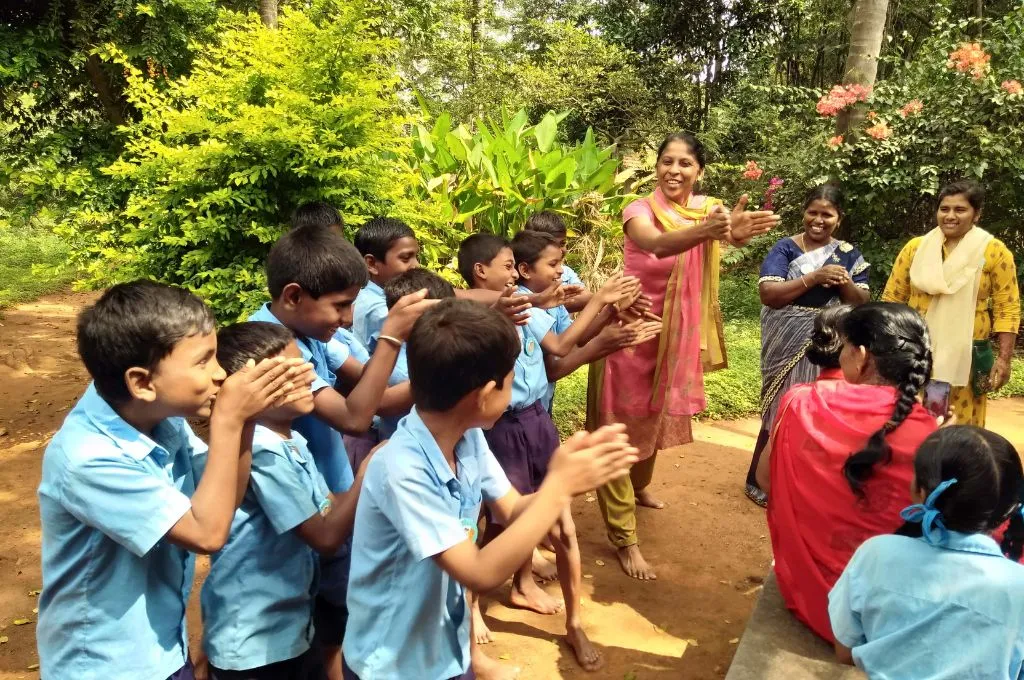
As violence in the region has been normalised, initiating conversation about mental well-being is the first step. Shiksharth helps children identify and express their emotions through storytelling, art-based activities, peer learning, and more.
Children in Sukma have a strong connection with nature. So, instead of confining SEL to the classroom, activities are conducted outdoors, helping them to develop a sense of pride and ownership in their identity.
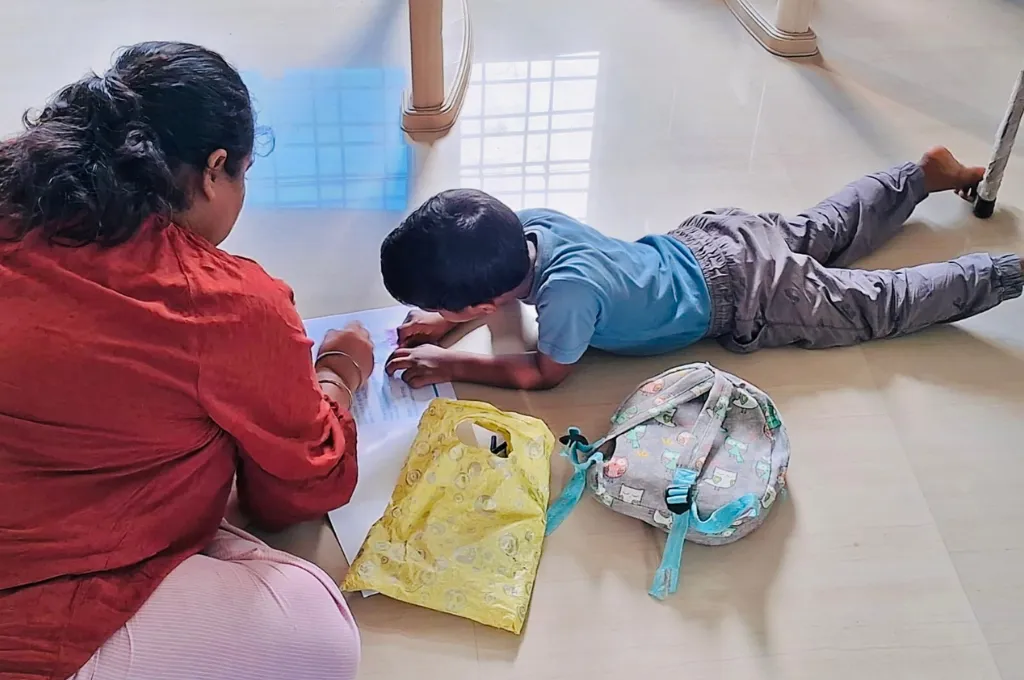
If children in Sukma are learning to cope with the effects of violence, in Sonbhadra (among the poorest districts in India), the challenge is to hold on to slowly eroding identities. Gond, an Adivasi community that Upkram works with, is losing its culture and traditions in order to assimilate with mainstream society. Nikhil Shetty, co-founder at Upkram, says, “The community has been repeatedly told that they, their rituals, and their culture are backward. When this happens, confidence suffers. They have stopped speaking their Gondi language.”
They asked the children, “How do you think the woman never gets tired?” The children responded, “It is because she is a ghost.”
Sonbhadra is largely populated by Dalit, Bahujan, and Adivasi people—communities that have been systemically marginalised for generations. Upkram believes that the need of the hour is to cultivate a positive self-image in the children and nurture them for who they are. “I have seen children who take footwear and make a car out of it. That’s amazing! Can we nurture this?”
Upkram’s curriculum includes stories that are true to the place. Nikhil says, “We can’t just pick up a story from anywhere and expect our kids to relate to it. We have tried this, and it didn’t work.” Today, Upkram is intentional about the stories they choose. Children in Sonbhadra love listening to stories about ghosts, so they introduced Bhooton ki Baraat (a folktale from Uttarakhand) to them. In this story, a newly married bride continues to do household chores at her in-laws’ house without ever getting tired. Through this story, they started a conversation about labour in general, and gendered work in particular.
They asked the children, “How do you think the woman never gets tired?”
The children responded, “It is because she is a ghost.”
Then they asked, “What about your mother and your aunt? Do they also never tire?”
Some children answered, “Our mothers mostly do housework.”
Then they asked, “When your father comes from the farm or the factory, he gets to rest; shouldn’t your mother also get to do the same?”
It made the children think. Kiran, also a co-founder at Upkram, says, “Our job is to start these discussions in the classrooms, so that children learn from the stories and from each other.”
They also bring conversations about issues such as water scarcity and environmental conservation to the classroom.
Kiran shares, “Storytelling is done in Hindi and Bhojpuri, which is a common language among the students. However, the stories are localised as we travel from one village school to another because there are often differences in life experiences. For example, while water scarcity is a challenge in one village, it may not be so in another.” This hyper-localisation is important because the children who attend government schools come from different communities.
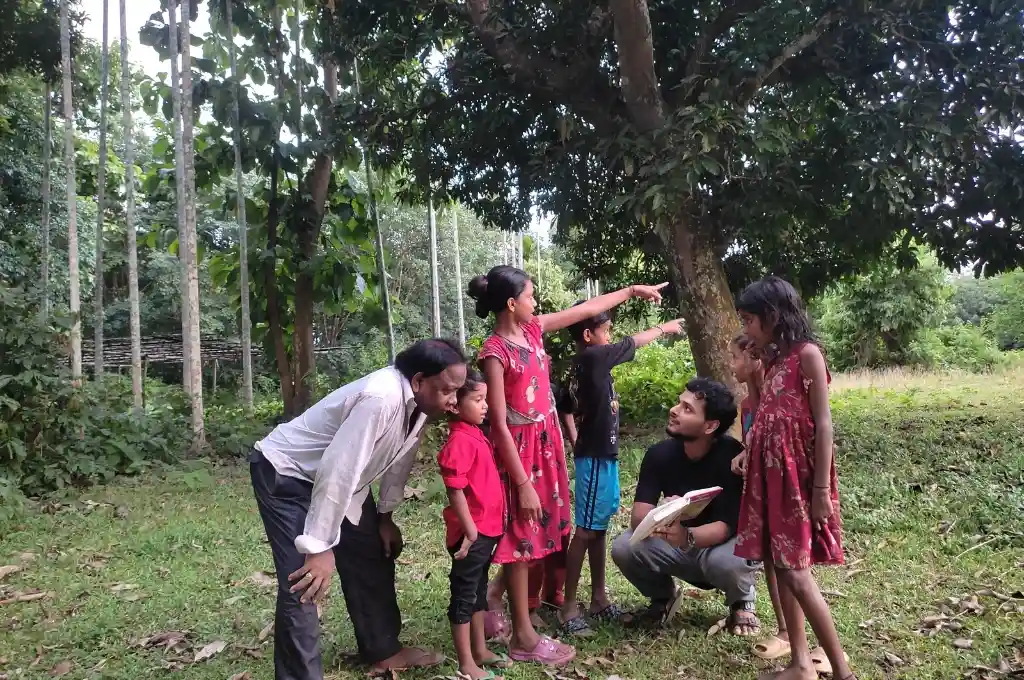
NEAID, which focuses on teaching SEL in hard-to-reach and ethno-linguistically diverse areas in Assam, has built hyper-localisation into their curriculum.
Neeladri Bora, co-founder at NEAID, says, “We work in Baksa where people are from the Bengali Muslim, the Assamese, and the Bodo communities. So, children in our classrooms speak three different languages. We help children learn Assamese since it is the official state language but after class, we also spend time on differential learning in local languages like Bodo and Bengali tailored to meet the needs of the children from each community.”
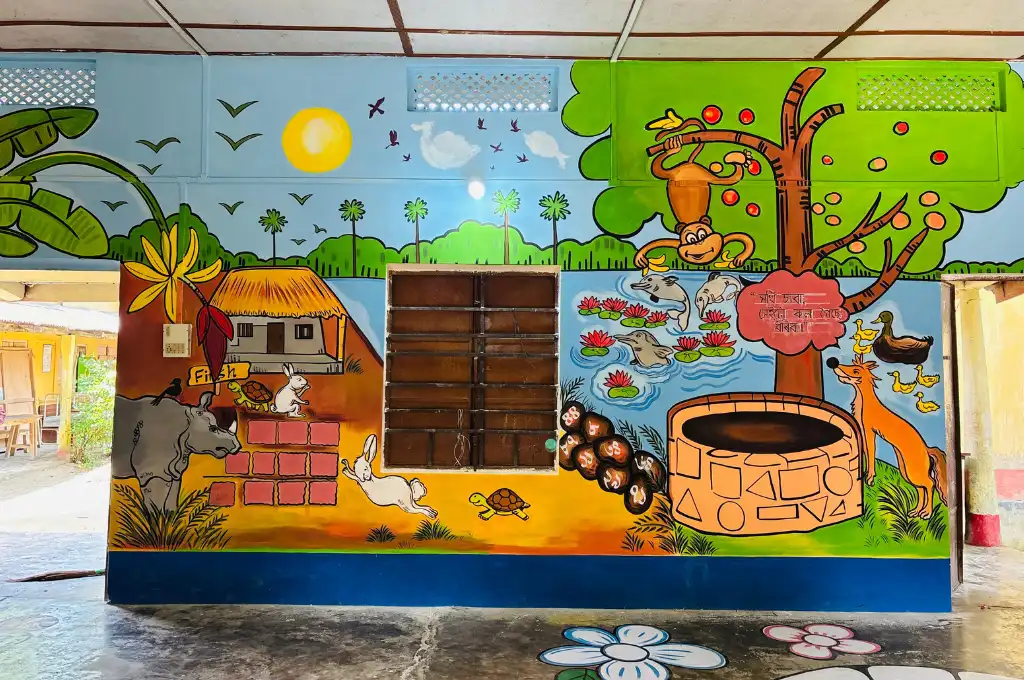
NEAID chooses stories that draw from common experiences in an area. For example, in a fishing village, most children can relate to stories about fishing, irrespective of the community to which they belong. Then there are common characters such as the jackal—present across the folk tales in the state—that serve as a literary device to carry the SEL morals that the nonprofit intends to impart. Because of its familiarity, the jackal becomes a safe and relatable vehicle to explore SEL themes that might otherwise feel abstract for young learners.
Sometimes the jackal is clever and resourceful, at other times it is impulsive, and yet it learns important lessons through all its mistakes. For example, one commonly narrated folk story involves the jackal tricking a group of animals to take more food for himself, only to be caught and eventually corrected by the elephant, who calmly explains to them why fairness and sharing matter. This story is used to spark discussions on compassion, fairness, empathy, and consequences of choices. Children analyse: Why did the jackal act this way? How did the action affect others? What could it have done differently?
Pushing the boundaries of imagination
Homogenous and top-down curriculum is only one part of the puzzle as these organisations work in areas that are systematically deprived. Students in remote areas are also served inferior reading materials—this treatment shapes how they view themselves.
In Sukma, it is rare for a child to come across a colouring book. Ashish says, “Even if someone donates a colouring book, it is very urban. So, we designed colouring books that would make sense to our children.”
One of these books looks at Bastar through a myna’s eyes. The villages, festivals, the act of collecting mahua flowers—the myna sees all this, and through its eyes the children discover the beauty of their Bastar.
All three organisations believe that the children in the communities they serve should have more choices. Upkram provides global exposure to children through touch and feel books and audio books where they can hear, feel, and see environs and animals that don’t exist in their immediate surroundings. Nikhil says, “Children are already curious and creative, and they have access to the internet. Our job is to nurture their hopes, offer them possibilities.”
The organisations have seen that this investment pays off. As they gain confidence of the children and, as a result, the communities, they can push for more social change on ground. Kiran says, “We noticed that there is more gender bias in schools than at homes. When they are within the school premises, boys and girls don’t hold hands, even though it is not a taboo to do so in their communities. We have started reminding them that at weddings and traditional dances, it is very common for them to hold hands.” Similarly, Upkram has also managed to make the children question casteism by using stories and discussions to question the discrimination that marginalised communities such as Dalits face.
Integrating SEL into the education system
For all three organisations, systemic collaboration with the government is key to ensuring that SEL becomes a sustainable part of the public education system, rather than an external intervention.
Neeladri highlights the importance of integration rather than supplementation when working with government systems. NEAID co-creates and co-designs their programme with government school teachers, which helps to ensure that it is not seen as an external imposition. He says, “The government response has been positive. Like us, they agree that the programmes should be integrated into the curriculum, not delivered as a separate activity.” Additionally, NEAID also runs meetings with the mothers of the students to provide them a better understanding of SEL and help them participate in their children’s social emotional development.
Reiterating the same values, Nikhil underscores the importance of working with all the stakeholders that are part of the school system: parents, teachers, students, and government officials at various levels. He says, “In the government system, you have to invest in relationships with people at all levels, not just the person designated to your programme.” Building mutual trust and ownership across the system allows SEL initiatives to take root more effectively.
Together, the experiences of NEAID, Shiksharth, and Upkram affirm that when young people start seeing dignified representation of themselves in the stories that they learn, they begin to value their lived experiences and develop healthier relationships with their surroundings. In the long run, this helps nurture confident children and adults who are capable of self-advocacy, questioning the norms, pushing the perspectives, and building a better world for themselves and others.
—
Know more
- Learn why social emotional learning in India needs an intersectional lens.
- Read why education must be contextual in unequal societies.