The social sector is currently operating in a turbulent global context, which is increasingly being shaped by political polarisation coupled with multiple overlapping crises such as climate change and global wars. Resources are stretched, funding is tighter, and people at the forefront of development are more stressed than ever, with a high risk of burnout. Yet, well-being remains chronically underfunded and underdiscussed.
Lack of credible data on the true scale of the challenges around well-being is one of the primary reasons for this.
The current data landscape is flawed
Over the last five to seven years, several studies have been conducted on how social sector workers are holding up. And almost all point to high levels of burnout, anxiety, financial stress, and workforce instability across nonprofits and civil society organisations. But most of this existing research suffers from a core problem. Burnout and anxiety are defined conditions, with established diagnostic criteria and measurement tools. A poll asking respondents whether they feel burnout does not indicate the clinical reality of what people are going through. While this is a useful signal to understand the beat of the sector, it is largely anecdotal information.

Another problem is that most of the existing data comes from isolated studies focused on particular countries, subsectors, or organisations. The bulk of research on well-being has been done in the United States, the United Kingdom, or western Europe, in contexts shaped by very different funding structures, labour protections, and work culture than the rest of the world, particularly the Global South. Extrapolating these findings to India, for instance, would require a false assumption that the Indian social sector functions similarly to the sector in Europe.

This also matters enormously when we look at some of the figures being cited in these studies. One, for instance, claims that up to 75 percent of social sector staff experience burnout. Taken at face value, a number like this would mean that the sector is actively on the brink of collapse. We would expect to see systemic breakdown in nonprofit programmes and service delivery, and a public health crisis among the workforce. The fact that this is not visibly happening does not mean the sector is fine, but it does suggest that this figure is measuring something closer to emotional strain, stress, or even dissatisfaction rather than burnout. Using a number like this, or depending on context-specific studies to transfer that data onto the sector worldwide, is problematic. It clouds the real issues facing the sector, making it harder for leaders and funders to respond appropriately.
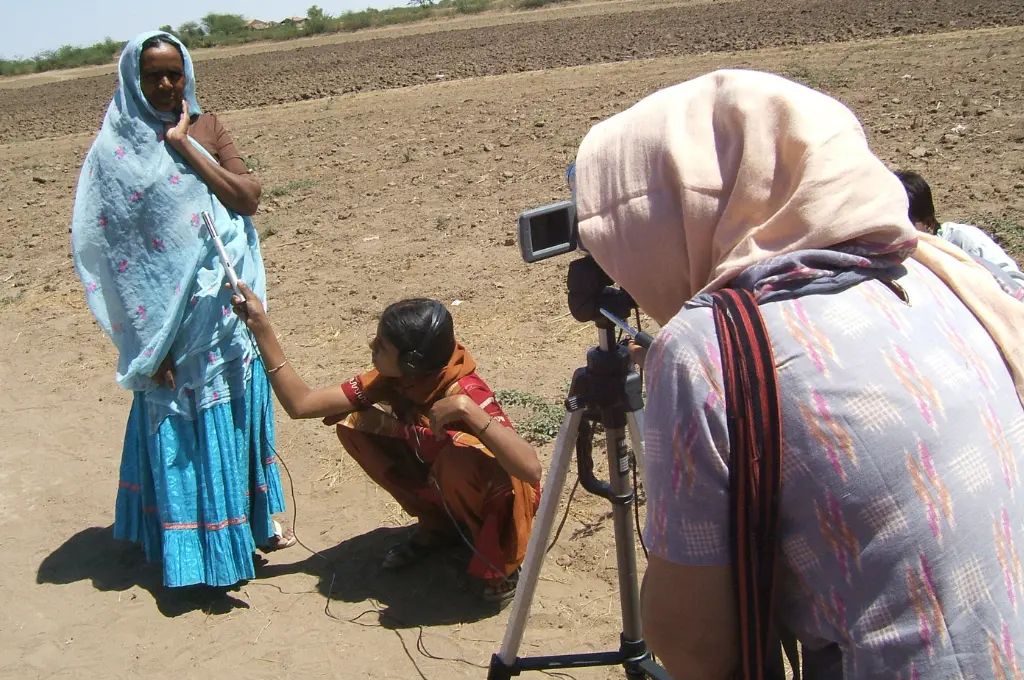
Fieldworkers and grassroots practitioners are also under-represented in these studies. These are people who are often paid the least, and have access to very few resources to manage stress. There is no real visibility on how grassroots contexts shape well-being across countries like India. An array of questions stay unanswered. Do people working in rural settings, for instance, experience different stressors than their urban counterparts? Does proximity to extreme poverty and exposure to trauma and crises exacerbate stress and emotional fatigue? How does low pay impact well-being when support systems are absent?
Building better data on well-being
Without credible, comparable, and contextually grounded data, it is nearly impossible to understand the state of well-being in the sector. This makes it difficult to design responses that are cognisant of local realities and to meet people where they are.
To help address this gap and to build a global dataset on well-being in the social sector, The Wellbeing Project, in research partnership with the Center for Healthy Minds at the University of Wisconsin–Madison, is launching the State of Changemaker Wellbeing Survey. The survey is currently available in English and Hindi. By gathering responses from thousands of changemakers across regions, roles, and types of organisations, the research seeks to better understand:

- the pressures people in the sector are facing
- the conditions that support resilience and sustainable work
- the differences in experiences across geographies and various parts of the ecosystem
If research reveals, for instance, that burnout is concentrated among fieldworkers in specific geographies, it tells us exactly where investment is most needed. If it shows that financial stress is a more significant driver of strain than workload, it reframes the conversation about what organisational support should look like. If it surfaces that rural practitioners are experiencing well-being differently from their urban counterparts, it challenges the assumption that a single, sectorwide response will work.
A global perspective is particularly important because well-being does not look the same everywhere. The pressures felt by a fieldworker in rural Odisha, a programme manager in Nairobi, and a community organiser in London are shaped by vastly different economic realities, social contexts, and institutional environments. A study that cannot account for that difference will reproduce the same blind spots that have limited the field so far. The goal is therefore to generate evidence that makes inaction harder to justify and action easier to design.
—
Know more
- Learn how mental healthcare continues to fail queer communities.
- Read more about mental health and well-being in the nonprofit workplace.