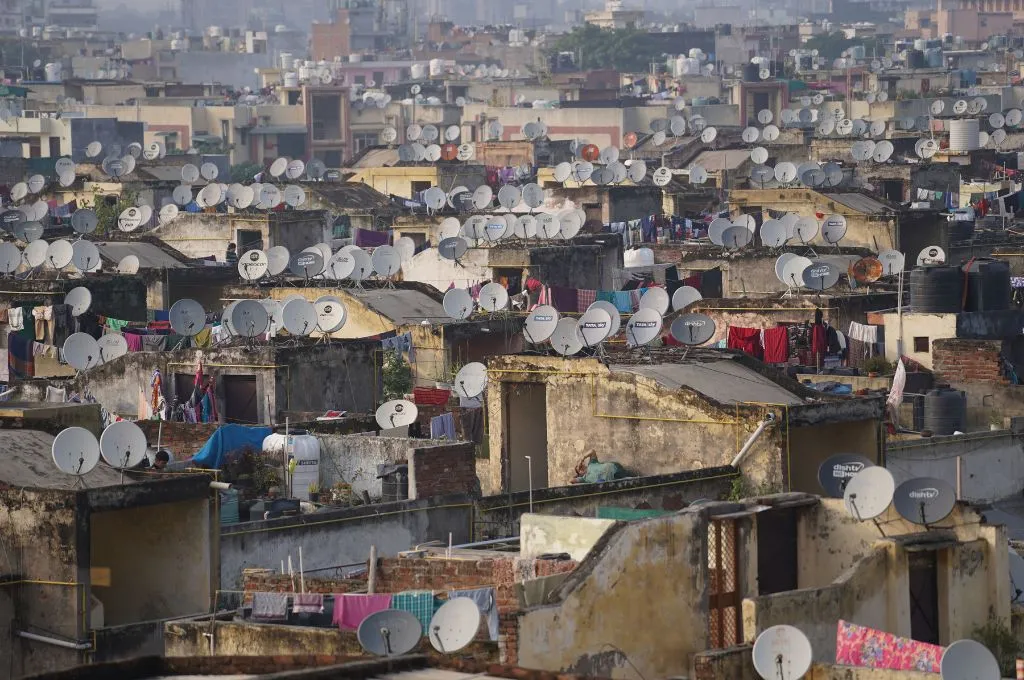
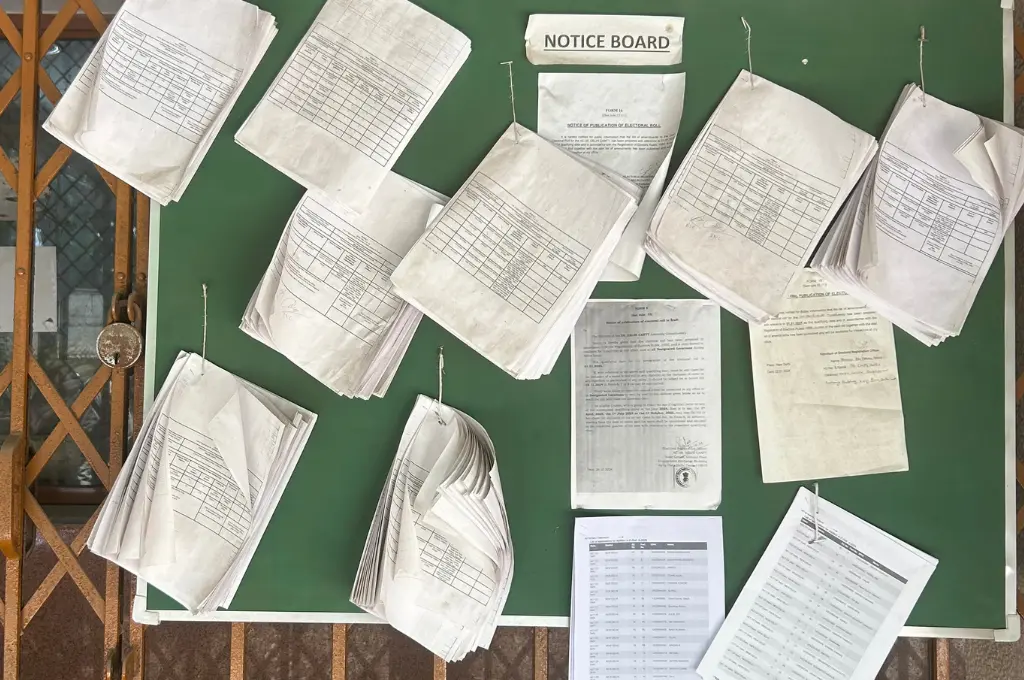
In an informal settlement in Malvani, a densely populated locality in northern Mumbai, residents who submitted enumeration forms to Booth Level Officers (BLOs) believed they were now in compliance with the Special Intensive Revision (SIR). But a local community worker notes that some names continue to appear on the discrepancy list despite being present on the draft electoral roll.
Unless their discrepancies are resolved, these voters risk being left off the final list.
When Maharashtra’s draft electoral rolls were published in late August, 2.07 crore of the 9.78 crore names present on the previous rolls were not included. Of those excluded, approximately 1.22 crore electors were placed on the SIR discrepancy list because their records had discrepancies or could not be linked to relatives in earlier electoral rolls. With a few days left until the final voter list is published, only 12 lakh of these 1.22 crore electors have been able to submit an application to get the discrepancy resolved.
Across Mumbai, community-based organisations (CBOs) are stepping in to help residents with the SIR process. Their experiences offer a closer look into what it takes to navigate the SIR on the ground, particularly for people who lack information, struggle to obtain documents, or have difficulty establishing a connection to older records.
Making sense of the process
For CBOs, one of the first challenges is helping people understand what the SIR means for them and what action they need to take. Submitting an enumeration form, for instance, does not necessarily mean that a person has no further steps to complete.
Community workers say that residents may not know that their names have been flagged for discrepancies. In some cases, their names appear on the electoral rolls but contain errors such as misspellings or alterations in the sequence of their first, middle, and last names. Many residents are unaware of these errors and of the need to correct them.
To address this information gap, CBOs are using a combination of direct outreach and community networks. “We are also indirectly reaching people through community committees and people’s organisations that we have created in these settlements as part of our work,” says a grassroots worker from a Mumbai-based nonprofit.
Through these networks, CBOs are helping residents understand the different stages of the SIR process and what they need to do at each stage. The organisations share guidance on how to check whether names appear on discrepancy lists, identify the relevant Booth Level Agent (BLA) or BLO, and understand which documents may be required. Some members of these collectives also work as BLAs, helping residents navigate the process.
People fear that the removal of their names from the electoral roll could result in them being forced to leave their homes.
In informal settlements in Chembur East, community workers used local WhatsApp groups to alert residents to the possibility that their names may be missing from the electoral rolls. “We are then directing residents to the election office and helping them understand where to seek corrections,” says a local community worker. “Networks such as WhatsApp groups allow information to travel beyond the people we can meet individually,” she adds.
Community workers are also having to address the anxiety surrounding the process. One of them reports that the people they assist fear that the removal of their names from the electoral roll could result in them being forced to leave their homes. In Baiganwadi, a community worker held meetings to reassure residents that they would not be driven out, urging them instead to follow the process as best they can and gather the documents they had.
Allaying these fears by offering reassurance and reliable information therefore becomes a critical function that CBOs perform. It helps those affected make sense of an unfamiliar and often confusing process, while addressing their fears fuelled by uncertainty.
The work behind a correction
Once a resident identifies a problem, the work becomes more involved. Some CBOs are helping people trace older electoral records, understand what documentation officials are asking for, and approach the relevant offices to resolve discrepancies.
This process includes checking records online, searching PDFs of older electoral rolls for relatives’ names, helping residents complete or submit forms, and following up when officials ask for further corrections. In some cases, community workers have helped residents pursue the process both online and offline.
For some communities, securing documentation and accessing public systems are long-standing challenges that are being surfaced more explicitly due to the SIR.
In Malvani, for instance, mismatches between older and current records are a recurring challenge. Some mismatches affect migrants due to names being recorded differently across states. Others affect women whose surnames have changed after marriage, making it harder to match their current details with older electoral entries. In such cases, residents may be asked to produce additional documents, including birth certificates or older electoral records. Community workers are helping residents identify the records they need to look for and direct them to the officials who can address their cases. But the process can be time-consuming, particularly when people do not have the documents being requested or are unsure where to obtain them.
An organisation operating in Malvani has been able to assist approximately 200 excluded electors through direct contact and community networks. But its estimates suggest that more than 5,500 individuals across 20 booths in the area continue to remain at risk of being excluded from the final list. These figures illustrate the challenge of identifying and assisting everyone who may need support, particularly when the organisation’s staff and resources are limited.
Community workers also describe residents’ struggles with the bureaucratic procedures required to obtain documents such as Aadhaar cards and birth certificates, with some having to pay repeated visits to the concerned offices. The problem is especially acute for those who depend on daily-wage work, as the long wait times at government offices usually results in them having to forgo work.
For some communities, securing documentation and accessing public systems are long-standing challenges that are being surfaced more explicitly due to the SIR. A grassroots worker describes supporting people living on the streets in Mumbai’s northern suburbs, many of whom belong to the Pardhi community. Given the persistent documentation challenges that these individuals have experienced, helping them secure voter ID cards has been a facet of his organisation’s work for years.
His account also points to the wider insecurity experienced by people living on the streets. He recounts encounters at government offices where people have faced suspicion about their nationality, including being asked why they have not ‘returned to Bangladesh’. Such hostility only deepens the community’s sense of distress and fear of bureaucracy.
Even when residents manage to submit documents, the outcome may remain uncertain. People are often back for further corrections, leaving them anxious about whether their applications have been processed successfully. Some continue to visit election offices and check records online to find out what has happened to their cases.
The work of these organisations therefore extends to helping communities manage uncertainty while trying to navigate a process whose outcomes they do not control. Their experiences raise questions about how far community-based support can compensate for gaps in information and access, particularly when the organisations themselves have limited capacity.
Bringing the process closer to communities
The community workers’ experiences also point to ways in which the process could be made more accessible. One of them argues that residents should be able to access information and assistance closer to where they live. The BLOs working in his area collect forms at a municipal school 1.5–2 kilometres from the informal settlement. Residents may not know which official is available or where they need to go to resolve their queries.
He suggests setting up help desks in accessible locations within settlements, where residents can check their records and find out what action is required. Such arrangements, he believes, could make it easier for people to seek assistance.
Other community workers similarly emphasise the need for clearer communication from election officials. They mention that they often needed to step in because residents were not receiving enough information from official sources about the process. One worker in Chembur recounts asking their local BLO to visit informal settlements within their constituencies. Although the BLO did visit the area later, their interactions with the residents remained limited to collecting forms and calling people for corrections rather than explaining the process.
CBOs are therefore attempting to bridge the gap between officials and citizens. They are leveraging their existing relationships within communities to identify people who need support, explain the process to them in familiar terms, and help them approach the relevant authorities. But they ultimately recognise that their efforts can only bear fruit if the election machinery also responds to people’s concerns and resolves cases in a timely manner.
—
Know more
- Read this article about a field organiser in Rajasthan who is trying to get her family onto the voter list after the SIR.
- Learn how the 2025 SIR differs from the last revision in 2003.