Basic Health Service, an organisation working in healthcare in a remote tribal area in Salumber, Rajasthan, hired the most qualified nurses they could find: candidates with strong degrees and experience from across the country. Within three to four months, most had left. “They had no idea that there would be power cuts in the village, that the internet would be limited, and that they would have to work closely with the community. Also, being available around the clock in a remote region is difficult,” recalls Kamlesh Sharma, who leads the organisation. Law Foundation, a legal aid organisation in Bihar, faced a similar situation. They hired a highly qualified candidate who left within three months. It was not that they couldn’t do the work, but their understanding of how to engage with the prison administration did not align with the organisation’s inclusive approach.
Two organisations, two very different roles, and the same outcome. In both cases, the problem was not a failure of the hiring process in the conventional sense. The hiring framework itself was built for a different kind of work. For grassroots organisations, this is a familiar problem. Highly qualified candidates sometimes leave because the role demands something their qualifications do not anticipate. Hiring fails not because candidates lack skill, but because of a misalignment between their expectations, values, and the lived demands of the role.
Why and for what are we hiring?
In recent years, the experiences of many organisations show that the impact of a wrong hire is not limited to just one person—it can affect the entire organisation’s direction, credibility, and stability. When an organisation grows from one person to a team of 20–30 people in just a few years, it must recognise that ‘growing a team’ and ‘building a team’ are two different processes.

Most organisations begin hiring when a project comes in or a position falls vacant. But before putting out an advertisement, it helps to pause and ask a few foundational questions. Why does this position exist? Is it for a new project or is it an expansion of existing work? If someone has left the organisation, does the role need to look the same as before? And critically, does the candidate’s career trajectory align with how long the project is meant to last? As Praveen Kumar of Law Foundation puts it, “If a project is for five years, we need someone who will stay with us for at least the initial three years.”
Qualifications and experience matter, but so does whether a candidate’s values and worldview align with the organisation’s.
Salary is another question that often gets less strategic attention than it deserves. The salary attached to a position shapes who applies. Amit and Ratna, who handle HR at Sewa Mandir in Udaipur, are direct about this: “When your budget is limited, it is natural that you filter out those who expect a very high salary right at the beginning.” This is not necessarily a problem, but it requires clarity. Organisations need to understand what kind of profile is realistically possible within their budget, and whether they are looking for immediate expertise or someone they can invest in and train.
Qualifications and experience matter, but so does whether a candidate’s values and worldview align with the organisation’s. This becomes especially important for organisations working on sensitive issues such as incarceration, Dalit rights, or tribal contexts. R D Vyas, formerly with Aastha Sansthan, asks candidates a question that has nothing to do with their job description: “Why is a poor person poor?” The answers, he says, tell you a great deal about the person.
Sending the right message to the right people
A good job description does more than list responsibilities. It signals to the right candidates that this role is meant for them and filters out those for whom it is not. Writing the salary range clearly saves everyone’s time. Praveen notes that job descriptions that simply say ‘sector standard’ or ‘market standard’ create confusion. If the role is in a remote area, saying so plainly, including that facilities are limited and community living is expected, sets honest expectations from the start. Law Foundation went a step further, explicitly stating in their job description that they encourage applications from first-generation learners, marginalised communities, and LGBTQIA+ individuals. “This is not merely a moral statement,” Praveen says, “but a powerful means to attract the right candidates.”
Where the job description is shared matters just as much as what it says. Professional platforms like LinkedIn and DevNetJobs work well for mid- and senior-level roles where candidates with prior nonprofit experience are likely to search. Social media and WhatsApp networks can help reach a wider pool quickly, especially when budgets for advertising are limited.

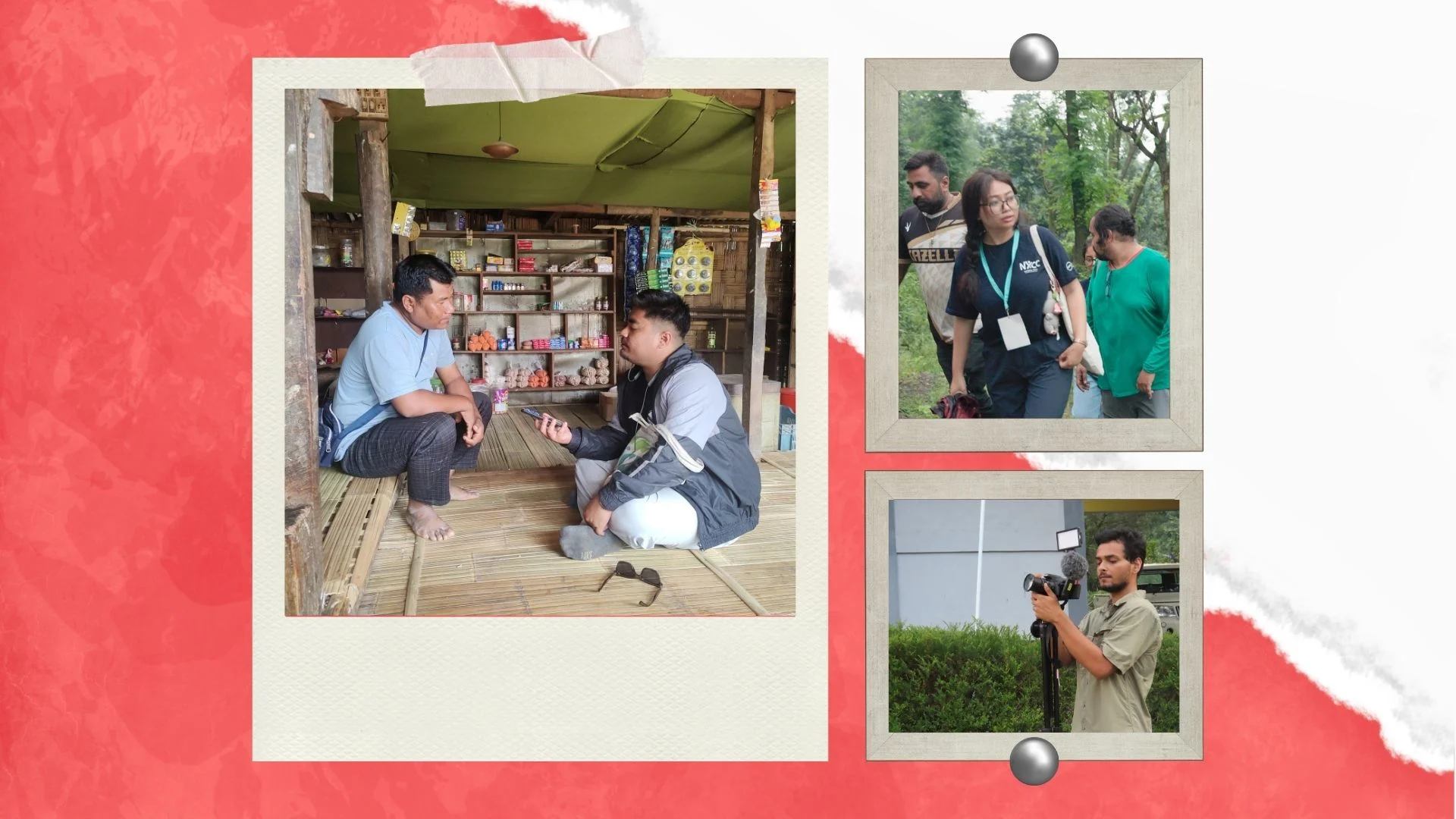
But for field-based roles that require deep community engagement, digital platforms alone are not enough. Holding community meetings, informing local women’s groups and youth clubs about the position, and creating a process for written or oral applications within the community itself can surface candidates whom no online platform would reach. This approach also increases representation from marginalised communities and ensures that whoever is selected understands the local context from within.

Screening, interviews, and finding the right candidates
Once applications come in, the real challenge begins. A 15–20 minute interview is rarely enough to understand a candidate fully. Ratna from Sewa Mandir is of the opinion that a multi-level process works better. Initial screening through phone calls or a short assessment can save significant time. Praveen notes that how a candidate speaks on a phone call reveals a great deal, while sending a written assessment as part of the application process early on filters out those who are not serious about the role.
However, screening can reveal bias as much as it reveals capability. Amit from Sewa Mandir describes a candidate from Kalahandi district in Odisha whose parents were bonded labourers. On the phone screening, he was not fluent in English and the team wanted to reject him. Amit intervened, saying, “Give him a chance.” When the candidate was sent a case study, he solved it with such brilliance that everyone was taken aback. He was called for an interview, was selected, stayed in the organisation for more than three years, and went on to build a significant project. “This test reveals the candidate’s thinking, ethics, and problem-solving ability,” Amit says. “It tells you things that a phone call never will.”
Candidates who have already engaged with an organisation through internships or fellowships are particularly strong prospects.
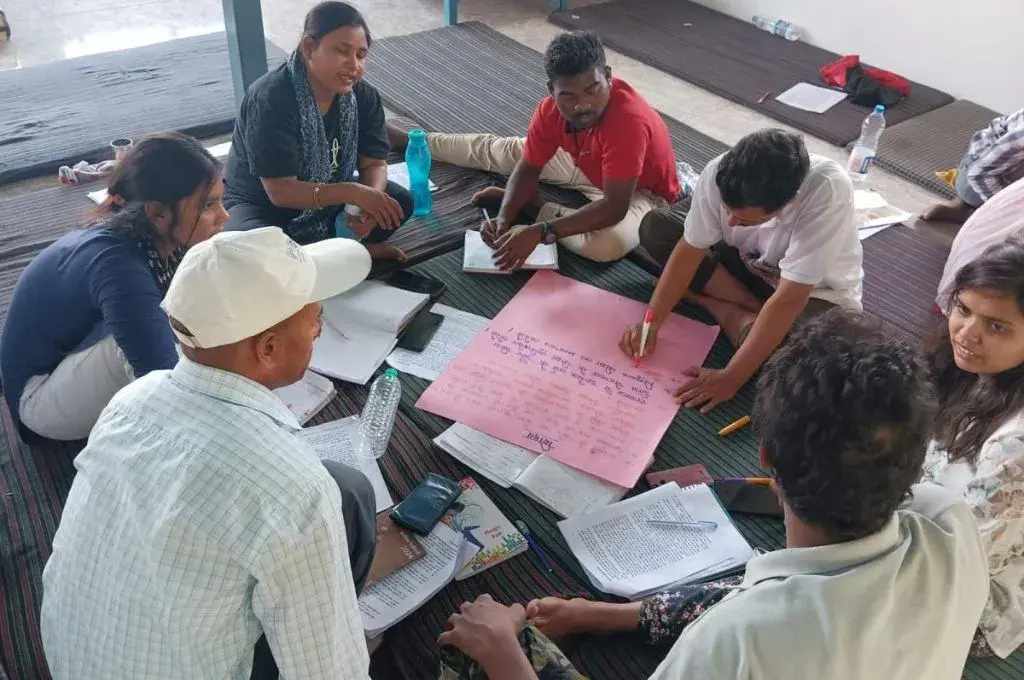
The composition of the interview panel deserves as much attention as the interview itself. Amit and Ratna recommend including field staff, women, subject experts, and people from marginalised communities, not just privileged senior management. If such perspectives are not accessible within the organisation, support can be sought from partner organisations. Sarfaraz, director of Kotda Adivasi Sansthan, takes a different approach. His coordinators, professionals with years of field experience who work directly with communities, conduct the first round of interviews before he meets shortlisted candidates himself. The method differs but the logic is the same: The people closest to the work are best placed to assess whether a candidate can do it.
For field-based roles, looking beyond conventional pipelines often yields better results. Candidates who have already engaged with an organisation through internships or fellowships are particularly strong prospects. Their capabilities and commitment have already been tested. Kamlesh connected with a travel fellowship that placed young doctors in different organisations for three-month stints. Some chose to stay on because they had developed a genuine connection with the community. Praveen goes directly to the Musahar basti to identify paralegal volunteers from within the community itself. Amit makes a case for candidates from local and state universities, who tend to understand the local context and stay longer. “Sometimes, these young colleagues turn out to be the best,” he says.
Lessons and the bigger picture
For organisation leaders hiring for field roles or positions with a grassroots context, these experiences point to a few concrete shifts. First, ask whether the role requires someone to live in the context and not just work in it. If the answer is yes, that question should reshape where you source candidates and what you look for in interviews.
Second, a candidate’s values and worldview are not soft criteria. How someone understands poverty and marginalisation predicts whether they will stay and whether they will do the work well. R D Vyas’s question about poverty is one way to surface what a CV cannot.
Third, look at who sits on your interview panel. If everyone evaluating a field candidate comes from an institutional or urban background, there is a blind spot built into the process. Correcting for this requires intention, not a large HR team.
Even with all of this in place, hiring will sometimes go wrong. Contexts change, people change, and organisations change. What separates organisations that recover well is whether they treat each difficult hire as something to learn from rather than simply a problem to move past.
For many grassroots organisations, hiring is not an administrative task. It is an organisational capacity. As Praveen, Kamlesh, and their colleagues have learned, the people an organisation brings in are inseparable from the work it is trying to do.
—
Know more
- Learn how organisational culture affects talent retention.
- Learn how grassroots nonprofits in India can nurture local leaders to drive lasting impact.