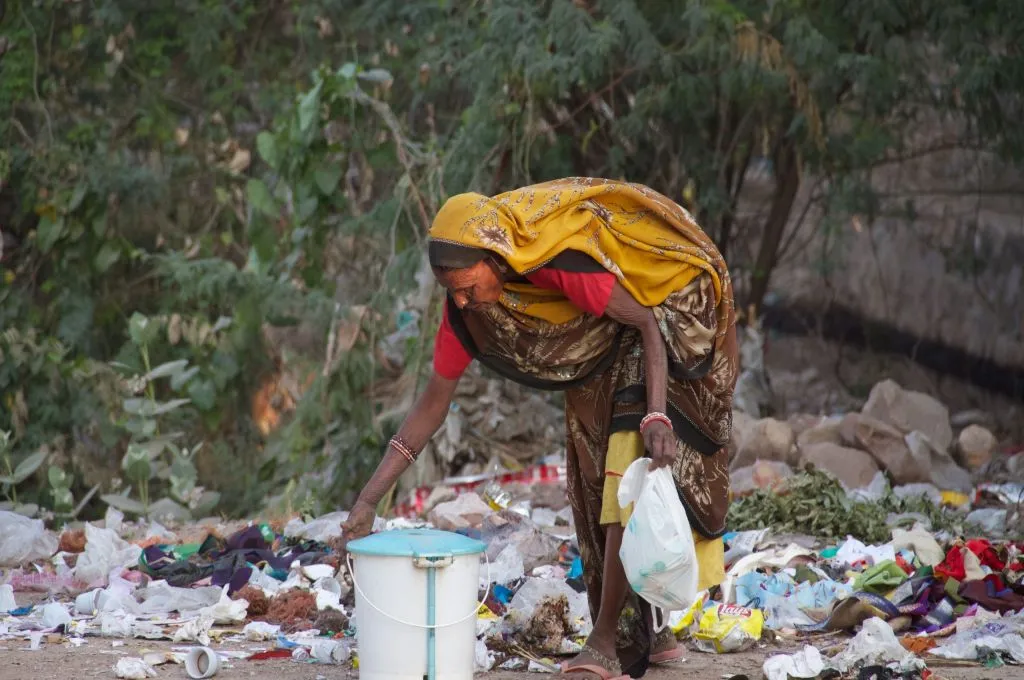
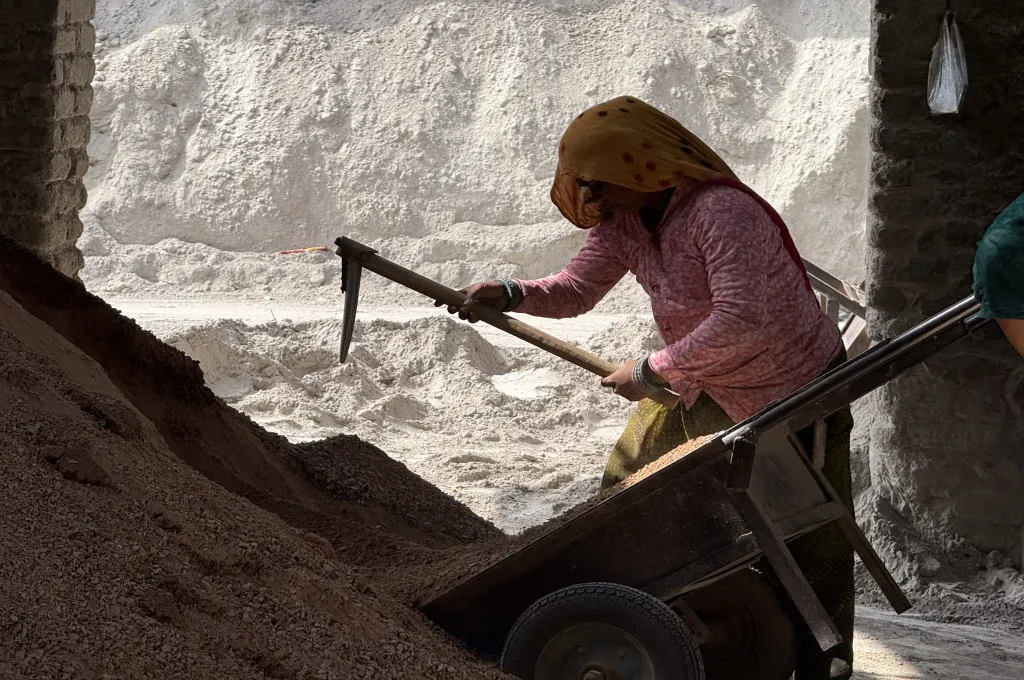
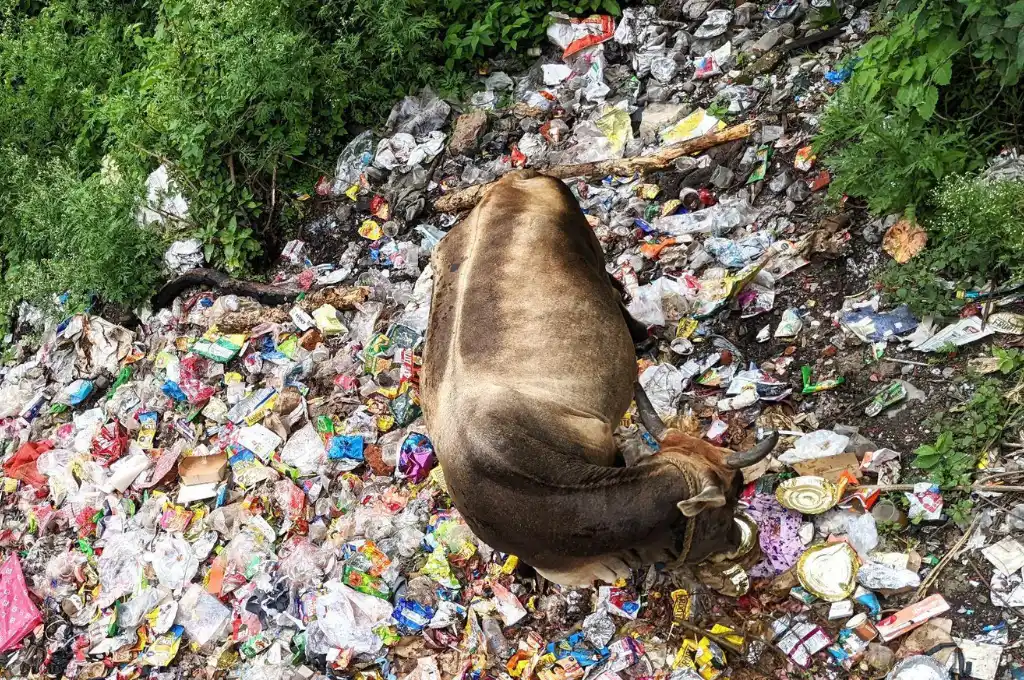
In rural Uttarakhand, mixed waste piles up in open spaces, chokes water bodies, and contaminates the air when burned. In Sahastradhara, Dehradun—a popular travel destination—pristine natural springs have lost their charm to the littered plastic that contaminates them.
From April 2024 to July 2025, tourists, households, and commercial establishments in the main Sahastradhara market and 15 adjoining panchayats have generated more than 800 metric tonnes of dry waste, most of it low-value plastic or paper. The problem is as social as it is environmental and requires solutions rooted in lived community realities.
In recent years, some community members have partnered with civil society organisations to address this issue because it directly impacts their lives. One such initiative is the Waste Warriors’ Paryavaran Sakhi (friend of the environment) model, which was launched in 2021 in Corbett across five areas, covering two gram panchayats, two van panchayats, and a village. In 2022, the model expanded to Sahastradhara. Women, known as sakhis, train with the nonprofit on waste management practices and awareness building, and carry out door-to-door dry waste collection from households and small businesses. The collected waste is then transported to the plastic waste management unit (PWMU), where the sakhis carefully sort it into 15 different categories such as low- and high-density polyethylene, single and multi-layer packaging (MLP), and paper. Waste like MLP and paper are then loaded into a baling machine to create bales, which are categorised and sent to different recyclers.

A sakhi’s role extends beyond waste collection and sorting. They raise awareness about waste, promote better habits, teach women about sustainable menstruation practices, and guide children towards environmentally conscious behaviour. In 2022, we replicated the initiative in six Sahastradhara panchayats (Asthal, Karliguard, Dhanaula, Maldevta, Sherki, and Kherimansingh).
The task hasn’t been easy as almost all the work requires sakhis to navigate the difficult hilly terrain. We have also had to be cognisant of community mindsets around waste, ensure waste work is economically viable, and gain the local leadership’s trust. Here’s how we achieved this.
1. Partnering with local government
We first convinced local pradhans and ward members, who hold significant influence in villages. During COVID-19, we raised more than INR 13 lakh in relief funds and distributed essential items such as salt, sugar, rice, and pulses. These actions built credibility and confidence within the communities. Yet, outreach proved challenging. Pradhans often avoided meetings, cancelling or ignoring them last minute.
Bir Singh Chauhan, a zilla panchayat member we knew from our earlier advocacy work, became a key ally. He endorsed us by speaking about our efforts to other ward members and encouraged hesitant pradhans to engage with us.
At a village meeting, community members learned that we were planning to construct a PWMU and were worried that we were building a ‘waste house’. We organised an exposure visit to our material recovery facility (MRF) in Harrawala, which included a PWMU. Seeing the operation first-hand helped local leaders understand our work better. That visit proved to be a turning point. From there, the conversations began to shift, and things started to progress.

Their support enabled us to attend gatherings, spend time in villages, and establish our presence before discussing waste. Municipalities handle waste collection and sorting in urban wards, so we focused on six Sahastradhara panchayats outside urban jurisdiction. Unlike city wards that receive door-to-door collection and municipal waste services, these rural panchayats had no formal system in place. Residents dumped waste into streams or burned it in open spaces. Our model bridged this gap, leading to further support from local governance.
2. Including women as paryavaran sakhis
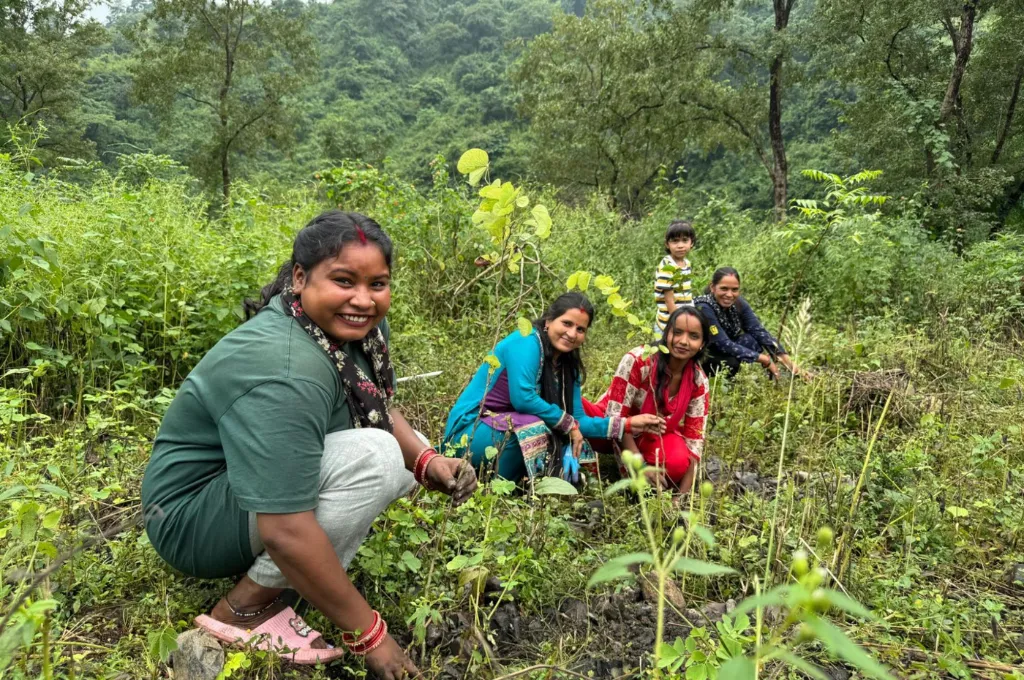
We believed women’s collectives would drive change. Their daily lives are connected deeply to the land—fetching water, gathering fuel, and tending farms—so they experience waste most directly. Yet, they needed time to recognise the harm caused by dry waste, and how they could lead the solution.
The primary challenge was family discomfort and neighbours’ disparaging remarks, as caste norms made waste work seem unacceptable, especially for women from families considered upper caste. Statements such as ‘Our daughters-in-law will not do this work’ were common. Some admitted they wanted to join the profession for various reasons, such as contributing to a cleaner environment and earning an income, but they feared judgement from their in-laws and neighbours. We shared stories of women leaders to inspire them. For example, we spoke about Laxmibai and Jhalkaribai who fought against the British in the 1857 Jhansi uprising; Chetna Sinha, a social entrepreneur working for women empowerment; Parbati Giri, a leader during the Quit India Movement; and closer to home, Gaura Devi of Chamoli, who was centralto the Chipko Movement for saving trees. Framing waste work as women-led environmental action made it feel dignified and purposeful. The women started seeing it as something larger than their individual selves.
We also identified different avenues to highlight the scale of the waste crisis. For example, we organised a community hike in Shera Gaon Panchayat, where waste along the trail prompted conversations on people’s connection to their surroundings and the need to protect it.
Women were increasingly viewing waste work as environmental conservation. Regular discussions about plastic’s harmful effect on soil, water, and air clarified this. They realised that responsible waste collection and processing prevented dumping or burning and protected their environment. Cleaner streams and smoke-free air transformed what was considered a menial task into caring for their land and nature.
Once that happened, women began advocating for themselves. When Mukta Panwar (a paryavaran sakhi) joined us, she faced resistance at home. “People asked my mother-in-law, ‘Is this the only kind of work your daughter-in-law could get?’ My husband supported me, and I explained to my mother-in-law that this work is about the environment.” Recognition also played its part. When sakhis received appreciation from the Swachh Bharat Mission or the Ministry of Panchayati Raj, the community noticed that the work garners attention and praise from the government.
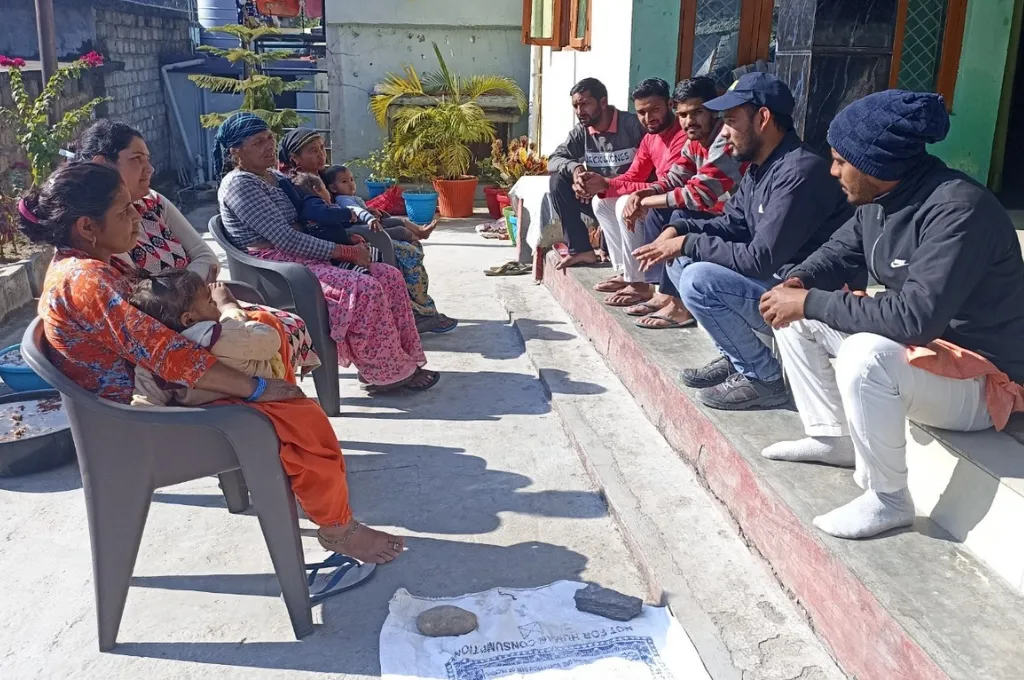
3. Making waste economically viable
Earning from waste work is at the heart of the programme because income is directly tied to the dignity of the work. Turning waste into a livelihood is difficult, especially when most people expect it to be a free service. Before our intervention in Sahastradhara, households dumped their waste into canals or burned it. When we introduced a user fee—a small monthly charge collected from households to ensure a regular and reliable waste collection service—the first reaction was ‘Hum kooda bhi dein aur paisa bhi?’ (Now we have to give waste and pay for it as well?)
We visited houses and businesses repeatedly to fetch the fees. Each time, we explained that the service prevents pollution of land and water sources, and that the payment honours women from their own communities. Slowly, their attitude towards us changed and some residents even visited our facility to learn more about dry waste management. Regular collection of waste by sakhis built trust and a few households agreed to pay. Although participation still hovers at 47 percent, we managed to collect INR 1,73,710 from households between April 2024 and July 2025.
Sahastradhara hosts rows of kirana stores, dhabas, and cafes serving tourists; their waste is heavier and includes plastic packets, wrappers, and bottles. The sakhis and team convinced them that regular collection requires a higher contribution. As a result, INR 93,150 was collected from commercial establishments between April 2024 and July 2025.
Recyclables are another source of income. After segregation, recyclable material is sent to certified recyclers. Earnings are calculated on the basis of hours worked. On average, a sakhi makes approximately INR 440 a day (minimum wage); though modest, it has changed how they view themselves. We saw people join and form waste workers’ collectives independently. As time passed, more women from the same families and communities joined hands.
Today, the sakhis have built their own self-sustaining network where they support one another beyond the scope of the project. For example, when a sakhi faces financial issues, the others pool in their resources to help. This solidarity and dedication is what sustains waste work. But beyond keeping the villages clean, the paryavaran sakhis’ journey is about reclaiming space, dignity, and voice in their communities in rural Uttarakhand.
Gyandeep Aghnihotri, Aslam Khan, Arti Jawadi, Seema Devi, Sashi Lakhera, Sarita Rawat, Beena Rawat, Sudha Panwar, and Mukta Panwar contributed to this article.
—
Know more
- Learn why waste is not wealth in the Himalayas.
- Read more about how India’s social hierarchy determines who ends up cleaning cities.