“I understand my village,” a woman sarpanch in Sehore district told us. “But whenever the discussion turns to budgets, rules, or government procedures, I have to depend on the [village] secretary.”
Her statement captures one of the central dilemmas of the panchayati raj today.
The sarpanch was not inexperienced. She was the only woman in her community to have studied up to Class XII. For more than a decade, she had managed the mid-day meal programme through her self-help group (SHG). She had strong community support and had defeated six male candidates to become sarpanch. Yet, once elected, she found that confidence and community connect were not enough. To exercise leadership, she needed to understand budgets, government guidelines, digital portals, planning processes, procurement norms, and departmental procedures.

This is not an isolated experience. Across India, elected representatives of gram panchayats are expected to function as local governments, but the systems that support them continue to treat capacity building as a one-time training activity.
Three decades after the 73rd Constitutional Amendment, India has built one of the world’s largest systems of grassroots democracy. More than three million elected representatives serve in panchayati raj institutions (PRIs), nearly half of them women. Many come from scheduled castes, scheduled tribes, and other historically marginalised communities. Electoral reservation has opened unprecedented spaces for local leadership. But representation alone does not automatically translate into managerial and leadership capability for enhanced performance of the gram panchayat. As a leader, she needs to understand a diverse set of community aspirations and help them to access entitlements within the village’s limited funds so that no one is left behind. However, as a manager, she needs to have a sound grip on available budgets, guidelines of schemes, procedures, and systems to use public funds.
The challenge gains urgency because gram panchayats today handle far greater responsibilities than before. The Sixteenth Finance Commission has recommended INR 4.35 lakh crore for rural local bodies for 2026–31. A significant share of this will go directly to gram panchayats. Importantly, a part of the grant is performance-linked. Panchayats will be expected to improve their own-source revenue, maintain accounts, comply with audit requirements, and demonstrate institutional performance. In other words, they are being asked to function as accountable local governments.
This is desirable. But it also assumes capacities that many gram panchayats, especially in poorer, remote, and tribal regions, are still struggling to build.
The prevailing model of capacity building is inadequate for this new phase of decentralisation. Newly elected representatives usually attend a few training sessions at the block or district level. These sessions often focus on schemes, official instructions, reporting formats, and targets. Less attention is given to participatory planning, gram sabha facilitation, financial decision-making, gender-responsive governance, community mobilisation, or problem-solving.

By the time elected representatives begin to understand institutional relationships and procedures, a large part of their five-year tenure has already passed. In practice, many become dependent on panchayat secretaries and block-level functionaries for funds, benefit transfer, etc. These officials play a critical role in facilitating executive functions of the gram panchayat under the supervision of the elected representative, but their work is often shaped by administrative compliance, scheme implementation, and reporting pressures. The leadership role of elected representatives remains underdeveloped under the burden of straitjacketed program guidelines.
Our field experiences in Madhya Pradesh suggest that capacity building becomes meaningful only when it moves beyond training halls and becomes a part of everyday governance.
Building capacities, building institutions
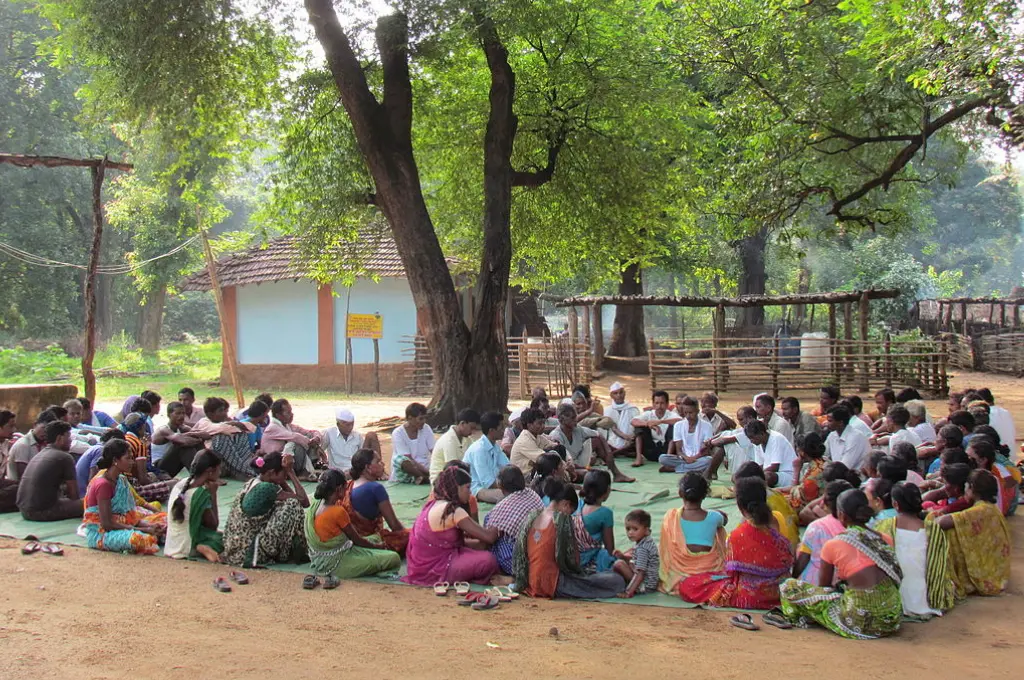
In Sehore, during participatory planning exercises with women and elected representatives, several issues emerged that were not merely about infrastructure. Women raised concerns about girls’ safety, school dropouts, malnutrition, drinking water, cleanliness, household waste, and gender discrimination. Some of these required funds, but many required behavioural change, collective action, and local leadership.
A pathway to change can be built through a scheme. But ensuring that girls continue their education may require dialogue with parents, safe transport arrangements, engagement with schoolteachers, and support from women’s groups. A toilet can be constructed, but its use and maintenance require changes in habits, norms, and accountability. Drinking water infrastructure can be installed, but regular supply depends on local monitoring, repair systems, tariff collection, and community ownership.
These are governance challenges. They cannot be solved by technical training alone. Village-level leaders need to learn skills of facilitation, negotiation, conflict resolution, community mobilisation, and more.
When women’s collectives engaged with panchayats, they mobilised support for some women who were estranged by their husbands.
In Badwani district, Samarthan worked with women’s SHGs to identify and train a group of women leaders as ‘change vectors’ for education, health, and governance issues. In other districts, young boys and girls were trained to be jal mitras or panchayat mitras as a support system for gram panchayats. These community leaders learned about gram sabha powers, panchayat functions, school governance, anganwadi services, drinking water systems, and entitlements. Instead of conducting one-off training programmes, monthly SHG meetings became spaces for discussing one issue at a time, planning action, and reviewing progress. As a result, elected representatives could check the online release of budgets, transfer of funds for housing, old age pension, etc. Moreover, monitoring of various basic services of health, education, water, and sanitation by the young leaders supported the elected representatives to perform their mandated functions more effectively. For example, school management committees started monitoring and supporting in improving the functionality of school toilets, and the quality of mid-day meals, etc.
Many women panches (ward members) and other members of various standing committees were also SHG members. This helped connect elected leadership with community leadership. The result was not merely better awareness. It created a local process through which women could ask questions, bring issues to the panchayat, and participate in solving them.
In Chhatarpur district, women used SHG spaces to discuss domestic violence and gender-based injustice. These concerns are often treated as private matters, outside the formal role of gram panchayats. But panchayats are constitutionally responsible for economic development and social justice. When women’s collectives engaged with panchayats, they mobilised support for some women who were estranged by their husbands; in such cases, panchayats mediated with the families of the bride and groom to hear why conflict had arisen, and facilitated solutions. This meant that some couples went back to living together and, even otherwise, most women started receiving entitlements like subsidised rations and work under the right to employment. Additionally, cases of domestic violence that were previously considered personal matters were registered with the gram panchayat for legal action.
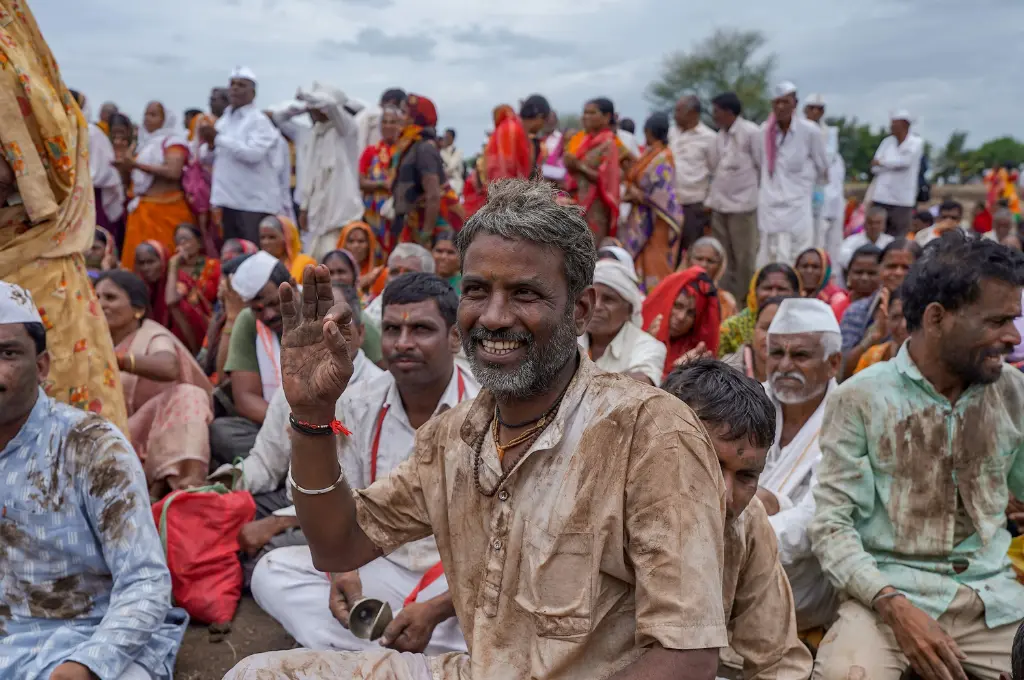
Such experiences show that capacity building must be understood as an institution-building process. It is not enough to train the sarpanch alone. The ecosystem around the gram panchayat must also be strengthened. This includes women’s collectives, youth groups, village water and sanitation committees, frontline workers, local facilitators, and citizens. For this to happen, various stakeholders working on the training of panchayati raj institutions must:
1. Provide high-quality training materials
To support the government’s training system, several civil society organisations (CSOs) and academic institutions can be identified as panchayat knowledge centers. State-level knowledge hubs should develop high-quality learning materials, practical handbooks, videos, case studies, model gram sabha agendas, and financial decision tools in local languages and contexts. These should be updated continuously based on emerging case studies of success, constraints, or failure from the ground. There is a need to find resources within government, university, and civil society systems that can host such knowledge hubs. An MoU can be signed providing them resources and autonomy with built-in provisions of accountability and transparency. Many CSR funders and other donors can be approached to fund such knowledge hubs.
2. Prioritise contextual mentoring
District-level resource teams should provide mentoring and handholding support with a rich understanding of local context. These teams can include experienced practitioners, former sarpanches, women federation leaders, retired officials, civil society members, academics, and technical experts. CSOs that have a strong grassroots presence across districts can be district-level anchors. District level-degree colleges and agriculture colleges can also be roped in to play this role. State knowledge hubs can be given the responsibility of building an inventory of such individuals and institutions and gradually training mentors in collaboration with district anchors.
Cluster-level mentors should be available to elected representatives, especially women, SC/ST representatives, and first-time sarpanches.
Further, cluster-level mentors should be available to elected representatives, especially women, SC/ST representatives, and first-time sarpanches. Many women cannot easily travel for residential trainings because of household responsibilities, mobility constraints, or wage loss. Cluster-level support is more accessible and can be linked to real governance issues. Building cluster-level hubs of knowledge sharing by utilising the rich infrastructure of the gram panchayats’ meeting halls and campuses will greatly enhance opportunities for peer learning, behaviour change sessions, and knowledge transfer.
3. Invest in AI literacy
Panchayats need digital and AI-enabled advisory systems. Elected representatives should be able to ask practical questions such as:
- Can this grant be used for repairing a drinking water system?
- What records are needed for an audit?
- How should a gram sabha resolution be drafted?
- What steps are required to collect user charges?
A multilingual AI-supported helpline (such as a chatbot), combined with human verification, could make government guidance more accessible. Technological capacities of state knowledge hubs can be enhanced in collaboration with IT specialists to design such support systems. There are several experiments already underway by the government agencies and CSOs that can be collated, adapted, and contextualised to meet the needs of the gram panchayats.
Panchayat leaders should be aware of the limitations of internet access in rural areas as well as the veracity of the information provided by AI tools.
4. Promote collaboration among stakeholders
Fourth, capacity building must include the wider panchayat team: panchayat secretaries, rozgar sahayaks, frontline workers, village water and sanitation committees, SHGs, youth volunteers, and local technical service providers. A gram panchayat functions effectively only when these actors learn and work together.
This is particularly important as panchayats take on responsibilities for managing public assets and services. For example, new provisions issued by the Department of Rural Development and Panchayati Raj in Madhya Pradesh in June 2026 allowed gram panchayats to spend INR 10,000 per month on the operation and maintenance of piped drinking water systems. But such responsibilities require technical understanding, procurement skills, tariff collection, repair systems, transparent costing, and trained local human resources. Without these, infrastructure may exist, but services will remain unavailable and unreliable.
5. Make judicious CSR investments
The same principle applies to CSR investments in rural development. Over the last two decades, CSR has supported schools, drinking water systems, health facilities, livelihoods, natural resource management, and community infrastructure. Many such initiatives have demonstrated high-quality models.
With support from the SBI Foundation, Samarthan strengthened tribal local governance and the gram sabha in Khamdhodagi village, Kanker district, Chhattisgarh. The project leveraged community leadership which paved the way for the integration of forest conservation, water security, and livelihood generation.
However, CSR projects typically create parallel implementation systems because gram panchayats are seen as lacking capacity to plan, procure, supervise, and sustain investments. This approach may produce good assets in the short term, but it does not always strengthen local institutions.
The strategic opportunity for CSR now lies in investing in the institutional capacity of panchayats. Instead of only financing additional infrastructure, CSR can support panchayat learning centres, youth digital cadres, technical service networks, peer-learning platforms, district mentoring systems, and digital knowledge tools. Such investments can improve the utilisation and sustainability of much larger public funds already flowing to gram panchayats.
Capacity building is not a peripheral activity. It is the invisible infrastructure that determines whether public investments produce lasting outcomes.
India has invested heavily in the architecture of decentralisation, constitutional reforms, regular elections, fiscal transfers, and digital platforms. The next generation of reforms must invest with equal seriousness in the architecture of learning.
—
Know more
- Read this article for an overview of India’s panchayati raj system.
- Learn how two villages in Karnataka remodelled their panchayats.