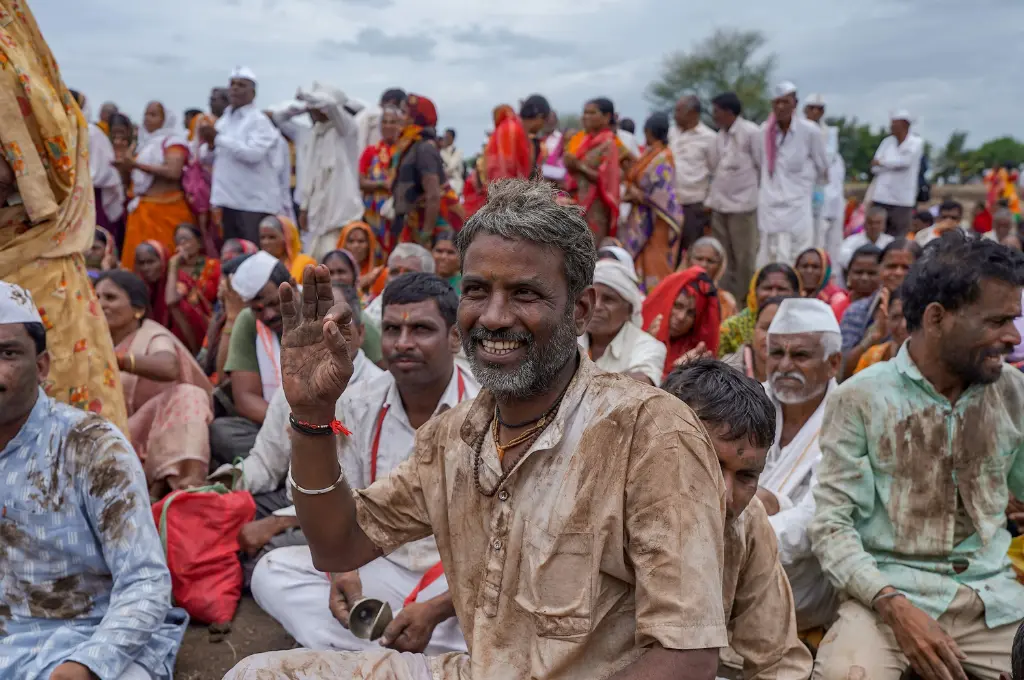
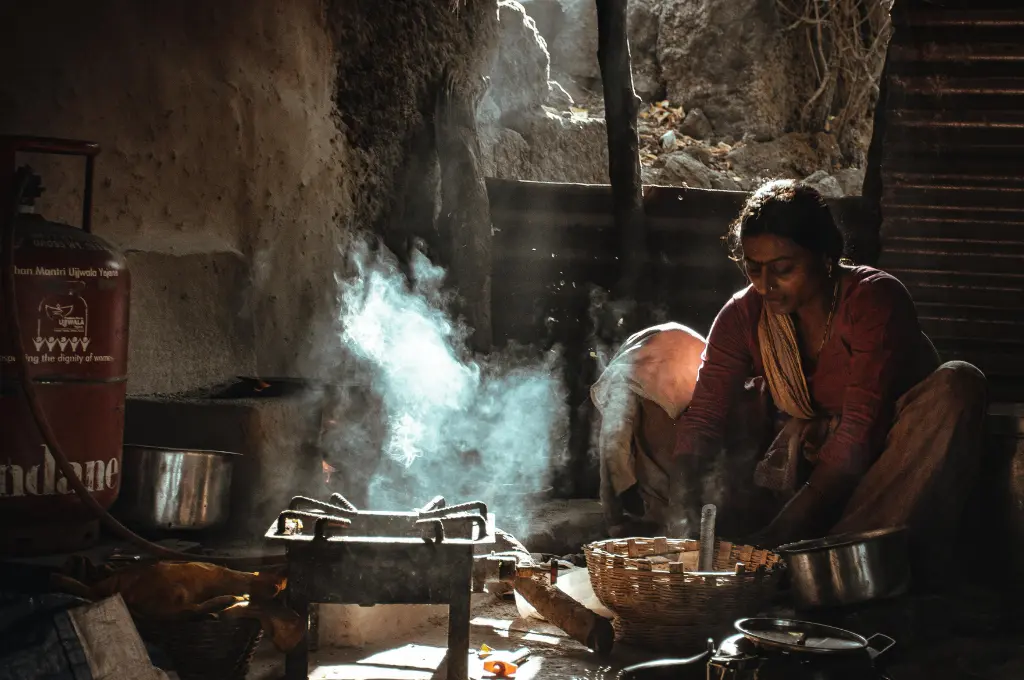
For millions of Indians, heat is experienced not through meteorological bulletins but inside a tin-roofed room that does not cool after sunset, at a work site where stopping work means losing wages, or in fields under a scorching sun.
Yet extreme heat remains difficult to locate as a distinct priority in India’s public finances.
Published in June 2026, Standing the Heat is a joint report by Greenpeace India, the Centre for Budget and Governance Accountability (CBGA), and the Budget Analysis and Research Centre Trust (BARC) that examines Union Budget data from 2020–21 to 2026–27 to understand allocations for heat response. It maps 130 schemes across various ministries that could support preparedness, adaptation, and resilience.

The report’s central finding is revealing. While India has several programmes that may reduce heat vulnerability, there is no dedicated national heat budget, no Union scheme designed exclusively for extreme heat, and no financing framework that connects key ministries overseeing climate, health, labour, water, housing, agriculture, and disaster management.
This gap is critical because heat risk is outpacing the response. Approximately 57 per cent of Indian districts, home to 76 per cent of the population, face high to very high heat risk. According to a recent study, a single-day heatwave can cause up to 3,400 excess deaths annually in India. Experts have also warned that official figures significantly underestimate the extent of heat-related deaths in the country. Such deaths are often undercounted because the immediate cause may be recorded as cardiac arrest, renal failure, or another medical condition, rather than heat exposure. Illnesses suffered outside formal health facilities may not be recorded in official statistics at all.
At present, 11 states across the country have recognised heat as a state-specific disaster. However, despite recommendations by the 16th Finance Commission, it is yet to be included in the list of national notified disasters. This has direct implications for coordinated public responses. While more than 250 cities and districts across 23 heat-prone states have Heat Action Plans, most lack predictable financing. Without an identifiable budget, a plan remains a statement of intent rather than an instrument of implementation.
A large envelope, but little identifiable heat finance
The report tracked INR 8.57 lakh crore across 130 schemes in the 2026–27 Budget Estimates. While these allocations may appear substantial at first glance, only 27 schemes, accounting for INR 91,137.7 crore, or 10.6 percent of the tracked total, were classified as directly relevant or potentially usable in addressing heat-related risks. The remaining 103 schemes, representing 89.4 per cent, contribute indirectly through housing, drinking water, rural livelihoods, infrastructure, renewable energy, environmental protection, or social security.
This distinction requires careful attention. ‘Direct’ does not mean that the entire allocation is earmarked for heat; it means that a scheme offers a relatively direct route to reducing vulnerability. For instance, crop insurance can protect farmers from climate-related losses; health and disaster-preparedness programmes can strengthen emergency response; and labour and social-protection schemes can cushion income loss. ‘Indirect’ schemes—including housing, water supply and urban infrastructure—may improve resilience but do not have distinctly identifiable, heat-specific expenditure, activities, or beneficiaries.

As such, the study is a map of potentially relevant public spending, not an audit of money spent exclusively on heat. This limitation itself is revealing. When heat-related components cannot be separated from larger schemes, the government cannot reliably determine what is being financed, who is being reached, or whether the expenditure is reducing exposure. A large allocation is not necessarily a heat-ready allocation.
While the study examined data from 16 ministries in the report, here, we break down findings for six key ministries based on an understanding of their relevance and importance in addressing heat impacts.
1. Ministry of Environment, Forest and Climate Change (MoEFCC)
MoEFCC presents one of the clearest contradictions in India’s approach to financing heat resilience. Although it is the principal Union ministry responsible for analysing and responding to climate-related risks, it does not operate a single scheme targeted specifically at extreme heat.
All eight schemes under the ministry which were identified as heat-relevant address the problem only indirectly: seven through adaptation measures and one through mitigation. Programmes such as Environmental Knowledge and Capacity Building, Control of Pollution, and the National Mission for a Green India could potentially help reduce heat-related risks. Still, none treat extreme heat as a distinct and growing crisis.
Funding levels also remain modest. In the 2026–27 Budget Estimates, the ministry’s heat-relevant schemes received INR 1,949 crore. However, more troubling is the gap between allocation and expenditure. In 2024–25, INR 1,737.74 crore was allocated, but actual expenditure was INR 788.99 crore, a utilisation rate of about 45 per cent. The gaps in certain schemes are particularly stark. For example, against an allocation of INR 858 crore for the Control of Pollution scheme, only INR 16 crore (or 1.8 percent) was spent.
The figures reveal a twofold problem: heat-related interventions are inadequately funded, while even the limited resources available are not fully used. The ministry also acknowledges these gaps in its 2024–25 Annual Report.
2. Ministry of Science and Technology
The report identifies two heat-relevant schemes under the Ministry of Science and Technology. One supports capacity-building for emergency preparedness, and the other contributes to adaptation, including early warning and forecasting. Neither scheme, however, directly addresses mitigation. More strikingly, neither scheme received an allocation in 2025–26 or 2026–27, despite the growing need for research, forecasting and evidence-led preparedness.
3. Ministry of Health and Family Welfare (MoHFW)
MoHFW plays a critical role in managing the impacts of extreme heat on health. Only five schemes under the ministry can be identified as heat-relevant: three social insurance schemes, the National Health Mission (NHM), and one capacity-building scheme. However, none are dedicated to heat emergency preparedness or mitigation. Under the Health Sector Disaster Preparedness and Response scheme, INR 94 crore was budgeted in 2024–25, but only INR 14.92 crore was spent, a utilisation rate of 15.9 per cent.
The National Centre for Disease Control addresses heatstroke through the National Programme on Climate Change and Human Health, which is part of the NHM. In 2021, the government issued national action plans on heat-related illness and climate change and human health, with an allocation of INR 28.98 crore. Comparable documents are unavailable for subsequent years, making continuity in financing and implementation difficult to track.
4. Ministry of Labour and Employment
As the nodal ministry responsible for safeguarding the country’s workforce, the Ministry of Labour and Employment should protect workers, particularly the millions of informal and unorganised workers who are at disproportionate risk of extreme heat exposure. Yet it has no heat-specific scheme. The study classifies 13 labour schemes as directly relevant to heat exposure and risks. Expenditure on these schemes was INR 11,011.78 crore in 2020–21, while the 2026–27 allocation is INR 31,791 crore, with substantial fluctuations in the intervening years. Underutilisation, particularly in the recently launched new employment generation scheme, or PM Viksit Bharat Rozgar Yojana, partially explains this volatility.
The graver concern is that the ministry has no dedicated heat scheme, no funding for a Heat Action Plan, no programme to enforce occupational heat-stress standards, and no compensation framework for heat-related illness at work. This is a significant policy gap in a country with one of the world’s largest heat-exposed outdoor workforces.
5. Ministry of Housing and Urban Affairs (MoHUA)
MoHUA can play a decisive role in urban heat resilience through planning and policies related to housing, livelihoods, public spaces, and infrastructure. The report tracks nine schemes, most of which are classified as indirectly relevant. Moreover, the actual expenditure had fallen from about INR 1 lakh crore in 2021–22 to INR 41,009 crore in 2024–25. The 2025–26 Revised Estimate (these are updated projections of expenditure for the financial year which are presented with the Union Budget for the upcoming year) is INR 46,622 crore. The decline reflects lower spending on the Pradhan Mantri Awas Yojana–Urban and the Deendayal Antyodaya Yojana–National Urban Livelihoods Mission. The latter received no allocation in 2025–26 or 2026–27.
6. Ministry of Jal Shakti
The report tracks three schemes under the Ministry of Jal Shakti, including the Jal Jeevan Mission (JJM). Actual expenditure for JJM as well as the two other schemes was showing an upwards trend till 2023–24. However, the actual utlisation of the budget under these schemes declined to merely 24 percent, or INR 29,709 crore, in the year 2024–25 and INR 24,535 crore in the 2025–26 Revised Estimates. This was largely because of declining spending and underutilisation under JJM. Atal Bhujal Yojana, which supports groundwater management, also recorded lower expenditure in 2024–25 and 2025–26, and received a negligible allocation in 2026–27. This is concerning because reliable water access is central to reducing heat exposure and illness.
Other ministries
Other ministries examined in the report, including Home Affairs, Rural Development, Earth Sciences, New and Renewable Energy, and Agriculture and Farmers’ Welfare, also lack dedicated schemes to address heatwaves. Allocations for some of their tracked heat-relevant schemes also declined sharply during the study period.
Importantly, low utilisation does not automatically prove neglect. Procurement delays, weak administrative capacity, programme redesign, and other bottlenecks may explain part of the gap. But money announced and money spent are not the same. An allocation protects no one until it is converted into trained health workers, effective surveillance, medical supplies, cooling facilities, and responsive local services.
Taken together, the pattern suggests that heat remains dispersed across departmental mandates, without a common financing framework or clear accountability for results.
What a comprehensive heat budget can and should do
The solution is not simply to introduce another large scheme. What India needs is a financing architecture that makes heat action visible, coordinated, and implementable.
1. Recognise and earmark heat finance. The Union government must declare heatwaves as a nationally notified disaster and establish a dedicated financing window for preparedness, response, and adaptation. This notification would give states a more predictable route to disaster-response and mitigation funds. However, financing must extend beyond relief after people fall ill.
2. Tag and report heat expenditure. Relevant ministries should identify heat-related components within existing schemes. Budget documents should specify objectives, activities, beneficiaries, Budget Estimates, Revised Estimates, actual expenditure, and measurable results. A central coordination mechanism should assign responsibilities and publish an annual heat-finance statement.
3. Fund local Heat Action Plans. Municipalities and panchayats need timely, flexible grants for drinking-water points, cooling centres, shaded public spaces, cool roofs, emergency outreach, upgrades to schools and health facilities, and temporary changes to working hours. Local bodies should not have to navigate multiple scheme rules during a crisis.
4. Protect workers’ health and income. Labour and social-protection budgets should finance enforceable standards for rest, water and shade, workplace inspections, heat-risk insurance, wage-loss compensation, and temperature-triggered cash support. These measures should pay particular attention to heat-exposed and vulnerable groups including construction workers, street vendors, agricultural labourers, waste pickers, home-based workers, and gig workers. Within these broader protections, these measures should also be gender-responsive and account for unpaid care work and unequal access to water and cooling, since the impacts of heat are often disproportionate and gendered, with women facing simultaneous and overlapping risks.
5. Make execution the measure of success. Underused health, pollution-control, water, research, and livelihood schemes require transparent diagnosis and corrective action. Heat finance should be judged not by the allocation announced, but by whether it reaches the neighbourhoods, workplaces, schools, health facilities, and households where exposure is highest.
India has moved from treating heat as a seasonal hazard to preparing costed plans for it. The next step is to establish dedicated financing and ensure its timely utilisation. Until budgets clearly identify heat, adequately fund the responsible institutions, and protect people who cannot retreat indoors, the country will continue to spend around the crisis rather than confront it.
—
Know more
- Read the full Standing the Heat report to learn more about the gaps in public financing for heat action in India.
- Learn how rising temperatures are impacting workers in the informal sector.
- Read this analysis of the implementation of heat resilience measures and plans in India’s most at-risk cities.