“During the wedding season, Diwali, and other festivals, flower farming fetches us up to three to four times more profit compared to the rest of the year, when everything is otherwise dependent on demand,” says Rahul, a farmer in Lucknow’s Malihabad area. “If the colours are even a little bit faded, then the price of flowers falls. Flower farming is full of uncertainties.”
India is among the world’s top flower-producing countries, with lakhs of hectares of agricultural land used to cultivate flowers. According to the National Horticulture Board, more than 85 percent of flower cultivators in India are small and marginal farmers.
In Lucknow, approximately 15,000–18,000 hectares of agricultural land are dedicated to floriculture, with cultivation predominantly done by smallholder farmers. While flower farming is widespread in the region, inadequate infrastructure and market instability pose major challenges for cultivators. As such, while floriculture may be profitable for sellers and traders, many smallholder farmers still struggle to reap similar economic benefits.

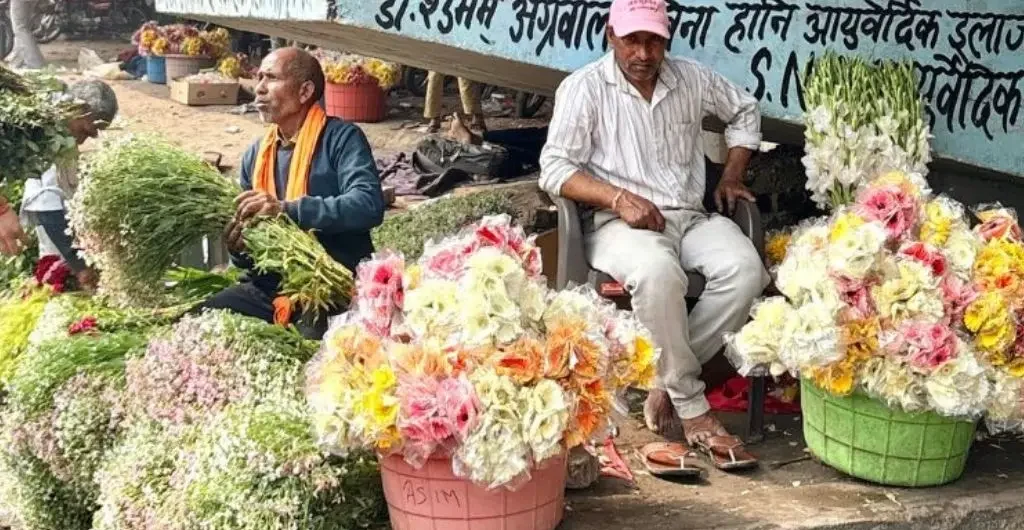
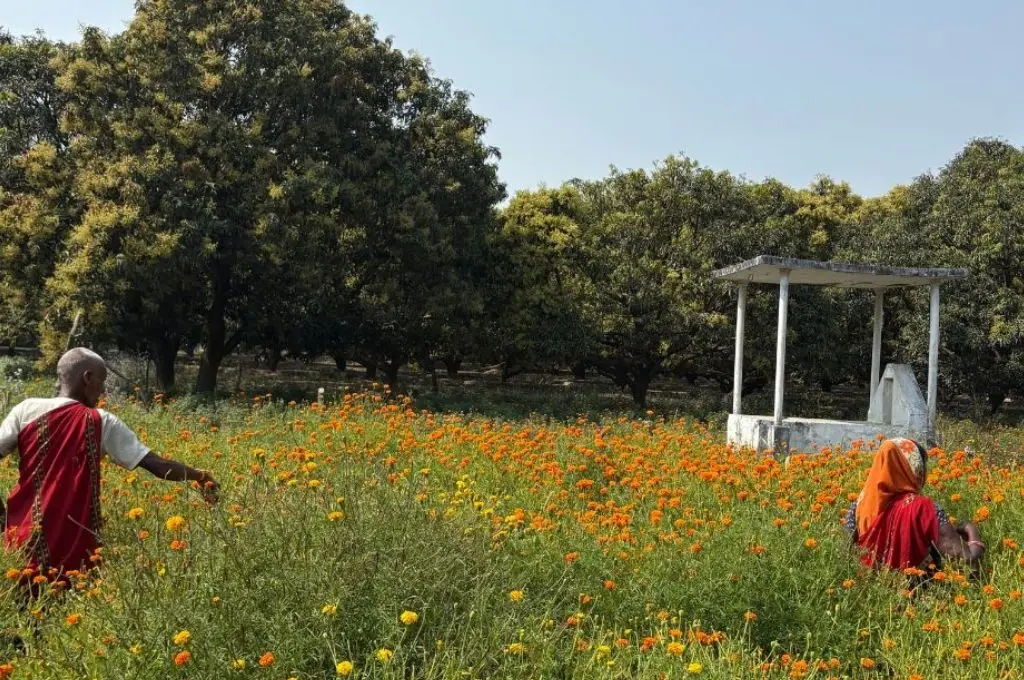
In the areas around Malihabad and Kakori in Lucknow district, vast flower fields can be seen in the midst of swathes of mango orchards.
Floriculture in this region follows cyclical patterns. While many plants have to be sown two to three times a year, species such as roses, tuberoses, and jasmine continue to produce flowers for several years once planted.
Farmers mainly cultivate marigold, gerbera, rose, gladiolus, and daisy, with marigold being the most cultivated. Farmers usually prepare marigold saplings twice a year, and there are two varieties of the flower that are grown in this region: jafri (French marigold), which are bicoloured, such as red with orange or yellow; and African marigold, which are larger and are usually monocoloured in shades of yellow or orange.
While the floriculture here is diverse and year-round, its success largely depends on environmental and climatic conditions.
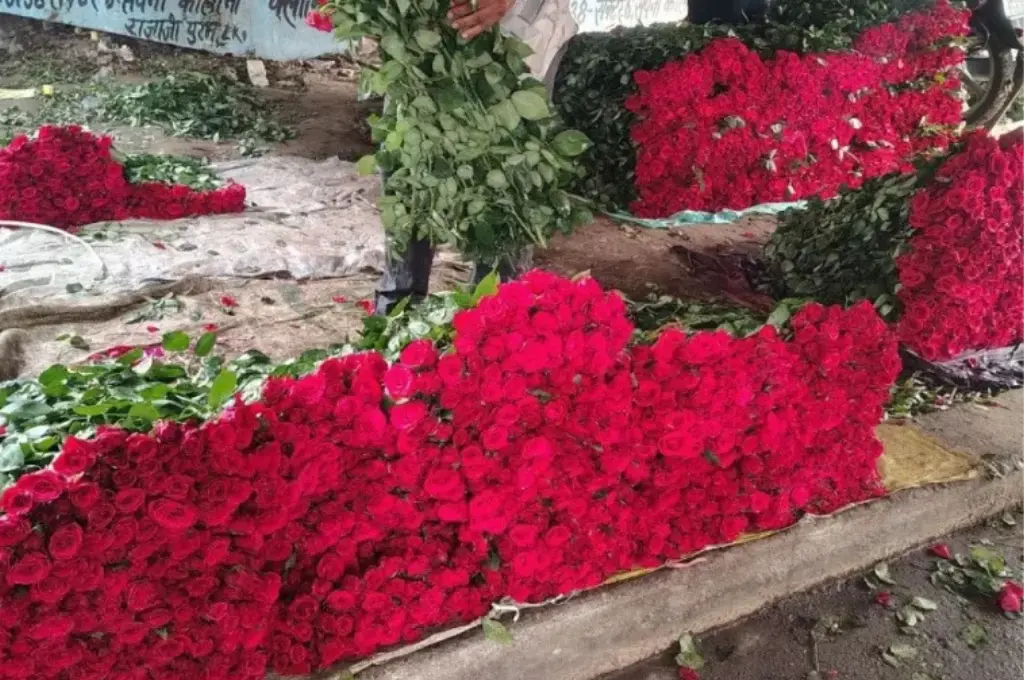
Cultivation is shaped by climatic conditions
Even slight changes in the weather impact the size, colour, and freshness of flowers, which affects their market value. Marigold is a prime example of this kind of vulnerability, since the flower cannot tolerate extreme heat or heavy rainfall. As temperatures begin to rise ahead of summer, farmers are forced to destroy leftover flowers by the last week of March, either by uprooting standing plants or burning dry plants to make space for new saplings.

Shivani Kumari, a flower farmer from Malihabad, says that in case crops get spoiled, or if there is a surplus, farmers have to absorb the losses. There are no policies for flower farmers, and the region has not been covered by crop insurance schemes. She adds that they have only seen advertisements about floriculture on TV, but there have been no benefits at the ground level.
Different challenges emerge after harvest
A new set of challenges emerges once the flowers have bloomed.
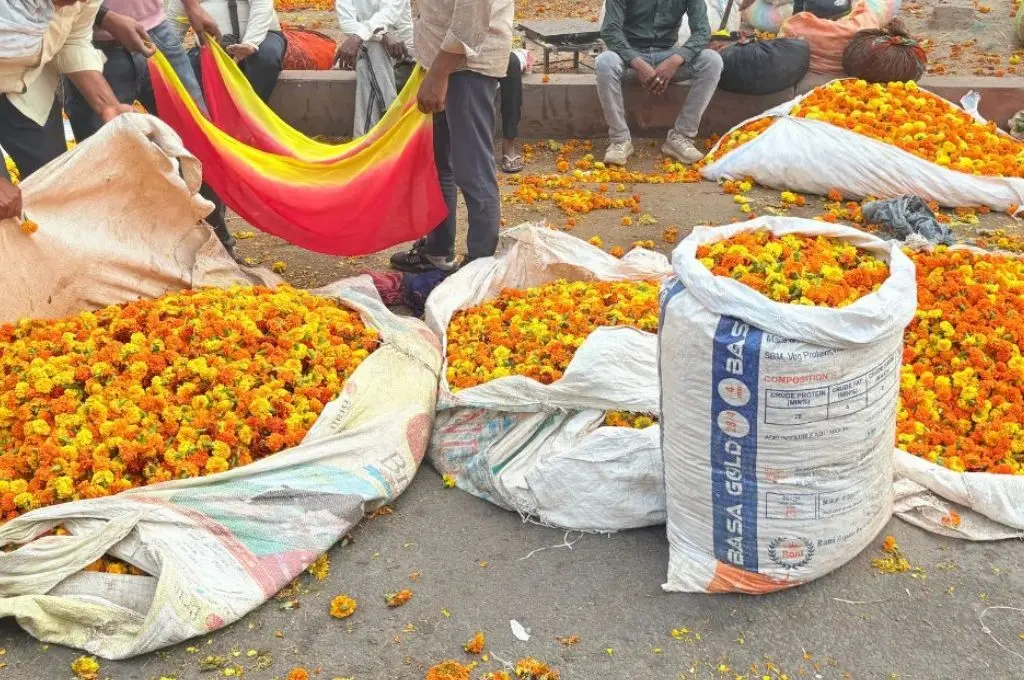
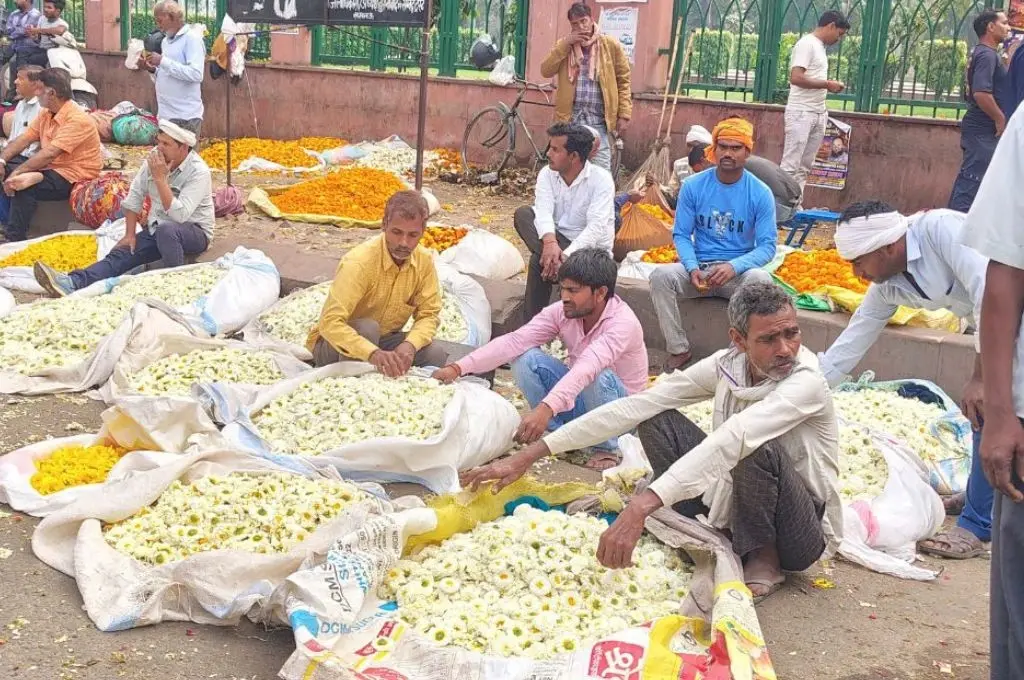
After harvesting, farmers come to sell their produce in big and small flower markets in Lucknow, including the Kanchan Flower Market in the Chowk area and the flower market at Kisan Bazaar in Gomti Nagar. However, in the time that it takes for farmers to travel this distance, the flowers lose their freshness, and consequently, fall in value and fetch lower prices.
For instance, a farmer from Rahman Kheda village in Kakori has to travel 25–30 kilometers to reach Kanchan Flower Market. During transit, flower petals tend to break and wither, which decreases the number of intact flowers, and the farmer ultimately has to incur losses.
According to 2023 estimates from the Agricultural and Processed Food Products Export Development Authority (APEDA), about 25 to 40 percent of the total harvested flower produce gets spoiled after harvesting. Delicate flowers such as roses and gladiolus are particularly vulnerable.
The long journey to markets, coupled with the lack of proper maintenance, packaging, and storage facilities, has made the situation difficult for flower farmers.
Farmers contend with demand, price, and market uncertainties
After dealing with issues during cultivation and transportation, farmers then have to face an unstable market.
Unlike other crops, the demand for flowers is not as consistent. It surges suddenly during special events, weddings, and festive seasons, allowing farmers to earn up to four times the regular prices for flowers. However, these periods of profit are very short-lived. Moreover, if farmers are not able to get their harvest ready in time for these occasions, they do not get the expected prices, which impact their earnings.
On the other hand, if we look at the commercial sale of flowers by big companies, we find that the fluctuations in prices are relatively controlled. For example, the price of roses typically rises to INR 50 to 120 around Valentine’s Day, but there are no major differences in prices afterwards. However, small and medium farmers are unable to benefit from this stability.
Ramashray, a farmer from Kakori, reiterates: “There are no policies for us; the minimum support price (MSP) is nonexistent here. Even today, if farmers are not able to sell their flowers in the mandi, they have to throw them away.”
The overall lack of coordination between production and sale significantly increases the risks and instability in flower cultivation.
Vulnerability and lack of information
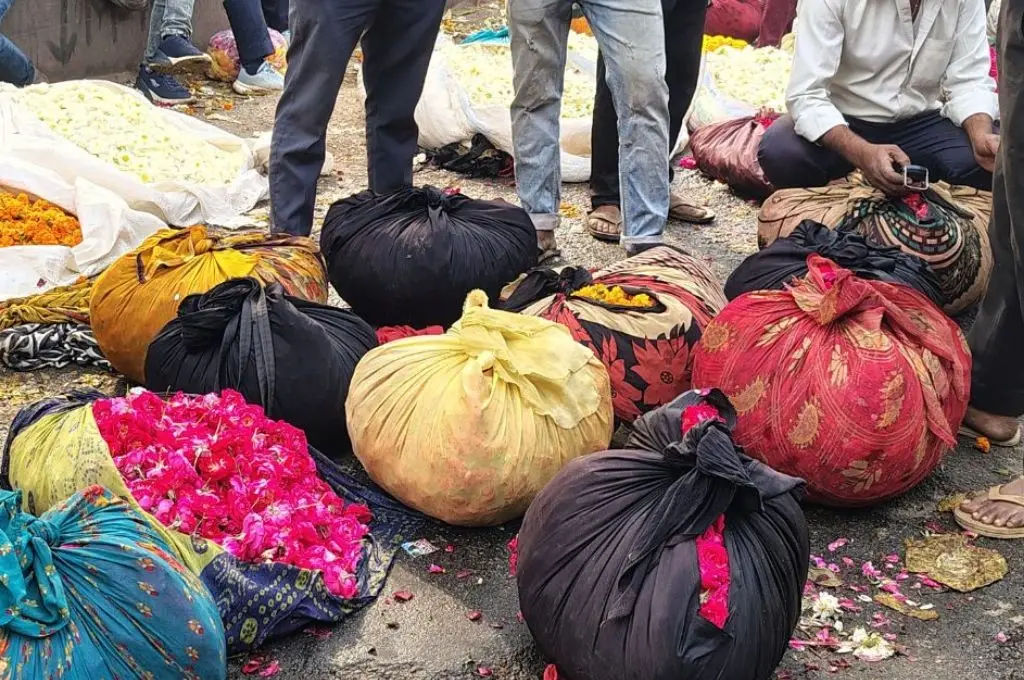
Amid these uncertainties, flower farmers also do not have access to timely and updated information about the market. They are often not notified if the mandi is closed or if there are no suppliers. As a result, farmers often have to pick and collect flowers without being sure if there will be viable opportunities to sell them.
Since small and marginal farmers do not have the means to store picked flowers, the produce also tends to perish very quickly. While it is possible to keep flowers blooming by watering them for one or two days, once they reach the market after this 48-hour period, their price decreases. At the same time, if demand dwindles and flowers are not sold, farmers often suffer complete losses.
Navigating the mandi system
While there are no fixed rules for the flower market, farmers say that they are able to get both better prices and better commissioning agents or middlemen if they reach the mandi early in the morning. The commissioning agents negotiate with farmers and merchants to set a fair price, a portion of which is set aside as their commission.
For farmers, this system is a source of both convenience and harm.
Due to a dependence on middlemen and a lack of proper systems for payment and storage post-sale, farmers are forced to sell their produce to wholesale traders or agents at low prices.
At the same time, a study published in the International Journal of Innovation Research and Development found that a large portion of the price that consumers pay for flowers does not reach the farmers. In India, farmers practicing open-field cultivation receive only 38 to 70 percent of one rupee. While this share rises to 55 to 80 percent per rupee in high-tech farming, this scenario is still not ideal.
A question that thus emerges is whether floriculture can actually become a sustainable livelihood option for farmers. In order for this to happen, it is necessary to strengthen basic infrastructure and market systems, so that farmers are not forced to sell their produce at low prices due to factors such as lack of storage or weak supply chains.
In addition, establishing small cold storage and pre-cooling units at the village or cluster level can increase the shelf life of flowers, while transportation facilities can improve farmers’ access to markets. It is equally important to develop policies for the benefit of flower farmers, including regular training and technical support. It is through these initiatives that a secure and profitable livelihood can be ensured for flower farmers.
—
Know more
- Learn how women in Nagaland are turning traditional flower drying into a sustainable source of livelihood.
- Read more about the impact of changing weather patterns and market instability on flower farmers in Maharashtra.