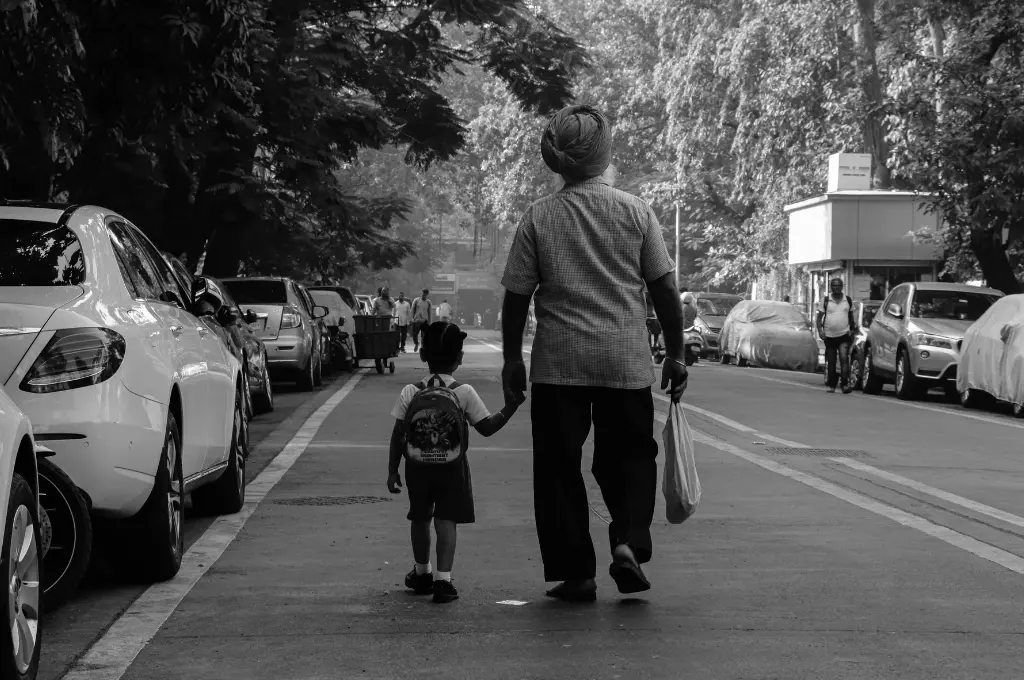
For decades, our education system has been built largely around material outcomes—teaching children to help them find jobs and a means of livelihood. More recently though, spaces are emerging where the conversation has evolved beyond just literacy and numeracy to include emotional wellbeing and mental health. Termed socio-emotional learning (SEL), this outcome is explicitly mentioned in the New Education Policy (NEP) 2020, which highlights the need to foster rational thought, prosocial skills, and empathy in students. While this is encouraging, it is not nearly enough. For holistic growth, the idea of human flourishing should also include wellbeing and systems thinking at the centre of their culture.
As the Human Flourishing programme at Harvard points out, it is, “a state in which all aspects of a person’s life are good, including the contexts in which that person lives.” While wellbeing focuses on individual potential, flourishing includes the wellbeing of the community and the environment. We live in an interdependent reality, and people cannot thrive in isolation just as a flower cannot blossom in a drying garden.
Look at the big picture
In our work with teenaged students, we have noticed that social media and artificial intelligence are affecting this generation’s ability to connect with each other and to society at large. Their education does not provide room for them to learn emotional regulation, attentive listening, empathy or discernment—skills that help them show up in relationships with others, and as compassionate decision-makers in larger ecosystems—institution, community, society, planet. After all, we are social beings hardwired to connect with others who are part of our interdependent reality.

The Social, Emotional, and Ethical (SEE) Learning framework, which the Karuna Practice uses in our work with schools, advances the field of SEL by integrating it with the science of compassion. It includes sequential steps to help students work on themselves while remembering that they are part of a larger system.
Compassion is not just about being kind to others. It is also about accepting your own vulnerabilities. It entails being courageous enough to examine your own feelings, experiences, fears, anxieties, and understanding how to show up with discernment and empathetic concern in your engagement with others and communities at large by navigating your emotions and shifting perspective.
The programme, developed at Emory University’s Center for Contemplative Science and Compassion-Based Ethics, has three layers: self-awareness. emotional self-regulation, and motivation for engaging better with self, with others, and with ethical issues at the systemic level. Students learn active listening, conflict resolution and ethical decision-making, with the exercises incorporating trauma-informed and resilience-based approaches as well.
For nuanced learning to be effective, it is important to create rituals and spaces that feel psychologically safe for students.
The programme helps them obtain a wider view of the world and see the layers and variables that contribute to a situation or trigger. They can discern the unfolding of privileges, biases and prejudices, and understand that they can’t do well if everything around them is collapsing. It shows them that the less we ‘other’ people, the better we can engage with the world.
For such nuanced learning to be effective, it is important to create rituals and spaces that feel psychologically safe for students. They need to feel that they can be different or make mistakes and not be pulled up, laughed at or segregated. To this end, classrooms and schools need to embody the practice so that it allows for learning to unfold.


Teachers need the oxygen mask first
Dr Kimberly Schonert-Reichl’s research emphasises that teachers are ‘emotional contagions’ and their own social-emotional competence is a strong influence on the climate of the classroom.
Teachers in the public system are, unfortunately, stretched for time and capacity. If they are unable to experience flourishing for themself, it is highly unlikely that they can help their students thrive.
Teachers need a script with objectives and lesson plans that helps them build skills.
We’ve seen the advantages of immersing them in Cognitively Based Compassion Training (CBCT), which uses experiential exercises to help adults internalise the concept of compassion and draw their own insights. Once they have practised CBCT personally, teachers are more invested and engaged in helping their students shift their perspective. In fact, those who have benefited from it have turned ambassadors and evangelists for compassion and ethical training and take the practice to children and their parents.
It is, however, easy to talk about lofty ideals. In practice, schools don’t always know how to operationalise them. Teachers need both content and procedural knowledge; they need a script with objectives and lesson plans that helps them build skills they can then use to transmit to the classroom as facilitators. And the classroom in turn influences the culture throughout the school.
Be comfortable with setbacks
A recent evaluation of SEE Learning in urban classrooms, the first of its kind in South Asia, showed emerging signs that students had increased self-awareness and empathy. However, a few students reported higher levels of self-judgment, and some had a decreased sense of classroom connection. These discoveries do not fit neatly into a success narrative that we all crave. The findings from Mumbai and Pune also suggest that even well-designed, carefully implemented programmes can produce mixed outcomes if the conditions around them are not aligned.
Keep it adaptive, give it time
A programme may be experienced differently across classrooms and lead to different outcomes. This reinforces the importance of balancing two demands that are often in tension: contextual adaptation and coherence in implementation.
Programmes must be responsive to linguistic, cultural, and developmental realities. In Rajasthan, for instance, sessions with indigenous students are held in the field using examples and contexts from their lived experience.
When we work with something as complex as human emotion, success rarely comes overnight or in a straight line. Behavioural change takes time. Sometimes lessons need time to marinate. At other times, students need to experience and explore situations to learn experientially.
We all know that fast moving consumer goods (FMCG) companies spend billions over years trying to influence and change people’s buying habits. And yet when it comes to human emotions, we expect to break habitual patterns of thought and action with one module in less than a year.
Do not treat it as a mere add-on
The findings of the study also point beyond implementation, to the role of the broader environment in which these programmes are introduced. My fear is that just slapping on another intervention to an already overburdened teacher’s schedule and workload is like adding another katori to a full thali.
In many school systems, where classrooms are structured around performance, comparison, and hierarchical relationships, just teaching SEE Learning modules creates a disconnect between what is taught and what is experienced. When it is treated as a standalone intervention, one that is added to the timetable without shifting the broader culture of schooling, students may engage with these ideas during specific sessions, but struggle to carry them into their homes and other environments that operate on different norms.
We know that academic competition and family expectations create significant stress among youth. Such dynamics reinforce the importance of compassion-based approaches that help students navigate environments of comparison, parental pressure, and performance anxiety. But the real need here is not just to change individual mental models but to alter systemic preferences and norms. Compassion and ethics should be part of the warp and weft of culture. When the message is embedded in the fabric, it has a greater chance of translating into sustained change and real human flourishing.
This, of course, is no magic bullet. When you disperse seeds, not all grow into trees. Some fall on a tin roof, and some others reach the soil but die before maturity. But the ones that endure grow deep and tall.
—
Know more
- Read this article to understand how SEL is the missing key to FLN.
- Learn more about the fundamentals of SEL in this article.
- Read this article to know more about SEE Learning.